Tim Spector: How to eat yourself happy — including an easy-peasy yogurt cake recipe

Sardines are just one of the affordable, everyday foods that Tim Spector recommends including in your diet to improve your mood
Tim Spector shares the ways in which food impacts the brain. Picture: Izzy Croker.
Tim Spector shares the ways in which food impacts the brain. Picture: Izzy Croker.

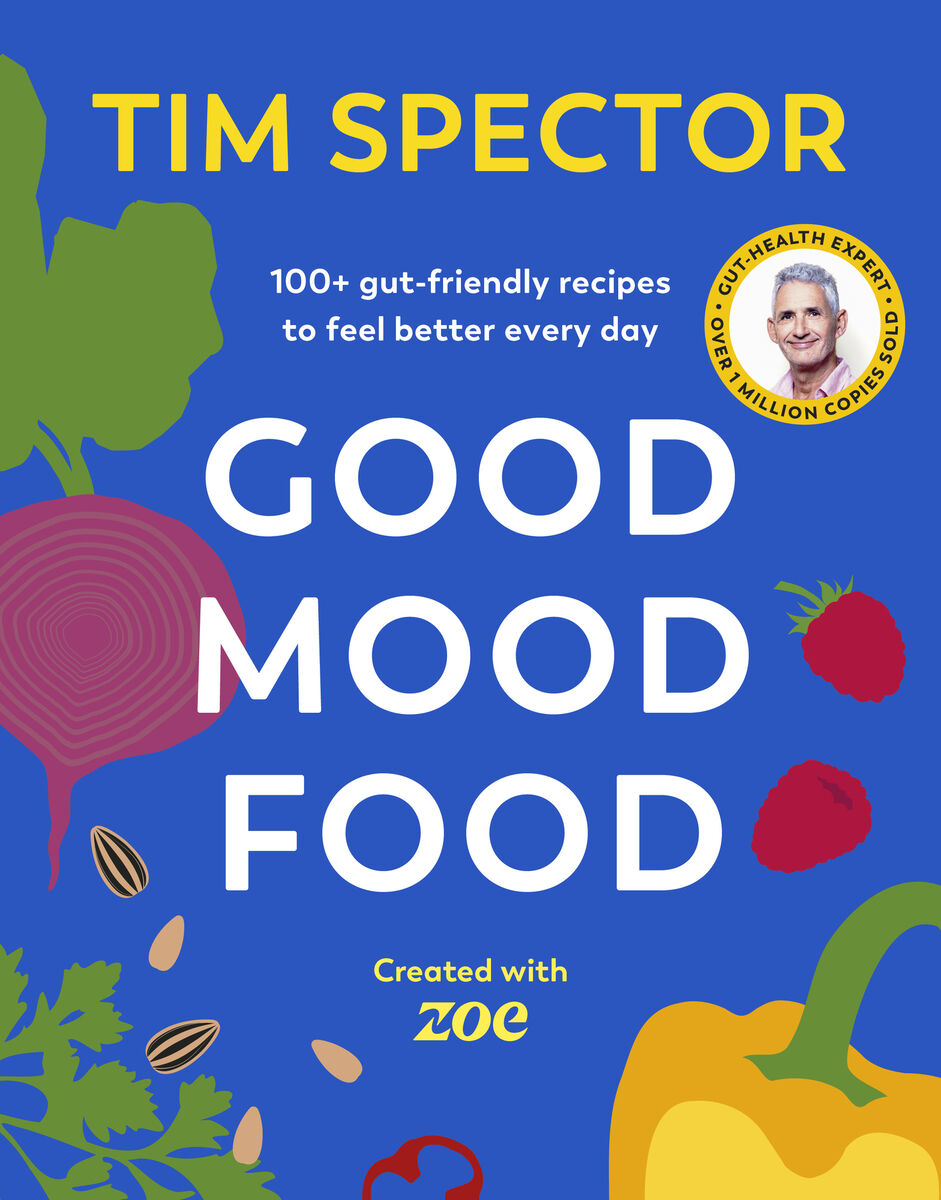
Sardines. Cheap, easily accessible, rich in omega-3 fats — and one of the foods that Tim Spector recommends including in your diet to help boost your mood. A professor of epidemiology at King’s College London and co-founder of the ZOE nutrition science company, Spector tackles the importance of the gut-brain connection in his latest book Good Mood Food.

In the opening section, he explains the science behind how the food you eat can affect how you feel. The book includes more than 100 approachable recipes designed to feed your gut and help your brain.

Inexpensive oily fish like sardines, anchovies, and mackerel are high up on Spector’s list of good things to include in your diet. “You can get them in cans, and we just don’t eat enough of them,” he says, speaking to the Irish Examiner from his North London home.

“Lots of studies show that they’re the best source of omega-3, and about one in four of us is deficient in omega-3.

“We were brought up to think that fish makes you brainy, so there’s some truth in that saying, but not all fish are equal. You really want the small oily ones to get the real benefits.”

According to Spector, food can impact the brain in three main ways:

1. Inflammation

In Good Mood Food, he notes that ‘chronic, low-grade inflammation — often driven by highly processed foods, stress and poor gut health — can interfere with brain signalling and mood regulation.’

“Our brain thinks we’re sick, and therefore it sends signals to the body to behave in a way as if we were sick,” he says. “And so depression, which is a common theme of nearly all brain disorders, is triggered by these inflammatory signals.”

Inflammation in the gut can drive inflammation in the brain, says Spector. “That’s a key fact that we didn’t know 10 years ago.”

2. The gut-brain axis

“The vagus nerve is the longest in the body, about 60cm long, running from your intestines to your brain via your lungs and your heart,” says Spector. “It’s like a fast fibre internet cable, and it basically sucks up all the information that the gut microbes are producing in the gut as they react to food.

“When you have a junk food diet with no fibre, [gut microbes] will be sending out very inflammatory signals. That gets picked up by the immune cells and the lining of the gut, and gets zoomed up to the vagus nerve, where it then meets other immune cells in the brain.

“We’ve also realised that 80% of the traffic along the vagus nerve is in the direction gut to brain ... altering the way your brain perceives the world. If you want to influence how your brain is working, then you need to feed your gut microbes good food.”

3. Energy pathway

“The brain is a very energy-hungry organ, and this means that avoiding things like sugar spikes and keeping our glucose control fairly level are really important as it makes it much easier for the brain to work well,” says Spector.

He wants people to avoid what he calls “carby low-fat diets, breakfast cereals, and snacks” because of the knock-on effects: “They will have these big peaks and troughs of glucose levels and that brings things like fatigue and tiredness and can cause brain fog as well.

“Basically, all these things tell the brain that you’re not well. It will send signals of fatigue to your muscles. It will tell you to be antisocial. It will tell you you’re not really interested in pursuing good food, or sex, or partying.”

But there is a simple way of helping your brain and your mood.

“We can absolutely reset [the brain] with a good diet that is focused on your gut microbes, your gut health, and reducing high sugar, carby, ultra-processed foods.”

Spector recommends people turn to several fast fixes in Good Mood Food if they’re feeling stressed or anxious. “There are a number of really easy, quick recipes, particularly things like soups, which are traditionally a comfort food. There are also tray bakes, and helpful snacks and salads you can make in under five minutes. And we also encourage people to batch cook one or two days a week and put it in your freezer so when you are feeling low, you’ve got something good to eat rather than ordering a takeaway, which will make you feel worse.”

Those oily fish pop up as a regular ingredient in recipes including salade niçoise, sunshine sardine salsa, or mackerel and tahini pâté, alongside other ideas incorporating Spector’s key ingredients: vegetables and fruits, beans and lentils, wholegrains, fermented foods, and a select amount of meat.

“There are lots of entry-level ideas,” says Spector, “and whenever there’s an expensive ingredient, we’ve given a cheaper swap. We use lots of cheap items like canned tomatoes, canned beans, frozen peas, frozen berries, things that cost [relatively little] but still have really high nutrients,” he explains.

“ Good Mood Food is an eating book, and hopefully an informative eating book. We’re trying to encourage major shifts in behaviour to try and improve people’s mental health.”

Good Mood Food by Tim Spector. All photography by Issy Croker.

  • Tim Spector — Good Mood Food with Dr Federica Amati and Recipes by Kathryn Bruton is published by Jonathan Cape (€37.50)

Possibly the world’s simplest baking recipe, this cake is super simple to make once you have the ingredients ready. You ideally need a 500g pot of Greek yogurt to start with, then you use this 500g pot as your measuring tool to speed up the process.

It’s a wonderful recipe to try with children and novice cooks, as it introduces them to mixing and baking with low risk of failure. The batter can also be used to make cupcakes. Spoon the mixture into 12 cupcake cases and reduce the baking time to 15–20 minutes.

Easy Peasy Yogurt Cake

This cake is delicious served warm, drizzled with kefir and honey, and is surprisingly healthy as the main ingredients are nuts, seeds and yogurt.

Easy Peasy Yogurt Cake

Servings

8

Preparation Time

10 mins

Cooking Time

45 mins

Total Time

55 mins

Course

Baking

Ingredients

  • 1 x 500g pot Greek yogurt

  • 400g ground almonds (2 yogurt pots)

  • 150g caster sugar (½ yogurt pot)

  • 1 tbsp baking powder

  • 3 tbsp poppy seeds

  • Zest of 2 lemons

  • 4 eggs

  • 300g frozen blueberries (1 yogurt pot)

  • TOP-UPS: Honey, to serve Kefir, to serve

  • SWAPS: Any frozen berry for blueberries

  •  

Method

  1. Preheat the oven to 200°C/180°C fan/400°F/gas 6 and line a 28cm square baking tin with baking parchment.

  2. Pour the Greek yogurt into a large bowl. Wash and dry the pot, and fill twice with ground almonds. Add to the yogurt. Half-fill it with caster sugar and add this to the bowl as well, along with the baking powder, poppy seeds, lemon zest and eggs. Mix well until the mixture is combined – make sure there are no lumps.

  3. Gently fold in the blueberries, transfer to the prepared baking tin, spread out evenly and bake for 45 minutes.

  4. Allow to cool slightly before serving, drizzled with kefir and honey (if liked). The cake will keep for three to four days and can be frozen for a later date.

  5. Sardines are just one of the affordable, everyday foods that Tim Spector recommends including in your diet to improve your mood

More in this section

Lifestyle

Newsletter

Eat better, live well and stay inspired with the Irish Examiner’s food, health, entertainment, travel and lifestyle coverage. Delivered to your inbox every Friday morning.

Cookie Policy Privacy Policy Brand Safety FAQ Help Contact Us Terms and Conditions

© Examiner Echo Group Limited