5 expert-backed tips to beat the winter blues
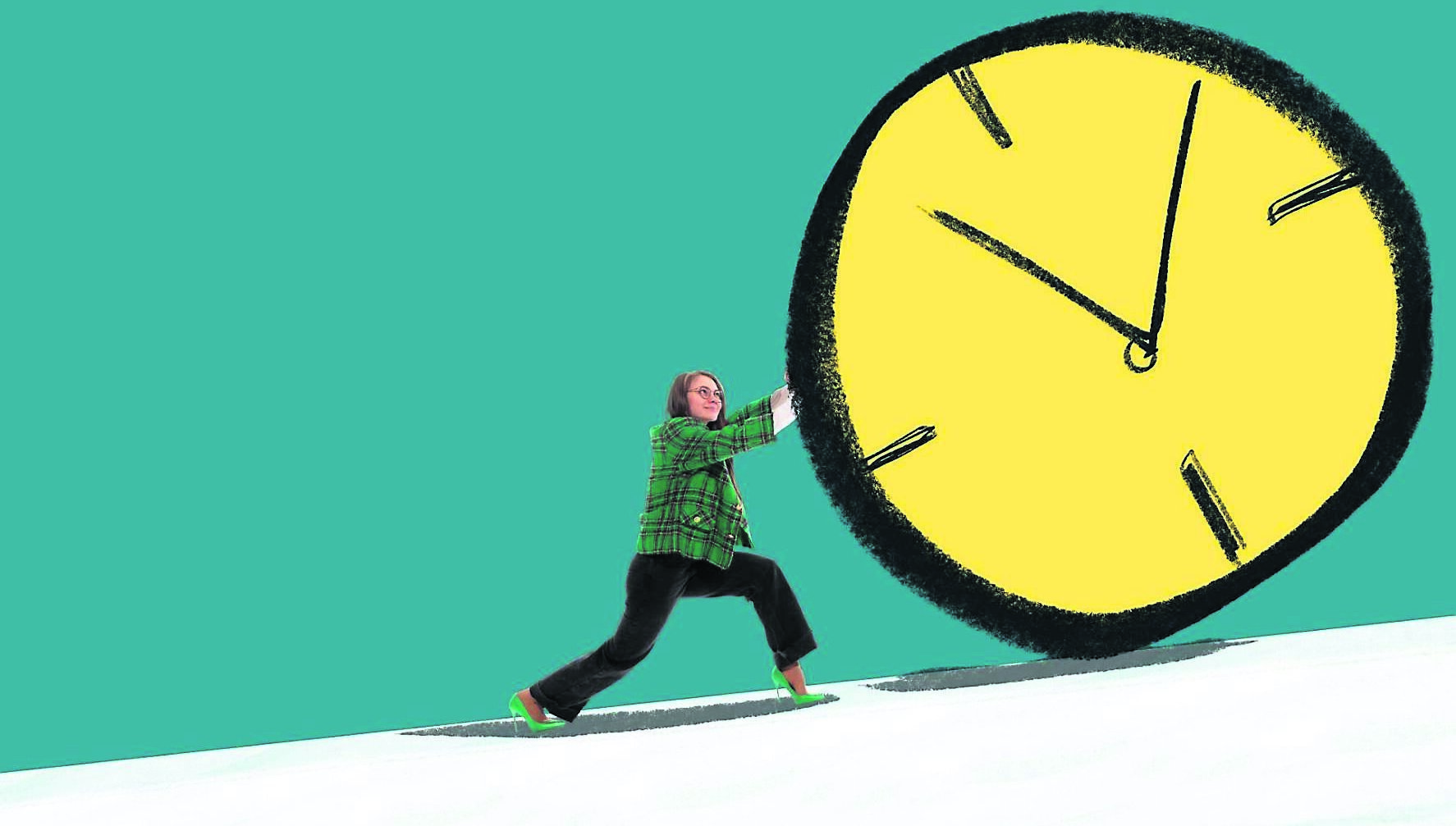
With the clocks going back this weekend and daylight hours fast diminishing, you may notice your mood and energy levels starting to dip. Could it be seasonal affective disorder or its close relative, the winter blues?
Whatever the cause, experts say there is much you can do to keep the gloom at bay. Picture: iStock 

Whatever the cause, experts say there is much you can do to keep the gloom at bay. Picture: iStock 

You start noticing it when autumn begins slipping into winter, around the time the clocks change, or even a bit later, when November winds blow the last leaves off the trees. A dip in your energy and brightness, some spark quenched. Tasks you’d usually accomplish easily become more of a trudge to get through. Often, you feel an unaccountable sadness, and you’re quicker to get irritated. You’re sleeping more, you’re craving carbs.

You wonder: could this be seasonal affective disorder (Sad)?

Sad is a recurrent episode of depression linked to the changing of the seasons, says Dr Amy Watchorn, senior clinical psychologist at St John of God University Hospital, Dublin. She explains that depending on where you are located in the world — how far from the equator — the prevalence of Sad is between one and 10%.

And 10 - 20% of the population will have sub-threshold symptoms — the winter blues.
Dr Amy Watchorn: Distance from the equator increases prevalence of Sad.

“For every five degrees further from the equator, prevalence of Sad increases by about one percent so by the time you get to Finland, nine per cent of the population will suffer it — in Ireland, it’s between two and six per cent.”

At this time of year, Monica Jackman, an IACP-accredited counsellor based in Waterford, often hears clients express a dread of the upcoming seasonal change. “As winter approaches, people do fear it. Some think they have Sad, and they don’t — they might have the winter blues.”

Psychiatrist Dr Norman Rosenthal was the first to describe Sad in 1984. Speaking to the Irish Examiner from Washington DC, he says that as days become shorter and darker in autumn and winter, people vulnerable to Sad develop a predictable set of symptoms.

“Physical slowing down, a tendency to overeat — especially carbohydrates — and to oversleep, to have difficulty thinking and functioning properly at work and at home, and a depressed mood. On the other side of winter, as days get brighter and longer, [symptoms] begin to fade.

“And for every person with full-blown Sad, there are at least two or three who have sub-threshold Sad, also known as the winter blues. They have the same kinds of symptoms as people with Sad, but milder, less disabling.”

He describes his first episode of sub-threshold Sad after arriving in New York from South Africa in summer 1976.
“The days were long, and I felt exceptionally happy. As the days shortened, I began to slow down, feel less energetic and enthusiastic. When spring came, those feelings went away — I was fine. In retrospect, that was my first episode of winter blues.”

Watchorn — who includes loss of interest in things normally enjoyed in the cluster of symptoms — says the degree of severity is what indicates whether you have clinical Sad or winter blues.

“It’s about how much the symptoms are affecting your function. If you’re struggling to get through the day beyond ‘I’m just a little bit down because of the weather’, if you’re not bouncing back, that indicates something more severe.”

Cavan-based psychiatrist Dr Rachael Cullivan adds: “If you’re low all day every day for 10 days to two weeks and nothing feels quite the same — you don’t get the same buzz, things have lost their sparkle and richness — and you feel despair, start feeling worthless, guilty, that’s a long way from wanting to sit by the fire with a mug of cocoa and not wanting to go out.”

Dr Rachael Cullivan: Reduced light can lead to a low mood.

Short of sunlight

What triggers Sad — and the winter blues — seems to be the reduction in sunlight resulting from the shorter days. This impacts melatonin — the sleep hormone secreted by the pineal gland in response to darkness. “Part of our visual cortex is stimulated by light itself — on a bright day, melatonin gets suppressed and you feel more energised,” explains Cullivan.

“But when the brain doesn’t get the same amount of light, melatonin isn’t suppressed as usual, so you feel more tired, more lethargic, less energetic, more like sleeping.”

Cullivan says another element involves the effect of reduced light on serotonin, a neurotransmitter often described as a mood-booster. Reduced light exposure may increase its clearance, which is thought to contribute to low mood.

Watchorn also points to the impact on our circadian rhythm, our sleep cycle.

“In winter, there’s far less sunlight, days are typically more overcast, and when it is sunny, we’re inside working or at school. So we’re not getting access to the available sunlight,” she says, explaining how sleep onset is delayed in winter.

“The amount of time that melatonin is released in our bodies is extended so we end up sleeping for longer, which means the time we fall asleep the next night is delayed.”

Cullivan reflects on what life was like for our ancestors who could not light their houses or streets. “In the pre-electricity [era], less daylight meant you couldn’t be as active — it limited the amount you could do. And in the lean winter months, there wasn’t as much easily available food, making it [beneficial] to slow down and sleep more.”

Looked at from this perspective, Cullivan says it is not abnormal to want to slow down — but rather a good adaptation. “The seasonal change in our behaviour is appropriate from an evolutionary point of view. But feeling depressed in winter isn’t — in that case, you should always go to your GP.”

Who is most at risk for Sad?

“Women are definitely more vulnerable — they’re typically more vulnerable to depression in general,” says Watchorn, citing also younger people — adolescents and those in their 20s — and anyone with a family history of depression or mood disorders.

Sad is diagnosed by considering the symptoms and whether they follow a seasonal pattern, says Watchorn.

“Presenting with depressive episodes over the winter months, where it’s only happening in winter, and the pattern has been there two years, would be evidence of Sad as opposed to [general] depression.”

Recommended treatments can vary between individuals, from antidepressant SSRIs targeting serotonin, to cognitive behavioural therapy (CBT) and light therapy, both of which, Watchorn says, treat Sad quite effectively. She points to a study that looked at CBT delivered twice weekly for six weeks, which encouraged participants to schedule pleasant activities, increase activity levels by getting outside to exercise and to look at their thoughts about weather, light, and the season with a view to finding alternative positive ways of looking at them.

“A follow-up study after they’d completed the programme showed they were still benefitting a year later.”

With light therapy, Watchorn says, when correct protocols are followed, 50% of Sad patients see significant improvement.

“But the light box must be 10,000 lux, and you must sit in front of it, facing the light, for 20-60 minutes every morning — no getting up or down.”

Beating the winter blues

While never suffering from Sad, Jackman experiences the winter blues.

“That feeling of the shorter days, it getting dark earlier, I don’t like that. I like getting out in nature, I love the beach, the woods. With the dark evenings, I find myself getting a little anxious — will I be able to get outdoors?

“I find I have to be a bit more intentional about looking after myself — dressing up warmly and getting out earlier in the day for a walk, not waiting until dark when I mightn’t want to. At this time of year, we all need to make a conscious decision and effort to keep moving, stay connected, and make time for the things we enjoy.”

So what can we do to keep our mood up during winter? In her ‘Big 5’, Cullivan recommends:

  • Pay attention to sleep. Get into a routine, going to sleep and getting up at much the same time every day. Make it good quality by having a good bedtime routine — no eating too much near bedtime, no looking at screens for several hours before. Sleep in a darkened room without screens or distractions.
  • Eat a healthy, varied diet with all food groups and lots of fruit and vegetables. Cullivan says there’s “no hard and fast evidence” showing vitamin D prevents or impacts Sad, though with Irish people typically deficient in the vitamin, she recommends checking out exa.mn/HSE-vitamin-D.
  • Exercise daily — studies show it’s associated with better mood and improved quality of life. “Exercise also brings us outdoors, thereby maximising our daylight exposure.”

Studies of the Old Order Amish of Lancaster County, Pennsylvania — who spend more time outdoors and less time exposed to night-time electric light — show some of the lowest Sad rates recorded among Caucasian populations.

  • Social engagement — “social interaction benefits mental health. Some cultures have developed festivals of light to deal with [winter] blues,” says Cullivan, highlighting also the Danish cosiness concept of Hygge. “Allow yourself the forgiveness of cosying up and hibernating a little, that sense of it being OK to be inside, doing seasonally appropriate activities — but not in a way to get isolated — that will give you back a sense of joy.”
  • Practice daily relaxation or self-care. Find a way to let go of negative thoughts. Cullivan recommends keeping a mood diary.

“It’s good to monitor our mood — when we’re down, we can feel we always have been. Challenge this by keeping track, nothing complicated — a happy or sad emoji, a number rating — so you can look back and say, ‘Oh I was a three out of 10 last week, now I’m more of a six’.”

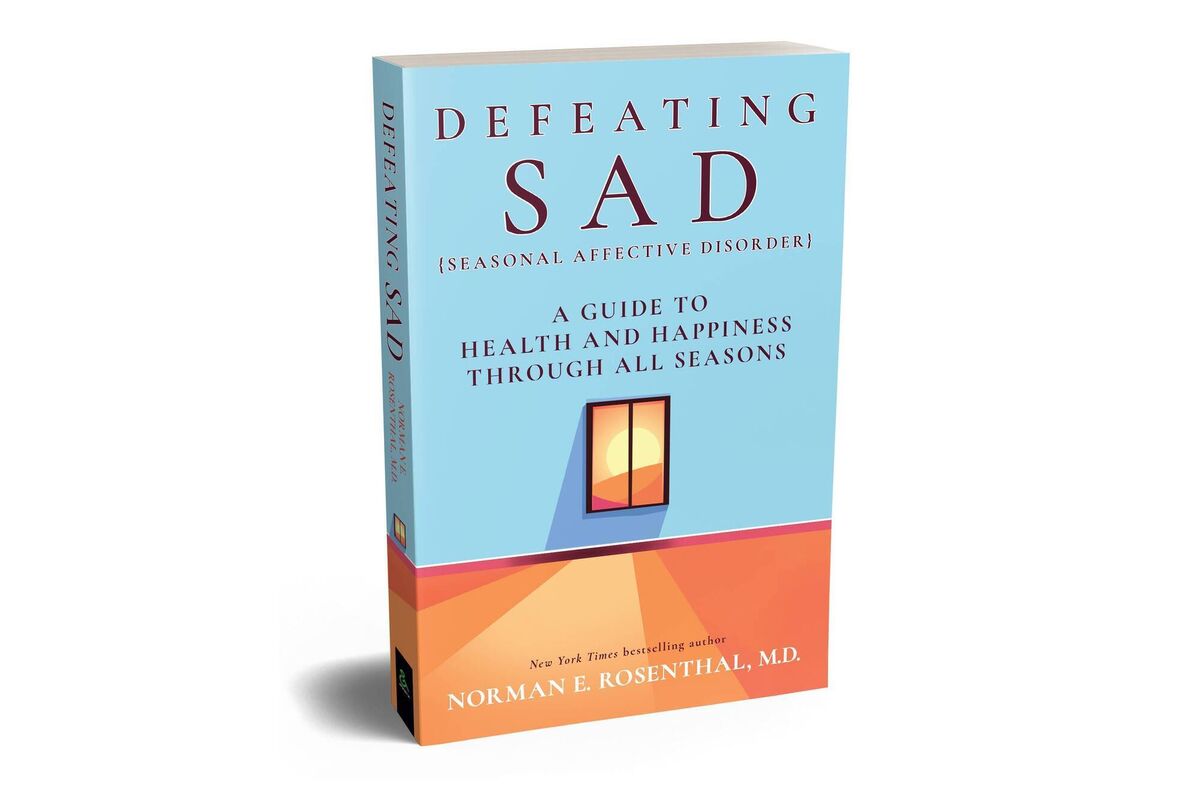
 Dr Norman Rosenthal wrote a book on overcoming SAD
Dr Norman Rosenthal wrote a book on overcoming SAD

Rosenthal, author of Defeating Sad, says the key to beating Sad is combining different approaches. “Light therapy reduces symptoms by 50%, adding exercise may raise that to 60% and adding CBT a further 20% to 80%. The sum of different approaches is usually better than any one approach alone.”

He strikes a comforting note: “There are so many things you can do to alleviate Sad — almost everyone can be greatly helped.”

Light therapies

Defeating SAD by Dr Norman Rosenthal

Dr Norman Rosenthal, author of Defeating SAD: A Guide to Health and Happiness Through All Seasons, says it is safe for most people to start light therapy with appropriate light boxes, used in the right way. (He recommends consulting an eye doctor if you have any eye-related problems.)

Among his recommendations for using bright light therapy are:

  • Try to get as much of your light therapy as early in the morning as possible.
  • Check in with yourself periodically to ensure you’re neither over- nor under-treating yourself – best done by tracking mood, energy and any side-effects.
  • Regard your chosen light box as only one of many ways to enhance your environmental light – for example, he suggests trimming back foliage around windows.
  • Resume light therapy promptly after returning from a sun holiday (in winter).

Rosenthal says it’s also worth considering dawn-simulators, describing them as “handy devices that deliver light at a predetermined time in a slowly incremental way that resembles [how] dawn breaks on a summer day”.

He says these enable people to wake up to gradually increasing light. “Besides improving mood, they help people wake up more easily on a winter’s day… for people with Sad, wake-up lights can provide a pleasant and seamless transition between the darkness of night and the brightness of day.”

More in this section

Lifestyle

Newsletter

Eat better, live well and stay inspired with the Irish Examiner’s food, health, entertainment, travel and lifestyle coverage. Delivered to your inbox every Friday morning.

Cookie Policy Privacy Policy Brand Safety FAQ Help Contact Us Terms and Conditions

© Examiner Echo Group Limited