How to reduce your risk of pancreatic cancer
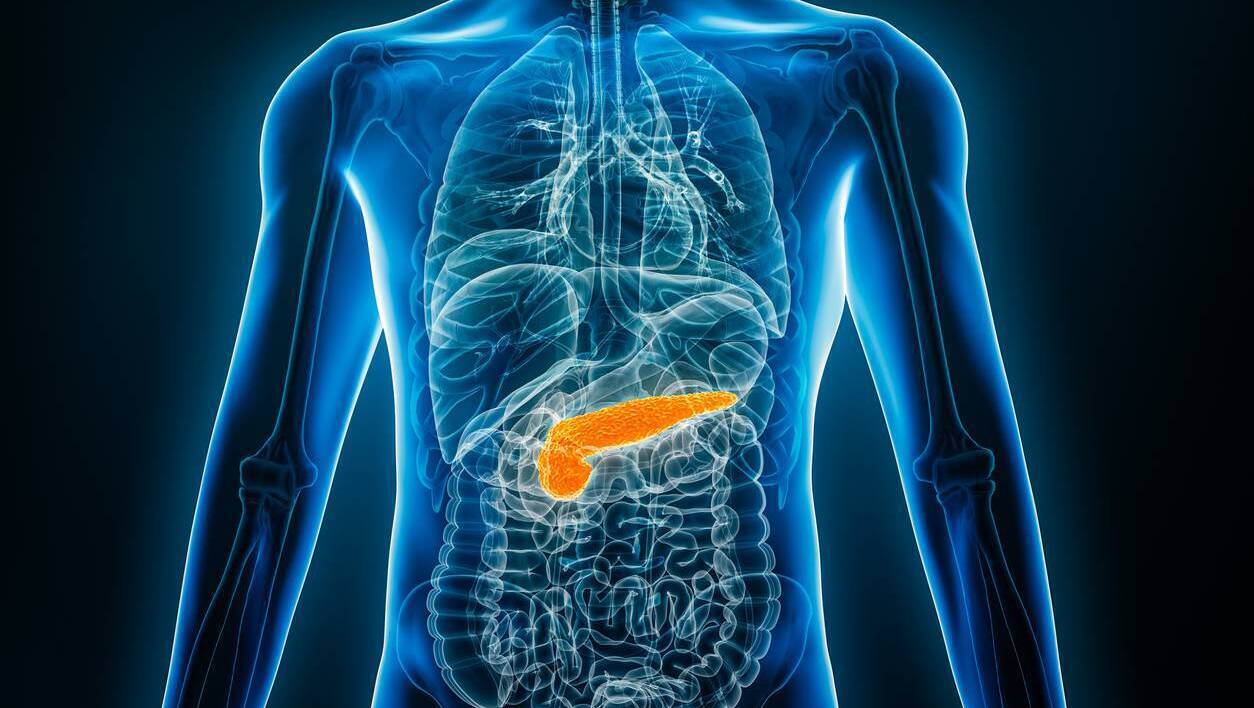
Treatment depends on the size and type of pancreatic cancer, where it is, if it has spread, and the patient’s general health. Picture: iStock
Pancreatic cancer is one of the deadliest forms of cancer, yet it remains a disease that is rarely talked about.
We spoke to Professor Giuseppe Kito Fusai, a consultant hepato-pancreato-biliary surgeon, who highlighted the key warning signs to look out for and the risk factors we can and can’t control.
Pancreatic cancer occurs when abnormal cells in the pancreas start to grow and divide in an uncontrolled way.
“The pancreas is one of the glands which sits on the back of our stomach, and pancreatic cancer is a malignant process,” says Fusai.
Around 95% of all pancreatic cancers are exocrine cancers.
“Pancreatic ductal adenocarcinoma is the most common type of pancreatic cancer, which affects the vast majority of patients,” says the surgeon.
“However, in a smaller number of patients, there are some rarer variants such as acinar cell carcinoma and adenosquamous carcinoma.”
Each year, around 670 people are diagnosed with pancreatic cancer in Ireland.
“Although pancreatic cancer is much less common than other types of cancers, such as breast cancer, it remains one of the most lethal types of cancer,” says Fusai.
The disease has a poor survival rate, with just 13% of patients surviving five years or more after initial diagnosis.
This is because most cases are diagnosed at an advanced stage, explains the surgeon.
“A big problem with pancreatic cancer is that it’s quite silent and is frequently detected and diagnosed very late when it has already spread to other organs,” says Fusai.
Pancreatic cancer is more common in older people.
“Pancreatic cancer is slightly more common in men than in women,” says Fusai.
The risk of pancreatic cancer is also increased in people who have a family history (first-degree relative) of pancreatic cancer, or have certain inherited gene changes such as the BRCA2 gene.
“Smoking remains one of the biggest and most important risk factors of pancreatic cancer,” says Fusai.
“Excessive alcohol consumption can affect the pancreas, cause inflammation and lead to chronic pancreatitis,” explains the surgeon.
Pancreatic cancer is more common in people with chronic pancreatitis.
“Obesity and being overweight are other risk factors of pancreatic cancer,” says Fusai.
“Diabetes is also considered a potential risk factor,” says Fusai.
The surgeon advises people not to underestimate or ignore non-specific symptoms.
“Some of the early symptoms that people with pancreatic cancer present with are often non-specific, such as vague abdominal pain, backache and weight loss — which are all symptoms that could be related to a number of other things,” says Fusai.
“So, it’s really important to investigate any symptoms that don’t resolve quickly.”
He adds that new-onset diabetes can also be an early warning sign of pancreatic cancer.
“Newly diagnosed diabetes should always prompt urgent investigations and a scan,” says Fusai.
The development of jaundice is also a red flag that requires medical attention.
“Yellow discolouration of the skin and the sclera (the whites of the eyes) and dark urine all suggest that there is a blockage of the bile duct. This is the duct which drains the bile from the liver into the intestine, and a growth from the pancreas can block this and cause jaundice,” explains Fusai.

“The gold standard test for pancreatic cancer is a contrast-enhanced CT scan, which will clearly show a mass in the pancreas. But if further confirmation is needed, a biopsy might be conducted,” says Fusai.
“The other tests that might be conducted to diagnose pancreatic cancer are a liver MRI or an FDG PET scan.”
The treatment depends on the size and type of pancreatic cancer, where it is, if it has spread and a patient’s general health.
If the pancreatic cancer is found early and has not spread, surgery might be an option to remove it.
“When the cancer is still operable, which happens in approximately 15% of newly diagnosed patients, often the recommendation is to go ahead with surgery and do a radical resection,” says Fusai.
The specific type of surgery depends on where the tumour is located within the pancreas.
“If the tumour is in the head of the pancreas, we will do a Whipple procedure, which is a pretty extensive and complex operation,” says Fusai.
Treatments such as chemotherapy or radiotherapy might be offered to try to control the cancer and help patients live longer if surgery isn’t an option.

CONNECT WITH US TODAY



Be the first to know the latest news and updates