I spent 48 hours at a €2,000 longevity retreat — now I feel empowered in my body

Nicole Glennon takes us inside one of Ireland's first longevity retreats
Nicole Glennon: I happily answer “yes” to an invite in my inbox — to attend Ireland’s first medically-led longevity retreat.
Nicole Glennon: I happily answer “yes” to an invite in my inbox — to attend Ireland’s first medically-led longevity retreat.
The first thing I do every morning is check how well I slept. How many hours. What my sleep debt is. My recovery score.

I am, in other words, exactly the sort of person the booming longevity industry is aimed at.

From beauty to fitness, health and wellbeing, it feels like longevity is the word of the moment.

Defined by Merriam-Webster as a long duration of individual life, in today’s parlance, it often refers to our attempts to live well for longer.

Once, living well probably meant some vegetables, some movement, some sleep, and some sun. (I vividly remember my doctor advising my mother to take me on a sun holiday to help with my poor immune system and burgeoning pre-teen acne.) Today, that doesn’t feel like enough. We want to optimise.

Our watches and rings track our sleep, cardio, and menstrual cycles; we have cold plunges and saunas in our gyms; there are red-light masks and IV drips in our beauty salons.

Two boxes of supplements have a permanent place on my work desk, a collagen-protein mix is spooned into my overnight oats daily, and my workout routine is a carefully curated mix of cardio and weights, all tracked on a wearable device, which gives me an estimated “healthspan age” at the end of each week. That number is, allegedly, a relative measure of my body’s overall health status in line with my chronological age, and I’ve become a little obsessed with ensuring it only ever goes down.

You might assume this makes me the sort of person who spends her holiday fund on Hyrox competitions and marathons abroad. I can assure you I am not. I don’t even consider myself particularly healthy.

But as I approach 30, I have found myself increasingly seduced by the promise at the centre of the longevity movement.

After all, who doesn’t want to swerve sickness, ailments, aches, and pains for as long as possible?

It’s in this context I happily answer “yes” to an invite in my inbox — to attend Ireland’s first medically-led longevity retreat.

The 48-hour retreat is an invitation-only event, offering a select group of journalists, influencers and pharmacists a chance to experience what the Dublin-based South William Clinic will soon be offering to the general public, at a cost of €2,000pp (or €1,500 for couples sharing a room). Here’s what happened.

The health audit

My retreat begins with a consultation with general practitioner Dr Amanda Hong. In contrast to the usual 15-minute in-and-out doctor consultation, I am asked to tell the story of my health all the way back to my earliest memories.

I talk about stomach issues, eczema flare-ups, and acne breakouts that have shown up at various points in life, generally at their worst in times of chronic stress. I talk about longstanding allergies and moderate to severe allergic reactions that appeared relatively suddenly two years ago.

“When we talk about longevity and wellness, it’s not about living longer, it’s about living better for longer,” Dr Hong says. “When we talk about autoimmune issues, a lot of people might think about lupus or hospitalisation. But amongst all of us, whether it’s stress, whether it’s sleep, the food that we eat, there are lots of nuances in our daily life that we just learn to cope with, which we actually don’t have to.”

The idea, she explains, is to become more aware of the triggers that might be affecting us.

The consultation is just the beginning of an extensive health audit.

My blood is tested across a broad range of markers, including iron, cardiovascular, diabetes, kidney, metabolic, liver, bone, thyroid, pituitary, adrenal, and hormonal health. Cortisol and testosterone are also tested, alongside other markers intended to build up a more detailed picture of my overall health.

My blood is also tested for food sensitivities. An allergy test is available too, but because I had recently undergone allergy testing with an allergist, we leave that out.

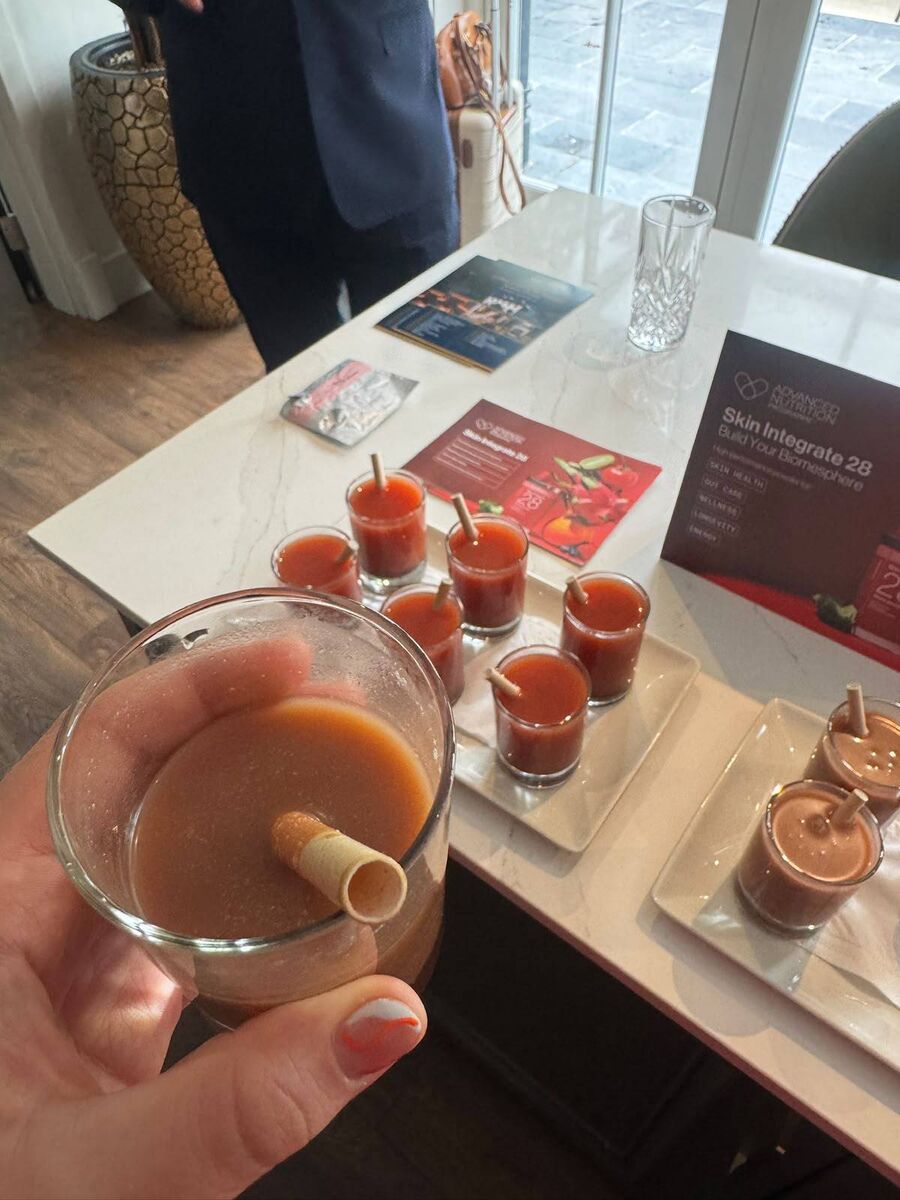
A few days later, I arrive at the luxurious private accommodation at Killashee and am greeted with a shot — a gut shot, naturally — and then more tests. An InBody assessment to measure body fat and muscle percentages (I really wish someone had told me to arrive fasted for that one … ) and an Oligo scan, designed to assess minerals and heavy metals.

The wellness playground

Over the next 48 hours, we are given full access to test and trial a range of treatments and technologies promising everything from muscle building and body sculpting to stress reduction and lymphatic drainage.

There are hyperbaric oxygen chambers, ice-cold plunge pools, saunas, and a suite of devices from BTL Industries.

There is EmFace, a facial treatment using radiofrequency and electromagnetic energy to target facial muscles. EmSculpt, designed to build muscle and reduce fat. EmSella, which uses electromagnetic stimulation to exercise the pelvic-floor muscles.

ExoMind, which uses transcranial magnetic stimulation to deliver electromagnetic pulses to an area of the brain and is marketed as a treatment that can help with brain fog, stress tolerance, and mood regulation. BTL Lymphastim, a pneumatic compression system that creates a sensation similar to manual lymphatic drainage. I wasn’t brave enough to try everything — hearing someone say they felt “brain zaps” after ExoMind was enough to have me heading in the opposite direction — but I do try EmSculpt, which is certainly an easier way to spend 20 minutes than reformer pilates, and lymphastim, which feels like a very elaborate, high-tech massage.

There is also the offer of a custom facial involving radiofrequency, exfoliation and a hydrating serum. It does wonders for my suitably stressed post-hen-weekend skin.

But, for all the expensive equipment and cutting-edge treatments, the medics were surprisingly honest about the fact that in longevity, the boring fundamentals — movement, nutrition, sleep, stress management, sunlight (for vitamin D and circadian rhythm regulation), and human connection — are by far the most important.

Dr Sarah-Jane Khong, who tells us about her time working with highly stressed, overworked CEOs in Malaysia, says people often come to her looking for a “magic wand”.

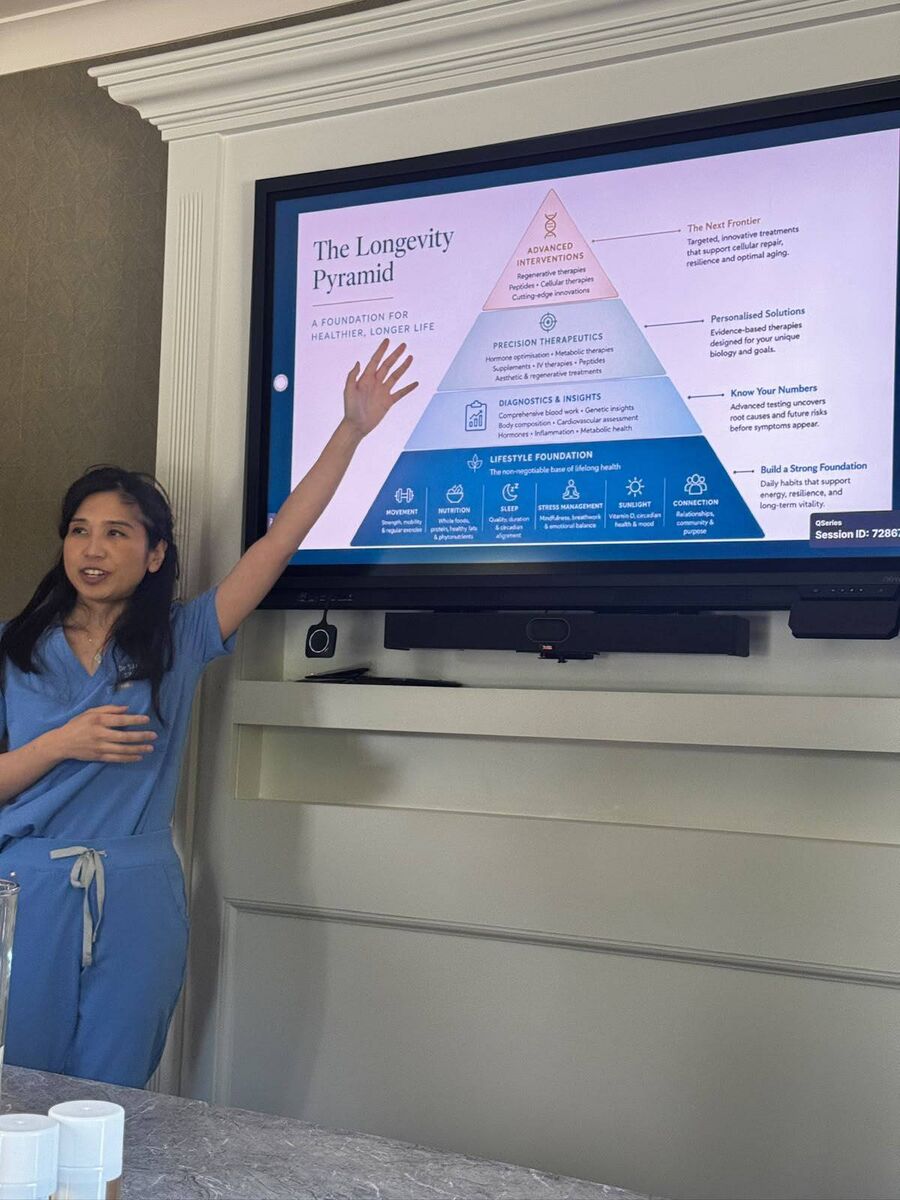
Dr. Sarah-Jane Khong explains the longevity pyramid at South William Clinic's retreat

But no amount of money can undo the effects of a highly-stressed life in which good nutrition, sleep, and time with other people have fallen by the wayside.

She talks us through “the longevity pyramid”, which starts with those boring basics before moving up to diagnostics — comprehensive blood work, cardiovascular assessments, and body composition information that can potentially uncover risks before symptoms appear. Then come “precision therapeutics”, supplements, metabolic interventions, aesthetics, and regenerative treatments.

At the very top are the cutting-edge innovations being tested by people such as Bryan Johnson, the current poster boy for the longevity movement. (His recent diagnosis of autoimmune gastritis serves as a useful reminder that no amount of rigorous biohacking can guarantee us a pass from illness.)

We talk through some of the clinic’s case studies, looking at what issues were identified during testing and which interventions were subsequently advised and carried out.

That evening, the importance of the basics comes up again during a fascinating private talk with neuroscientist and resilience specialist Dr Brian Penne. Headlined “The powerful tools we forget to use”, the talk focuses on mental wellbeing, mindful breathing and the benefits of cardio. The night ends with a delicious meal, and a glass of wine — but just the one.

So, are you well?

Day two starts with Hatha yoga outside on the grass, where we are encouraged to take off our socks and ground into the earth. Half the group are brave enough to continue the morning with an icy cold plunge. I opt for the considerably lazier option of the hyperbaric oxygen chamber. I last about 20 minutes before the pressure in my ears and the tingling become a bit much.

Then comes the moment I’ve been waiting for. Dr Khong welcomes me into a private room with my folder of test results. The blood tests, carried out with Randox Health, contain a number of markers highlighted in scary red text, alongside some mad-looking numbers. One of the most shocking results for me is how high my allergy marker remains, despite the fact that my allergist has me on an intensive antihistamine regime. Given how symptomatic I still am, it actually felt empowering to have information I could bring to my next appointment — tangible data to back up the feeling that our current approach wasn’t working.

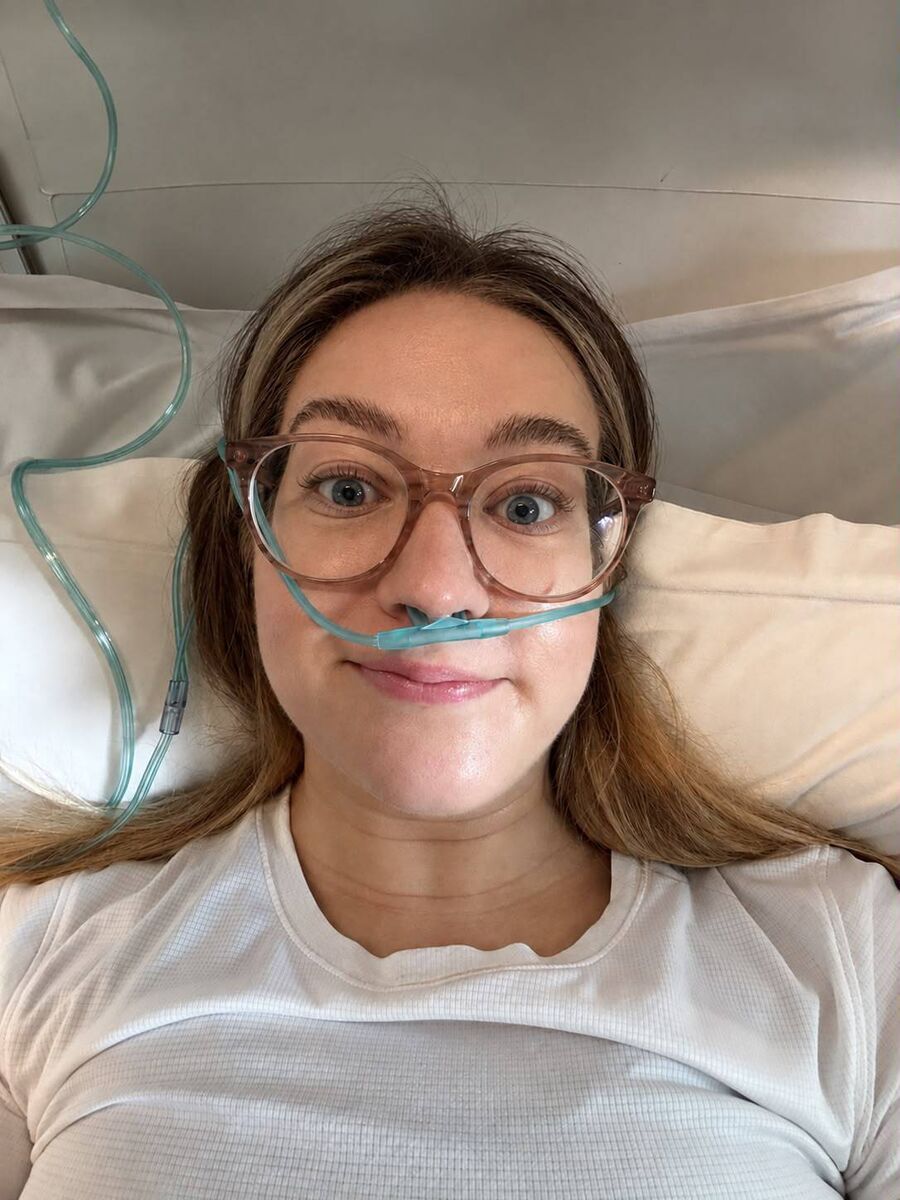
Nicole Glennon inside the hyperbaric chamber

My food sensitivity results give me something else to work with. Twenty-five foods are “elevated”, including some I already suspected. The advice is to eliminate them for a controlled period, gradually reintroduce them, and monitor symptoms.

Overall, I am not shocked or surprised by most of my results — perhaps because I’ve had so many tests done recently while trying to get to the bottom of some ongoing health issues, though one result does initially concern me. One hormonal health marker appears very low for a woman my age. In that moment, I am grateful I am with a doctor who has further context about me to interpret the results. In my case, Dr Khong explains it is likely related to the contraceptive pill I take, and suggests I explore alternative options with my GP. I explain we settled on this particular pill partly because I have long struggled with acne, and I am hesitant to switch, fearful that my skin will suffer.

And therein lies the somewhat uncomfortable truth at the heart of today’s longevity movement. Aesthetics are part and parcel. I don’t want to change my contraceptive pill – despite worrying about how it is affecting one of my health markers – because I don’t want to deal with the aesthetic impact my skin might suffer.

The aesthetics of ageing

The retreat is run by South William Clinic, which started as a beauty salon before evolving into aesthetics and now, longevity. That evolution underscores just how intrinsic aesthetics is to the longevity movement. We don’t just want to age well — we want to look good. We want our muscles toned, our faces snatched, our waists cinched, our skin smooth. It is a slightly uncomfortable truth that longevity has become as much about how we appear to others on our Strava feeds and on Instagram as it is about the reality of our health.

Brendan Molloy, the clinic’s founder and CEO, describes the move into longevity as “a natural evolution”.

“Our clients have always come to us because they want to look and feel their best, and over time that conversation has become much broader,” he says.

“It’s no longer simply about treating a line, improving skin, or changing something aesthetically; people are increasingly interested in their energy, sleep, nutrition, metabolic health, stress, hormones, and how they can remain healthier and more active as they age.”

Nicole has a Skin Integrate supplement smoothie at the retreat

Looking well is, he says, is an important part of ageing well. “I don’t see aesthetics and longevity as two separate conversations.”

Leaving the retreat, armed with my folder of data, I feel empowered. For a long time, I have felt powerless when it comes to my body, particularly over the past two years as I’ve dealt with issues for which I am still trying to identify an underlying cause and effective treatment plan. While I didn’t get one concrete answer, I now have more information — and I feel I have been given something that can be surprisingly hard to find within our healthcare system: a medical professional with the space and time to really listen.

  • South William Clinic’s next longevity retreat takes place on October 24-25 in Killashee.

More in this section

Lifestyle

Newsletter

Eat better, live well and stay inspired with the Irish Examiner’s food, health, entertainment, travel and lifestyle coverage. Delivered to your inbox every Friday morning.

Cookie Policy Privacy Policy Brand Safety FAQ Help Contact Us Terms and Conditions

© Examiner Echo Group Limited