Rethinking the power of hormones: 'Women deserve the information needed to choose'
Dr Louise Newson is a leading authority on women’s health. In her new book, she argues that we are still not giving enough attention to the profound impact hormones can have on our daily lives
Rethinking the power of hormones: 'Women deserve the information needed to choose'

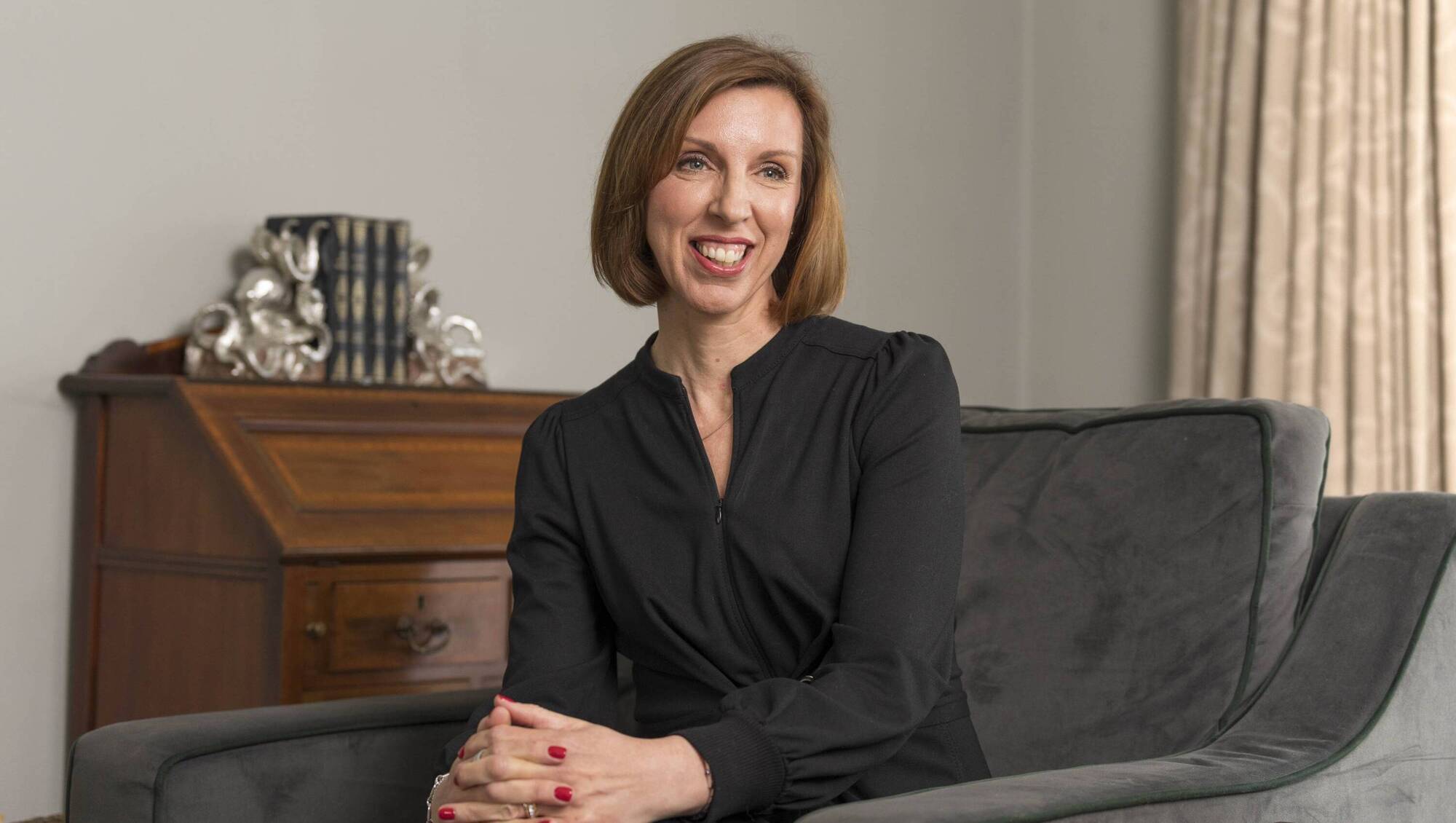
Dr Louise Newson. Picture: Andrew Crowley

If you're a woman aged 40 or older, chances are you’ve heard of Dr Louise Newson. The British-based GP has long been an outspoken advocate for women’s health, particularly menopause care, focusing on the topic long before it became mainstream.


Having spent 18 years working as a GP and medical writer, she opened the first of several private menopause clinics in 2018, launched a podcast in 2019 and then Balance, a free menopause app in 2020, and in 2021 was a leading voice on landmark documentary Davina McCall: Sex, Myths, and the Menopause, which transformed the national conversation around menopause in Britain. Around the same time, a similar discourse around menopause kicked off in Ireland when Sallyanne Brady, co-founder of The Irish Menopause support group, emailed Liveline about her traumatic experience of menopause.

It hasn’t all been plain sailing. In 2023, the British Menopause Society (BMS) removed Dr Newson from its online menopause specialist register, stating the move was “as a result of concerns that aspects of her practice did not accord with established guidance”.

A Panorama documentary followed in 2024, raising concerns that Newson’s clinics were prescribing too-high doses of HRT. However, earlier this year, the British health regulator’s report rated Newson’s clinics as “outstanding” and found the service was “committed to supporting women with care that met their needs”.

With regard to the BMS, Newson now says: “They are a charity. They’re not a regulatory body, and they’ve behaved like a regulatory body... It’s increased confusion about who I am and also what hormones are.”

Her latest book, The Power of Hormones, is a guide to all things endocrine. In it, she outlines how hormones affect far more than fertility and periods, influencing almost every system in the body, including mood, brain function, heart health, bones, sleep, and energy levels.

Early on, she dispels the myth that oestrogen, progesterone, and testosterone are sex hormones and are gender-specific. All three are needed by men and women, she writes, and their receptors are not confined to the reproductive organs but are distributed throughout the body, meaning these three hormones influence many aspects of health.

While many women find they can access oestrogen and progesterone quite easily, often if they need a dose change or testosterone, she says they can “become stuck” if their practitioner doesn’t have the knowledge to help them.

Getting the balance of HRT right during perimenopause can be challenging due to the significant hormonal fluctuations during this stage. “And that’s where it’s really important that women don’t just give up,” she says.

Testosterone is a case in point. The triangle of hormones that is oestrogen, progesterone, and testosterone “work closely together”, she says, and from her clinical experience “it’s a balance of those three hormones that’s key”.

Dr Louise Newson says getting a balance of all of your major hormones is important

She can prescribe a patient oestrogen and progesterone “but if someone’s symptoms are due to testosterone deficiency, then they’re not going to improve”.

Every cell, organ, and system needs testosterone to function properly, Newson writes.

Testosterone treatment for women is a polarising topic. Endocrinologist professor Susan Davis, a world leader in testosterone research, has conducted large clinical trials around testosterone in post-menopausal women and found no benefits on mood, wellbeing, or depressive symptoms. There is, however, extensive anecdotal evidence that it helps with these symptoms, which is often attributed to the placebo effect. Newson thinks “it’s very degrading to women to say that it’s all in our heads and it’s placebo”.

We don’t always need a randomised controlled study in medicine, she argues, explaining that testosterone is a biologically active hormone that’s long been known to help with wellbeing, mood, muscle strength, and bone repair. “We’ve got lots of data from men’s studies about how beneficial testosterone is for future health. And a lot of the drugs that we prescribe, like statins, blood pressure drugs, use data from men. But somehow, when we’re trying to extrapolate that data about testosterone in men and equate it to [its therapeutic use in] women, everyone’s going, ‘No, you can’t do that’,” she says, pointing out that “it’s the same hormone,they’re the same cells”.

Her own clinics have collated extensive data from “nearly 2,000” patients showing “the incidence of side effects is vanishingly low”. What she does see, “time and time again” are the benefits for women. Testosterone helps rebuild cells, improves the connections between the neurons, rebuilds the myelin sheath.

Freedom of choice

Newson does not believe in giving everyone hormones. Her goal is “giving information so people can choose” and is “adamant that women should be allowed to choose” to try hormones if they wish to “because they’re being silenced all the time”.

She also favours a holistic approach but points out that if hormones are deficient, all the lifestyle changes in the world won’t fix the issue: “You wouldn’t say to someone with an underactive thyroid gland, ‘Don’t bother taking thyroxine, just try and lose some weight and exercise more, and don’t worry that you’re feeling so tired.’”

Newson has been on HRT for about 11 years. She says: “If I weren’t taking it, I would not be working. My brain completely went [during perimenopause] and I was finding it very difficult to do yoga because I was getting a lot of joint pain and stiffness. Also, I couldn’t remember anything. I found it difficult to function at work. And I probably wouldn’t be happily married either because I was finding my relationship with my husband quite difficult.”

She also takes DHEA, known as prasterone, as a preventative for UTIs. “I’ve had a lot of urinary tract infections, which is quite ironic because I’m married to a urologist. I thought he’d be able to sort me out but clearly not,” she says, adding that two of her daughters also use DHEA for their recurrent UTIs.

She explains that DHEA “is a lot more effective than vaginal hormones” because the tissues of the vagina, vulva, urethra, and bladder contain “as many testosterone receptors as oestrogen receptors”. As DHEA converts in the body into both oestrogen and testosterone, it can act on both sets of receptors rather than just one. “About a third of sepsis is due to UTIs,” she says.

She found that patients who had bladder pain syndrome or interstitial cystitis and were “really disabled with their pain and their discomfort” had a significant improvement in symptoms “within months” when prescribed vaginal DHEA. Her experience is that it also frequently “melts away” lichen sclerosis, a chronic, incurable, inflammatory condition of the skin in the vulval area, which, if left untreated, has a small but significant risk of cancer.

UTIs are often also a side effect of the contraceptive pill. While HRT contains bio-identical hormones, the contraceptive pill is, almost without exception, made from synthetic hormones. “And if you’re going to be worrying about any treatments that are called hormone treatments, we should be worrying about the synthetic hormonal treatments that are given out to so many women,” she says.

In the book, she writes about research that links oral contraceptives to an increased risk of suicide, alopecia, and autoimmune conditions, and side effects such as low libido, cystitis, and UTIs, and an altered pain response. She is not saying that no one should take oral contraceptives but “as doctors, we have responsibility for thinking about the potential risks and alternatives for those people who want alternatives”.

The Power of Hormones by Dr Louise Newson

  • ‘The Power of Hormones’ by Dr Louise Newson is published by Hodder & Stoughton

More in this section

Lifestyle

Newsletter

Eat better, live well and stay inspired with the Irish Examiner’s food, health, entertainment, travel and lifestyle coverage. Delivered to your inbox every Friday morning.

Cookie Policy Privacy Policy Brand Safety FAQ Help Contact Us Terms and Conditions

© Examiner Echo Group Limited