My post-baby anxiety hit me like a double decker bus
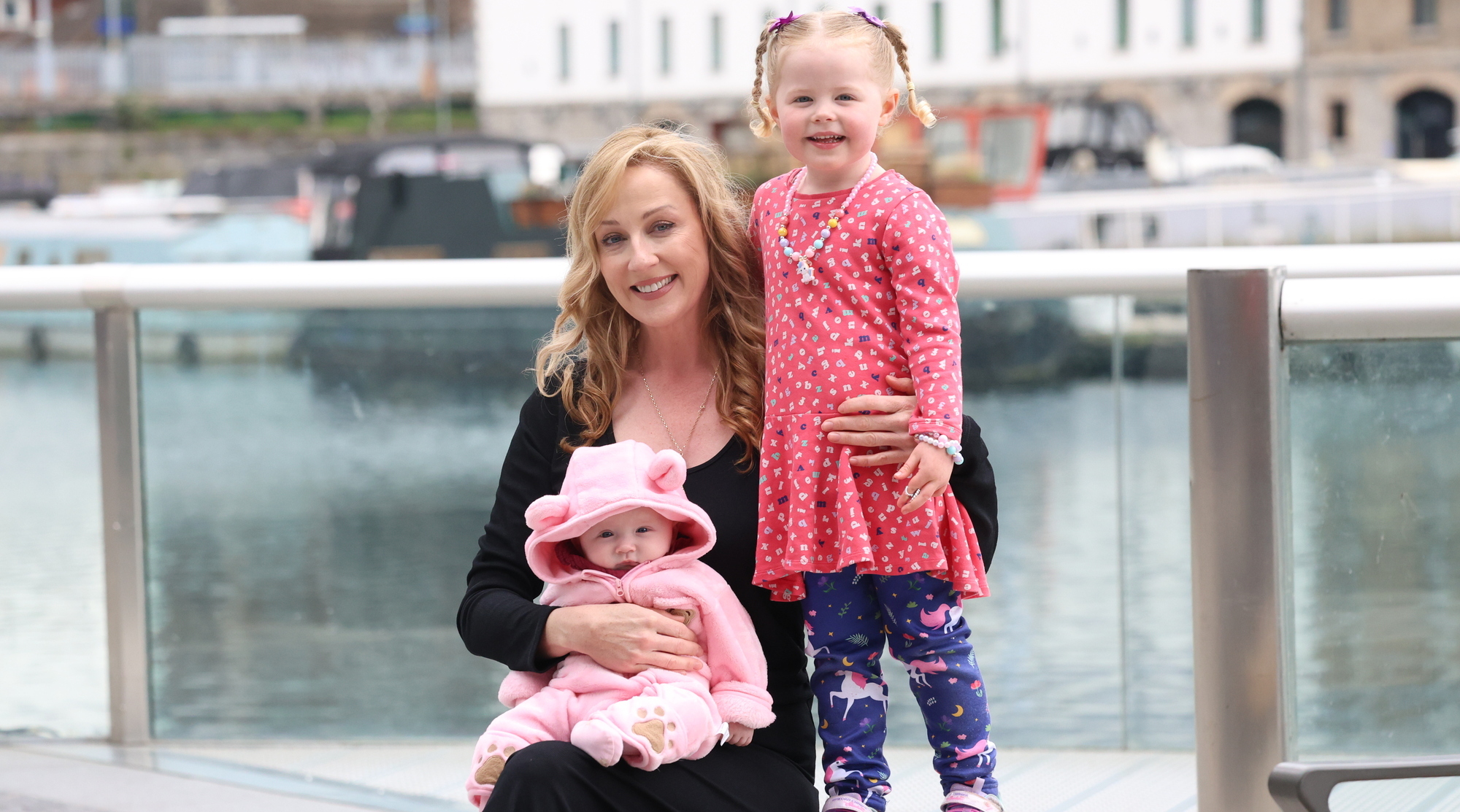
Julie O’Sullivan was enjoying the early days of motherhood when she suddenly began experiencing distressing, intrusive thoughts later linked by doctors to hormonal changes after childbirth
My post-baby anxiety hit me like a double decker bus

Julie O'Sullivan with children Olivia (4), Anna (4 months)pictured at grand canal dock Co Dublin. Picture: Stephen Collins/Collins Photos

After five years of trying to conceive, Julie O’Sullivan was delighted to be pregnant with her first child in 2021 and enjoyed a normal pregnancy, excited about the prospect of becoming a mother.

But less than two weeks after her daughter Olivia was born in April 2022, she “woke up a different person”.


“Out of nowhere, I suddenly became riddled with fear,” she says. “I felt sick to every cell in my body and had no idea why. I couldn’t sleep, even when the baby was asleep, and I remember describing it to a friend as being hit by a double-decker bus every 10 seconds. I was plagued by intrusive thoughts about not being a good enough mother and that social services would come and take my baby. I also had suicidal thoughts. It was absolutely horrendous.”

Her symptoms were all the more surprising given that all was going well with her newborn. “I wasn’t thinking anything negative, and then the next thing, my whole body went into convulsions, my teeth chattering, and I was sweating. I didn’t know what was happening. I thought I was going to die.”

She ended up in the emergency department at The Coombe Hospital and was later admitted with Olivia for nine days. She was diagnosed with postpartum anxiety, a name she says “does no justice to the reality of the condition”, which came “totally out of the blue” as she has no history of anxiety, depression, or any other mental health issues.

“I was told that it was physiological and down to my body’s reaction to post-baby hormones,” she says. “When I was in hospital, I was put under the care of a consultant psychiatrist who prescribed medication. It took almost three months before I felt better. This might not sound like a long time, but when you have a small baby, each day can feel like a year.

“I asked about therapy, but was told that there was no point because it was a physical illness — I didn’t know that hormones could mess with your head like that, but they do, and they made me very sick. I was on medication for the best part of a year before things settled back to normality.”

Originally from Galway, but living in Dublin, the 47-year-old was happy to put the whole ordeal behind her. But when she became pregnant again in 2025, she was concerned she might have a similar experience after the birth. However, doctors told her that, although there was no guarantee, it was unlikely.

When her second daughter, Anna, was born in January 2026, she was undoubtedly tired, but otherwise positive about both the delivery and her mental state. However, just like the first time, exactly 13 days after the birth, she began to experience the same “terrifying” symptoms as before, but this time they were a lot more intense.

“It just hit me out of the blue, and I bawled crying when I realised [what was happening],” she says.

I went straight to see my consultant psychiatrist at the Coombe and she confirmed that I had postpartum anxiety again.

O’Sullivan was put on medication again. “Thankfully, it has begun to work, because the symptoms were way worse this time than they were before. I was in a terrible state. I would be reading a story or singing to the girls and trying not to cry as these awful thoughts would come into my head.

“I got the help I needed, and I am doing well now — of course I’m exhausted and sleep deprived, but I’m taking joy in everyday things — going for walks with the baby or playing with her on the mat, having coffee with friends, doing nice things with the girls.”

The solo mom by choice, who is a senior corporate director at a global technology firm, says it is vital for people to speak out about their experiences so other women will know that they are not alone.

“There is so little awareness about this,” she says. “I said to my consultant that I would have loved to have spoken to someone else who was going through the same thing as me. There is loads of information online about postnatal depression, but [very little] about postpartum anxiety.”

Help from family and friends has been essential. “I had great support from my parents and my three brothers, two of whom live abroad; all came to spend time with me, which was fantastic. Also, my friends were amazing, calling me every day to check in on me and offer moral and practical support.”

Her advice to other women experiencing post-baby anxiety is to see their GP straight away.

“Don’t be fobbed off if they tell you that it’s just ‘baby blues’, trust your gut and if you have to, go to the hospital to seek help. Even if you are normally the most amazing, resilient person with the best coping strategies, with something like this, you absolutely need help.”

Common complication

Dr Chaitra Jairaj, consultant perinatal psychiatrist at The Coombe Hospital, says that perinatal mental disorders are the most common complications of pregnancy and childbirth, and yet they are often missed.

“When we talk about the perinatal period, we mean from pregnancy right through to the end of that first year after birth,” she says. “The most common issues we see are depression, anxiety, intrusive thoughts, and obsessive-compulsive disorder.

“There is a common misconception that mental health difficulties only begin postpartum, but they can emerge at any point during pregnancy. In fact, about a third of cases of postpartum depression actually begin in pregnancy itself.”

Anxiety is the most common issue seen in the period surrounding birth, yet it is often the most overlooked, says Jairaj. “Women and birthing partners often assume that being consumed by worry is just part of being a new parent. And yes, some degree of anxiety is to be expected, but anxiety disorders go well beyond that and can be utterly exhausting to live with.

“It is also worth distinguishing between perinatal mood and anxiety disorders — which are clinically significant and very treatable — and something like the ‘baby blues’, which are a transient emotional adjustment that most new mothers and birthing partners experience, and typically settles within the first two to three weeks postpartum.”

Jairaj says that the symptom profile of perinatal mental disorders is broader than people might think, which is partly why they are missed.

“The core symptoms of depression and anxiety — like low mood, anxiety, sleep disturbance, and reduced motivation and energy — remain consistent in perinatal and non-perinatal periods,” she says.

“Where perinatal depression differs is that it tends to come with more anxiety, irritability, physical symptoms, and intrusive thoughts, often about harm coming to the baby.

“People with perinatal anxiety often describe an unrelenting sense of dread and imminent threat, difficulty switching off, and physical tension. Many check their baby repeatedly to ensure they are breathing. Beyond the emotional toll, this is also deeply physically draining.”

Jairaj says it’s essential to raise awareness and normalise conversations about mental health difficulties during pregnancy and in the postpartum period.

“The World Health Organization estimates that one in five mothers and birthing partners will experience a mental disorder in the perinatal period,” she says. “That’s probably an underestimate, given how often these disorders go undetected.”

x

More in this section

Lifestyle

Newsletter

Eat better, live well and stay inspired with the Irish Examiner’s food, health, entertainment, travel and lifestyle coverage. Delivered to your inbox every Friday morning.

Cookie Policy Privacy Policy Brand Safety FAQ Help Contact Us Terms and Conditions

© Examiner Echo Group Limited