Fixed-price contracts: What is plan B for dairy?
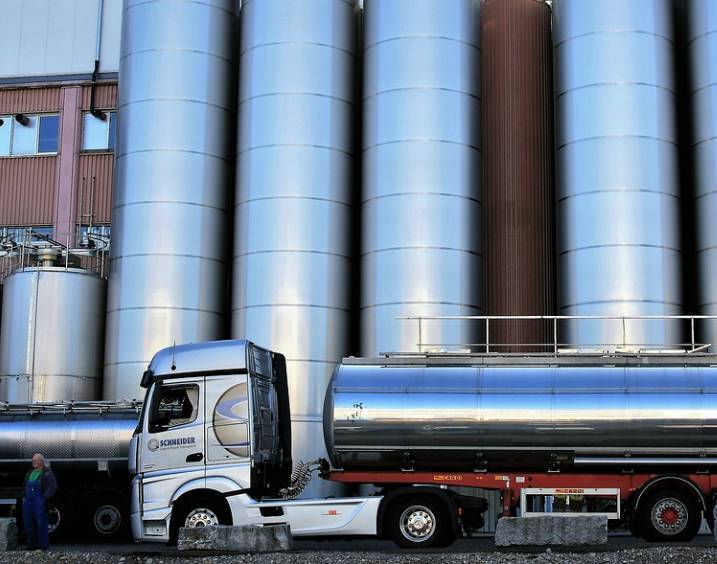
Dairy price volatility continues to be a challenge for the entire dairy supply chain.
Irish dairy farmers are living in unprecedented times, with both milk prices and input prices reaching all-time highs. While many in the industry agree that these high prices will persist in the short term (the next six months) few are willing to provide any concrete opinion on where prices may be in a year's time, let alone two to three years’ time.
This is both understandable and prudent given the current global economic and political environment. What is more certain is that prices will continue to be volatile and this will present a real risk to some farmers in particular.
Dairy price volatility continues to be a challenge for the entire dairy supply chain. Since its emergence more than a decade ago, the Irish industry has responded by launching a number of tools such as fixed-price forward milk contracts and milk flex.
Until recently, both were effective tools which allowed a certain cohort of farmers an opportunity to manage their risk.
However, the need for a larger and more robust suite of tools exists. In addition to volatility, the industry must also deal with the cyclical nature of dairy prices. It is estimated these cycles have in the past lasted about 40 months from trough to trough.
Should input costs follow a similar trajectory then, they most likely will be fine. However, as sometimes happens, milk prices tend to drop ahead of input costs.
In this scenario, most farmers would see their margins quickly evaporate and turn negative in some cases.
Should the base milk prices revert to their longer-run average of 33 to 35 cents the majority of dairy farmers would be facing negative margins.
In the absence of appropriate risk management tools, such a scenario could become a crisis for the industry.
The reality is that Irish dairy farmers have access to a very limited selection of risk-management tools. The EU Commission will point to the Basic Payment Scheme and a Crisis Reserve as their response to volatile farm incomes while placing any additional responsibility on national governments, who in turn have largely delegated responsibility to industry.
The result is we do not have margin insurance or other risk management tools such as “rainy day” deposit schemes to manage the risk associated with price volatility.
However, these unprecedented times have resulted in a set of circumstances which have meant that those who are currently in fixed-price contracts are now enduring greater rather than less income risk.
As a result, there has been a negative campaign by some aimed at removing these contracts.
While is clear that in their current form these contracts are not suitable when input costs rise in the manner recently witnessed, it is very short-sighted to dismiss their use entirely.
These are contracts, and with both parties' agreement can be redesigned for future use. For example, by using bands it may be possible to share the risk better in times of extreme prices.
Facilitating farmers to forward-purchase some of their inputs while using these contracts may be possible.
All stakeholders in the Irish dairy supply chain should now be thinking about how we find solutions that protect farmers and their industry.
The current price volatility and the recent experience of forward supply contracts mean that a relevant stakeholder group of the industry be convened as a matter of urgency to examine issues and recommend solutions.
A failure to do this will mean farmers will lose a key tool in protecting themselves in an increasingly volatile world price market.