Ireland's derogation extension provokes mixed reactions
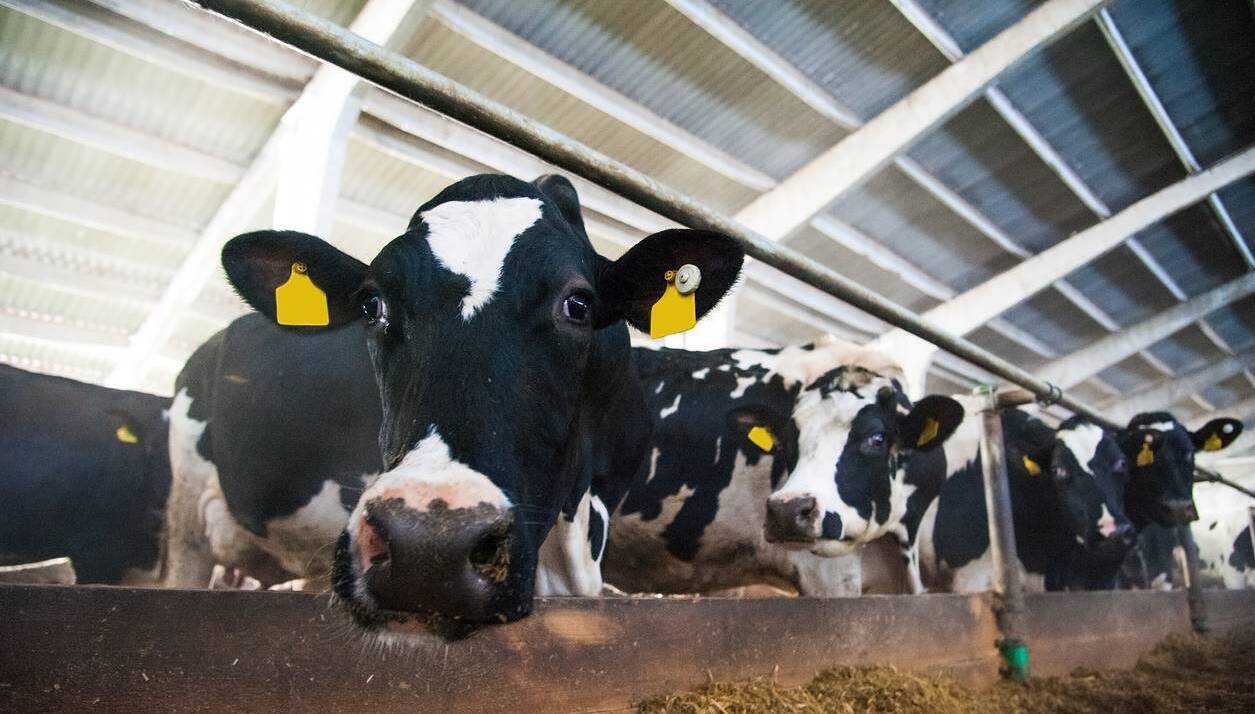
Although largely welcomed, the extension of the nitrates derogation has resulted in mixed reactions.
There have been mixed reactions surrounding the news of a nitrates derogation extension being granted by the Nitrates Committee.
IFA president Francie Gorman said the positive vote to extend the nitrates derogation for three years would be a relief to farmers, but a longer-term solution was needed.
“This outcome is not an ‘opt out’ from the nitrates directive as some like to portray it. Higher stocking rates are provided for under Annex 3 of the EU Nitrates Directive, and those who apply annually for permission to operate at higher stocking rates will have to implement many additional measures,” he said.
Mr Gorman went on to say the vote in favour of the extensions recognises Ireland’s grass-based system, and comes after a concerted campaign across the sector to convince the EU Commission that the relentless focus on water quality across the sector was bringing about improvements.
“I would like to acknowledge the commitment shown by the Government and the minister for agriculture to secure today’s outcome. I would also acknowledge the support of opposition politicians, the co-ops and other rural businesses. This was a national effort supported by those who realise the importance of farming to the rural economy,” he said.
Commenting from Brussels, IFA dairy chair Martin McElearney said the vote followed an extensive consultation process on the draft 6th Nitrates Action Programme, which proposes new measures aimed at advancing farmers’ ongoing efforts to enhance water quality. However, he cautioned challenges remained.
The president of ICMSA, Denis Drennan, welcomed the decision as a sensible and proper recognition of our unique grass-based system, as well as the economic and social importance of the family farm model that still applies in Ireland.
However, he said big challenges lie ahead, some of which will have to be dealt with by farmers and the industry, some by Government, and others by the EU.
“From a farmer's perspective, the very strong focus of farmers on improving water quality needs to be maintained and accelerated. Farmers have made huge strides and investments in this area over the last number of years, and this needs to be continued. ICMSA firmly believes that farmers will continue to play their part”, said Mr Drennan.
He said the government must ensure the requirements imposed by the Habitats Directive were fair and reasonable for farmers. He also warned farmers were not to be made the ‘fall guys’ for past failures of the Government in terms of the directive implementation.
Turning to what was required from the EU Commission, Mr Drennan said what he called ‘The Myth of Simplification’ that the EU had been trumpeting in recent years had to be discarded and a radical and real simplification and updating programme needed to be introduced as soon as possible.
“The decision today is welcome but the Government must now move to implement the other measures outlined so that we can meet the big challenges that already loom up in front of us as we continue to work to protect our unique environment and our family farm model,” he said.
Head of advocacy for An Taisce Dr Elaine McGoff called the decision in favour of the extension “shocking.”
“This derogation decision is actually shocking. Decisions like this are meant to be based on science, but the evidence clearly shows Ireland has a serious water pollution problem that isn’t getting any better, caused largely by agricultural nitrogen.
"Recent EPA data on water quality is unambiguous. We are going backwards. There are fewer waterbodies in good ecological status now than there were three years ago. Simply put, those with responsibility in Ireland have not been holding up their end of the bargain and just keep pushing out the day of reckoning,” she said.
An Taisce called the extension a bad day for Irish waterbodies, and for everyone who relied on clean quality water in Ireland.
An Taisce has consistently called on the European Commission to remove the derogation from Ireland, which is now the only European state relying on a derogation.
“I think it’s valid to question if this decision is even good for derogation farmers who, in three years time, will once again find themselves on this economic cliff edge, wholly dependent on the European Commission granting Ireland a derogation.
"This is a very risky business model, particularly given the current state of our water quality in Ireland. In their derogation decision, the European Commission seem to be very clearly indicating that this derogation is on borrowed time.”
Ms McGoff has called on the Government to take the next three years to put together a plan to transition farmers away from their reliance on a derogation.
ICOS president Edward Carr welcomes the news of the extensions, saying it “is vital for both generational renewal and Ireland’s family farm model”.
Mr Carr added: “The derogation isn’t a licence to breach rules, it’s actually quite the opposite, in fact, with additional compliance and requirements. A derogation is granted under the Nitrates Directive specifically to countries with outdoor grazing systems and long growing seasons. It is in recognition of the positive environmental and welfare status of our grass-based production model.”
ICOS remains wary of how farmers are going to have to comply with the Habitats Directive, demanding a well thought-out plan must be made public and implemented over several years that protects the future of rural Ireland.
“In the long term, we need to ensure we have a workable derogation that will deliver certainty and clarity for farmers, for the next generation of farmers and the dairy co-operative sector,” Mr Carr said.