Alan Healy: Ireland isn't ready for a warming Europe
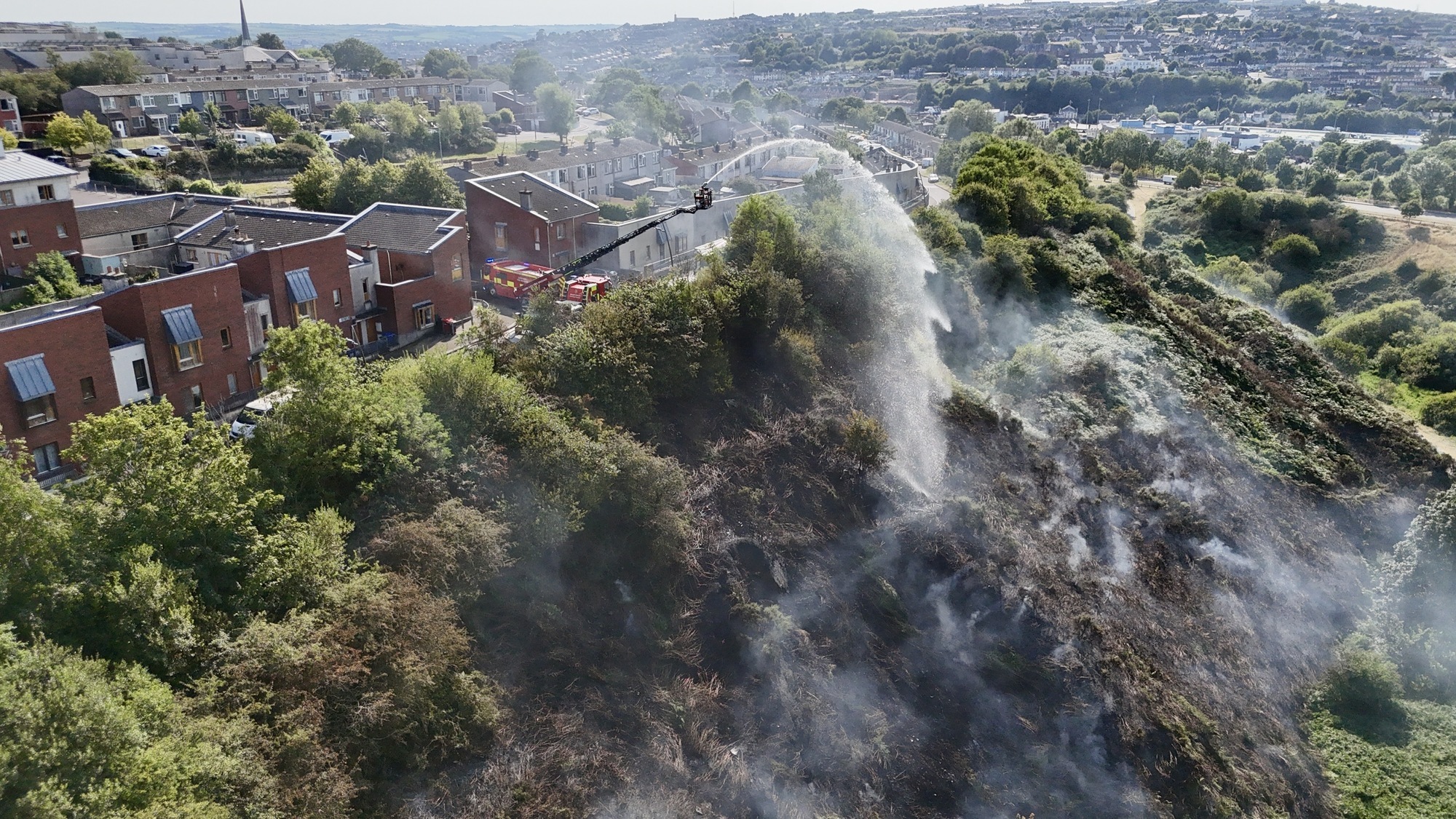
Heatwaves, wildfires, water restrictions and creaking energy grids are the new normal.
As Ireland and Europe emerge from the summer heatwaves and still dealing with an acute drought, the change in climate is forcing renewed focus on what the future holds when weather forecasts start looking very different from those a few years ago.
Increased flooding, more frequent storms, summer heatwaves, wildfires, water restrictions and creaking energy grids are the new normal for much of the continent.
There is another version which points to potential benefits for countries like Ireland. Allianz Research recently modelled the effect of rising temperatures on European economies, and placed us in a group of relative 'winners' alongside Canada, Sweden and Switzerland.
The research suggests that below a critical threshold of 30 degrees, which Ireland rarely reaches, increased temperatures mean countries spend less on winter heating and also see a modest productivity gain. However, above 30 degrees, productivity begins to drop sharply, and energy costs begin to rise. Countries like France, Spain, Germany, Italy and Japan fared the worst in this scenario, with the possibility of a 5%-7% loss of GDP.
Allianz is not alone in suggesting a potential upside for northern Europe. In 2023, the European Commission's own Joint Research Centre modelled the impact of rising temperatures on tourism demand across the continent. It found that Ireland could once again benefit, as baking Mediterranean coasts lose visitors, with the report suggesting 80% of central and northern regions seeing an increase in visitors. The EU study attracted criticism at the time for suggesting a marketing and tourism upside to southern Europe becoming unbearably hot.
However, any benefits of increased temperatures collide headlong with what has happened here this summer, with the models and theory meeting the reality on the ground.
For our vital agricultural sector this year, things began well. Heavy rain throughout June stimulated rapid grass growth with farmers banking large volumes of silage for winter. Then came July and August. The rain was switched off like a tap and grass growth fell to a crawl. Farmers are already feeding cattle their winter fodder, raising fears of a repeat of the 2018 crisis.
Teagasc, the State's agriculture development authority, said in 2024 that farmers must prepare for increased grass growth in winter and increased variability in the summer.
For at least two decades, the world has been warned of the looming climate change crisis and the impact of a warming planet. With those changes now here, there is a clear need to prepare the systems underneath to cope.
The country is still facing a national hosepipe ban. While our water network has improved significantly, more than a third of treated water is still lost to leaks before reaching our taps.
Our electricity grid is near capacity, with greater demand for air conditioning and cooling expected into the future. At least, there is a rapidly rising level of solar farm development taking place across the country, eager to take advantage of the increased sunshine we are seeing. However, that grid capacity issue is likely to emerge again and again as more renewable energy sources come on stream.
Ireland also has no heat-specific workplace protections at all, an issue the Labour Party raised during the summer. Countries like Germany and Spain have set maximum temperatures for workspaces, but no legislation is in place in Ireland.
Ireland's housing network also makes the point vividly. For the past decade, a major programme of retrofitting has taken place to improve the energy efficiency of our notoriously leaky homes. Heat pumps, new insulation, triple glazing and strict new building standards have helped prepare Irish homes for the cold, damp weather we experience for most of the year.
But it is a one-directional fix. The changes to our homes that allow us to live comfortably, at a relatively cheap cost in February, can make the same homes unbearable in July. Conversations about domestic air conditioning, dismissed as almost unthinkable and a waste of energy just a few years ago, are now happening.
Ireland has spent time, effort and money to reduce emissions and our carbon footprint, and that will continue, but the climate has changed, and a fundamental pivot is required that moves away from treating heatwaves, droughts and snowstorms as isolated anomalies.


CLIMATE & SUSTAINABILITY HUB
CONNECT WITH US TODAY



Be the first to know the latest news and updates