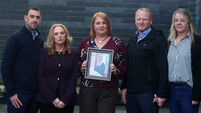
Limerick and Clare homeowners devastated by defective block crisis
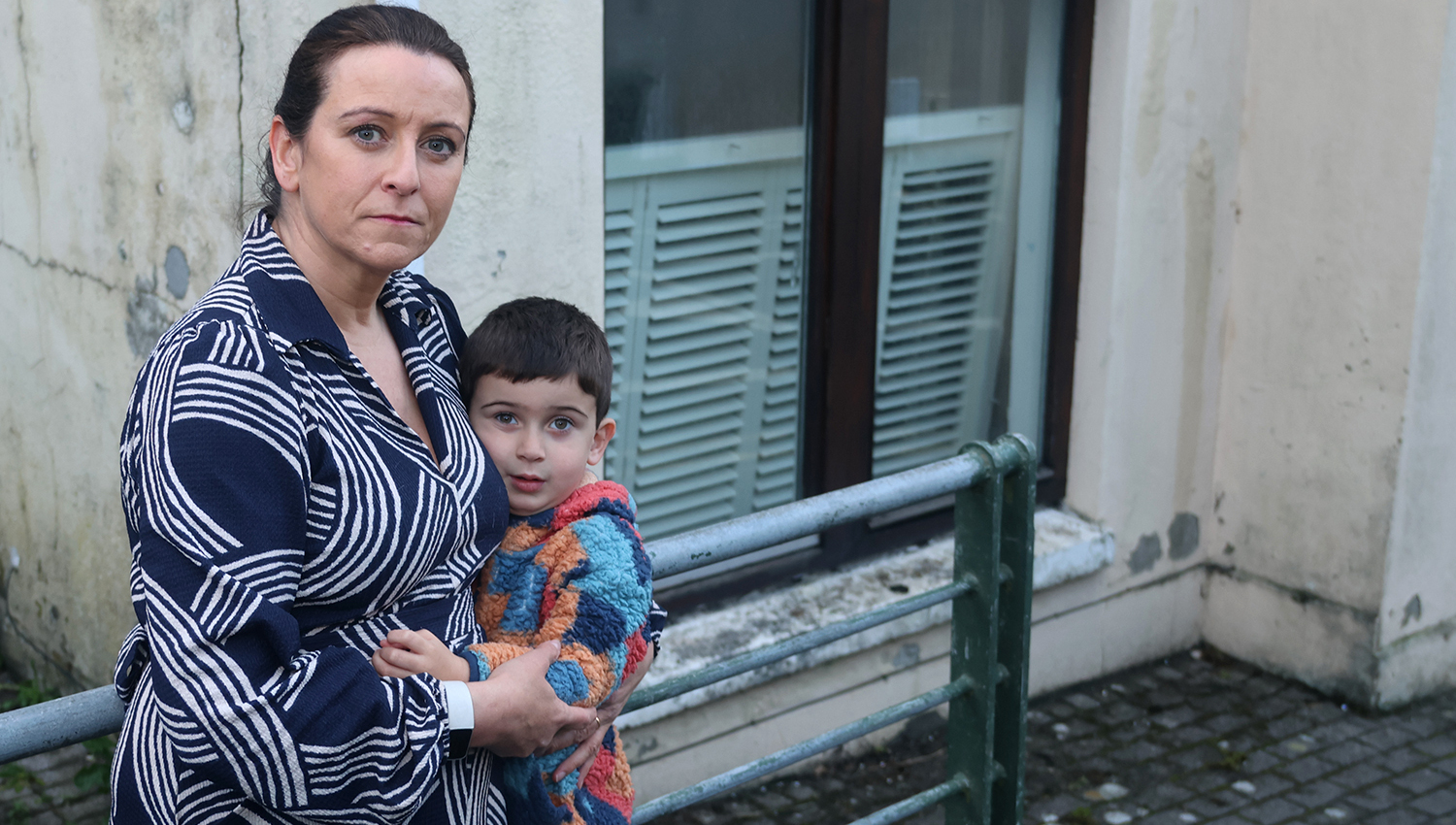
Olivia and Noah Shiel at their home in O'Connell Mews, Barrack St, Limerick City. Pictures: Brendan Gleeson
Limerick woman Olivia Shiel had a plan.
After getting her “miracle pregnancy”, she would take some time off to raise little Noah in her first home, one she bought on her own.
But after finding out her house in Limerick City was falling apart, she was forced to move out and rent a room from a friend with her now three-year-old and her Jack Russell.
“I had saved money. If I got my miracle pregnancy, I was going to take some time out,” Olivia told the . “I haven’t been able to do any of that, and now he’s going be starting school in a year. It is sucking the joy out of our lives, and the stress is just immeasurable. It’s so hard.”
Like hundreds of homeowners across Limerick, Olivia’s home is hit by pyrite, one of the primary minerals responsible for the defective concrete blocks crisis. From the inside, the mineral creates a chemical reaction, which leads to cracks.
While Donegal might be the county most talked about in relation to the defective blocks crisis, eight other counties are officially affected and designated under the defective concrete blocks grant scheme.
Under the scheme, the Housing Agency assesses homes and offers five remediation options, going from replacing the outer leaf of the blockwork to the full demolition and rebuild of the home.
Four years after Limerick’s inclusion in the scheme, there is a stark lack of progress as there has been zero completed remediations in the county.
While Limerick City and County Council have estimated that more than 700 homes are impacted by defective blocks across the city and county, research led by mineralogical consultancy Petrolab has found that up to 2,500 private homes in Limerick may be affected.
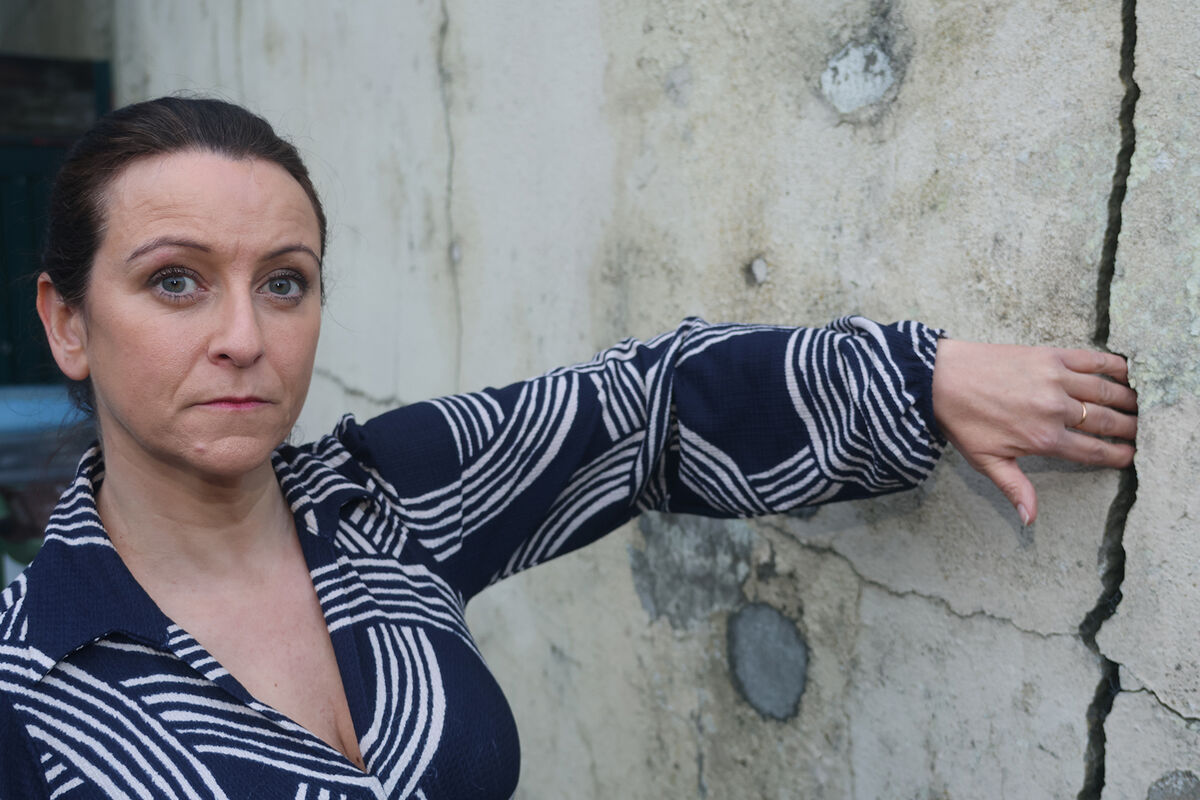
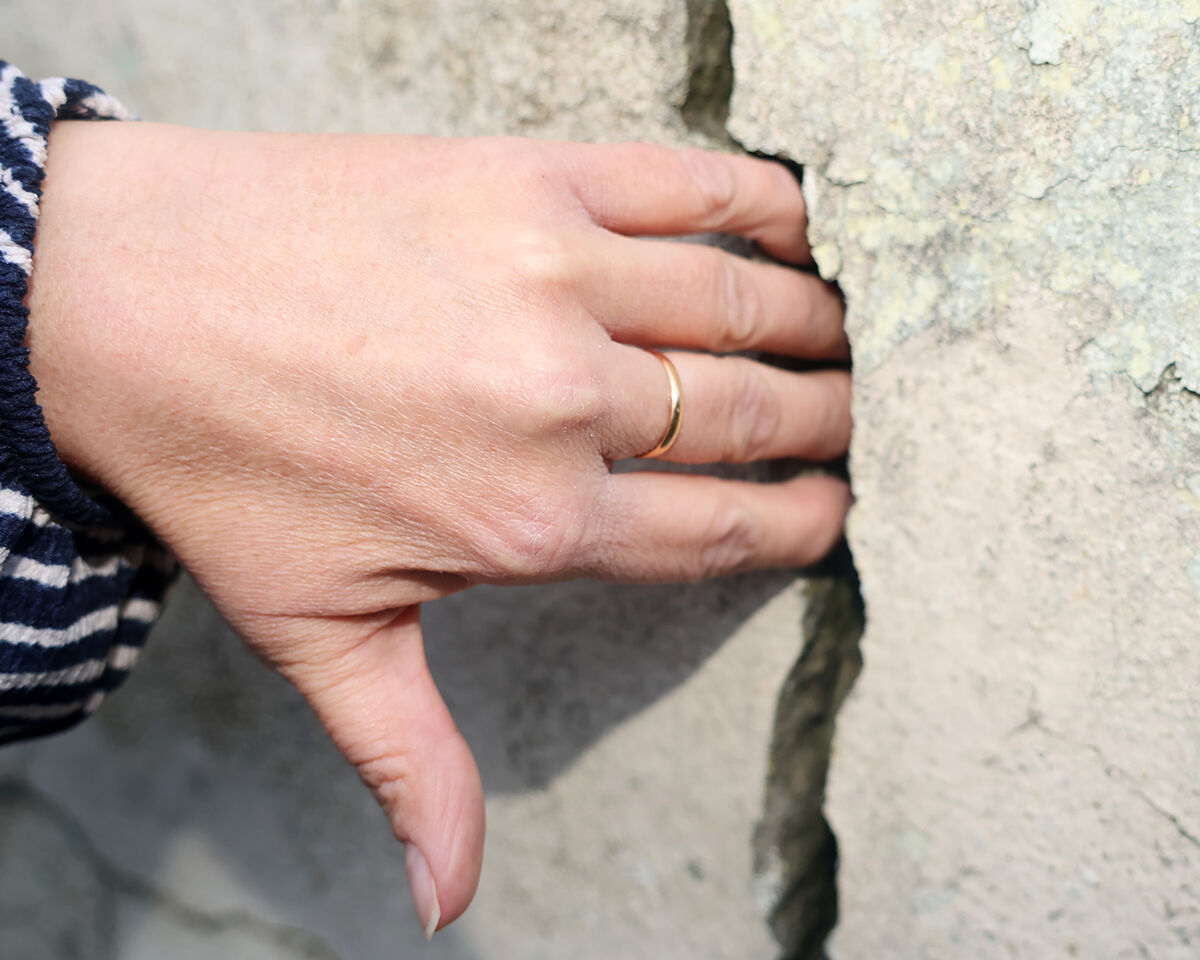
According to Olivia, who is the co-chair of the Limerick Defective Concrete Blocks Action Group, this is only the “tip of the iceberg”.
“I drive around Limerick, and I can spot the houses. People don’t realise they’re sitting in these houses, they don’t realise it’s a Limerick problem,” Olivia said.
Olivia’s house was built in 1991. When she bought it in 2016, no concerns were raised about defective blocks. In July 2022, an engineer told her the house had defective blocks and “would need to be fully demolished”. She recalled:
“A month later, I found out I was pregnant with my much-wanted now three-year-old boy. I was navigating through pregnancy, trying to get my head around the fact that I was living in a house that was crumbling and would have to be demolished, with a scheme that we had learned from the people in Donegal was really not working for people.
“Being pregnant and knowing I was bringing my very precious baby boy back to a house that had defective blocks, worrying about the health implications for him and the safety. You close the door and the whole house would rattle,” she says.
While the scheme was amended to be called a “100% grant”, Olivia says that homeowners who have to rebuild are left covering the shortfalls as a lot is not covered under the grant, such as replacing foundations.
“My own home is only an 89sq m home. I’ll get a grant of €213,000 and I’m looking at a shortfall of about €130,000. I’m 47 years of age. I’m going to a have to remortgage until I’m 70.
“So 100% is an absolute insult, and it’s also wrong to call it a grant when what it should be is a redress scheme because Government failed and the quarries failed.”
Despite being in a “comfortable position financially” Olivia, who works as a teacher, said surprises keep coming, making it difficult.
“Every week there’s a new surprise. I had to pay over €800 to get the gas disconnected in order to demolish my house. All of these little things are not allowable.”
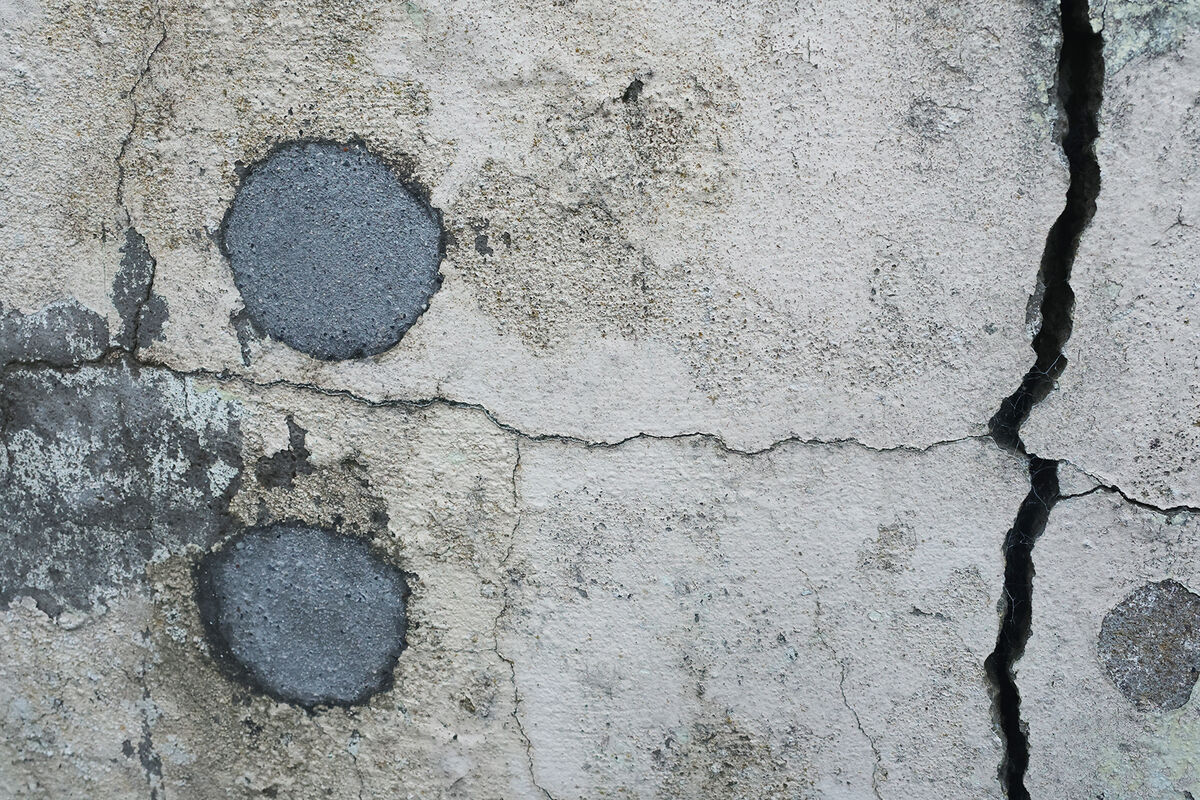
As it stands, Olivia is unsure what the Government’s “master plan” may be, as she compares the homes impacted by pyrite to “Weetabix blocks”, waiting to crumble.
“There is no saving these houses. Decisions are being made by people in suits sitting at tables with no homeowner voice allowed to be part of the conversation. They say relevant stakeholders are being consulted. Who is more relevant than the homeowner?,” she asked.
While a lot of people have bought mobile homes they placed in their gardens, Olivia says a lot of older people are “crossing their fingers” and staying in their crumbling homes.
“I was initially offered option two, which is to replace the outer and inner leaf of the outside wall of the house, but that just wasn’t feasible. Maybe a month ago, I was offered option one of demolish and rebuild. So I’m just in that process now,” she explained.
Since the discovery, Ann says, she has been living a nightmare.
“I was absolutely devastated when I realised because it’s such a process. You never expect this to happen to you. The house is to be demolished, rebuilt, and in theory that should be straightforward, but of course it isn’t. There’s a whole quagmire of things to get through before you get that all sorted out.”
After working for over 45 years, Ann was looking forward to settling into retirement. She thought her house would be home for the rest of her life.
“My home means an awful lot to me. You feel that your whole security is just shattered because your home is your security, it’s your independence. Then to think that’s up in the air because you’re living in the house, it’s deteriorating.”
Inside the house, Ann says the issues are not at noticeable. But from the outside, cracks are on full display.
“Anybody who was affected by this, it’s not their fault. They went in good faith. The builder built the house in good faith. Then decades later, this turns up and this happens. It’s pretty shattering,” she said.
As a single woman with no children, Ann says “everything has been put on hold” financially as she cannot foresee how much rebuilding will cost.
“I suppose if somebody else half-owned the house or something or co-owned the house or something, at least they could take 50% of the responsibility.
“You can’t make any plans to do anything, you’re very aware that you have to be very careful with whatever monies or savings you have because you don’t know how much money you’re going to need when all this is going through,” she said.
After engaging with a specialist, she heard of pyrite for the first time.
“I’d heard of mica because of the extent to which it’s happening above in Donegal and Mayo. When he said it, I kinda laughed initially, and I thought to myself: ‘No way.’

“We were after spending €50,000 on doing this renovation. So when you hear that, you’re like: ‘Nah, the house can’t have pyrite.’ ”
In February 2024, John Garrett, one of the known engineers for defective blocks assessed the home. Based on his report, Michelle was recommended onto the scheme.
The family of four could not sell, and not many builders “would ever come near” the home because of the complexity of the issue.
“We were offered option one. But even the option one, the demolish, doesn’t include the falling of the house, doesn’t include the foundations.
“It doesn’t include any other extras that come about with it. So for example, we’ve got solar panels, and we’ve had to pay €2,500 to remove them and store them for as long as the house is being rebuilt, which again, there’s no grant for that.”
Among the extra costs, the engineer’s report costs about €2,000. To get a refund from the local council, Michelle says it can take months.
“We are already on our knees, to be honest with you, trying to afford everything on this scheme. It’s really stressful.”
After investing a lot of money into the home, Michelle has been left devastated.
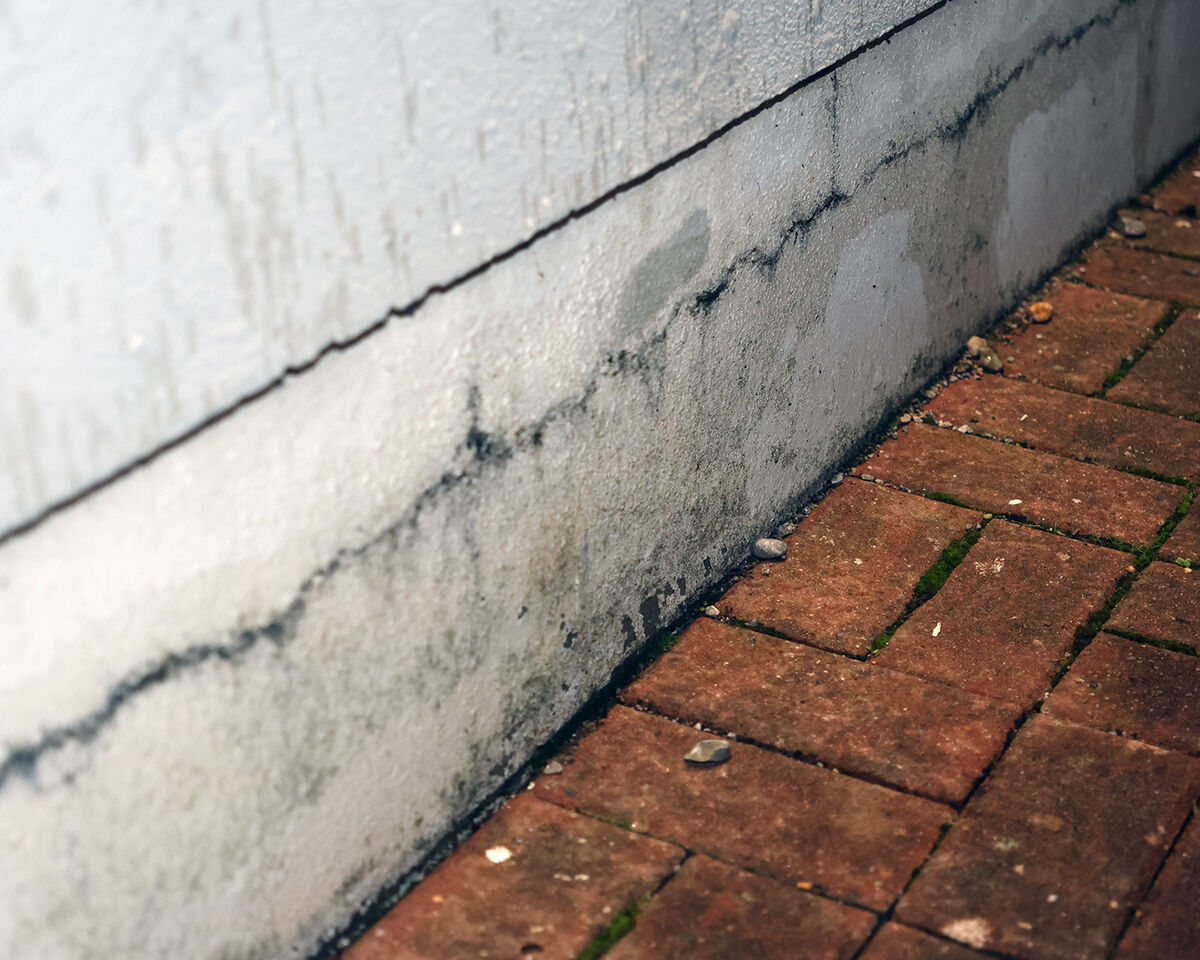
“It’s gut-wrenching, we’d be quite house-proud, and we like to keep our house up to date and kept well. There’s no point in even painting any walls now.
“We’ve invested an awful lot of money over the years in bringing it up to a standard, it’s devastating knowing that it all has to come down, and there’s nothing we can do about it.”
Over 40 homeowners have signed a letter issued to government officials, outlining their concerns around the lack of progress made in Limerick. Four years after the scheme was introduced, just a little over 100 applications were made to the defective concrete blocks grant scheme — with zero completed remediations works.
Among the signatories is Ronan, who noticed the external walls of his house were crumbling. When the scheme opened in Limerick, he was one of the first applicants.
“The first couple of people are the ones who get bloodied the most. They’re kind of the guinea pigs. We asked to get additional type of reporting and stuff like that at our own cost.
“Over time, things just don’t move that quickly. What we noticed was a gap in terms of what’s being talked about in the Dáil and in terms of execution,” he explained.
While he says those in the local council are “still trying to find their way”, Ronan admits there has been a gap in terms of what they have heard on the TV about the scheme and their own reality.
After being allocated a grant amount, Ronan and his wife noticed the figure seemed low compared to how vocal the Government were about allocating €460,000 per house.
“You don’t get that, it’s all done on a meterage, and we didn’t understand that.
“We got an architect at our own cost and an engineer at our own cost to do up drawings and to do up what would actually cost to renovate the house.
After an appeal and nearly two years in waiting, the family was told they would not be getting “any more money” — and that’s it.
According to Ronan, the information available is not “user-friendly”.
His neighbour was told his home is also potentially “in trouble”, but with no official communication on how to address the issue.
“He was in shock. In theory, he wants to join the scheme, but he doesn’t know how,” Ronan said.
“He’s going through his own hurdles in life in terms of how to get this.
“We’re six years into this, and we’re still no closer to a build. Builders are scarce in Limerick.”
While Ronan says his wife struggles a lot with the situation, he says he feels he has aged 20 years.
“There’s times we have sleepless nights where the two of us wake up during the night and start talking about the what ifs.
“There’s no guardrails, it just feels like you’re on your own. We have children, one of them has additional needs, we’re trying to prioritise.”
More than 100 homeowners have applied for the Defective Concrete Blocks Grant Scheme in Limerick, and more than 300 in Co Clare.
That is according to the latest figures released by the Department of Housing, which disclosed how many people have applied for the scheme in various counties.
As of October 31, nearly 4,000 applications were received from homeowners in Clare, Limerick, Donegal, Mayo, and Sligo.
In comparison to Donegal, the Midwest counties have been deemed slow-developing “hotspots”.
According to research by British-based specialist Petrolab, published in recent months by Christopher Brough and Bradley Staniforth, the numbers could be much more higher than the figures released so far.
Petrolab has found that the numbers of homes affected by defective concrete blocks could rise to up to 20,000 nationally.
The research was presented to TDs and senators at Leinster House over the summer.
Meanwhile, the County and City Management Association had told the Oireachtas housing committee the number of homes impacted by defective blocks stood at 9,500.
According to figures from local authorities, an estimated 700 homes are affected by defective concrete blocks in Limerick, while over 860 are estimated to be affected in Clare.
An estimated 1,100 properties are affected in Donegal, and nearly 300 in Sligo.
The Petrolab research is based on the analysis of thousands of concrete blocks samples from homes across Ireland.
Researchers analysed 23 private estates in Donegal, 10 in Mayo and 10 in Clare, as well as five in Limerick.
According to the research, up to 2,500 private homes could be affected in Limerick, while up to 4,500 private homes in Clare could be at “high-risk”.
Petrolab also noted the final 20,000 figure excludes data from social housing, businesses and business-residential duplex buildings.
The key difference identified in Clare and Limerick’s defective blocks crisis has been the speed and the mineralogy at the root of the issue.
Clare and Limerick have been experiencing a slower pace of deterioration, caused primarily by coarser framboidal pyrite.
It has been found the issue remains hidden up until moisture triggers it, such as when cavity walls are pumped.
In Donegal, the speed of deterioration has been faster, and can be explained by the presence of both pyrrhotite and mica.
Under the Enhanced Defective Concrete Blocks Grant Scheme, the Housing Agency offers homeowners five remediation options.
Under option one, they can have a complete demolition and rebuilding of the home.
Meanwhile, options two to five cover different levels of partial demolition.
While the scheme is said to provide “up to 100% of eligible remediation costs”, it is capped at €462,000 per property.
Across the country, homeowners have been left distressed by the extra costs which are not covered by the scheme.
In Donegal, a group of pensioners have refused a meeting with a senior housing official, as they have requested a meeting with minister James Browne, a request deemed “reasonable” by local councillor Joy Beard.
Mr Beard said the pensioners want to sit down with the minister for housing to explain their hardships.
People affected by defective building blocks live in “perpetual fear” as the walls of their homes become “like dust”.
Limerick City TD Conor Sheehan has visited a number of affected homes across the county and further afield.
“Defective concrete, in some cases, can be silent, it can be sneaky, and it’s absolutely devastating,” he told the .
“I visited homes that if you actually put your hand onto the wall, the plaster on that wall will come away like dust.
According to Mr Sheehan, the scheme has not actually worked well in Donegal, and there is a strong need for an end-to-end remediation scheme similar to the Fingal Pyrite Scheme.
The TD said homeowners in Ireland have been left with massive cost shortfalls, through no fault of their own.
Those who have to rebuild, he said, “could be out of pocket to the tune of €100,000 or €200,000”.
After engaging with homeowners, Mr Sheehan said the issue takes its toll, both emotionally and mentally.
“They’re living in a home with the walls crumbling down around them. That could be causing damp, that could be causing the electricity to trip, and that could be causing people, in many cases, to live in perpetual fear that, the walls of their home aren’t strong enough to hold the roof.”
He stressed that funding needs to be made available for people, so that they can obtain alternative accommodation if they have to move out of their homes.
While many are already impacted, some looking to purchase a new home avoided the defective blocks crisis “purely by chance”.
With his family, Limerick man Shane Vaughan was looking to buy a home in Limerick and had his eye on just the one.
“The laws around pyrite are very odd, so we’re not allowed to publicise specific locations, as a judge ruled basically that if you announce your house had pyrite, that your neighbours who might be fine would be affected by the negativity,” he recalled.
Mr Vaughan had practically signed a contract for a new home in Limerick City, when he realised “by accident” it was located in an area where many houses were affected by defective housing.
“I was on Daft.ie, just glancing. There was a house up for sale, it caught my eye as it was cash only, and the price of it was extremely low because, of course, it has pyrite. It said it in the headline: ‘Cash only. House is affected by pyrite.’ And at that point, I obviously then went in search of other houses in the area,” he explained.
Mr Vaughan stressed the importance of doing your research, as many homes can look fine “for the most part”. He pointed out homeowners have no obligation to do a pyrite test.
“From their point of view, they’ve never tested for
pyrite. Yes, there’s pyrite in other houses, but as far as they’re concerned, there’s none in their house, even though if you do the test, I guarantee you, you would find it there.”
A retired Limerick woman has said she will be “totally broke” by the time her home is rebuilt, after she found out it was affected by defective blocks.
The woman, who wished to remain anonymous, told the the situation has put “so much strain and stress” on her life.
After being diagnosed with cancer, she applied for the defective concrete blocks grant scheme in August 2023. Months later, she lost her husband.
“After a long time” she was offered option number three — to demolish and rebuild both the inner and outer layers of the external walls down to the top of the rising wall on a phased basis, and then re-render.
“Emotionally, I’m here on my own. I have no knowledge of the building,” she said.
“My husband was a carpenter when we originally built this house. He knew everybody, knew all the contacts, knew who to talk to.
“We did it by direct labour, and we did it very economically. I don’t have knowledge myself about construction, and I feel that I’m very much dependent on the professionals here and builders.”
While she said the “whole thing is very stressful”, she is “fairly well able to cope” — but some days are “very bad” ones.
“If it wasn’t for the people in Donegal we probably wouldn’t be this far, because they were the people that sort of started the whole process, and they’ve been fighting for years to get to where we are, so I’m very grateful for them,” she noted.
Five years ago, she was in full-time employment. But now she is retired and lives off her pension.
“The money we put away that was supposed to be our cushion for our retirement, that will all go into this house,” she said. “I will actually, probably, don’t even have enough money to finish this.
“I’ll be totally broke when this house is built, simple as that. I’m probably very lucky that I have a pension, because there will be people out there that don’t have it. Financially, it is definitely a worry.”
Many of the people who spoke to the mentioned the toll their situation has put on their mental health.
From sleepless nights to constant dread, some have been left in limbo while they wait for updates.
According to research by Ulster University, adults affected by defective blocks have seen a major impact on their mental health.
Some of the homeowners reported suffering from depression, stress, and suicidal thoughts. The research found that 30% of those who responded had experienced severe depression, and that over 25% suffered from severe anxiety.
The study by PhD researcher Oisin Keenan was the first of its kind, looking at the impact of defective blocks on people’s mental health.
Those who worked on the research said that it was “alarming” how the affected individuals were “similar, and in some cases even worse, than those reported following natural disasters such as earthquakes and floods, or among refugee populations”.
In total, 393 adults living in homes built with defective concrete blocks across Ireland took part in the research.
- If you or someone you know is struggling, you can contact Samaritans on 116 123 or Pieta at 1800 247 247 for free, confidential support 24 hours a day.
CONNECT WITH US TODAY



Be the first to know the latest news and updates