Solar panels in Ireland: Could now be the time to cut your rising electricity bills?
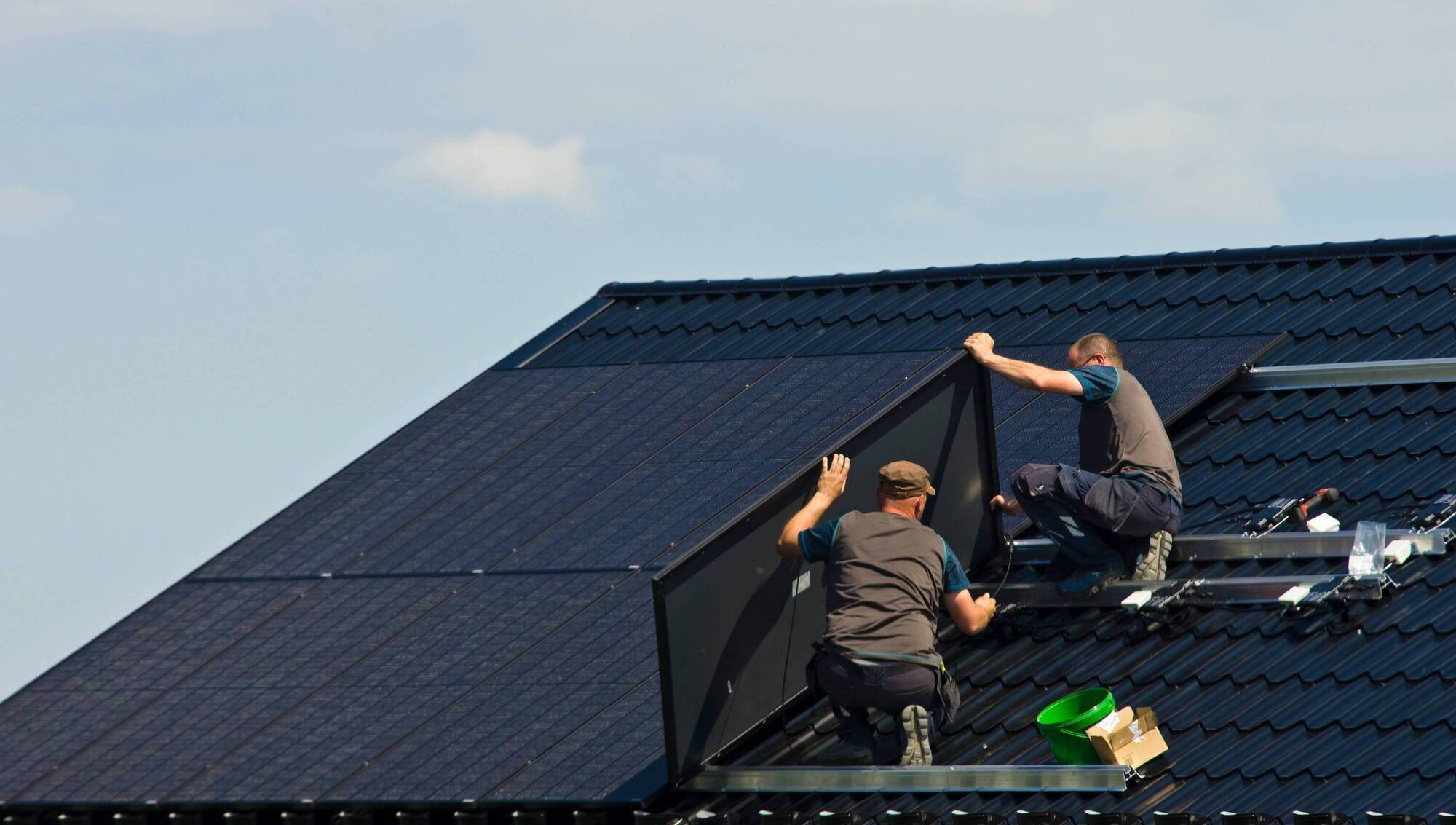
16,770 solar panel grants have been paid out in the first six months of this year. That's 12% more than last year.
Energy prices are going up again. The conflict in the Middle East — which began in late February and has already hurt natural-gas production, as well as other energy supply chains — has had a knock-on impact on the electricity and fuel prices that Irish households are paying.
Electricity providers Electric Ireland, Prepay Power, Yuno Energy, Flogas, and SSE Airtricity have all increased prices in recent months as the cost of natural gas has risen.
According to the Dutch TTF natural gas futures, natural gas was trading at €59 per megawatt hour (mWh) this week, while prior to the outbreak of the war between the US and Iran it was trading at €31.
There was a reprieve towards the end of June and the start of July, when the US and Iran announced a ceasefire. Energy prices fell to between €42 and €43 per mWh, but have since surged.
If the price of natural gas does not come down, further electricity price increases will be inevitable.
Additionally, Ireland has had significantly higher temperatures over the last few months than is typical. According to Met Éireann, last month was the second-hottest July since 1900, the driest July, and one of the sunniest months on record for Ireland.
The hot weather has continued this month, with Met Éireann this week issuing a high-temperature warning for much of Leinster, where 27C is expected.
Read More
With these two events combined, households may consider installing solar panels to save money, but the initial cost outlay may not be affordable for everyone.
The Sustainable Energy Authority of Ireland's (SEAI) grants can reduce the cost of solar panels by €1,800.
During the first six months of this year, the SEAI has paid out 16,770 solar-panel grants. That's 12% higher than the same period last year. In 2025, the agency paid out 34,693 grants, an increase of 18% year on year.
Paul Deane, senior lecturer in clean energy futures at University College Cork (UCC), said a full solar-panel system will cost a household €6,000, after the SEAI grant is deducted. That should pay for itself in savings within 10 years.
The panels should produce electricity for 25 years, so they will generate savings for households well after the initial investment is paid back.
For a typical three-bedroom home for a family of four, eight panels will do, but it depends on the roof size.
"Eight panels on a roof would provide a family of four about 40% of their electricity throughout the year," Mr Deane said, with those panels generating, on a clear day, about four kilowatt hours (kWh) of electricity every hour.
"Here’s the caveat on that: Most of that electricity will be generated from the end of April to the end of September. During the winter, there's very little output, unless you get a kind of a clear day in the winter.
"It's probably taking about €300 to €400 off your electricity bill [a year],” he said, adding that if the panels generate surplus electricity, "The grid will buy it off you; you can earn maybe another couple of hundred euros there on income.”
Daragh Cassidy, of price-comparison website Bonkers.ie, said the cost of solar panels depends on various factors, such as the supplier, whether you opt for battery storage, the number of panels, and the orientation of your home.
"If you have a south-facing home, you’ll need fewer panels than if your home is west- or east-facing, for example. They also aren't suitable for every house. If you have a north-facing home or a home with only a small usable roof area for installation, they're not going to work properly," he said.
Given the higher energy prices over the past few months, the average household's payback period may reduce as the savings over the course of the year rise, Mr Cassidy said.
"The payback period for solar and battery is now around seven or eight years," he said.
The payback could be even less for households that use a lot of electricity, particularly those with electric cars (which have surged in popularity over the past few years, in response to the higher fuel costs).

ESB Networks say that as of August 5, 210,049 microgeneration applications were made to allow customers to send electricity back to the grid; 39,256 were added to the system during the first seven months of this year.
Based on the number of microgeneration applications so far this year, ESB Networks are expecting 75,000 applications in 2026. That would be significantly higher than the 49,630 applications received in 2025, which was the previous annual record.
These figures primarily consist of residential microgeneration, but they also include a small proportion — less than 1% — of business customers with solar units.
Like the electricity a home consumes, the microgeneration rate is measured by kWh. For example, Electric Ireland estimates that an electric hob being used continuously for an hour would consume 2kWh and would cost around 70c (if used during the expensive day rate).
The money paid for microgeneration per kWh depends on the provider. Bord Gáis Energy, Energia, Flogas, and Pinergy all offer 18.5c per kWh, while Electric Ireland and SSE Airtricity offer 19.5c per kWh.
Yuno Energy and Prepay Power offer less, at 17.16c and 14c per kWh.
"You could save yourself about €300, and you can make maybe another €200," Mr Deane said.
Some systems can contribute so much electricity to the grid that their electricity provider can actually owe the owner money at the end of their billing cycle, even after deducting the cost of the electricity taken from the grid.
These customers are eligible for a €400 tax exemption on this income, and this can double to €800 if a second person is included on the electricity bill.
Another option offered by solar-panel installers is a battery that will save excess energy. This can be used on days when the weather isn't as favourable. These batteries can also be programmed to charge off the grid on the cheapest night rate and be used during the day.
A battery, depending on its size, can add up to €5,000 to the cost of a system. Mr Deane said that if you have the money, get the battery, but you don’t need one, because the excess energy will automatically go to the grid and earn the household money in return.
Mr Cassidy said that if you can afford a battery, get it.
He said: "Given that solar panels last for up to 25 years, on average, and batteries for around 12 years, for households which can afford the initial outlay, it’s definitely a win-win, as you’re saving money over the longer term, as well as doing your bit for the environment.
"It also means you have more control and predictability over your electricity bills, which is another important benefit, given the fact we've experienced two energy crises in the space of just a few years and have seen electricity prices increase by around 70%."
However, Mr Cassidy cautioned households about treating the potential income from solar panels as a guaranteed long-term financial return.
"As more and more solar comes onto the Irish grid, particularly during periods of strong sunshine and relatively low demand, the value of that surplus electricity will reduce," he said.
The national grid is already struggling to manage the huge amount of renewable generation that has been added over the past decade. In recent weeks, some wind energy has been curtailed to accommodate solar. Mr Cassidy said: "As more and more solar gets pushed onto the system over the coming years, its value to the national grid is going to reduce."
The Netherlands has had an "explosion of residential power" and created "massive grid congestion" in the process, Mr Cassidy said.
"So, from 2027, The Netherlands is scrapping its current energy credit system for households. Going forward, homeowners will receive a much lower compensation rate for surplus solar power sent back to the grid, significantly reducing the financial return from excess generation," he said.
"So, if you're considering solar panels today, I would still factor in the current value of selling excess electricity when working out the payback period. But I wouldn't assume that today's export payment rates will be there for the lifetime of the panels," he said.
A couple of years ago, Mr Deane, along with his colleagues in UCC and the Irish Solar Energy Association (now Solar Ireland), used satellite imagery to estimate the number of roofs in Ireland that could be used for solar panels.
He said: "We came up with kind of a ballpark figure of a million residential roofs in Ireland that have the potential to put solar panels on it and to contribute in a kind of a meaningful way to the reduction of their electricity bills."
According to Eirgrid, during the first six months of the year multiple renewable energy records were broken. June saw a record amount of solar energy on the power system, contributing 8.2% to the overall fuel mix. This compared to 7.8% in May and to 5.3% in June 2025.
Ireland isn't known for its consistently sunny weather, so wind energy still contributes the most renewable power to the grid.
ESB Networks does not track the volumes of solar microgeneration from these customer groups separately. Some customers may not wish to export electricity to the grid, or avail of grants, and so they will not be included in the above figures.
Eirgrid also does not collect data on small-scale embedded power; it monitors the contribution of larger solar farms to the system.
Mr Deane said that as we increase the number of homes generating power to the grid, Eirgrid will have to log them and how much solar power they are contributing to the grid.
Mr Deane’s advice to households that are considering buying solar panels is to get three quotes, consult neighbours who have them, and get someone reputable to install them.
"The cheapest price doesn't always reflect the best quality. Get someone to vouch for them. Get a known name," he said.

CONNECT WITH US TODAY



Be the first to know the latest news and updates