My Goldilocks guide to choosing climbing roses
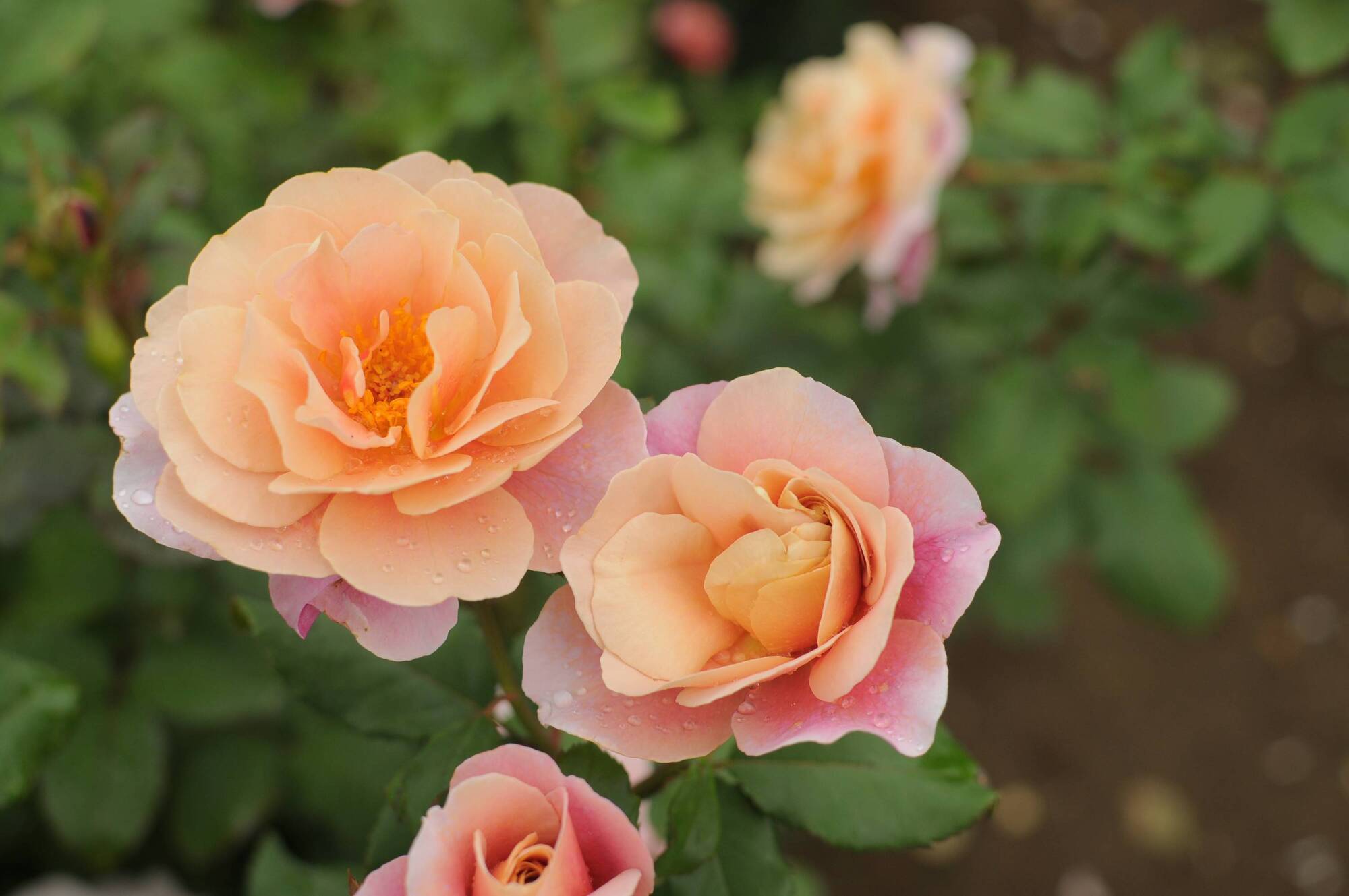
Crépuscule was introduced into cultivation in 1864 by the famous French breeder Dubreuil and is ‘just right’ as Goldilocks would say. Picture: iStock
I’ve spent the last week thinking about roses. Climbing and rambling roses in particular, which I hope to use to partially screen one of my garden’s dilapidated but still beautiful stone outbuildings. The problem, much like Goldilocks in her pursuit of the perfect bowl of porridge, is the surfeit of choice. Almost inevitably my shortlist of varieties has turned into a long one, with the emphasis on a host of desirable qualities including vigour, disease resistance, scent, and a long flowering period as well, of course, an abundance of beautiful flowers.
Determined to avoid choosing anything too chocolate box in style, I’ve ruled out the perennially popular variety known as ‘Rose Constance Spry’, despite its famously beautiful, large, deep pink, scented blooms. It’s a similar story for Rose 'Gertrude Jekyll'. Shocking, I know.
Rose ‘Pierre de Ronsard’, also known as ‘Eden’, is also off my list for the same reason, despite its long-flowering ways, excellent disease resistance and general vigour. My sincere apologies to all its many fans. But to paraphrase Goldilocks, it’s just not quite right for what I have in mind.
Wary of its vulnerability to blackspot and powdery mildew, the famous heirloom variety Rose ‘Zephirine Drouhin’ also hasn’t made it onto my long list, although I’ve plenty of gardening friends who love it for its almost thornless branches, shade tolerance, and clouds of scented, deep-pink flowers. It’s a similar story for both Rose ‘Alfred Carriére’ and Rose ‘Albértine’, two varieties I’m forever prejudiced against, having grown them in the past and watched them succumb to black spot so often and so severely that by late summer the plants were almost leafless.
And while I’m still dabbling with the thought of ‘Rambling Rector’, this rampageous rose’s reputation for growing into a huge- albeit spectacular - beast almost impossible to keep in shape makes me very chary, the same reason why I’ve also ruled out Rosa ‘Kiftsgate’; Rose ‘Bobby James’; Rosa banksia ‘Lutea’ ; Rose ‘Paul’s Himalayan Musk’; and Rose mulliganii. All are unruly beauties only suitable for huge gardens where there’s scope for them to grow relatively unchecked.
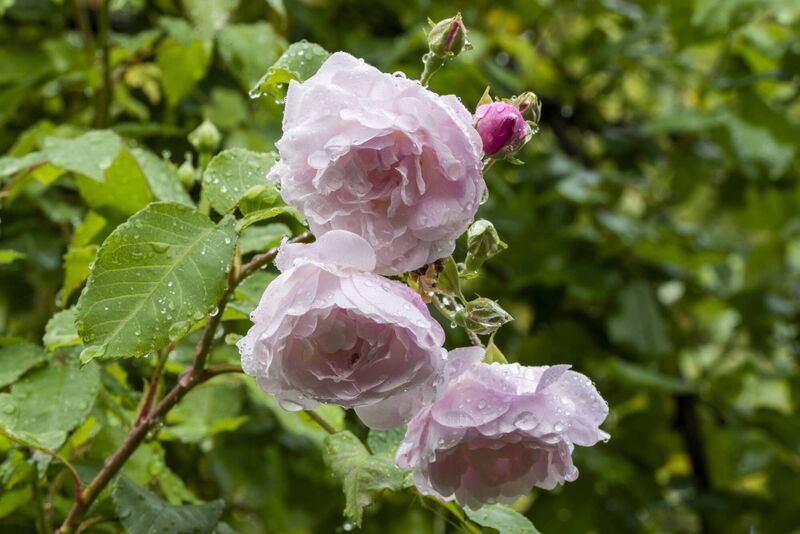
If the rambling Rose ‘Frances E Lester’ flowered more than once in a growing season, it would be top of my list for its floriferous ways, dense clusters of pale, scented, elegant blooms, decorative hips and graceful growth habit. So too would the white-flowering and very beautiful Rose 'Adélaïde d'Orléans'. But both are what is known as once-flowering, meaning they have one spectacular display each year in June-July rather than a succession of blooms over many months.
Likewise, I love the sound of Rose bracteata, a species-type, semi-evergreen, vigorous climbing rose whose clouds of golden-eyed, single white flowers appear from mid-summer until the first harsh frosts. The only problem is that it’s not fully hardy, requiring a warm, sheltered spot with protection from cold winds, which is equally true of the delightful white-flowering climber known as Rose ‘Cooperi’. This makes both varieties unsuitable for my midlands garden with its colder-than-average winters. a shame.
On the other hand, I reckon that the climbing variety known as Rose ‘Crépuscule, which was introduced into cultivation in 1864 by the famous French breeder Dubreuil, is ‘just right’ as Goldilocks would say. An historic noisette-type rose prized for its vigorous growth habit, long flowering period, tolerance of heat extremes, almost thornless branches, and semi-double to double, scented, apricot flowers, it needs a high, sunny wall and a fertile, moisture-retentive but free-draining soil, both of which I can give it. Also ‘just right’ for my purposes is Rose ‘Blush Noisette’ or ‘Noisette Carnéé’, a more compact, repeat-flowering climbing rose with large clusters of pale pink, deeply-scented flowers produced throughout the months of summer and early autumn. Introduced into cultivation in 1817, it remains a classic.
If space allows, Rose ‘The Generous Gardener is also nudging towards the top of my list. From the stable of the late rosarian and breeder David Austin, it’s rated highly for its long flowering season, disease-resistance, vigour, shade tolerance and the beauty of its scented, pale pink flowers, although one of its few failings is that those same flowers are short-lived and vulnerable to damage by heavy rain. Another is its stiff, thorny stems, which make it more difficult to prune and train.
Others jostling for prime position include the semi-double, repeat-flowering compact climber Rose ‘Meg’, whose luminous, scented, pale peach flowers appear through summer and autumn; the white-blooming, repeat-flowering, modern climbing rose ‘Guirlande d’Amour’; and ‘ Rose 'Desprez à Fleur Jaune', a heritage variety from the early 1800s with creamy-yellow to apricot, deeply-scented flowers produced generously throughout the summer and early autumn months.
Which will make the final cut? I’ve yet to decide. But I’ll need to do so soon, because late October-November is the very best time of the year to plant all roses as bare root specimens, allowing the plants time to stretch their root systems deep into the ground before leafy growth begins again in spring.
Where to get them? Recommended stockists include altamontplants.com in Carlow ; futureforests.com in Cork; riverlane.ie in Meath and Dublin-based mrmiddleton.com.

CONNECT WITH US TODAY



Be the first to know the latest news and updates