How to add a touch of play to kid's space
Kya deLongchamps offers imaginative, healthy ideas to reset your children’s bedrooms this winter.
There’s a lot of scope — even if space is tight

There’s a lot of scope — even if space is tight

We all know they are little shape-shifters. Whether you’re setting up new rooms or doing a reshuffle, add some playful style to your children’s bedrooms this season.
Splat mats

Whether you’ve watched children in your care or can actually remember the intense magic of imaginative play as a very young child, floor space offers a rich universe to explore and inhabit. In winter, with the garden damp, dark and inaccessible for a frolic, this is doubly true. The more uninterrupted floor space children have, the greater the potential adventure, and the more time they will remain absorbed. You don’t need much room for a tiny teepee — but you need some. Open areas, with comfortable places to sit and lie completely down are vital. We’ll get into rugs in a moment, but I’ve discovered a great product to expand what children can do safely on the floor without destroying hard flooring or carpeting — the Studio Huske range of wipe-clean, silicone “leather” mats.

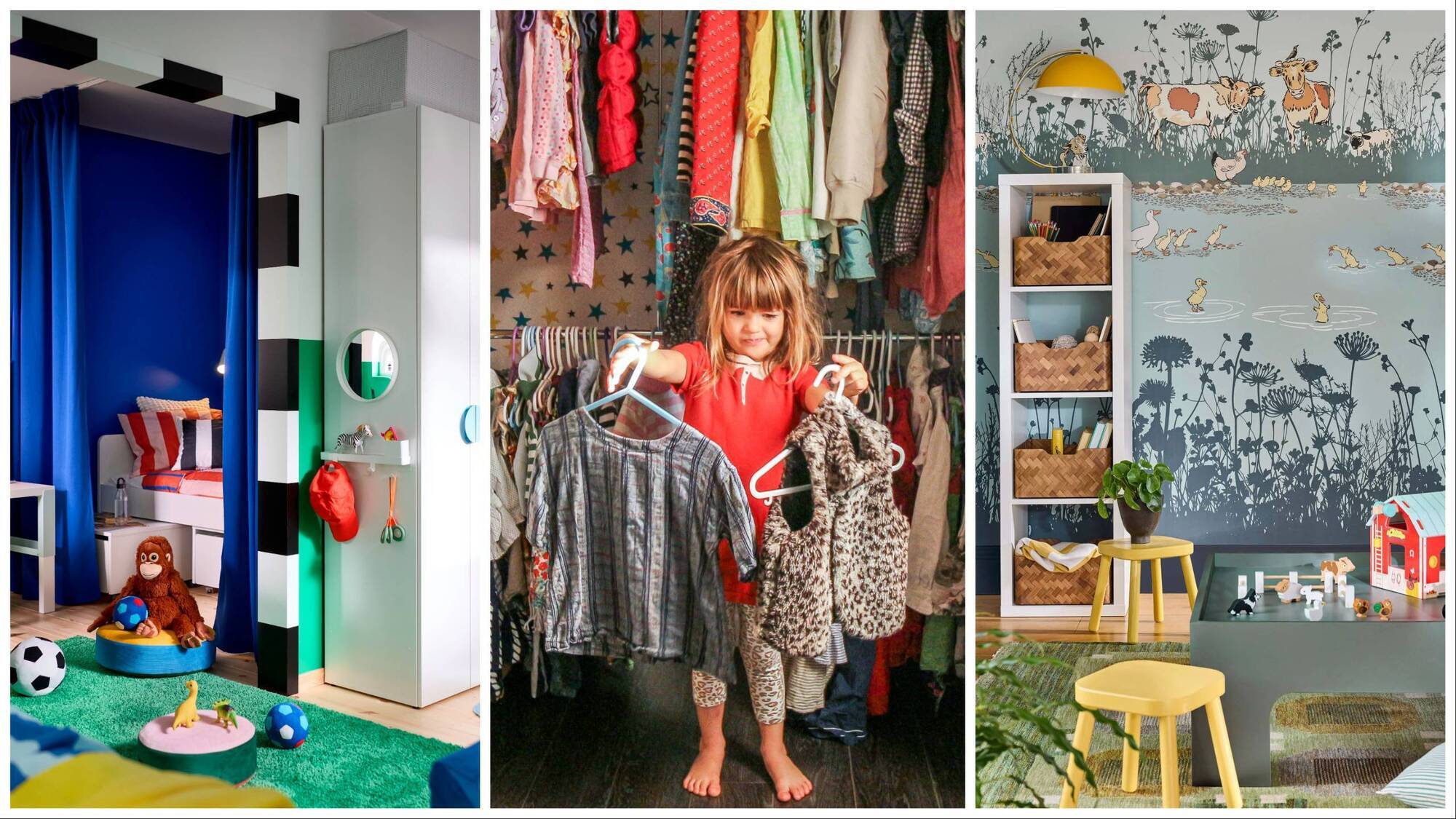
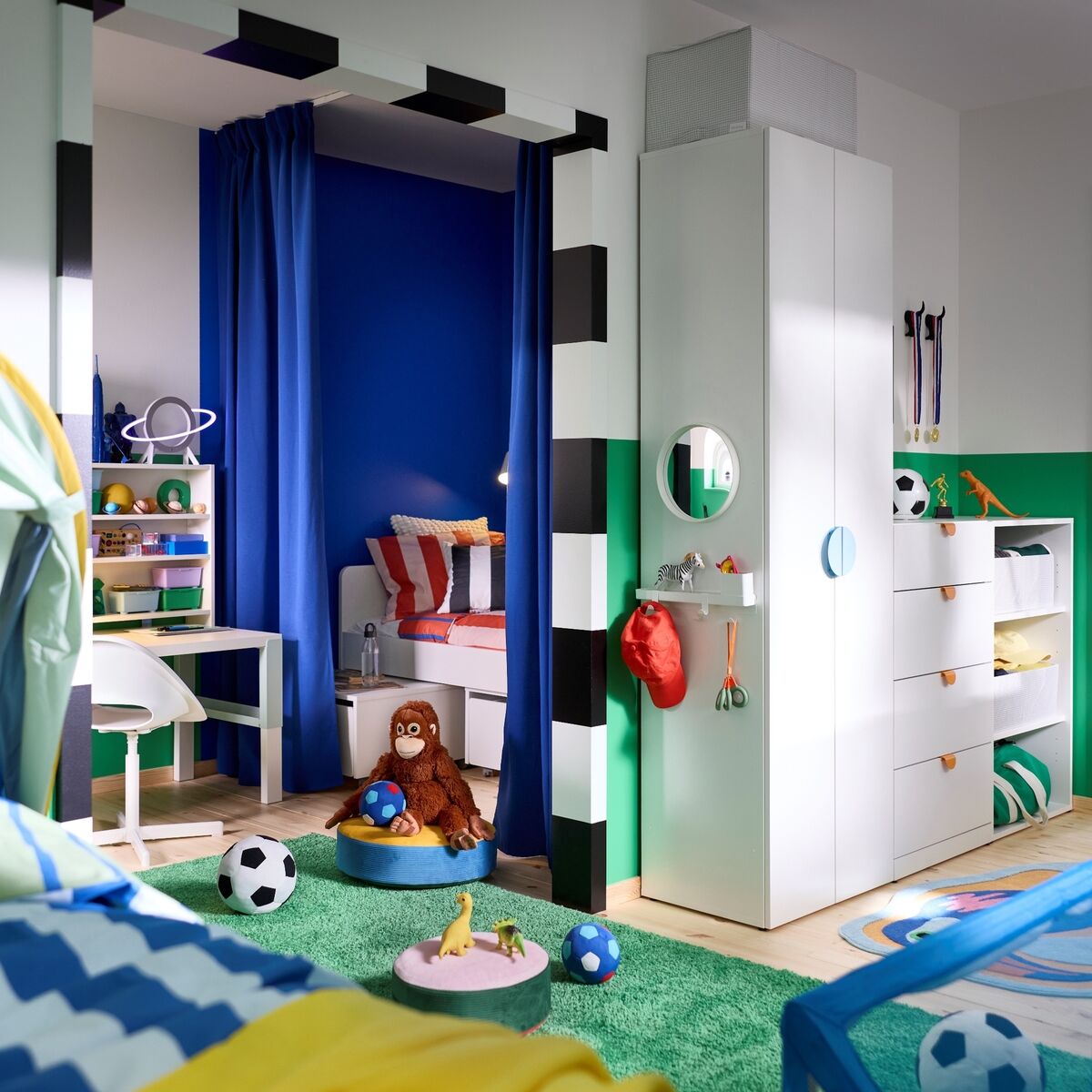
This two-bedded room styled by Ikea is a brilliant demonstration of what a new stud wall, a curtain, and ergonomic furnishings can do. Smastad Platsa storage combination in white, 180cm x 57cm x 181cm, €443 ikea.com/ie.

You can take these softly textured, double-sided, waterproof mats to the park and throw them over damp leaves for a picnic, or deploy around them all over the house for mucky play including painting or crafting on a table or on the floor. Huske notes, “These mats contain no plasticisers, no phthalates. The OEKO-TEX Standard 100/1 (Class I), is the strictest class and covers products intended for babies. That means safe for tummy time, baby-led weaning, and everything that comes after.”

Cheap, no, but versatile beyond belief and a great gift, from €51 for a Wriggle Changing Mat to €175 for the 135cm x 180cm Gallivant, studiohuske.com.
Breathe easy

When it comes to pile and woven rugs for children’s rooms — softness really matters, but this is too often delivered by synthetic, petrochemical-based materials containing microfibre that can migrate into the air. Babies and children playing on the floor, driving their toys, books and crawling and rolling around, are disturbing the pile of the carpet or rug. Lying or sitting down, they are especially vulnerable to airborne dust and debris. Going forward, vouch for cotton, jute, wool or flax rugs to avoid that unseen plume of microplastics. If you do have microfibre mats or carpeting in place already, use a small HEPA air purifier regularly in the room together with regular vacuuming with a HEPA-level machine, to clear up to 99.97% of airborne particles.

What’s true of the floor is equally true of bedding. With its gorgeous, indulgent softness, microfibre duvet covers, sheets and faux-fur throws might seem the perfect match to young skin. However, we are still coming to grips with the potential effect of micro-plastic ingestion on the body (epidemiological research is still ongoing as to what this actually means for long-term health).

Double-up

With long nights trapping them indoors, we want our children to look forward to going to their room to hang-out, play, read or to go to sleep. Whether you’re faced with pre-school siblings who simply will not be parted at night, or a child who longs for regular sleepovers — two beds in one room might be a spatial challenge worth winning. Bunk beds remain the ergonomic go-to, and the best designs today are metamorphic, shifting into separate furnishings (storage or a study area below). A generous small double or European sizing in the bottom bed just needs a mattress update after eight years or so to offer an adult bed. Look for a slender bottom drawer built into the base of any bunk bed to maximise storage.

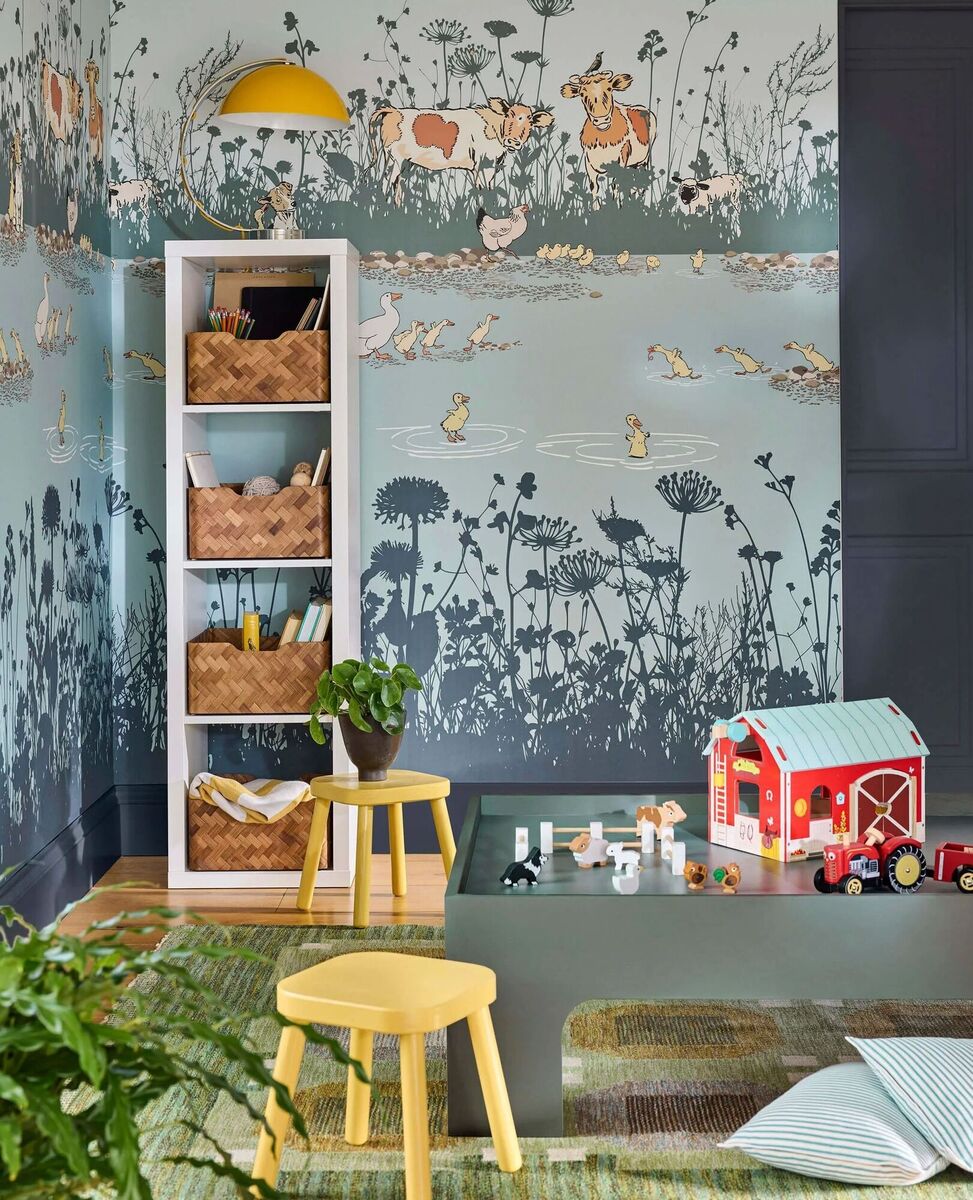
Matched to a table low enough to scoot over to on your knees, a panel of Riverside Capers wallpaper by Little Greene from artwork by 19th century illustrator Cecil Aldin. Available in Quack, Cluck and Moo. From €268, various suppliers. When using high storage pieces, always firmly secure the case to the wall.

A bottom bunk is generally safe for a three-year-old child, while the top bunk is better suited to a six and up – but that does leave the danger of unplanned ascents when your back is turned. Watch for the maximum load, expressed in kg which covers both beds. I would encourage you to offer the same detailing to each bed — for example book/toy storage shelving to each bed, to head off territorial stand-offs. If you have room for two single beds — these could be bunks with separate storage/study/tented zones below. Flanked on one wall, this is an unusual space saver that retains the excitement of elevated sleeping. If you feel that sharing a room is damaging your child’s development, keep in mind that they are getting an ongoing lesson in boundaries, conflict resolution and respect for the needs and wants of others.

Good fences

Two kids in one room is just a reality of life for many families, but it can cause tension and resentment if mishandled. To work best, their sleep schedule must be reasonably closely aligned (in short, siblings should be close in age). If you have the right footprint, adaptable square metres and children open to sharing some communal areas, tailoring two separate sleep and storage zones is very doable. To reset, put some proven partition and decorating ideas to work, and stick to age-appropriate solutions. This could be one low stud wall to cuddle into a corner, or indicating a better break between personal spaces with a new furniture placement.

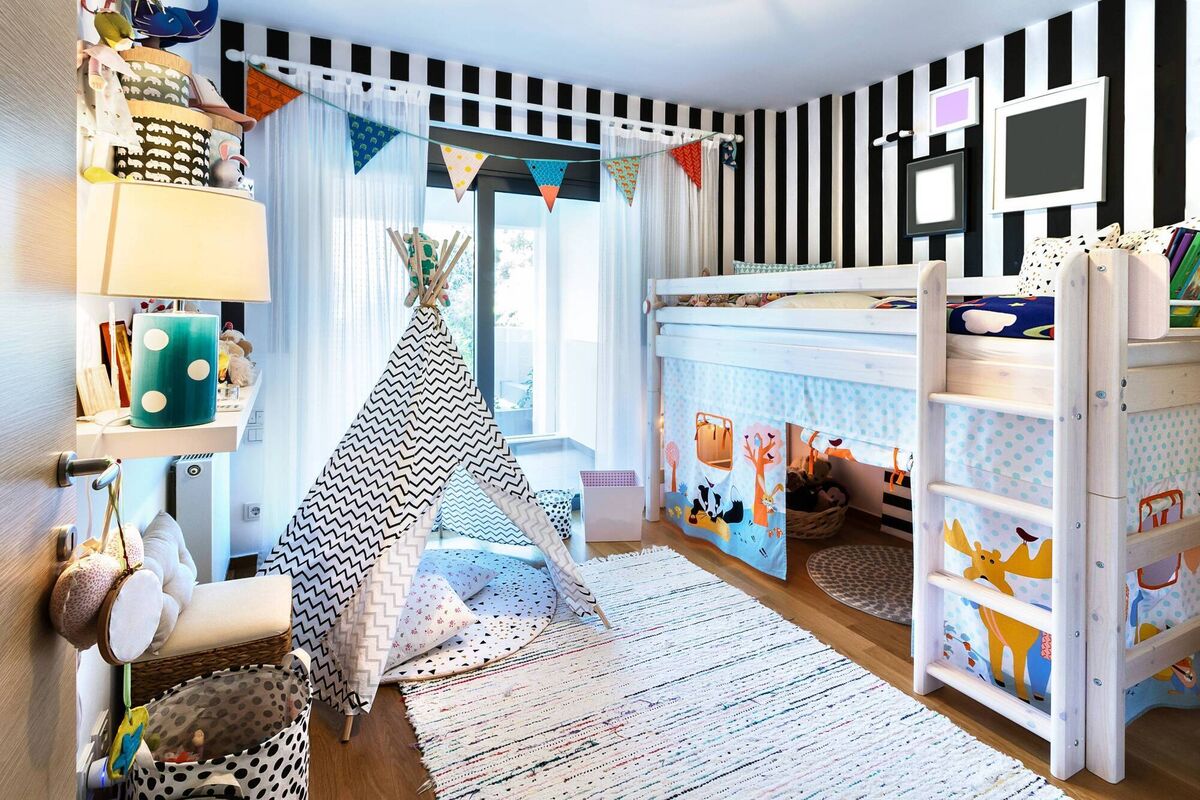
A gorgeous kids’ bedroom complete with teepee. Pictures: iStock

Designated areas allow each child to define their presence and taste while maintaining a precious sense of connectedness for as long as they deem this cool. Be open to allowing distinct wall colours and wildly clashing rugs and accessories — it’s a small price to pay. Free-standing bookcases set back-to-back or set at 45 can work as room dividers and storage heroes in one go — butted up to the bed heads if you fancy. Secure them firmly to at least one wall for safety’s sake.

Closets and rails

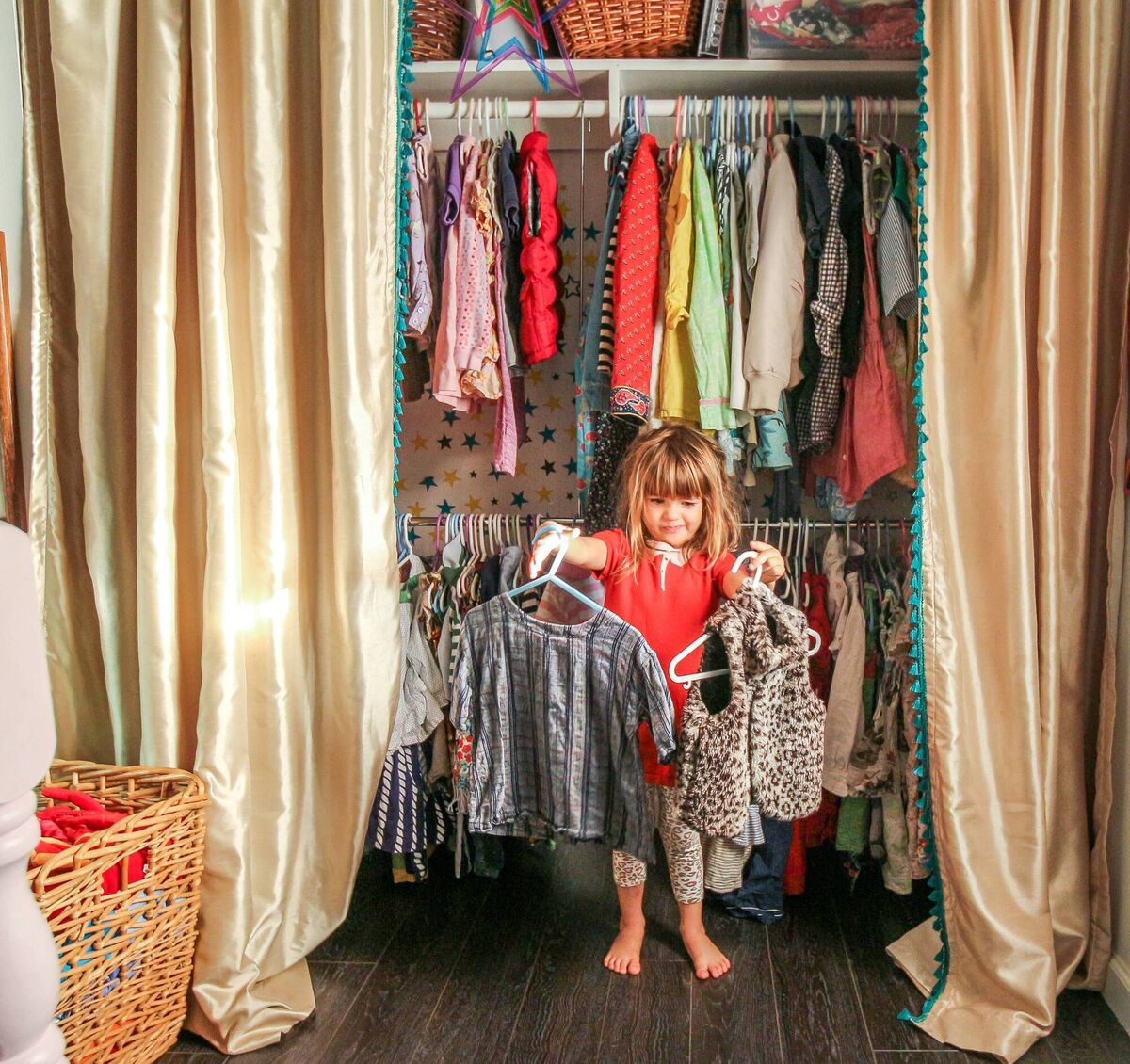
Miss Bradshaw’s little closeted area is created by simply hanging a curtain over a shallow area on one wall. So much more accessible than a solid wardrobe. 

My daughter is studying in Cork, and living in a house of 10. Her new room has a tiny walk-in wardrobe under an attic slope.

It’s already proved life-altering. No, I’m not suggesting a full walk-in wardrobe for a five-year-old, but taming clothes on hanging rails and shelving behind a hefty curtain, or building a closet into an angle of wall offers great accessibility and visibility compared to the physical intrusion, shadowing and interior gloom of a typical free-standing wardrobe and chest of drawers.

Free-standing furniture scattered around a room, even if it’s centrifuged off the walls, is surprisingly demanding in terms of space. Think about an area of the room they can step into to fully see their clothes and to replace them easily on open, height-appropriate rails.

The area on the floor can be set with baskets and boxes to micro-manage shoes and even the odd group of toys (don’t let these wreck the area), and large shelves for out of season items can be built in overhead.

If you are building or renovating, give the inclusion of real closets in every bedroom some serious thought — architects love them.

If you’re concerned about doors and little fingers? Pocket doors that slide into the wall, surface mounted roller doors, and curtains on a simple pole can do the trick.

In this at least, the Americans have it absolutely right — closets rock.

More in this section

Revoiced

Newsletter

Had a busy week? Sign up for some of the best reads from the week gone by. Selected just for you.

Cookie Policy Privacy Policy Brand Safety FAQ Help Contact Us Terms and Conditions

© Examiner Echo Group Limited