Home Q&A: Why it's worth an extra €20,000 if you can prove a property is derelict rather than vacant

There’s an extra €20,000 on the table if you can prove the distinction between whether a building is derelict or vacant
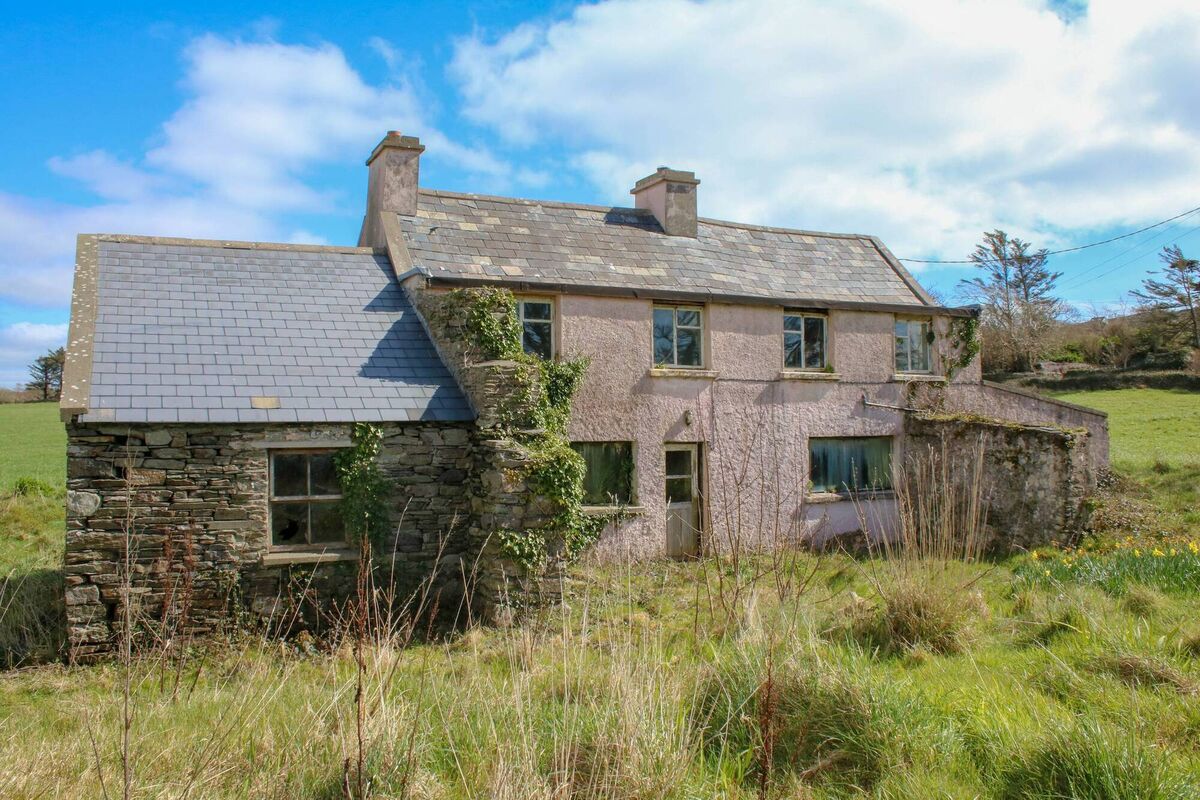
If you want to bring new life to an old building, the Vacant Property Refurbishment Grant (VPRG) offers up to €50,000 for a property that has not been lived in for at least two years. File pictures

If you want to bring new life to an old building, the Vacant Property Refurbishment Grant (VPRG) offers up to €50,000 for a property that has not been lived in for at least two years. File pictures

How do I officially prove a property I want to refurbish is derelict?

The Vacant Property Refurbishment Grant (VPRG) has attracted a lot of attention from individuals willing to re-imagine an old building, but what about something that’s completely uninhabitable to the point of dereliction? There’s an extra €20,000 on the table if you can prove the distinction between whether a building is vacant or derelict.
Let’s just go over the system in broad strokes as it stands first. To apply for any of these grants, you need to either own the property or be in the process of buying it (some form of evidence that you are in serious negotiations will generally be enough).

The description “vacant property” covers a range of buildings in various states of disrepair. The VPRG offers up to €50,000 for a property that has not been lived in for at least two years. That’s the bar, and you have to prove that the 24-month period stands up to close examination.

The term 'vacant property' covers a range of buildings in various states of disrepair. File picture

The grant can also be applied to properties that have never been used as residential buildings (but are not derelict). In both cases, the building must have been built up to and including 2007.

To prove that a property has not been inhabited for two years, many people use ESBN disconnection records or the affidavit of former owners or neighbours. The figure rises to a maximum of €60,000 for vacant properties on offshore islands (€84000 if derelict).

If you have a traditional house and are applying for this grant, you can secure up to €5,000 (or 67% of the costs) for expert conservation advice on how to refurbish it. For the standard grant, there’s 10% of the net construction cost, including VAT or €14,000, whichever is less, included under works.

Secondly, there’s the Vacant Above the Shop Grant, which arrived this year - a real game changer for anyone looking to live right in a village, town or city who is happy to roll up their sleeves. It doesn’t have to be a unit above the shop; it could be at ground level and set off to the side.

On the mainland, the maximum grant here is €95,000, while on islands offshore this rises to a very tempting €114,000 (or €138,000 if you are creating two units). There’s also an advice grant of up to €5000.

You must own the property or be in the process of purchasing it, and it can be lived in by the applicant as their primary residence or rented out. Just because a building is vacant for even a very long time, it does not mean it meets the criteria of derelict in the eyes of the local authority. Assume nothing.

There’s an extra €20,000 on the table if you can prove the distinction between whether a building is derelict or vacant.

Moving to derelict buildings, the grant funding increases dramatically, and little wonder, as the property is going to need so much more structural attention, bringing it close to the figure required for a new build per square meter (and in some rare cases more).

With the VPRG, there’s a maximum award of €70,000 for qualifying works. For offshore islands, this figure is tweaked to €84,000.

All of these figures include the VAT you will be paying for supplies, skills and services. The maximum amount allowed is based on a two-storey, three-bedroom semi-detached home. Qualifying works in the Vacant Property Refurbishment Grant and the Vacant Above the Shop Grant should be balanced against SEAI energy retrofit funding, which is also available to renovators of properties built before 2008. They work well together, but you cannot use both grants for one type of work.

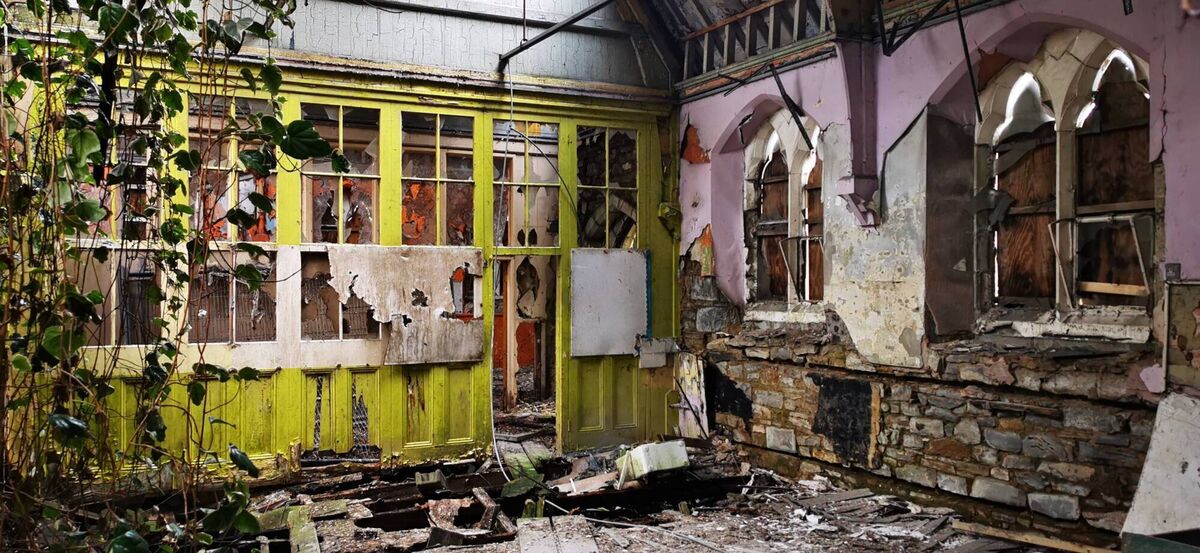
So, just what makes a building certified as derelict and qualifying for increased funding? Dereliction is not just a house in bad condition. This property will not just be long abandoned as a home; it will be structurally unsound, uninhabitable or in need of out-of-the-ordinary repairs that render it unlivable.

The needs cannot be purely cosmetic ones. The roof might be in, it might have been taken apart by flooding, or the foundations may be compromised – you won’t be living there for the duration.

A pile of stones indicating a house is not a derelict building either, so put aside the dream of quietly demolishing the ghost of a house and starting again on the back of a VPRG. That’s going to be regarded as a new build, and large, complex extensions to small rural houses are poorly regarded by most authorities.

Now we have to confirm that the building is derelict, to make it official with the local authority and access that grant aid. In bald terms, this takes “confirmation the building is on the Derelict Sites Register or an independent report from a qualified professional confirming it is structurally unsound and dangerous” ( Gov.ie).

So, if the building has been recorded on the Derelict Sites Register as derelict, you don’t need to prove it again. Otherwise, together with providing evidence that the property was built before 2008 and has been vacant for two years or more, you will also be required to provide an independent structural report, paid up front by you, with your application. Only a suitable professional like a chartered surveyor, structural engineer, or architect can carry this out.

“The survey typically examines the building’s structure, including walls, roofs, floors, foundations, chimney, openings and signs of movement, collapse, damp, rot, fire damage, vandalism or long-term weather exposure,” says John Morrisson, a civil and structural engineer based in Conna, Co Cork, whose practice John Morrisson Consulting Engineers Ltd ( Jmce.ie) supplies multi-disciplinary engineering, architectural, and planning consultancy services.

Due to safety issues, these structural engineers’ reports are often virtual and are non-invasive, adds John, who notes the surveys also cite safety, access issues, services, drainage, boundary conditions, vegetation growth and evidence of hazardous materials. “The resulting condition survey records the property’s visible defects, identifies immediate health and safety concerns, comments on likely causes of deterioration, and sets out recommended remedial work,” he adds.

“It includes ample photographs and, where needed, photographs to illustrate defects, structural concerns, access recommendations and recommended areas for repair or further investigation.”

The funding is all retroactive so file all your expenses. Picture: iStock

Depending on the complexity, the cost of such a report can vary from the high hundreds to as much as €2,000, and you can recover this money as part of your grant funding under net construction costs if that suits you and the money is not sucked up in other areas.

As with all these refurbishment expenses, the funding is retroactive. Carefully file away your invoices and receipts showing payment that was made to specific, fully tax-compliant, insured and qualified individuals working on the project. If you buy materials yourself, again, you supply the paper trail.

x

More in this section

Revoiced

Newsletter

Had a busy week? Sign up for some of the best reads from the week gone by. Selected just for you.

Cookie Policy Privacy Policy Brand Safety FAQ Help Contact Us Terms and Conditions

© Examiner Echo Group Limited