Garden Q&A: How can I cut back my firethorn to a manageable size
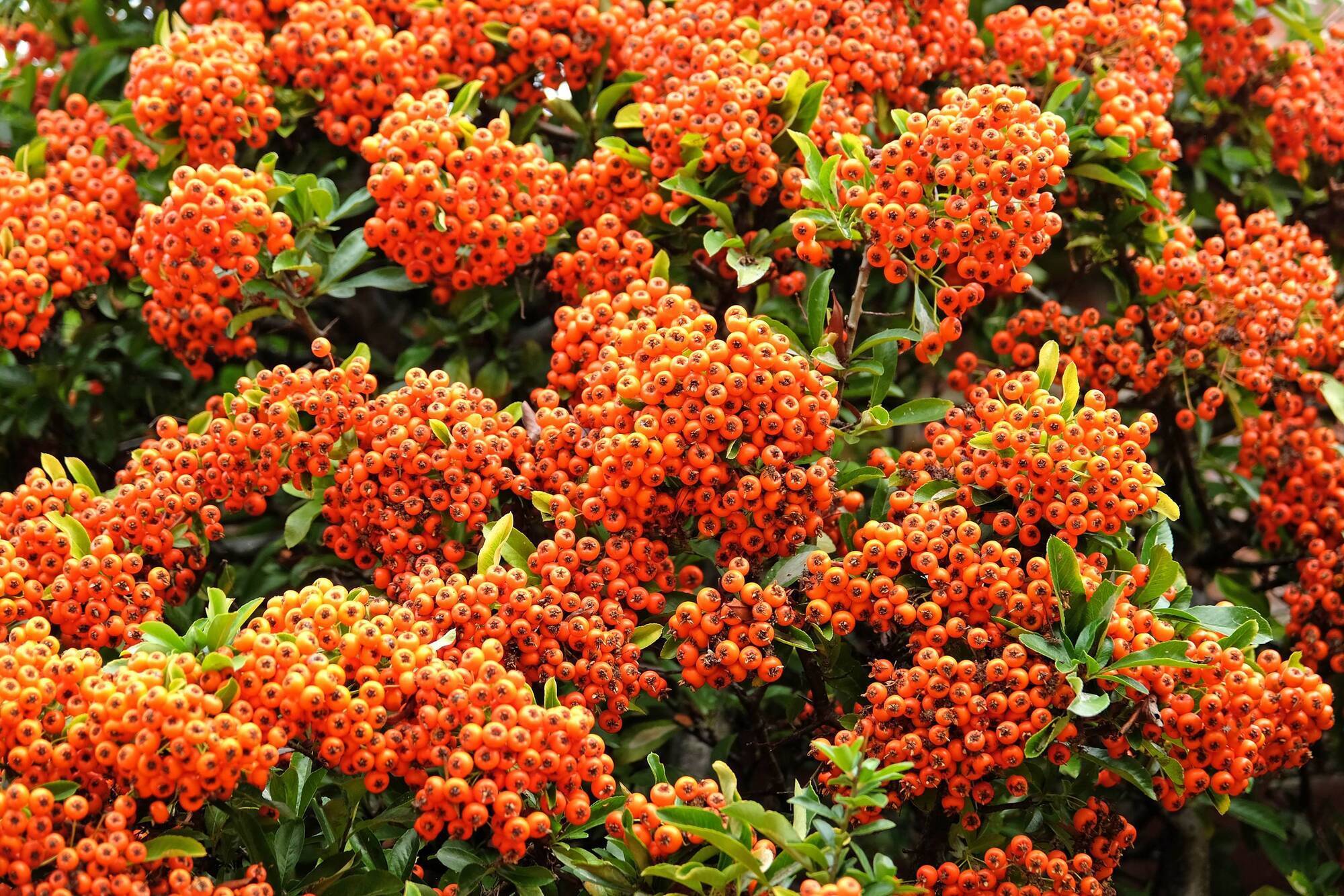
Bright orange Pyracantha 'Fiery Cascade' firethorn berries.
Commonly known as firethorn, this vigorous, resilient, evergreen shrub is valued for its generous clusters of pale, pollinator-friendly flowers in spring, which are followed by its handsome autumnal display of colourful berries. Depending on the variety, these can be red, orange or yellow.
The challenge with growing it as a wall-trained shrub is keeping it in shape. Pyracantha naturally forms a tall, dense mass of thorny branches that can quickly become an impenetrable thicket unless kept diligently pruned and trained. To work as a wall-trained shrub, it should be pruned twice a year, firstly in spring just after flowering to cut back any branches growing directly outwards from the plant as well as any unwanted branches, and then again in late summer/early autumn, this time shortening all side shoots to just above any cluster of berries.
Harsh pruning, especially if carried out at the wrong time of year, can drastically reduce both the flowering and berrying displays, while also leaving plants looking ungainly and ill-proportioned.
Restoring a badly overgrown wall-trained pyracantha requires drastic action in the form of hard pruning the plant in early spring. You’ll need to reduce its woody branches by as much as half, with the aim of creating a neat framework that can then be trained to grow against the wall. This will mean sacrificing much of its display of flowers and berries for that year, with the long-term aim of creating a neater, much better proportioned plant. Just make sure to wear goggles, protective gloves and thick clothing while doing so, as its long thorns are famously sharp and can easily cause injury, the reason why pyracantha is also very popular as a vandal-proof informal hedge.

CONNECT WITH US TODAY



Be the first to know the latest news and updates