Four-poster beds: A style to suit bedrooms throughout time
Kya deLongchamps advises on a regal-style bed that suits spaces of every era
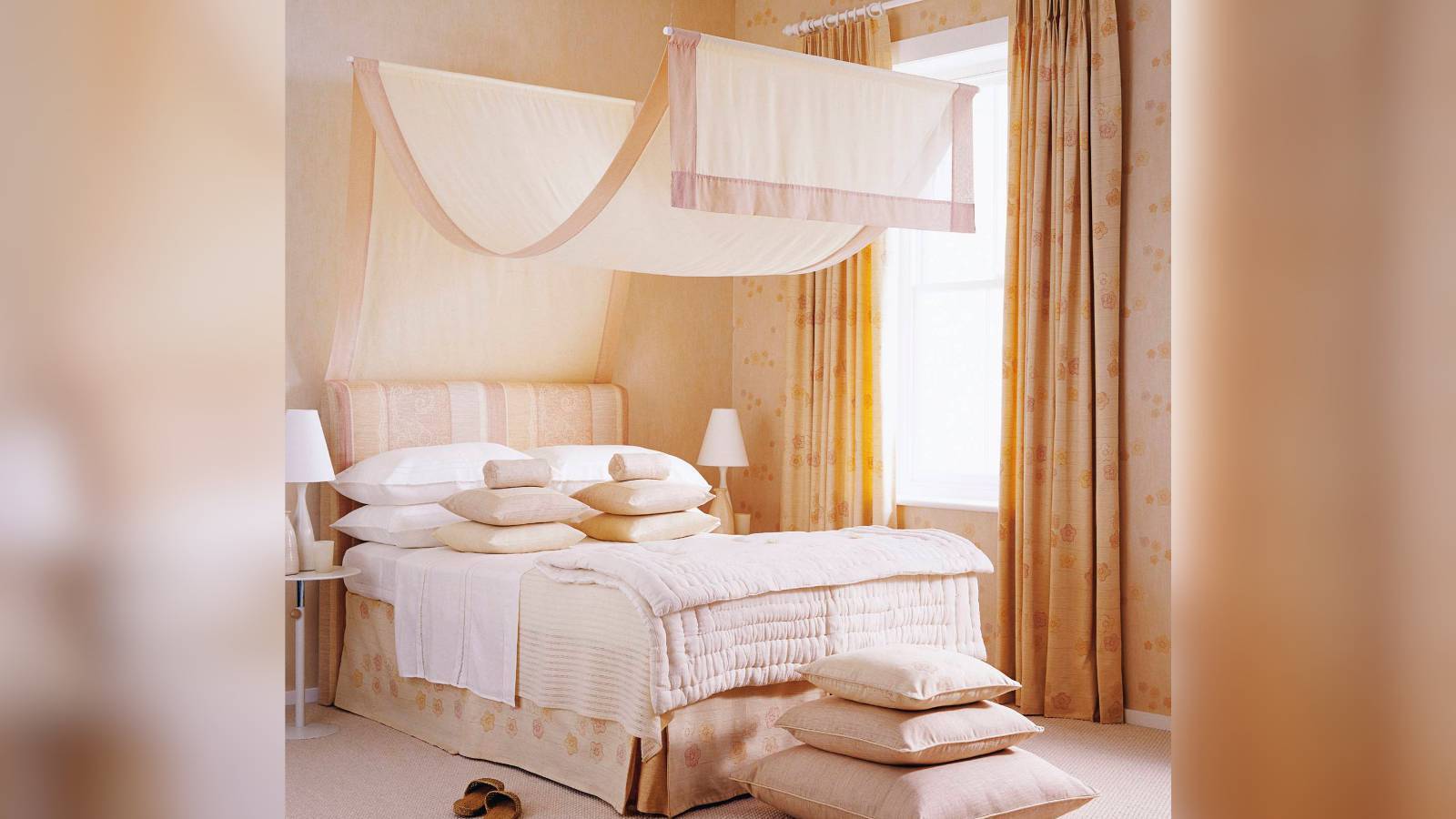
A very clever nod to a conventional canopy created with two rods, a little wire and a sheer panel. For a contemporary look, concentrate the drapery at the head end of the bed. Picture: iStock

A very clever nod to a conventional canopy created with two rods, a little wire and a sheer panel. For a contemporary look, concentrate the drapery at the head end of the bed. Picture: iStock

The four-poster bed. Is it just a lot of overbearing grandiosity? Why would we even consider enthroning a bed right to the ceiling? Well, four-poster beds are having a hearty renaissance this winter, and if you thought you wouldn’t, couldn’t have anything that over the top — you could be missing out on a seriously beautiful trend.

Many of us have only experienced a four-poster in the honeymoon suite of a boutique hotel. Even floated out in chintz and pink brocade, they have sexy, decadent connotations. Today’s pole beds, four-posters and cabinet beds of diverse types can suit a variety of classic and contemporary spaces.

Teased open with a tracery of uprights, or stated boldly in cup-and-chalice carving, it’s time to jump under the covers of this ancient protective piece of furniture.

Here comes just a little history. [Four-poster beds were introduced as a mark of wealth and status and are believed to have been made popular first in the 14th century in Austria.

Considered the bed of kings, they demanded quality, showy timbers to support heavy draperies — not something every family could afford. Ostentatious or simply assembled in planks, a bed of this kind would often be part of a bride’s trousseau, taken apart and brought with her by cart to her new home. Their enclosing nature cloaked the sleepers off from the view (whatever they might be up to) in what was then quite a social space.
People often received visitors in their beds.

Crucially, the bed, once pulled shut, delivered a slightly warmer microclimate in the misery of the cold and draughts typical of a late Medieval home.

Surrounding curtains invoked a welcome sense of intimacy and separation in a larger household where your chamber servants could be sleeping on the floor of the room.

The tester overhead framed the ceiling or the thatch, ensuring debris (including vermin and even bats), didn’t land on your face during dreamtime.

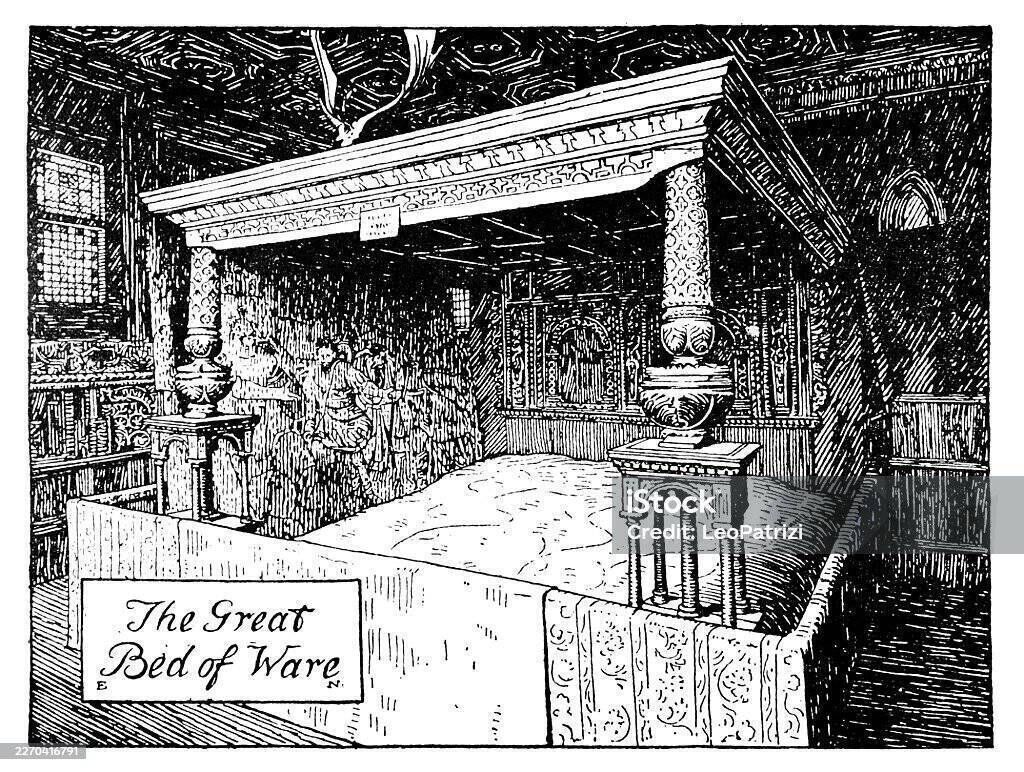
One of the most famous surviving early four posters is the magnificent Elizabethan 3m-wide Great Bed of Ware, kept at the Victoria & Albert Museum in London — well worth a gawk. Shakespeare even referenced this super-bed in Twelfth Night (c.1601/1602).

This is a high-contrast pen-and-ink architectural drawing of the legendary Great Bed of Ware, an enormous oak four-poster bed famously mentioned in English literature and history. The illustration captures the bed's immense scale and intricate Elizabethan carvings, featuring its massive, bulbous posts, decorative tester (canopy), and ornate panelled headboard. The artist has used dense vertical hatching and cross-hatching to define the deep shadows of the room and the rich textures of the carved wood.

Carvings in bulbous cup-and-chalice forms were popular for these aristocratic nuptial bowers, with the Georgians introducing gilding, feathers and rich velvets from across the Empire to their fabulous bedrooms.

Over time, the curtains and the tester over these beds were gradually dispensed with in favour of lighter curtains, both sheer and insulating. The posts at the end were kept for their structural support and to show off fantastic carving, but a lot of the decorative business moved to the head of the bed, focusing more on a headboard.

What this did leave behind was a ghost of a bed — a bed with uprights, tenting, a connection to the ceiling, and it’s this look we’re falling back into bed with this season.

If all you have to work with is a box-spring and mattress, we can still indicate a canopy bed with a little bit of home crafting. First of all, how present do you want the bed hangings to be? How about just curtains without vertical supports? Install curtain tracks that follow the dimensions of the mattress below — we can have just sheers around the bed, taken right to the floor (add 5cm to 10cm to the drop). Combine with a lovely headboard to make use of the floaty translucent effect when the sheers are even partially pulled over.

This is a good approach for a smaller room you don’t want to overwhelm with too much period or structural detail. If you prefer, use suspended curtain rods held very slightly off the ceiling (even tab-top curtains can be neatly elevated here in an afternoon’s work).

Ensure you use the correct mounts for your tracks or rods, and anchor to the supporting ceiling joists, as this staging is not something we want to ever collapse.

Next up is a canopy arrangement over the head of the bed. Again, this can be contemporary or Downton Abbey in flavour; it’s really about the weight of materials you use.

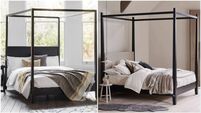
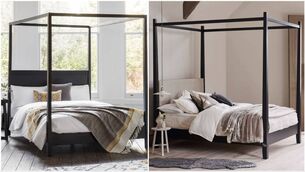
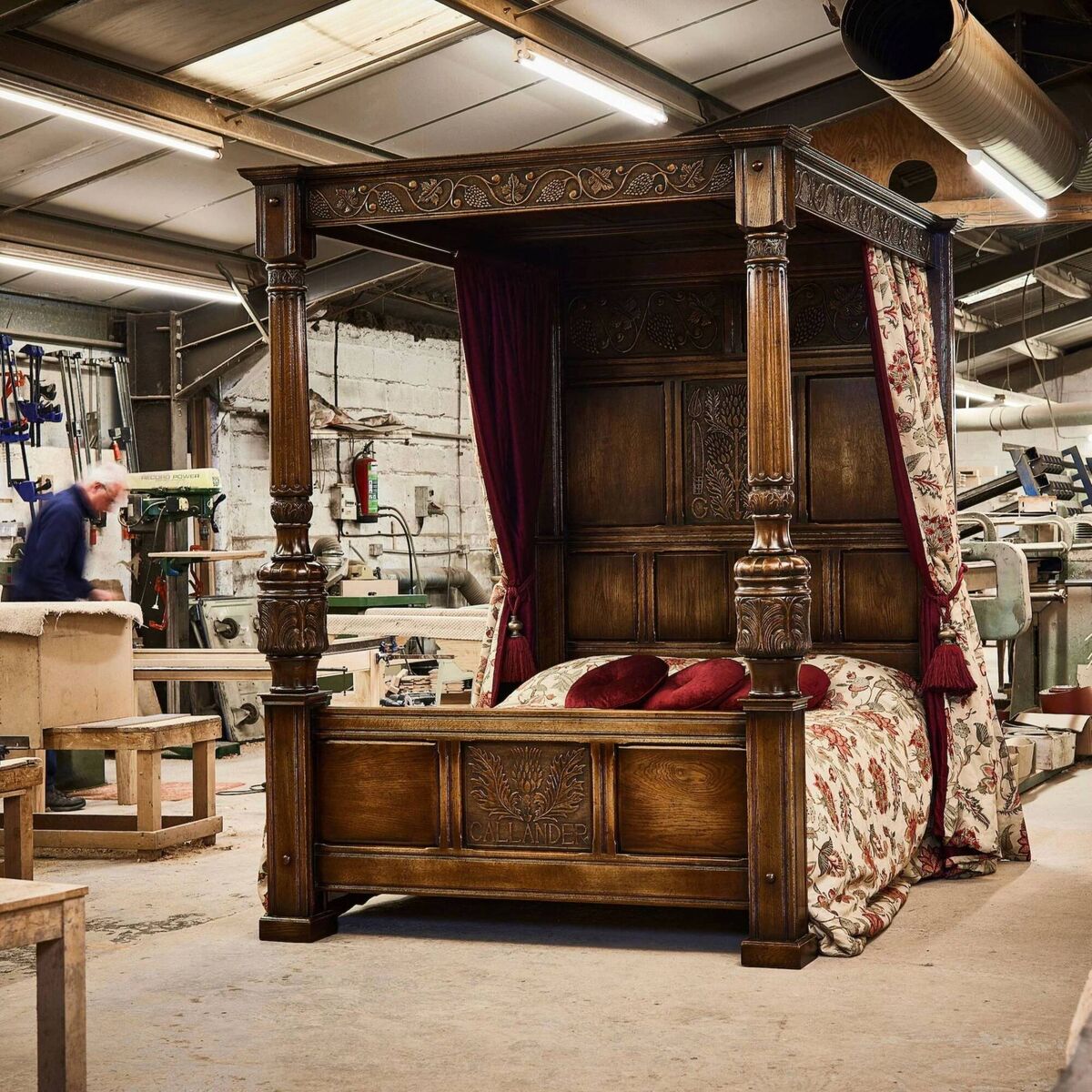
A fabulous handmade four-poster bed by Royal Oak Furniture Co in a Tudor style which can be finished with the owner's name or insignia. Prices from around €20,500 not including delivery, Royaloakfurniture.co.uk (Yorkshire).

It’s possible to line the fabrics in two colours or patterns for something really gorgeous here. For a period piece, we can frame a support in a rectangle of timbers over the bed head, and then hang our curtains, sheers (or both) from this, separating our bed-dressings in a dreamy sweep.

These can be drawn slightly over your pillow position, adding a bit of shelter from view if there’s a door likely to swing open near the bed-head. There’s a range of devices to do this, including circular crowns (a ring) for a the head end of the bed. Going further, we can introduce heavy pleated curtains in a pillar of fabric to the bottom corners of the bed. If you have a love of combining fabrics and patterns, this is a stunning device combined with a long, upholstered ottoman at the bed’s end, a covered box-frame, and sumptuous bed clothes.

Go to a proper haberdasher to learn more about the weight, drape and other talents of materials like slub-linen and low pile velvets. Some materials are designed to drift and puddle; others will sit up with additional structural definition.

The supporting canopy over the bed can have a simple pole or a deep scallop edge — there are hundreds of possibilities for a fantasy bed tricked up from a remarkably simple buy or something built on-site around a box-spring or bed-frame if you have the skills. Take time to design the bed to suit the space, and avoid a pretentious monster of a thing that will raise eyebrows (not compliments).

If you buy at auction or from a dealer, most period beds come to pieces, but their dimensions can be truly vast. Expect to largely find reproductions from the 1980s, when decorators got flirty with naughty, nostalgic bedrooms including canopy confections frothing in ruffles.

Whatever its era, ensure you can get that elephant pivoted and up the stairs, and that it will make the ceiling, before waving your bidder’s paddle over your ears.

More in this section

Revoiced

Newsletter

Had a busy week? Sign up for some of the best reads from the week gone by. Selected just for you.

Cookie Policy Privacy Policy Brand Safety FAQ Help Contact Us Terms and Conditions

© Examiner Echo Group Limited