Revealed: The best blinds to transform your windows and living space
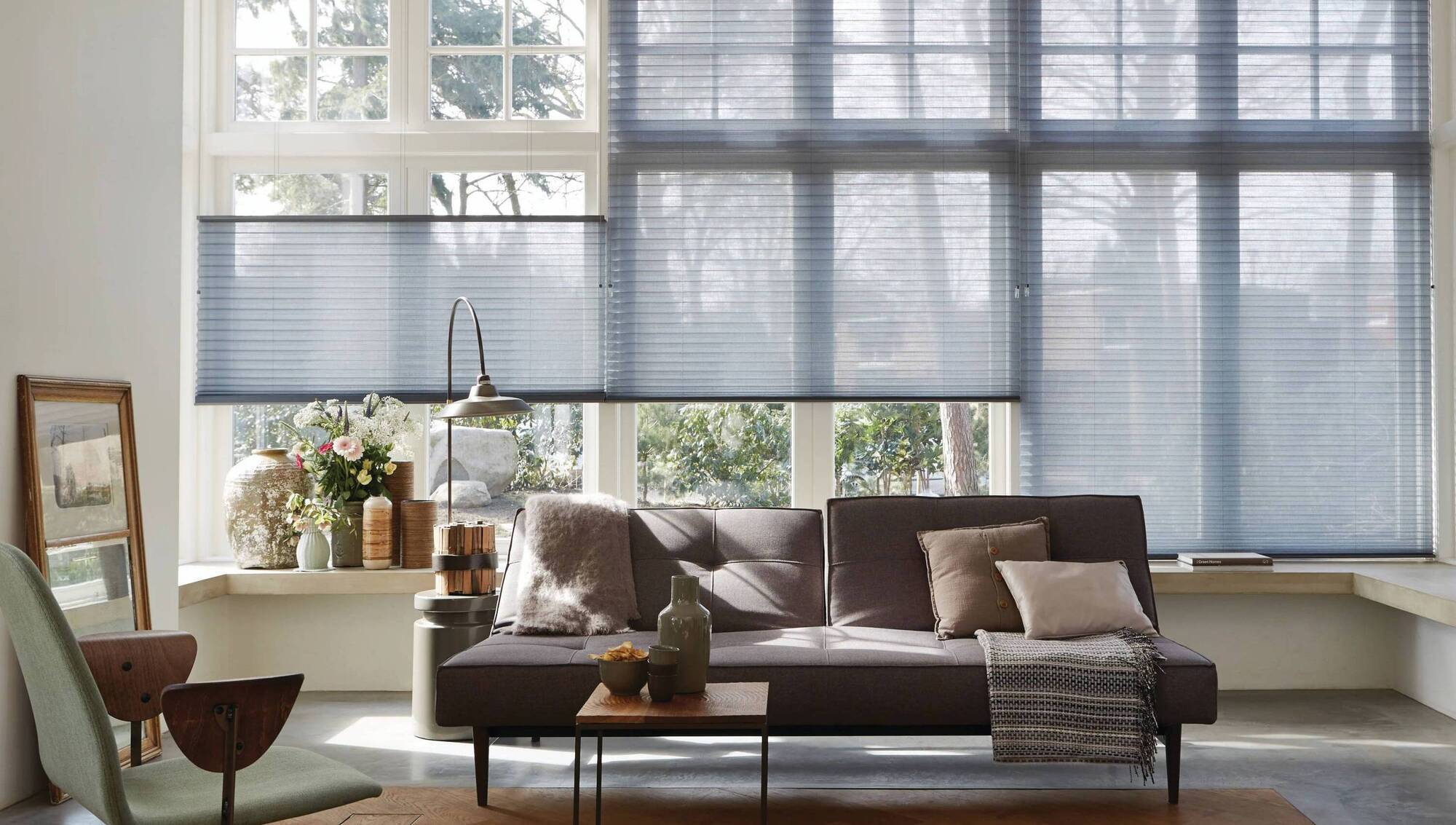
Duette blinds from Hillarys can reduce UV rays by 99% and offer high thermal efficiency as winter approaches.
Blinds are a versatile, affordable update.
With light and thermal control as standard, used alone, or combined with curtains, the choices, price and performance have never been better.

Using effortless no-drill installations, you can transform your experience of your windows and the space they are set in minutes after their delivery.
Unpacking will take you longer than setting up a wall-tensioned blind.
What do you want from each window position? This would obviously include the overall aesthetic of the blind within this room (open and closed), its impact on an available view (or distant eyesore) and most importantly, the quality and quantity of the light the blind will transmit in use.
Are there insulation, glare or solar gain problems to tackle? Here are four areas to deploy some trending and impressive light shifters.
To showcase an uninterrupted slice of the outdoors (without revealing what you’re up to), my recommendation would be a pleated panel that floats up and down on an inset frame. It just requires a bead depth of 18mm-30mm. Set to keep the view in the top half of the window, you can WFH or prance around your ground-floor apartment without fear of being seen. This type of blind is a no-drill (so could be self-installed) and has the cheeky name of top-down/bottom-up (TDBU).
They are intended for PVC windows with a bead that can hold a light frame in which the panels are set. If you have wood windows or a reveal for a blind and want a TDBU, talk to your supplier about alternative fixings. Perfect-fit styles can be installed on windows, glazed doors, casements and tilt-and-turns.

Several firms offer thermally efficient perfect-fit pleated blinds, Venetian blinds and day/night models, with drops (lengths) as short as 20cm for those tricky top-opening sections; prices from €30 ( Blinds2Go.ie).
Ikea's tensioned blind systems have a different surface-mounted rail that can work in most window types, from €25. Where you want to completely reveal a view, install your blind outside the reveal (termed an exact fitting or face-fixing), and set the cassette or bracket/rail high enough to pull and stack the blind up and out of the way.
A hack for odd windows and sashes? Use a blind, set to pull up from the sill with a tensioning system and pulls. Bottom-up Roman blinds (rare) are available at kingblinds.ie. If you are renting, always veer towards tensioned, no-drill blinds, as they can be installed and removed without damaging the wall or reveal. For bead depths as shallow as 11mm, explore Hillarys INTU Micro Pleat and Micro Hive.
Direct sunlight can cause passive solar gain and glare that can wreck the enjoyment of even a brand new A3 house with lots of south-facing glazing. Over time, even where you’re enjoying all that juicy sunshine, vulnerable fabrics, including some laminates and LVT, can be bleached from unmanaged UV and IR damage. Even the best low-e glazing will not block 100% of UV and is intended primarily to retain heat in winter. Shading in the form of architectural overhangs and/or external awnings outdoors matched to blinds is vital to wrest back control. Most blinds, even soft Roman blinds luffed up against the glass, will cut UV and reflect IR light. Often, just clipping the skyline with your blind by 20cm will tame direct light. The blind does not have to be expensive or feature ugly reflective metallic backings outside to reduce UV rays and IR, but cheap roller blinds in one layer of fabric and a deep colour are very likely to fade.
Investigate pale and reflective UV-protective backings on traditional blinds first. Lightly made honeycomb-structured blinds with a UV backing can also help to insulate windows in winter. Double blinds pulled out from one cassette offer elevated aesthetic flair, and with a second sun-screen (semi-translucent) they are a great option to tame the rays down to a diffused glow. If you’re tortured under a fixed roof light or opening roof window, investigate Velux Anti-Heat blinds and solar-powered awnings. Their external anti-heat blinds come in a transparent mesh, which can be combined with a decorative interior blind and even insect screens. Prices from around €109, Velux.ie. If you do change out your window for modern low-emissivity designs, you can expect improved UV performance as standard.

For a premium spend (€300-plus per window), Luxaflex Silhouette blinds are real stunners, especially in variations of white. They take the best of the pinpoint control of Venetian blinds, add a soft diffusing glow with a translucent sheer style cover on both sides of the blind. Unlike typical Venetians, the vanes are a soft, pliant S-shaped material, and the whole look and feel is very airy and elegant.

Luxaflex offers two vane size options to suit small and wide windows in Silhouettes. For an almost clear view through the vanes, go for the gossamer sheers of the Luxaflex Silhouette Clearview range. Available in motorised options. Log on to Luxaflex.ie to find Luxaflex showrooms and interior design agents all over Ireland.
On a budget, day & night blinds glide over a top-mounted spindle to set the view or privacy using zebra stripes of sheer and opaque material. Available in a wide choice of dual materials, you can raise and lower the blind entirely too, just as you would any roller blind; from €22 made-to-measure, suppliers include Blindsdirect.ie.
Keep in mind that fabric choices, motorisation, decorative trim and chains can double an entry price, but remote operation is a highly competitive area. Shop around.
When ordering DIY installs online, follow the maker's measuring guide and pay that bit more for their measuring guarantee, especially when placing a pricey blind inside a recess.
With elaborate or high windows, motorisation and/or expensive fabrics, a measuring and fitting service from a local agent will completely protect your investment.
True black-out blinds can make all the difference if you’re doing shift work or live in an area with overpowering street lighting, and no - black-outs don’t have to be black. I would argue again for the use of a double-blind in most situations, as a single black-out blind with complete opacity can sit starkly on a window when off-duty.
We want an exact fit that sits outside the recess and falls neatly against the wall, ensuring there’s no sneaky glow at the blind edges. Allow an additional 10cm all-round if you want to be sure of little to no light bleed.
If you’re seriously into the dark, Hillarys is one of a handful of quality suppliers offering a total blackout solution. Its Blind Screen has a pleated, honeycomb fabric fitted within a specially designed frame.
Pulled across horizontally like a louvre door, it completely seals the window from illumination from outside. The honeycomb design also reduces heat loss through draughty windows by up to 40%. I’m drawn to this blind in its Scene Set Light Grey (a blue/grey). Frames for the Blind Screens come in white, grey or black. POA, hillarys.ie.
If you have an odd recess or window design, combine the best black-out blinds you can fit with generous double-layered curtains, with the pole set to take the curtains back from the reveal by 15cm-20cm.
Use small-pleat designs (pinch or pencils) and curtain tracks rather than rods to keep the material close to the wall at the top. Ceiling tracks for floor-length curtains are hotel-chic, and trending for AW 2026. Ikea's Rosenmantel black-out curtains are just €25 a pair (135cm x 250cm) in a range of colours, complete with heading tape, Ikea.com/ie.