Home Q&A: How GPS trackers can keep our pets safe and healthy
At home and on staycation, this tech is offering more and more ways to provide us with vital peace of mind
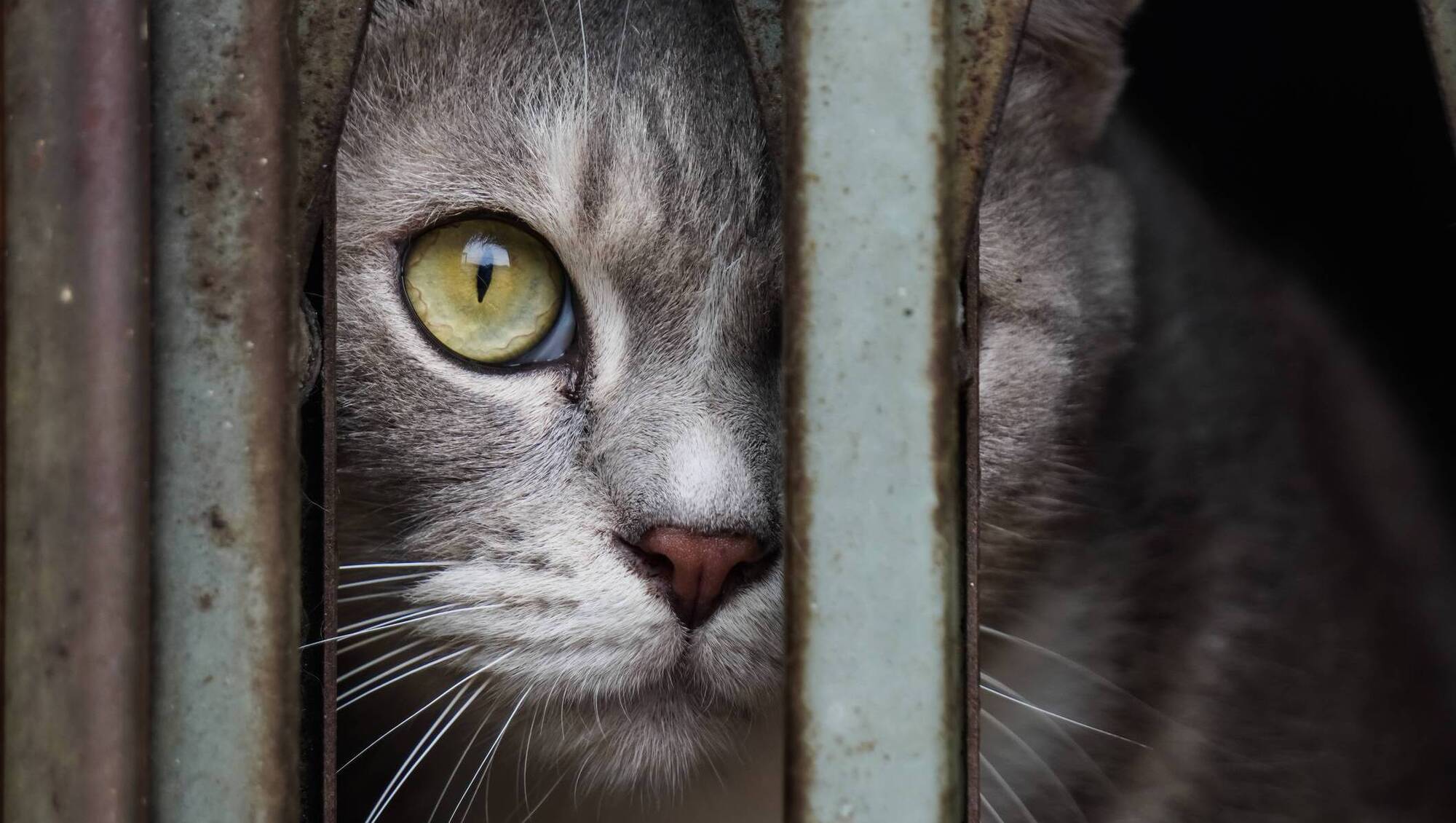
Cats rarely get lost. The real issue is that most missing cats (80%) are often stuck in places like garages, sheds or locked houses, unable to escape on their own. File pictures


Cats rarely get lost. The real issue is that most missing cats (80%) are often stuck in places like garages, sheds or locked houses, unable to escape on their own. File pictures

Home or away, GPS pet trackers offer multiple benefits, keeping your pet under a digital eye whatever they get up to. Just to clarify — no tracking device should stand in the place of enclosed, safe fencing and having your dog under proper control out on walks. If you ever intend to take them off the lead, they should be trained to recall.

Olivia O’Gorman is a dog training specialist working with gundogs and companion pets at Canine Connect, Cork. She regards GPS trackers as part of responsible dog ownership. “Many of us think losing a dog is something that could never happen to us, but unfortunately it can, and when it happens remotely, things can turn ugly very quickly,” she says. 

“My dog has some health issues that could compromise his physical abilities in the field, but I still want him to enjoy doing what he was bred to do. Having a reliable GPS tracker gives me enormous peace of mind.”

When a dog breaches fencing or gets away from you, everything can go straight to the dogs. Your pet may lose its domestic mind in pursuit of “prey”; it could take fright or get over-excited and bolt. Collars, clips and buckles break.

If you want an idea of the deep distress and sad regularity of missing dogs and cats, look through the postings on the Lost & Found Pets (Munster) on Facebook. The first thing to understand is that all GPS trackers require a live-data connection to work in real-time (often with feedback every two to ten seconds while live and three to sixty minutes on default settings).

They don’t rely on short-range Bluetooth or wifi signals and offer unlimited range. However, standard GPS dog trackers demand reliable network coverage to send information to a charged phone. “We have a number of clients who use Tractive devices and Apple AirTags,” says Olivia.

“Both systems ultimately rely on mobile network coverage to function, just in different ways. Tractive uses cellular coverage to transmit real-time GPS data. However, if a dog enters an area with poor or no signal, such as deep valleys, forestry or remote land, updates may stop until coverage returns.”

What about using cheaper Bluetooth tags, like Apple AirTags, repurposed as pet trackers? “Apple AirTags rely on nearby iPhones through the Find My Network to update location data,” says Olivia. “In isolated rural areas where there may be few people or phones nearby, tracking updates can become very limited.”

So, the Bluetooth hack could be next to useless if a squirrel-chaser goes on a proper marathon, a moment where satellite-based GPS (when operating) offers more precise locations and more frequent location updates.

Transmitting GPS data usually requires a paid subscription for a dedicated branded app, on top of the cost of the tracker, but there is a growing number of GPS units in the €199-plus price point, which offer a lifetime SIM and no additional costs. Look into PitPat and Pawtrak.

Otherwise, the longer the subscription, the lower the subscription price. Tractive’s five-year standard policy comes in at €300-€5 a month, and this can be as low as €4 depending on the brand. Expect to be offered two levels of subscription, with additional features for a few euros more.

So, what can you do with the GPS unit? First up is geofencing. With a virtual fence set up using the product’s mobile app, if the dog or cat goes beyond a safe preset area, you will be instantly alerted with a notification via the app to your mobile and/or smartwatch.

The talents of GPS begin at home. Where you don't have full fencing, or you visit a property without it, a geofence can offer alerts when the dog is in a no-go zone.

This could be your cat going further than you’re comfortable with, or it could be that your gate was left open and the dog is straying. Unlike a conventional radio (shock/training) collar, there is no physical correction.

Whatever the reason the animal goes AWOL, with geofencing alerts, you can act immediately. If the dog hasn’t moved for some time, the collar may be off or have been deliberately taken off. Depending on the system you buy into, we can also program in multiple geofences. 

This means if you are at your parents’ home or farm, you can engage the geofence matched to their property to signal if the dog wanders into a forbidden area. With better brands, you can also set keep-out zones like ponds and driveways within any geofenced perimeter.

Now, while out walking, the reach of the GPS with good phone coverage and open ground is unlimited. If the dog frolics off into the woods, up the beach or into the urban jungle, you can follow their trail and locate them down to just a couple of metres.

This is enormously helpful if we’re on a dog-friendly staycation, and Floofy McDimblewit gets carried away. Leaving them at home? The GPS will let you know that the dog is being walked by the house-sitter.

If you are abroad, top brands potentially work in up to 200 countries around the world, using the local cellular networks. Check the specs and ensure you follow the app’s instructions if leaving Ireland. You will be relying heavily on reliable phone coverage.

We need the GPS collar to be accurate (expressed as positioning accuracy) — something you can trawl in reviews by tech specialists online. Tractive’s latest trackers have a loud buzzer you can prompt — great for finding dogs plunging through bushes.

Trackers such as Tractive with health monitoring offer recordable data on sleeping/activity/barking and even scratching, 24/7. Changes in behaviour over time can indicate a health issue that requires your attention. 

GPS trackers are scaled to the size of the animal to ensure they are lightweight enough not to interfere with natural movement or to cause strain on the neck. Some companies like Weenect and Pawfit offer very small units for very small dogs (Weenect.com from €44.99 plus subscription, Pawfit.com from €50 plus subscription). 

Some GPS users prefer to use a cat unit on their tiny dog. The GPS unit should be designed for a reasonable length of submersion if your dog is a swimmer (look for an IP67-IP68 rating) and they will generally survive standard rough and tumble, and a cat’s arboreal life. Check if your choice of tracker requires a highly specific collar.

Inside the tracker is a SIM and battery, which you will need to recharge every few days to every couple of weeks, depending on the product’s spec and your use of battery-hungry, live-time location. Wireless charging units are extremely handy.

Periodically, double-check that any collar or harness is secure enough to keep the tracker in place. Use a harness for the GPS if the dog is especially small. Cat collars with or without a tracker unit must always feature a safety release in the event they get hung up on branches.

When tracking a cat, heat-seeking maps will show you where Puss ventures and where she and her gang like to hang out. You can record the walks you take your dog to catalogue favourite routes. Some units include LED lights, handy if you like nighttime walks (on the lead) or to spot where the dog is in a larger garden.

Systems like Tractive offer extra features, allowing pet owners to act in community and report nearby risks in their area, from rat-bait boxes to potential walk hazards. Multiple people can have a dog or cat set up on their phone via a dedicated tracker app, and you can put all your pets on the same app with different GPS trackers of the same brand. Do keep in mind, it’s also flagging where you are going!

Even when your pet is safe and sound at home, a GPS tracker can monitor their health. Generally, this will settle around their heart and respiratory rate, as measured by their sleeping and active times. Monitoring and recording these vitals lets the software pick up on changes in behaviour that might flag illness.

AI-based behaviour monitoring is increasingly common with the latest series of top GPS collars. Some units even pick up on barking episodes and the short, furious bursts of scratching which could indicate a skin disorder (useful information to share with your vet). 

“Many of us buy health insurance, home insurance, life insurance and pet insurance, so in my opinion, having a GPS on both you and your dog in the field and at home is absolutely worth the money, even if only for the peace of mind. You are both worth protecting, whatever the cost,” says Olivia.

x

More in this section

Revoiced

Newsletter

Had a busy week? Sign up for some of the best reads from the week gone by. Selected just for you.

Cookie Policy Privacy Policy Brand Safety FAQ Help Contact Us Terms and Conditions

© Examiner Echo Group Limited