Letters to the Editor: Drug laws will not work miracles, funding will
'Someone dies of a drug overdose in Ireland every single day, and our death rate is three times the EU average.'
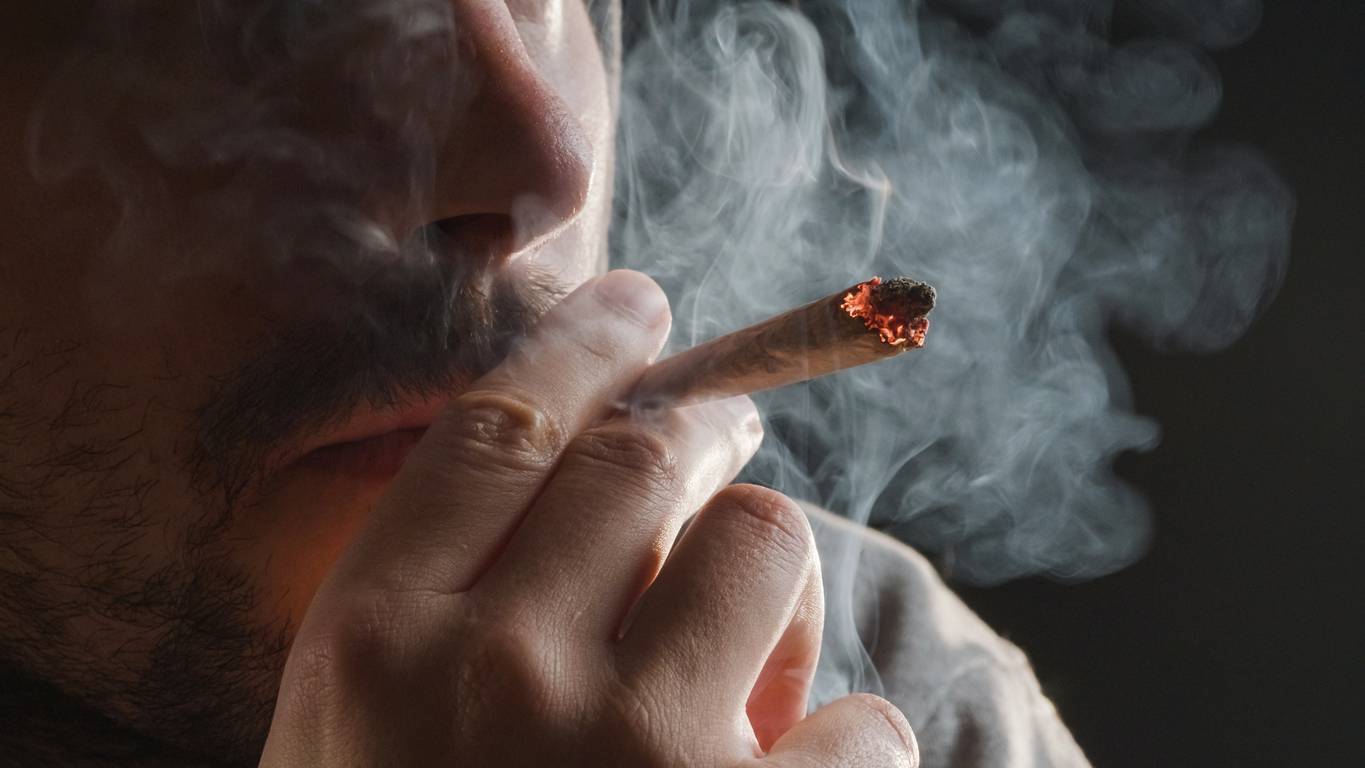
Politicians talk about decriminalising personal drug use as a health-led approach. I struggle to see how that claim holds up in practice.
Before anyone in Government starts congratulating themselves over another plan, they should ask a simple question: Where are those affected supposed to go when they need help?
The system doesn’t exist at the scale required. Not enough facilities. Not enough staff. Not enough resources.
Recovery isn’t a slogan or a press release. It’s expensive, exhausting, and mentally brutal. It demands everything, every hour of every day. And even then, there are no guarantees.
Having spent time in a residential treatment centre myself, I know what recovery actually costs.
The Rutland Centre charges €11,500 for its five-week residential programme. That’s before aftercare.
The HSE accepts referrals, but waiting lists are severe. At its worst, over 3,500 people were waiting for a detox bed; not therapy, not rehab, just a detox bed. The bare minimum of care — and even that seems unattainable.
Every politician reaching for the Portugal comparison forgets the fine print: When Portugal decriminalised in 2001, it doubled investment in services for addiction and recovery and, across the following two decades, overdose deaths fell by 77%. The law was not the miracle — the funding was.
Ireland wants the bumper sticker without buying the car: Decriminalise the behaviour, then abandon the human.
You cannot call it a health-led approach when the health system cannot support the people being referred to it. That’s not progress, it’s rebranding.
Someone dies of a drug overdose in Ireland every single day, and our death rate is three times the EU average.
Without immediate, free, long-term treatment capacity, it is hard to call this progressive reform. It reads more like abandonment dressed up as compassion.
Your editorial pertaining to our drug crisis, “Imaginative responses should be encouraged” (Thursday, June 25), points to the “Pandora’s box” potential of putting the onus on local authorities to deal with the probable increase in public drug consumption should personal use be decriminalised.
However, this problematic downside should not be allowed to cloud some of the positive potentials in any decriminalisation scenario.
When possession for personal use is allowed, people will not face criminal convictions that can affect their employment, education, housing, and family life.
This in turn should increase the potential of police and customs resources to be redirected toward the greater scourge of drug trafficking networks and organised crime.
Decriminalisation can lessen the perception that drug dependency is primarily a criminal issue rather than a health issue, thus encouraging people to seek help when criminal prosecution is no longer an obstacle.
It seems, from the experience of some countries, that real advancement is best achieved through linking with a broader health-focused strategy and not dependent on decriminalisation alone.
Therein may lie our biggest challenge!
The Oireachtas committee report on its recommendations to decriminalise personal use of controlled drugs like cannabis, heroin, cocaine, crack cocaine, hash oil, etc, does not take into consideration the harm that constant personal use of these drugs will do to users long term.
While there needs to be a health-led approach, it cannot be independent of other agencies.
How will this be funded and supported by a HSE already under pressure from the many demands made on it?
While Garda cautions could be the mantra of the day, with lower court appearances for personal users, this won’t stop the sale, supply, or importation by international or transnational crime groups of these drugs.
How will they deal with the added problems of increased addiction and use?
While this report emphasises the importance of prevention, harm reduction, and recovery, it does not deal with how it will reduce or control access to these controlled drugs whose addictive qualities vary in the substances used.
The levels of THC in cannabis has increased from 2% in the 60s and 90s to 15%-30% today.
This is the psychoactive substance that gives users a feeling of euphoria.
Hash oil and edibles derived from cannabis have THC concentrations that vary from 50%-90%, while medicinal cannabis has only 0.2%.
How do they hope to regulate, or what strategies do they propose to have in place, to deal with the increasing addictive qualities in these substances?
How will they hope to regulate and control the use of these drugs, or what’s put into them, with people already having mental health issues due to drug taking, when drugs like cannabis cause further harm such as paranoia, psychosis, depression, and anxiety?
Decriminalising personal use won’t stop organised criminal groups from selling their deathly ware or reduce the number of users.
What it will do, looking at other countries that have decriminalised soft drugs for personal use, is increase pressures on mental and public health centres, but fail to reduce anti-social behaviour and criminality associated with substance use/misuse.
While decriminalisation may give the few a feelgood factor for a short period of time, it will — as seen in Amsterdam and in America — have deadly knock-on effects for the public at large, and the added burden for addiction and mental health health agencies that will have to provide supports which will need extra taxpayer funding for users who have a choice.
A choice many do not take, but expect non-users to carry their burden and addiction at great expense so that they can enjoy their shortlived but dangerous euphoria.
If a moment of silence is appropriate for Venezuelan earthquake victims, as has been done before World Cup soccer matches in the US, it is also morally appropriate for civilians killed or wounded in Iran by US and Israeli airstrikes.
Human suffering should not be acknowledged selectively or only when it is politically convenient.
A minute of silence is not an endorsement of any government or military.
It is a simple act of respect for ordinary people who have lost their lives, homes, and loved ones.
If we can pause for victims of a natural disaster, we can surely pause for civilians harmed by war.
To recognise grief in Venezuela while ignoring grief in Iran sends the wrong message.
It indicates that some lives are visible and others are not. Moral consistency requires us to mourn civilian suffering wherever it occurs.
So Ireland’s Nations League game against Israel will now be played at the TSC Arena in Bačka Topola, Serbia on October 4.
According to the FAI, this was “a decision taken by the FAI board to move the fixture to a neutral territory due to operational challenges” (“FAI confirm Ireland will play Israel in Serbia”, June 30).
Recently, the Serbian foreign minister Marko Djuric told the Jerusalem Post newspaper that “Serbia and Israel have elevated their relationship to a formal strategic partnership”.
According to the Post: “While some European governments have distanced themselves from Israel or adopted more critical positions, Serbia has maintained consistent political and practical support.”
Calling this “neutrality” is an insult to the intelligence, and reveals the FAI once again as an utterly unprincipled organisation.
I think the Irish Government is correct to fund a storage facility for LNG.
This could actually turn into a good earner for the Government, being a stopover for the distribution of Canadian LNG to Europe.
Unfortunately, an emergency supply is necessary due to the uncertainty of supply and the increase in demand.
The savings required to meet the country’s needs would not be met by better management, though I have no doubt that savings could be made.