Number of electric cars still lags behind Government target despite surge in popularity
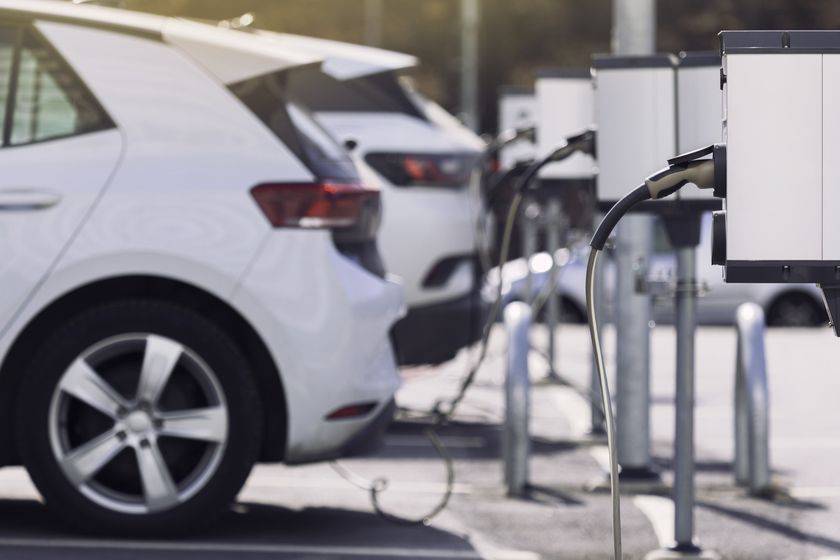
With the growing number of EVs on the road, there are also concerns about the infrastructure available.
New figures released in recent weeks have revealed that electric cars have become Ireland’s most popular new type.
In the first six months of 2026, 19,580 new electric vehicles were licensed for the first time, according to figures published by the Central Statistics Office (CSO).
This accounted for 24% of all newly registered vehicles so far this year, up 49% compared to the same period last year.
Some 21,988 hybrid cars were registered, as well as 11,970 plug-in hybrids, accounting for 27% and 15% of all newly purchased cars respectively. This compares to just 17,171 petrol cars and 10,148 diesels.
However, despite the boom in popularity for EVs, they still make up a tiny proportion of the national fleet. There were 134,475 EVs on the road at the end of June, up 39% from 2025.
This makes up just 4% of the 3.34 million vehicles on Irish roads. This is far below the Government body Zero Emissions Vehicles Ireland’s (ZEVI) targets to have 30% of the private fleet electric by 2030.
Some 81% of EVs are less than five years old, while 82% of non-EVs are more than five years old.
Brian Cooke, director general of the Society of the Irish Motor Industry (SIMI), said the “increase in battery electric vehicle sales would not have been achieved without Government supports”.
The Sustainable Energy Authority Ireland (SEAI) provides a €3,500 grant for battery-powered electric vehicles. The grant used to be €5,000 but was reduced in March 2023.
As of June, 14,048 EV grants had been drawn down in 2026. Since 2021, over 85,000 grants have been used. A separate grant of up to €300 is available for home charging units, with 98,904 applying for this grant since 2019.
The National Transport Authority (NTA) also offers grants for taxi drivers who can avail of up to €25,000 for a wheelchair accessible vehicle, up to €17,500 if they are buying an EV and scrapping “older, high-polluting vehicles”, and €7,500 if they have no trade-in.
In addition to the grants, Vehicle Registration Tax (VRT) relief reductions apply to electric cars. This is currently in place until the end of the year.
Vehicles with an Open Market Selling Price (OMSP) of up to €40,000 are granted relief of up to €5,000, while cars with an OMSP of greater than €40,000 but less than €50,000 receive a reduced level of relief.
EVs also pay the lowest rate of car tax at €120.
In June, the SEAI and climate minister Darragh O’Brien launched the “ICE2EV Pilot Scrappage Scheme”.
People with petrol and diesel cars from 2013 or older could apply for a grant of €8,500 to purchase a new EV. However, the scheme quickly became oversubscribed and closed within hours.
However, with the growing number of EVs on the road, there are also concerns about the infrastructure available.
There are just 4,000 public charging stations around the country. The ESB admitted recently that while it has 1,600 public charging stations, only 1,400 EVs can charge at the same time.
As reported by the Irish Examiner last month, less than half of the money allocated by the Government for electric vehicle (EV) charging infrastructure over the past 5.5 years has been drawn down.
- Louise Burne, political correspondent
CLIMATE & SUSTAINABILITY HUB
CONNECT WITH US TODAY



Be the first to know the latest news and updates