Irish Examiner view: Drugs issue requires imaginative responses
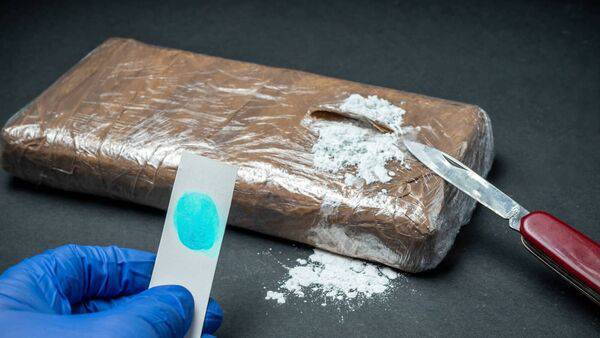
'It is not at all clear whether that sympathy will extend to encountering higher levels of drug use in our public spaces than we are experiencing at present.' Stock picture
The trade in illegal drugs is one of the greatest challenges facing modern society. Between the sheer volume of money that trade generates, and the crime which accompanies it, there can be a sense that any possible solution should at least be listened to.
This week, we have the final report of the Oireachtas committee on drugs use, which was established to consider the findings of the 2024 Citizens’ Assembly on Drugs Use.
The report does not shy away from making suggestions: There are more than 160 recommendations across a wide variety of areas.
One of those recommendations may draw more attention than others. As reported in the by Paul Hosford, the committee says that, based on the evidence it examined, “decriminalisation for personal possession is not likely to result in an increase in consumption”.
This is certainly encouraging. A broader point made by the report is that punitive, enforcement-led approaches may be counterproductive, so it makes sense to try a different tack.
However, the report also adds a significant caveat: “A small sample of jurisdictions where decriminalisation has been implemented have reported an increase in drug consumption in public areas.”
This is not nearly as encouraging. There is a slight complication in this approach if citizens can expect to see more evidence of drug-taking in public even as consumption levels decrease.
Even allowing for people’s sympathy towards users trying to deal with their addictions, it is not at all clear whether that sympathy will extend to encountering higher levels of drug use in our public spaces than we are experiencing at present.
The report appears to put the onus on local authorities to draft and enforce bylaws to deal with drug consumption in public areas which may also prove contentious. Any such approach may run counter to the report’s push to move away from enforcement-led responses, while local authorities all over Ireland already face budgetary challenges.
Imaginative responses to our drug problem are welcome, but this recommendation may be opening Pandora’s box.
The influence of the Catholic Church has been waning in Ireland for quite some time, and a survey published by the Department of Education this week seems to underline that decline.
As reported here by Jess Casey, the survey found that a significant number of families (42%) who intend to send their child to a religious-run primary school would prefer their children’s education to be multi denominational.
The figure varied considerably from county to county — as high as 58% in Wicklow and as low as 29% in Monaghan — and there were other striking results in the survey, including the number of parents who expressed a strong preference for more education through Irish or English.
Again, regional variations swung from a near-35% demand in Galway to almost 16% in Longford.
However, the interest in non-denominational education is the headline finding in the survey for one obvious reason: The overwhelming majority of primary schools in Ireland are still under Catholic patronage.
This seems anomalous in a country where that Church is not the power in society it was when many of these schools were established. If Catholic families wish their children to go a school with a Catholic ethos that is entirely fair, but it cannot be fair if that is the de facto ethos for almost every child in Ireland.
The extent to which an educational system should reflect the society it serves is an interesting question, and one not necessarily restricted to religion. The climate crisis is having an unavoidable impact on society as a whole, for instance, and readers will know London is currently sweltering in extreme heat, with temperatures forecast to reach 37C. As a consequence, many schools in London have closed because they do not have air-conditioning systems and conditions are too harsh for children.
Our current hot spell has not been quite as extreme, but with rising global temperatures we may need to consider new forms of school building — let alone new forms of school patronage.
The explosion in e-commerce during the pandemic has never really abated, which is good news for online operators but perhaps not quite as heartwarming for small businesses all over Ireland dependent on local custom.
All the more reason, then, to celebrate the Grá Macroom gift card, which was launched in October 2025 both as a physical and digital card.
It is part of the town and city gift cards initiative, which sees local gift cards branded to specific Irish towns and cities to drive in-person sales and spending in local communities.
So far, it has been a resounding success — clocking up some €200,000 in sales in five months.
The Grá Macroom gift card has resulted in over 3,300 in-shop transactions in local businesses in Macroom as well as nearby towns such as Coachford and Ballymakeera, and Ballingeary: More than 100 businesses in the locality accept the gift card.
One of those businesses, Macroom’s Castle Hotel, spent €13,000 on the cards as part of their staff rewards scheme and had €9,000 spent in the hotel by people using the cards.
It has never been more important to use small and local businesses, particularly if we want the areas they serve to thrive. The local business is a vital part of our economic infrastructure and an irreplaceable element in our towns and villages.
CONNECT WITH US TODAY



Be the first to know the latest news and updates