Irish Examiner view: EU's €3 customs charge could curb our fast fashion habit
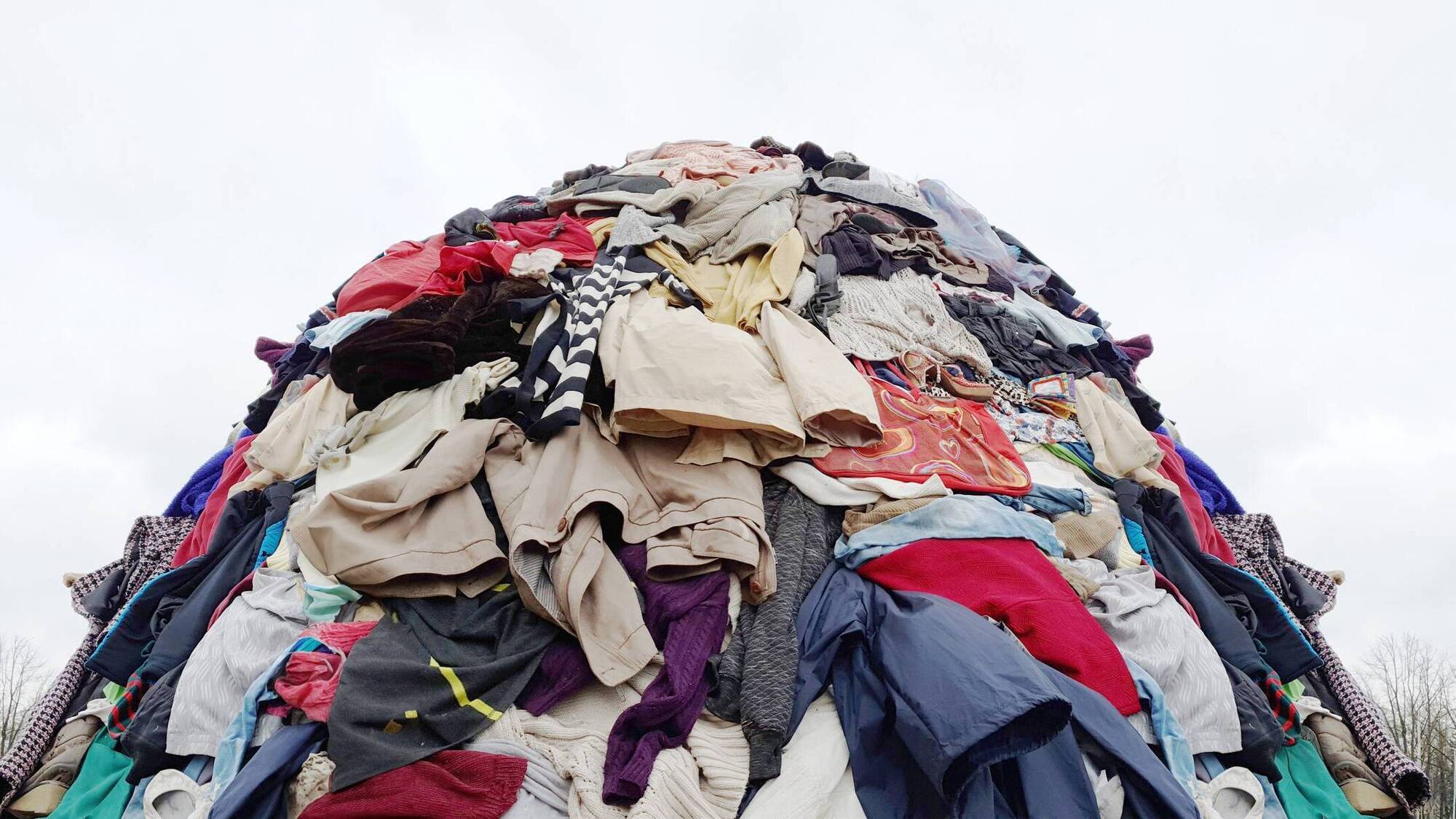
Callers to 'Liveline' expressed dismay about the charge — but if it makes us pause before filling the online basket with stuff we don’t need, it could be a great benefit to us all
We are generating mountains of waste textiles due to our habit of buying cheap clothes for one or two wears. The new €3 charge could be one of the most environmentally-beneficial taxes introduced in years. Picture: iStock 

We are generating mountains of waste textiles due to our habit of buying cheap clothes for one or two wears. The new €3 charge could be one of the most environmentally-beneficial taxes introduced in years. Picture: iStock 

The new €3 customs charge on imports from outside the EU, which comes into effect next week, had callers to Liveline riled up last week. Many were dismayed at the thought of paying at least €3 — with additional handling fees possibly pushing the cost higher — on items ordered from retailers such as Temu and Shein.

For many callers, affordability was the key issue; in the midst of a cost of living crisis, these websites offer prices that local retailers simply cannot match. 

What Irish retailer can compete with t-shirts for €2, dresses for €10, and jeans for less than €15? 

However, while the primary objectives of the EU-wide charge are to create a level playing field for European businesses and to protect consumers from products that fail to meet EU safety standards, there is another reason to welcome the measure: The environmental cost of our fondness for ultra-cheap clothing.

Ireland has developed a serious fast-fashion habit, and can no longer ignore the consequences. 

The average person here now consumes 53kg of new textiles every year—the equivalent of 30 pairs of jeans, 45 t-shirts, 22 jumpers, and 13 pairs of runners for every man, woman, and child. 

While textiles includes bedding, curtains, and towels as well as clothing, the figure is still more than twice the EU average. It reflects a culture of consumption that would have horrified our grandparents.

The environmental damage caused by this level of consumption is considerable. Textile production accounts for around 10% of global carbon emissions, more than international shipping and aviation combined.

At the other end of the cycle, some 110,000 tonnes of clothing are sent to landfill or incinerators in Ireland every year. Many consumers take comfort in donating unwanted garments to charity shops, believing they are doing their bit for the environment.

The reality is more complicated. Charities have repeatedly reported that the volume of cheap low-quality clothing donations, which can cost more to sort and process than they can sell them for, is overwhelming them.

A recent report by EY Ireland on Ireland’s textile waste problem said we now own enough clothing to provide for the next six generations. 

Yet we keep buying, making space in our wardrobes by discarding three out of five items within a year of purchase. A €3 customs charge will not solve our fast-fashion problem on its own. 

However, if it causes us to pause before filling the online basket with stuff we don’t need, it may prove to be one of the most environmentally beneficial taxes introduced in years.

Gender pay gap 

The Government’s launch of a public portal providing access to employers’ gender pay gap reports is a welcome development. 

The initiative should improve compliance with existing reporting obligations and, as equality minister Norma Foley noted when launching it last week, encourage employers to address disparities in pay between men and women.

The Government's new public portal providing access to employers’ gender pay gap reports should improve compliance with existing reporting obligations. Picture: iStock

Unfortunately, while the Government is highlighting one advance in pay transparency, it has failed to deliver another quite significant reform. 

Ireland missed the June 7 deadline for transposing the EU Pay Transparency Directive into national law, leaving jobseekers and workers without rights that should already be in place.

It has been a strange but common feature of the job-hunting process for some time now that many employers do not state what the pay for the job is when they are advertising posts. 

Candidates can spend weeks navigating application forms, interviews and assessments only to discover, at the final stage, that the salary falls well short of expectations. 

Instead of open discussion, remuneration is often shrouded in ambiguity with applicants asked about their salary expectations or current earnings before an offer is made. Such opacity benefits employers, not workers.

The Pay Transparency Directive seeks to put an end to that by not only obliging employers to state pay rates or pay scales for the job upfront, but by giving employees access to data about pay rates for others in their organisation, discretionary benefits and promotion processes. 

These measures are intended to improve transparency and to combat pay discrimination and narrow persistent gender pay gaps.

The Government’s failure to meet the transposition deadline means thousands of school leavers, new graduates, and other jobseekers must wait longer for the protections their counterparts elsewhere in Europe are already beginning to enjoy. Ireland is not alone in missing the deadline, but the Government should move quickly to keep up the momentum on narrowing the pay gap.

• You can access the portal here at GenderPayGapIreland.gov.ie

Keir Starmer's resignation

Keir Starmer’s resignation paves the way for Britain to get its seventh prime minister in a decade, a rate of political churn our neighbours could do without.

British prime minister Keir Starmer announced yesterday that he was about to step down. File picture: PA

As Mick Clifford reported in the Irish Examiner in recent days, 10 years after Brexit, Britain remains divided, despondent, and economically diminished.

The task of disentangling the UK from the EU was always going to be fraught, but the instability sparked by David Cameron’s ill-judged referendum, made it far more complicated, costly and damaging than it needed to be. 

Four Conservative leaders occupied No 10 Downing Street in the eight years between Cameron’s resignation and the Labour Party’s victory in 2024. Now, a second Labour Party leader is set to take office.

Our own Government is often criticised, sometimes justifiably, for its handling of housing, the health service, and the cost-of-living crisis, but we have reason to value the relative political stability the country has enjoyed in recent decades.

Ireland’s economy has continued to outperform the UK’s despite facing many of the same challenges, including the 2008 financial crash, the covid pandemic, and soaring living costs following Russia’s 2022 invasion of Ukraine and the more recent upheaval in the Middle East.

Stable government is no guarantee of success, but chronic instability in a deeply divided society is a recipe for continued economic and political difficulty.

More in this section

Revoiced

Newsletter

Had a busy week? Sign up for some of the best reads from the week gone by. Selected just for you.

Cookie Policy Privacy Policy Brand Safety FAQ Help Contact Us Terms and Conditions

© Examiner Echo Group Limited