Irish Examiner view: Brexit's seismic effects have resulted in a bewildering political fallout
The concept was sold to the British people as an opportunity to recreate sovereignty, free trade, and greater border control. There is little doubt that it failed on each of those objectives
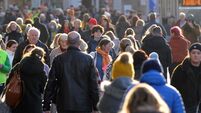
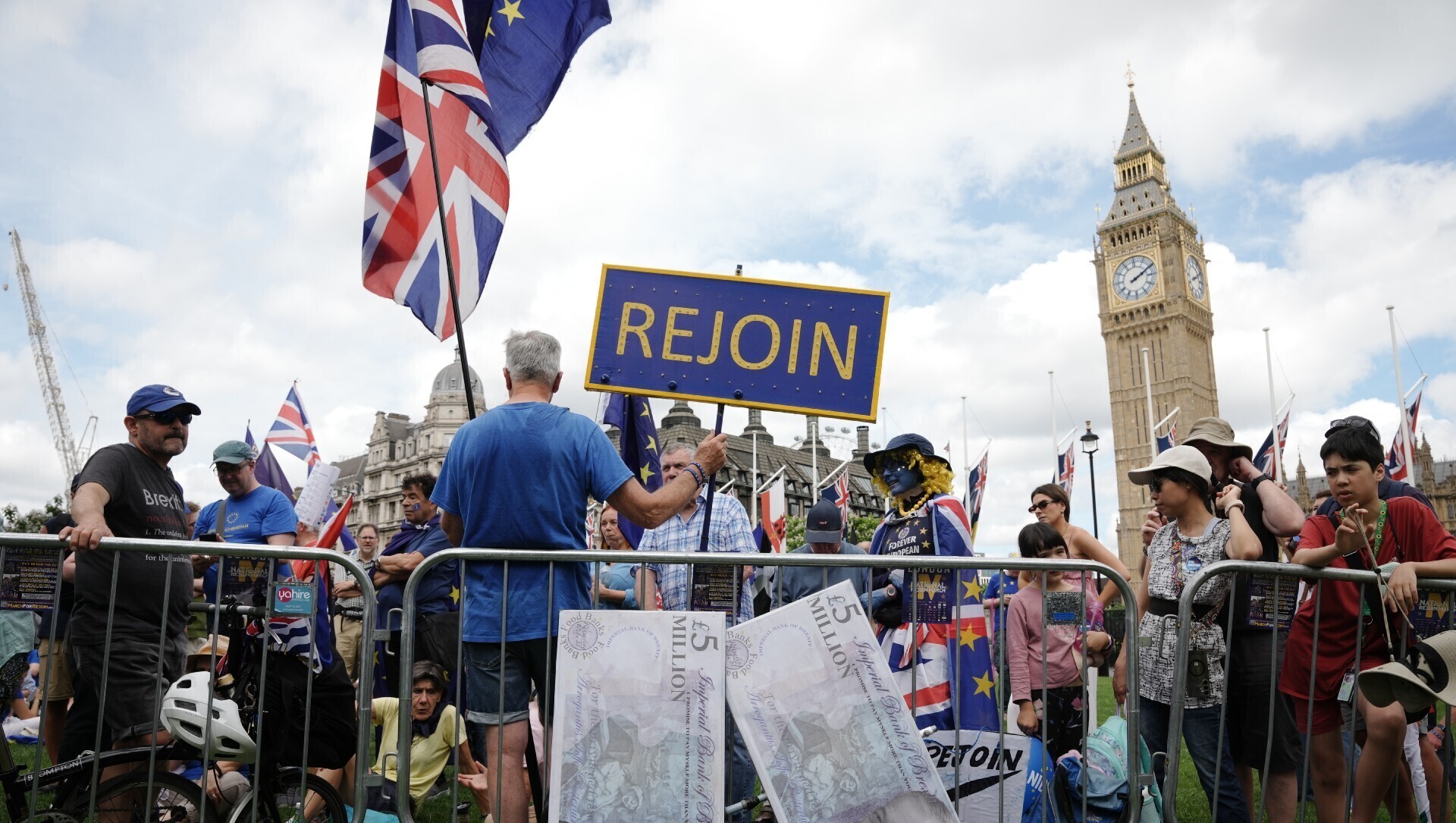
People during a National Rejoin March in London, marking 10 years since the Brexit referendum. Picture: Jeff Moore/PA

People during a National Rejoin March in London, marking 10 years since the Brexit referendum. Picture: Jeff Moore/PA

As Keir Starmer prepares to exit 10 Downing St as the prime minister of a once-great Britain, it could reasonably be argued that he is yet another political victim of the cataclysmic decision his fellow citizens took 10 years ago tomorrow to take their country out of the EU.

Brexit, the cover-all term invented to describe Britain’s exit from a half-century project to integrate itself with a broader ideal of European unity — economically, socially and politically — eventually led to a tumultuous shake-up of every aspect of society across the country.

Propelled by a loose grouping of entitled public school educated voices, right-wing extremists, and the permanently disaffected, who persuaded 52% of the British public — 17m of them — to vote leave and unwittingly launch the country into an unprecedented period of political realignment, social upheaval, and economic uncertainty.

The concept was sold to the British people as an opportunity to recreate sovereignty, free trade, and greater border control — not to mention reestablishing the National Health Service as a world-class health care system. There is little doubt that it failed on each of those objectives.

The seismic effect Brexit has had on the UK and each of its constituent elements, including Scotland, Wales, and Northern Ireland, will, by today, have seen seven prime ministers come and go in a bewildering political fallout as the established political mainstream tried to grapple with its impact.

It is widely estimated that the decision to leave and the actuality of doing so cost Britain some 8% of GDP; small businesses and sole traders have been the worst affected, with some half a million ceasing trading.

Ten years on, and British politics has become a toxic morass which has almost destroyed the two-party system dominated by Labour and the Conservatives, leaving the former at the head of a lame duck administration afraid of taking any meaningful decisions and the latter as a wounded, limping shadow of its former self.

Into the void has swung political opportunists such as Nigel Farage — himself one of the highest profile Brexiters and an anti-immigration propagandist sans pareil — leaving Britain even more divided and riven than ever before.

The UK has lost £100bn of economic activity in each year since it left the EU; business investment dropped by 11% in the six years after the vote; and, the economic drag is estimated at £4bn a year in lost tax revenue.

London is no longer the single foremost global financial capital and over €1tn in banking assets have been transferred to EU financial centres. Much of the country’s agriculture, hospitality, construction, and social care sectors have been decimated by the cessation of free EU worker movement.

It has been a dark 10 years for the UK and it looks like the next man up as prime minister, Andy Burnham, has a lot of work to do to repair the damage.

Iceland’s contentious and divisive EU referendum

As Britain marks 10 years since Brexit, another European country is fast approaching a moment of truth with regard to the EU, albeit from a different direction.

Iceland is set for a referendum on August 29 next on whether to open negotiations with Brussels on joining the bloc, a year ahead of schedule. The country had thought it might ask its people this question in 2027, but Donald Trump’s threat to invade closest neighbour Greenland, changed all that.

Trump, who appears to have difficulty distinguishing between Iceland and Greenland, has stoked fears among the 300,000 or so Icelanders that he also has them in his crosshairs.

For the pro-European side of the argument, the misinformation of Britain’s ‘Leave’ campaign and the sense the country has not exactly flourished since turning its back on Brussels. The native anti-EU camp reckons that Britain’s inability to leave on its own terms is good enough reason not to join.

Recent polls across Iceland indicate on one hand that 54% of people are against joining with 46% in favour, while 53% wanted to resume talks, while 47% said no.

The biggest question facing the electorate concerns their native fishing industry, said to be worth €7.3bn. Having watched such as the Irish fishing industry almost vanish within the EU, Iceland does not want a repeat.

With a history of economic turmoil, Iceland is also focused on the relative security of the eurozone.

One way or another, August’s referendum is going to be both contentious and divisive. Sound familiar?

Summer solstice about seeing light in the darkness

Yesterday was the longest day and shortest night of the year.

The annual summer solstice celebrates the cross-quarter moment between Bealtaine (early summer) and Lughnasagh (early autumn) and signals a momentous seasonal change.

It might be somewhat idealistic to think it might also spark a fundamental shift in the political and economic affairs of the world where warfare has become the new norm and cruelty, self-enrichment, and cloying self-aggrandisement are the order of the day as part of that.

In Irish, Solstice is ‘Grianstad’ — literal meaning ‘sun stop’ and is one of the two peak moments of the light and dark
interplay in our universe. Directly opposite the winter
solstice, yesterday was the peak of the sun’s climb into
maximum light.

Our ancestors saw this key turning point in the Celtic
calendar as momentous — a time of blossoming and blooming ahead of a plentiful harvest. Spiritual traditions remind us of who, where, and what we really are.

Humankind has always been optimistic, and while it is hard right now to see much light through the darkness which currently engulfs the world, we must remain hopeful that days of plenty are ahead for those who are going through the most difficult of times across the world.

More in this section

Revoiced

Newsletter

Had a busy week? Sign up for some of the best reads from the week gone by. Selected just for you.

Cookie Policy Privacy Policy Brand Safety FAQ Help Contact Us Terms and Conditions

© Examiner Echo Group Limited