Colin Sheridan: Death makes liars of us all — canonising Glen Hansard denies his humanity
As with Shane MacGowan and Sinéad O’Connor, we are projecting our own our feelings onto someone we don't know, effectively reducing an ordinary, fallible human to a one-dimensional icon
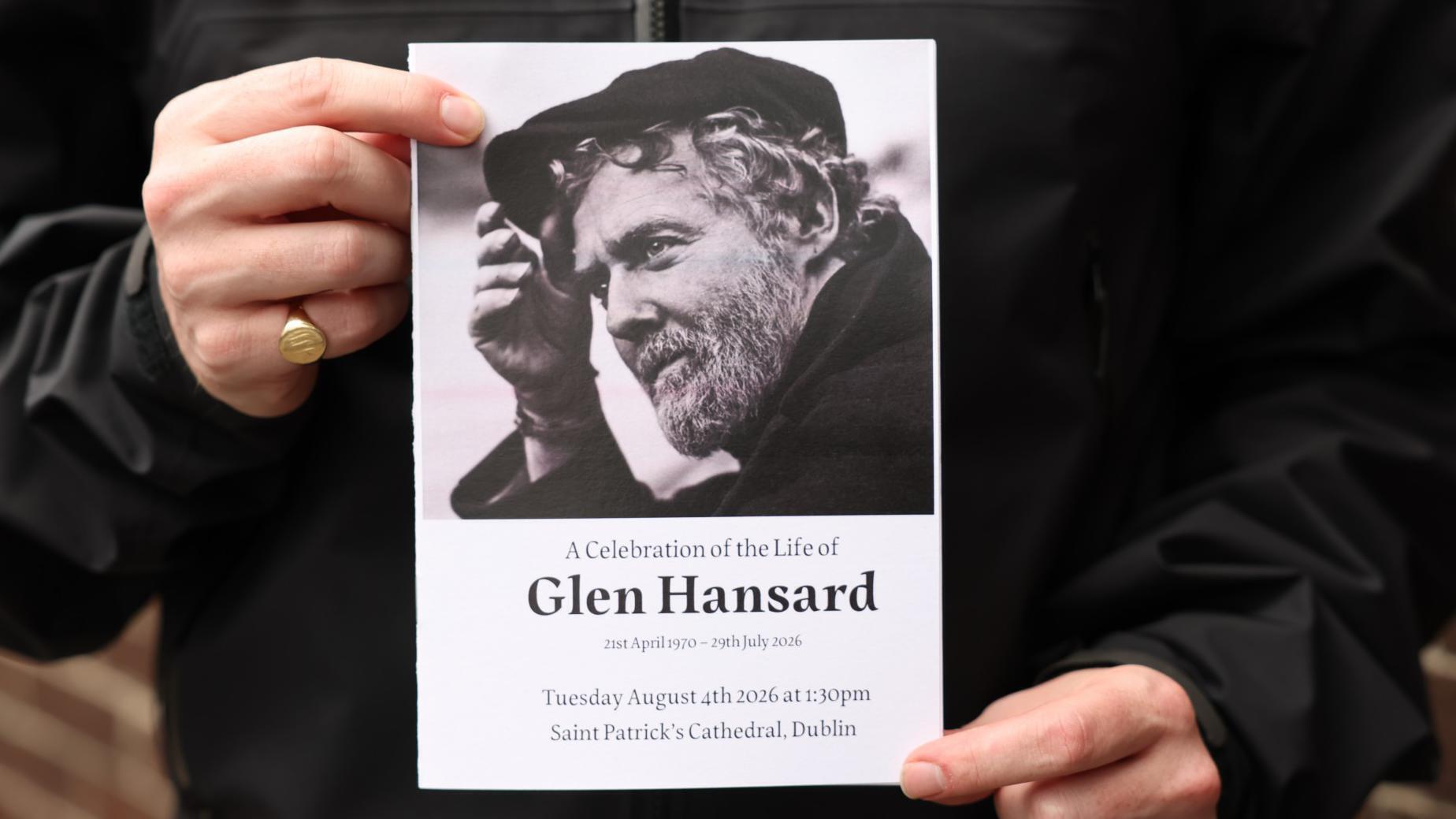
Crowds watching Glen Hansard’s funeral service on screens outside St Patrick’s Cathedral. Colin Sheridan writes: ‘The problem with placing someone on a pedestal is not simply that they might fall. It is that we stop allowing them to be ordinary.’ Picture: Damien Eagers/PA

Crowds watching Glen Hansard’s funeral service on screens outside St Patrick’s Cathedral. Colin Sheridan writes: ‘The problem with placing someone on a pedestal is not simply that they might fall. It is that we stop allowing them to be ordinary.’ Picture: Damien Eagers/PA

There is something about death that makes liars of us all. Not malicious liars, but human ones. Within hours of someone famous passing, the rough edges begin to disappear. 

The awkwardness is airbrushed away. The contradictions soften. The stories become cleaner than the lives they describe. Before long, the artist has become a cultural icon, the writer a literary giant, the musician a national treasure. 

We do not simply mourn them; we canonise them. And in those hours of posthumous veneration, we grieve a version of ourselves.

I begrudge nobody that grief. 

Quite the opposite. If music, writing, or art has helped you through your life (as it has helped me through mine), then losing its creator can feel surprisingly personal. It is entirely understandable to feel that way. 

But I wonder if we have become less interested in remembering people than in preserving the versions of them we have carefully curated and filed away. Perhaps that says more about us than it does about them.

Well-deserved affection for Glen Hansard

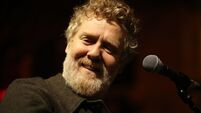
Glen Hansard’s death has prompted an extraordinary outpouring of affection. Much of it is entirely deserved in the context of what he meant to those who really knew him. To the rest of us, he was a character in a story.

Once remains one of the most affecting Irish films ever made. The music of The Frames became a soundtrack to countless lives. 

For many people, Hansard wasn’t simply a musician, he was heartbreak, hope, and Dublin itself.

Oscar winner Glen Hansard and Marketa Irglova in a scene from 'Once'. Much of the outpouring of affection for Glen this week was entirely deserved. But the absolutism of such praise tended to eclipse the fact that, like all of us, he was profoundly human too. File picture 

I loved his early music too. But I also remember sitting through concerts and finding myself increasingly distracted by the lengthy monologues between songs. They were intended, I guess, to be earnest, searching, and vulnerable. Anecdotes of humility. 

Yet, over time, they began to feel strangely contrived.

With the arrival of Youtube, I realised many were simply variations on the same stories, retold to different audiences. 

What struck me wasn’t insincerity so much as a profound need to connect; an almost desperate desire to be understood, loved, perhaps even needed. That isn’t a criticism so much as an observation. It also happens to be a profoundly human trait, common in many of us.

Yet the week after someone’s death is no longer a time for observations. It is a time for absolutes. Any complexity feels almost like an act of betrayal.

Shane, Sinéad, and Tony 

I’ve wondered the same about Shane MacGowan. When he died, Ireland quite rightly celebrated one of our greatest songwriters. 

Crowds around the hearse bearing the remains of Shane MacGowan as it leaves St Mary of the Rosary Church, Nenagh, Co Tipperary, after his funeral Mass in 2023. Picture: Larry Cummins

But somewhere amid the deserved tributes, the mythology began to eclipse the man.

MacGowan became Ireland’s poet laureate, all wit and lyricism, humanity and romantic chaos. 

Less attention was paid to the wreckage that accompanied the genius, because grief has a habit of editing.

Sinéad O’Connor’s death produced a different but equally revealing response. For years she had been misunderstood, ridiculed, dismissed, or quietly avoided by sections of the establishment. 

Then, almost overnight, many of those same voices spoke as though they had always recognised her brilliance. She became a symbol onto which an entire country projected its guilt, its admiration, and perhaps its regret.

People lining the streets of Bray, Co Wicklow for a 'last goodbye' to Sinéad O'Connor ahead of a private burial service on August 8, 2023. Picture: PA

Anthony Bourdain occupies a similar place in our cultural imagination. The imminent release of a new biopic reminds us how much he meant to millions. 

But what made Bourdain so compelling wasn’t simply that he travelled well or cooked beautifully. It was that he gave language to loneliness, curiosity, addiction, masculinity, and uncertainty. He made people feel less alone.

In truth, many of us weren’t mourning Anthony Bourdain. We were mourning the person we had become while watching him.

Perhaps that’s the point.

The older I get, the more I suspect that our relationships with famous people are rarely about them at all. We love the album that carried us through a broken but beautiful relationship. We love the intrepid chef who inspired us to book the trip we still remember 20 years later. 

We love the writer who gave shape to thoughts we couldn’t quite articulate ourselves.

In time, the individual becomes inseparable from our own memories. They cease to belong entirely to themselves. They become repositories for pieces of our own lives.

Psychologists have a name for this — the parasocial relationship. Technology has only intensified it. We no longer consume the work alone, we consume interviews, podcasts, Instagram posts, performative backstage footage, and sycophantic documentaries. We feel as though we know people we have never met. Their successes become ours. Their failures feel oddly personal. Their deaths leave genuine holes in our emotional landscape.

None of this is irrational, but it does become dangerous when affection turns into canonisation. Because saints are impossible things to be.

The problem with placing someone on a pedestal is not simply that they might fall. It is that we stop allowing them to be ordinary. 

Ordinary people are contradictory. They are generous one day and selfish the next. They are capable of immense kindness and astonishing vanity. They produce beautiful work while making questionable decisions. They inspire people they will never meet while hurting people they know intimately.

That isn’t hypocrisy. That is humanity. We seem increasingly uncomfortable with that kind of complexity.

Social media rewards certainty. You are either entirely admirable like Hansard or entirely beyond redemption, like Rod Liddle

We have become remarkably efficient at turning people into symbols and remarkably poor at accepting them as human beings.

Maybe that is why celebrity deaths feel so emotionally charged. 

We are not simply losing artists. We are losing versions of ourselves. The teenager who first heard Rainy night in Soho. The student who fell in love to Seven day mile. The exhausted commuter who found companionship in Bourdain’s restless curiosity. 

Those memories deserve to be cherished, but perhaps the people who helped create them deserve something else as well. Not sainthood. Not excommunication. Just acknowledgement of their flaws, and the dignity of remaining complicated.

More in this section

Revoiced

Newsletter

Had a busy week? Sign up for some of the best reads from the week gone by. Selected just for you.

Cookie Policy Privacy Policy Brand Safety FAQ Help Contact Us Terms and Conditions

© Examiner Echo Group Limited