The changemakers: 'We can no longer ship our waste to the global south'

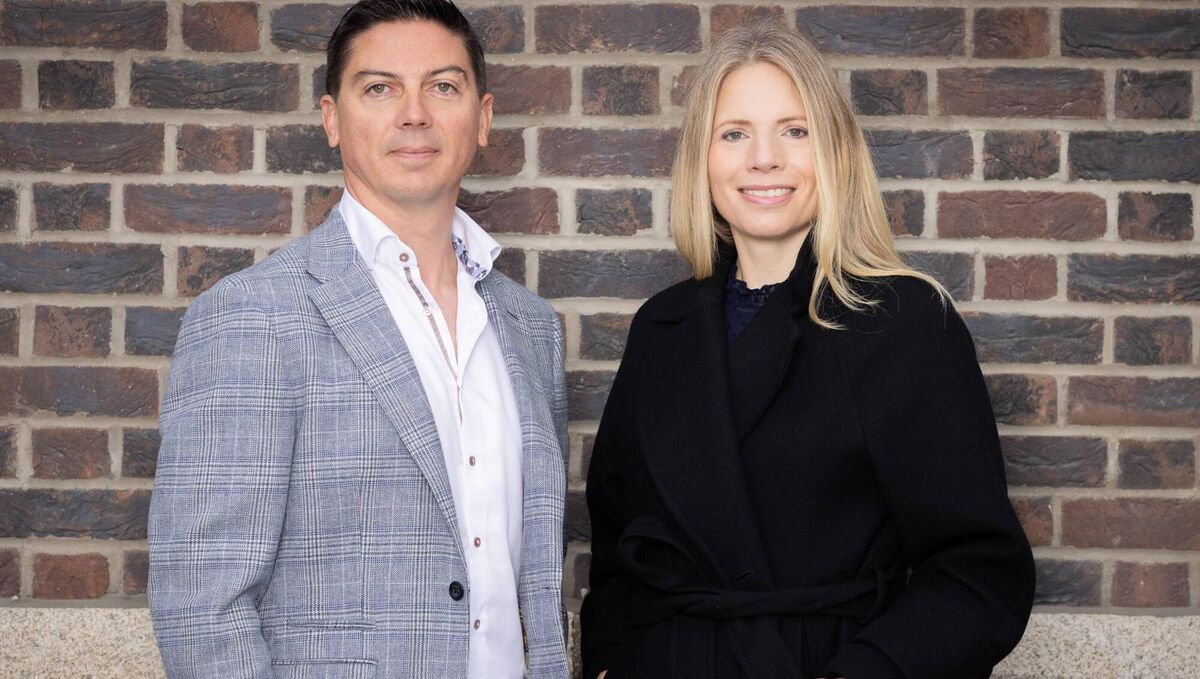
Shana Chu (L) is the CEO and founder of Tailr, Katie O'Riordan is the CEO and Co-Founder of Kinset
“The environmental harm caused by fast fashion is not a problem that conscious consumerism can solve. There are systemic failures within the industry, and these failures need systemic solutions.”
So says Katie O’Riordan, founder of sustainable clothing brand Theo + George, and more recently, co-founder of Kinset, a company designed to help brands navigate one of fashion’s biggest upcoming shifts: Digital Product Passports (DPPs).
Having run an eco-conscious clothing brand herself, O’Riordan speaks from experience when she says the word “sustainable” in fashion is rarely measured against anything real. “Terms like organic or free-range in food are defined an audited. In fashion, ‘sustainable’ is not. At this point, ‘sustainable’ no longer describes a product; it describes a marketing decision,” she explains.
Under the EU’s Ecodesign for Sustainable Products Regulation (ESPR) legislation, brands will soon be required to implement DPPs — digital records that track a product’s journey from raw material to end-of-life.
CLIMATE & SUSTAINABILITY HUB
Kinset is already working with Irish brands like Celtic Tweed and Ériu to prepare, and in July of last year, launched a pilot with World Collective, working with suppliers in Turkey, Bangladesh, and India to build the data infrastructure required by incoming legislation.
“Even trying to do the best I could with Theo + George, I was wary about the information I was receiving,” says O’Riordan. “A simple way of explaining a DPP might be that it is a connector of data that comes from the supply chain, gets passed on to the consumer and enables end-of-life opportunities for that product as it holds data on the materials, resale opportunities, and recycling requirements of that garment.”
Kinset is looking to standardise and streamline this information, making it usable across the supply chain. “A mill might make one fabric and sell it to a thousand different brands. At the moment, they’re pulling that information a thousand times; there is a huge lack of efficiency, and brands can’t make informed decisions. If brands are receiving water impact, carbon impact data, or energy use data, then they can start comparing information and potentially make their products more sustainable.”
The legislation also targets one of fashion’s biggest issues: waste. Some 100 billion garments are produced each year, with just 1% of materials recycled — worsened by the fact we often don’t know what clothing is made of when it reaches the end-of-life stage.
“It’s up to the EU to manage our consumer waste and the only way is to have the data behind it so we can create processes to manage it,” O’Riordan says.
But waste in fashion doesn’t just happen at the end of a product’s life. Two of the biggest culprits in the industry are the sampling process — producing mock-ups of garments that will never go into production — and bracketing, where customers purchase multiple sizes or colours of the same garment with the intention of returning items that don’t suit. Inconsistent sizing and free returns policies by retailers only encourage the latter.
Shana Chu, the London-based, Waterford-born entrepreneur behind TAILR, an AI-powered platform that connects fabric mills, manufacturers, and brands, is hoping to fix some of those issues at the product development stage. Her previous work as a garment technologist in the PPE sector informed the platform.

“In a garment ‘tech pack’ you have the measurements, fabric, button type etc. This document is emailed to the factory, production is greenlit and the garments end up in-store,” Chu explains. “Working with things like dimensional stability, pilling, abrasion, colour fastness, etc, I could see that there was a huge variance in what I was seeing on the factory floor and what the fabric data sheets and test results were saying.”
“A lot of the time the fabric mills already have data around the dyeing, spinning, weaving, knitting or finishing [of a fabric] and are conducting tests during these processes, but the information is stuck in pdfs or in Excel. They want to be able to give this information over but it’s a lot of data and it’s not formatted properly.”
TAILR strives to structure this data in a clean format to enable brands to combat inconsistent sizing and to tackle waste. “If a brand is able to ensure consistent sizing, they will be able to reduce size-related returns, and, after a few seasons, they will be able to reduce the amount of products they’re ordering to ensure that their sell-through rate is correct and that they’re not left with wasted stock or deadstock.”
Then, there’s the sampling process. “A factory I spoke to in Turkey told me that they get over 3,000 sample requests per month from a fast fashion brand but that less than 1% of that goes into production. They are wasting so many resources producing items that never make it to the shop floor and a lot of that is because the product developers don’t have the correct data to hand during the design process.”
Chu says the new EU regulations have made brands more open to using platforms like TAILR because they will have to become more transparent.
“Reducing sampling waste and ensuring production is optimised is one way they can combat this overproduction.”
CONNECT WITH US TODAY



Be the first to know the latest news and updates