Michael Moynihan : Cork's precious built heritage is not getting the respect it deserves
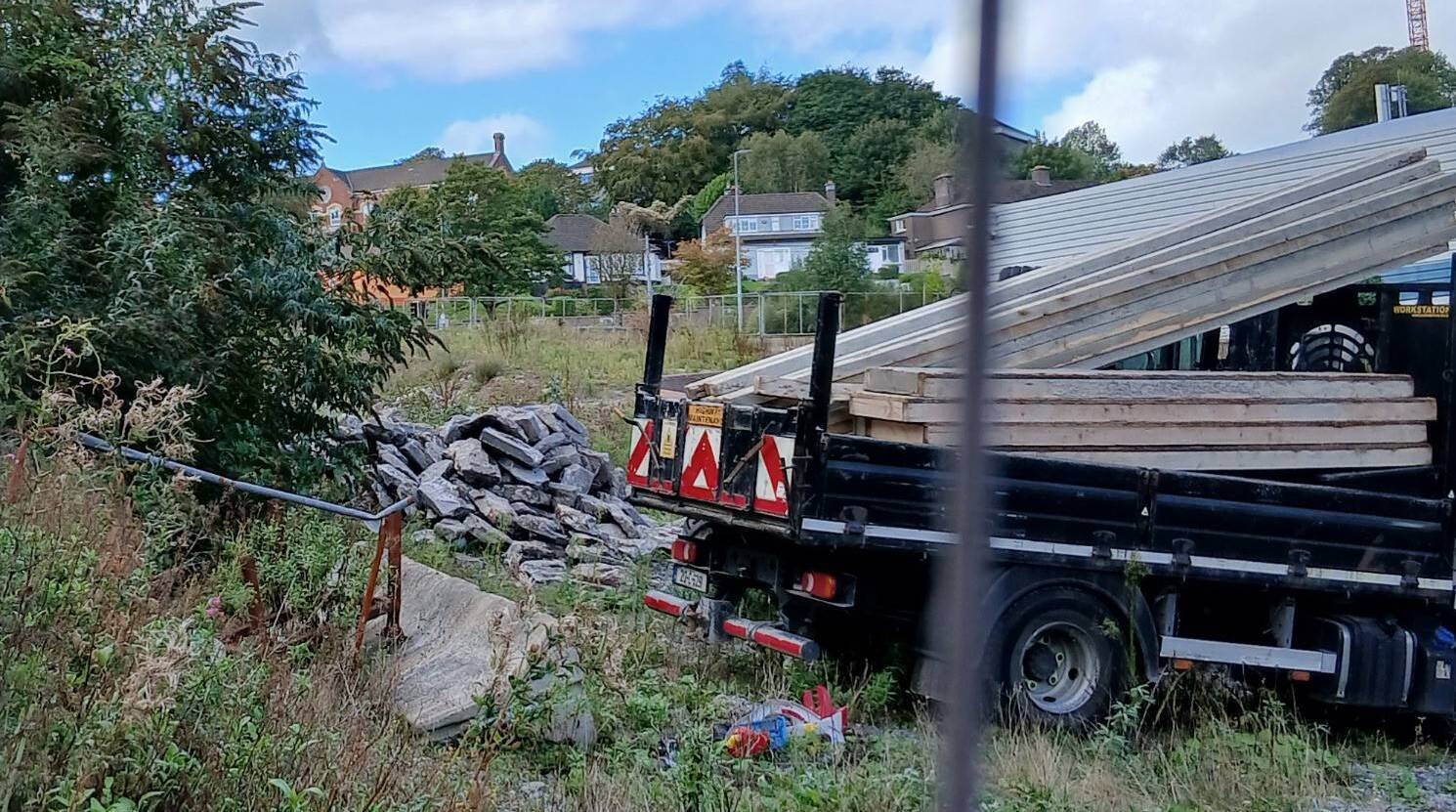
Thanks to reader Eoin Lettice for this picture of the City Council depot near Maddens Buildings. Are these the missing kerbstones?

The Blackpool Village Core Concept Design and Implementation Strategy was launched a couple of weeks ago in Cork City, and the accompanying document has some interesting highlights.
For instance, it refers to Blackpool having just 9% green space; readers may recall the recent removal of green space near the old fire brigade substation by Cork City Council, which replaced it with a car park for council vehicles. The plan also proposes planting more trees in Blackpool, which no doubt will resemble the trees recently removed from that old substation plot by the local authority.
Its reference to Blackpool surrendering much of its public realm to traffic should surely cite the four lanes of traffic on the motorway which was suspended over the area. By the local authority.
Judging by one of the images in the document the stretch of the river Bride running alongside Blackpool Church will be covered by concrete, which seems counter-intuitive, to use the politest term available to me.
However, I direct your attention to references to Blackpool’s “rich heritage” and “historic townscape”.
Last month, I wrote about Madden’s Buildings in Blackpool, and the limestone kerbs removed from old footpaths there. Those old footpaths were replaced by newer footpaths which do not feature the old kerbs.
Read More
After the column was published, Councillor Oliver Moran posted online that he had contacted the Council: “I’ve been told all salvageable kerbs will now be reinstalled. Unfortunately, some broke apart during excavation. The remainder will be reinstated part of the works, which are ongoing.”
Credit to Oliver for pursuing this matter, but the explanation he received was flatly contradicted this week by a spokesperson for Cork City Council, who stated: “The limestone kerbstones which were removed as part of the footpath renewal works in the area were not damaged in the removal process but from more than 100 years of wear and tear from pedestrian and vehicular traffic.”
Hmm. So one official told a councillor that these kerbs were broken apart during excavation, but another says they were broken by pedestrians and cars. Who’s right?
The kerbs can be seen along the edges of the footpaths which have not been dug up, but they are well over a foot long and embedded deeply in the footpath edges, so removing them properly is a challenging, delicate matter. If some were broken while being removed then that creates a problem when it comes to reinstatement.
The lack of native Cork limestone means adequate replacement material is in short supply, and if stone from other areas is sourced and used instead then clearly it will not match the originals. How will they be reinstated without damaging the ‘new’ footpaths ...? Anyway.
The storage of the surviving kerbstones is a separate concern. This week the spokesperson noted: “The salvaged kerbstones are currently stored in a secure Cork City Council depot nearby for sorting and assessment”, which seems a generous description.
Since the original column was published (on September 24) several readers have been in touch, some of whom scoured the city to locate the missing kerbstones.
One appeared to find them, indeed, in “a secure Cork City Council depot nearby” (to Madden’s Buildings) — see the photograph above. However, “stored” seems a kind description for lumping a pile of kerbstones in the corner of a yard rather than even putting them on a pallet in a shed, or cataloguing them as items of built heritage.
I use the latter term advisedly. As noted in my original column, the area is included in the National Inventory of Architectural Heritage, and Madden’s Buildings is specifically named in the section headed ‘Existing Architectural Conservation Areas: Blackpool’ in ‘Built Heritage Objectives Part 1: Architectural Conservation Areas, Draft, Cork City Development Plan 2022-2028’.
The "storage" of the kerbstones raises an accompanying question. How are other significant parts of Cork’s built heritage kept?
Last year, Cork TD Ken O’Flynn offered €500 as a reward to anyone providing information on a missing feature of the city’s landscape: the Dunscombe Testimonial Fountain, which stood for many years at the bottom of Shandon Street. As reported here, however, Cork City Council officials had admitted in 2017 that they had no idea where the antique fountain was.
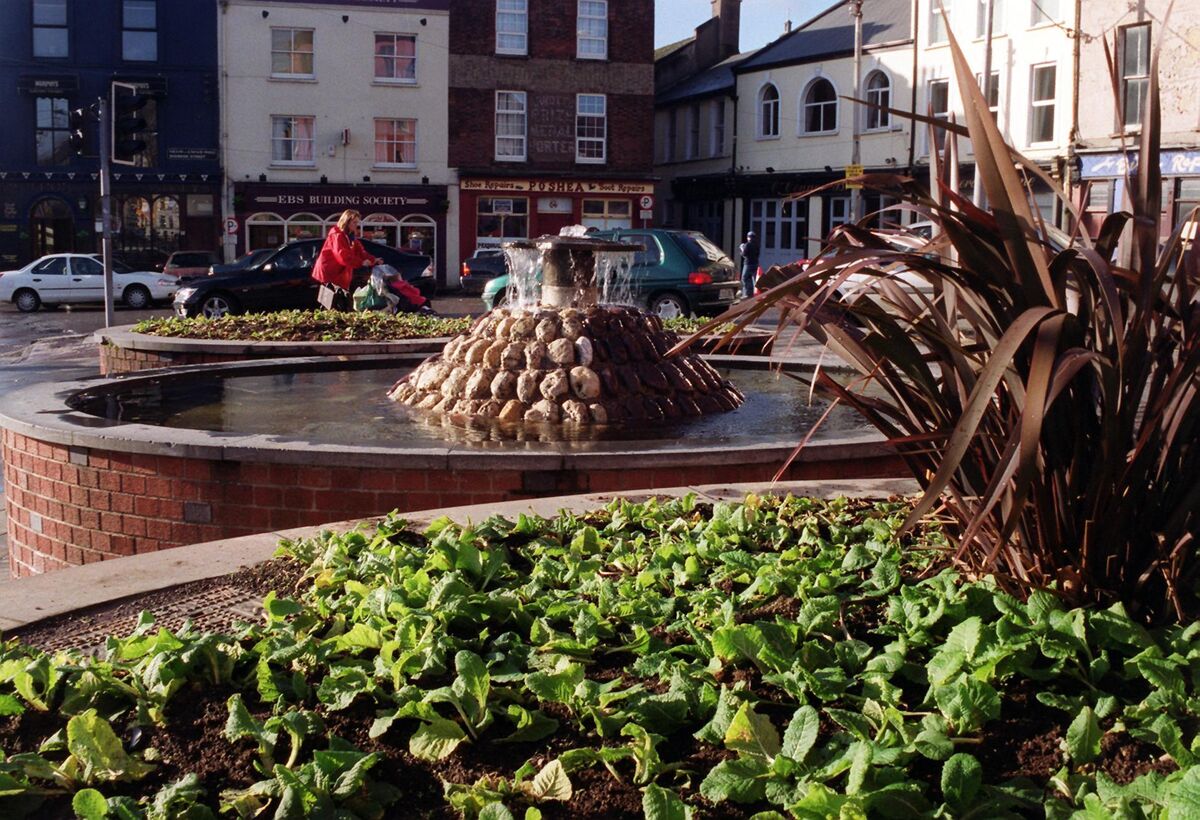
At the time Mr O’Flynn, then a councillor, said: “The fact that there is no record available of the whereabouts of this fountain begs serious questions about the management of this city. It is absolutely unacceptable that management has taken such a flippant attitude towards it . . .”
At that time he called for a full list of “the whereabouts of other gifts, antiques, and items belonging to the city”, an idea he revisited when discussing the fountain again last year.
He said then: “I renew my request to city council that they prepare a full Excel file of all public street furniture and things of interest in the city that are either on public display or are in storage, and that they know at all times where it is being stored, and that it is being stored correctly.”
Almost a decade ago, then, the Council was advised to create, maintain, and update a catalogue of public street furniture and other items of interest by one of its own councillors.
It would be interesting to consult such a catalogue to see how items such as the limestone kerbs at Madden’s Buildings had been noted, listed, described, and stored. If such a catalogue exists, or if indeed it ever existed.
The same goes for other “things of interest in the city”. Readers may think of the Fireman’s Rest, which mouldered away for decades before being restored at vast expense, but photographic contributions from readers disappointed with what happened in Madden’s Buildings suggest other items are in plain sight around Cork.
Take the green space in one northside area where carved stoneworks appear to have been dropped to deter careless car parking. The stoneworks can even be identified as ornate, dressed masonry from Google Maps images of the area.
This beggars belief. A couple of weeks ago I quoted a Council draft document on built heritage: “Cork City Council will seek to protect important elements of the built heritage and their settings as appropriate.”
Satirical or not, this carry-on should give readers pause.
Reader contributions, in fact, are about the only bright side to this whole affair.
It’s great that people in Cork are passionate about the city’s heritage. It’s reassuring to realise that there are people who are unwilling to put up with destruction, carelessness, and ignorance when it comes to Cork.
The fact that such people are willing to go out and search for missing parts of the city’s heritage in their spare time — and to find them — is hugely positive. (By way of comparison, I first emailed Cork City Council about this on September 28. I got a response with some, though not all, of my questions answered yesterday, October 21)
The fact that such reader searches are necessary in the first place? Not nearly as encouraging.
CONNECT WITH US TODAY



Be the first to know the latest news and updates