Dáil votes to abolish the Triple Lock by 79 votes to 71 following hours of tetchy debates
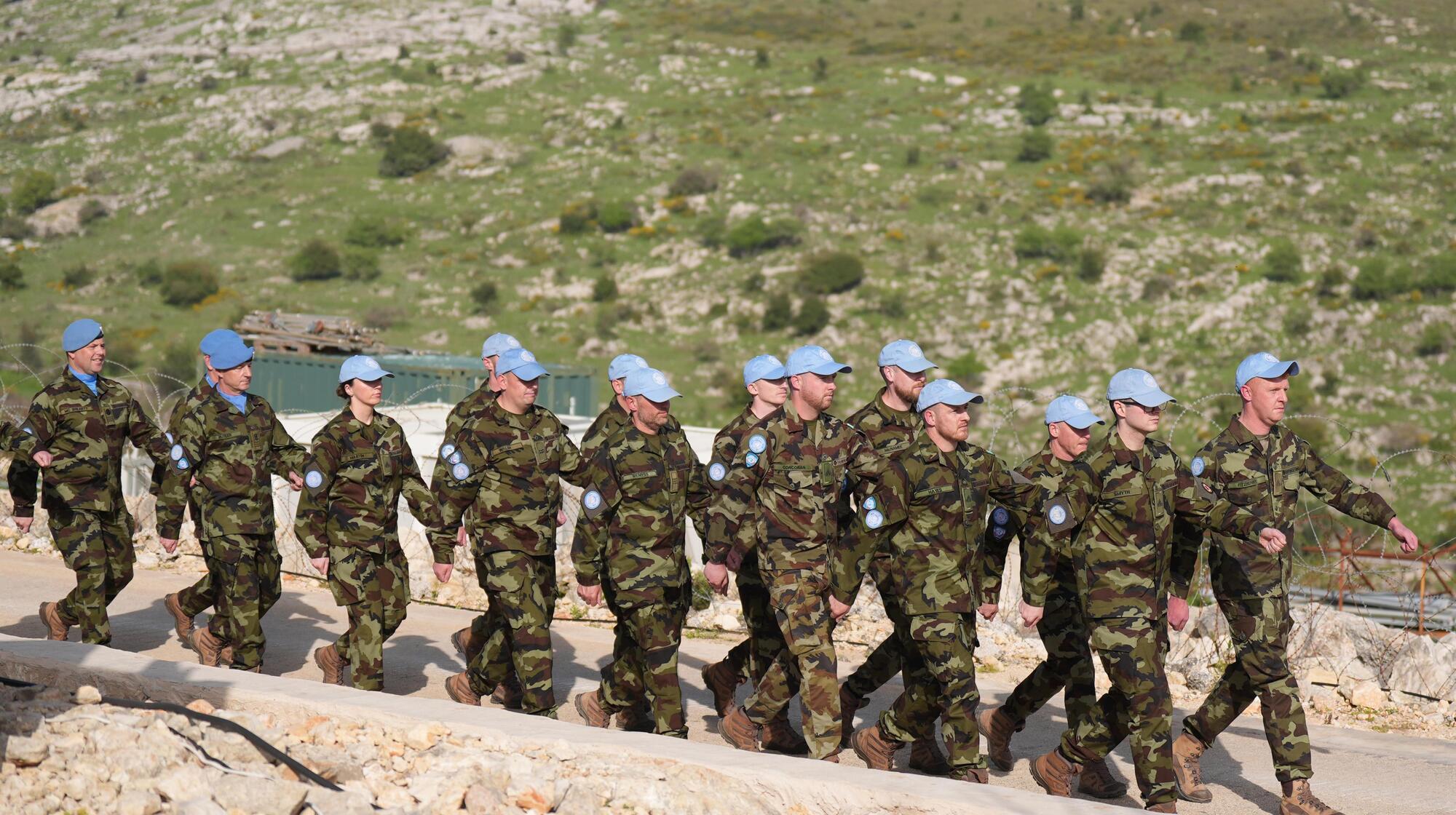
Irish troops on parade at Camp Shamrock near the border with Lebanon and Israel where Irish Defence Forces troops are serving with the Unifil peacekeeping mission.
The Dáil has voted to abolish the Triple Lock by 79 votes to 71 following hours of tetchy debates and warnings that TDs would be thrown out of the chamber.
During a contentious three-and-a-half-hour debate in the Dáil throughout Wednesday afternoon, removal of the Triple Lock was labelled “risky, reckless, and foolish”, amid warnings it will put “Irish governments in the future at risk of considerable pressure for deployments” overseas.
Defence minister Helen McEntee argued that the “Triple Lock is not working” and “does not reflect the changed global environment we live in”.
The Triple Lock is the mechanism used to send Defence Forces personnel overseas on peacekeeping missions. It says that a Government decision, Dáil approval, and a UN mandate are required to send more than 12 personnel overseas.
The Government has said the UN mandate element must be removed due to concerns that one of the five permanent members of the UN Security Council can veto missions. This includes Russia, China, France, the United States, and the United Kingdom.
Read More
Addressing the Dáil during the debate, Ms McEntee argued that resistance from the Security Council has meant that the Defence Forces have had to pull out of Operation Irini, a Mediterranean naval mission, as well as the UN Interim Forces in Lebanon (UNIFIL) mission.
“This is what goes to the heart of this debate: that another country, that five countries across the world, can have any say in where we send our troops is absolutely crazy, and we need to change this,” she said.
Sinn Féin’s Donnchadh Ó Laoghaire reiterated his party’s calls for a referendum on the proposals, arguing that the public want to keep Irish neutrality, and want to keep the Triple Lock.
“What the Government proposes to do is risky, is reckless, and foolish,” he said.
“It puts Irish Governments in the future at risk of considerable pressure for deployments of what kind we do not know.”
While Mr Ó Laoghaire said that Ireland will “never be a major military power”, he argued that “neutrality is vitally important at this time”.
People Before Profit’s Paul Murphy said concerns about the Security Council were a “red herring”, arguing that the current legislation also allows a mandate to be given by the United Nations General Assembly.
Sinead Gibney of the Social Democrats, meanwhile, argued that while the Government is saying that it is “reforming” the Triple Lock, it is removing it completely.
“It is not reform, and therefore you have no mandate,” she said.
“It is the abolition of the Triple Lock. It is the removal of the Triple Lock with no comparable replacement.”
Padraig Rice, Social Democrats TD for Cork South Central, meanwhile, warned that the Government and the public were going to “regret” removing the Triple Lock.
Ceann Comhairle Verona Murphy had to reprimand TDs several times during the debate due to heckling across the Dáil chamber.
At one point, she warned TDs that if they did not stop interrupting, they could go and watch the debate from their offices.
Following previous apprehension amongst some Fianna Fáil TDs about the changes, there were no dissenting voices during the debate.
At the Fianna Fáil parliamentary party meeting on Tuesday evening, Willie O’Dea, a former defence minister, proposed “some tweaking” of the legislation that would “preserve some element of the Triple Lock”.
It is understood that this included keeping some form of link to the United Nations. The Taoiseach suggested to the meeting that the suggestions could be examined.
The legislation will now be debated by the Oireachtas defence committee. The Government hopes to remove the Triple Lock before the end of the year.

CONNECT WITH US TODAY



Be the first to know the latest news and updates