Michael Moynihan: Is architecture a huge part of our history that has been overlooked?

Built heritage, and protecting that built heritage, is in the air lately. Judging by the reaction to the column a couple of weeks ago about Madden’s Buildings people are a lot more interested in that built heritage than might be expected.
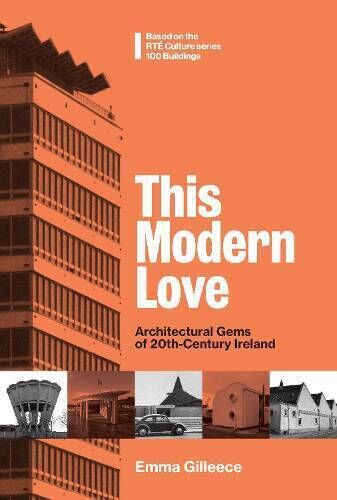
If you’re someone who takes an interest in such matters, I can recommend a new book. by Emma Gilleece takes a look at notable buildings around Ireland, and ‘notable’ includes churches and institutes of technology.
However, she also takes a look at the water tower in Knocknaheeny and the Dundanion Court housing estate in Blackrock. I liked the broad view of interesting buildings, so I got in touch.
“It’s been a decade of centenaries, one hundred years since we became a new country,” she said.
“How would we express ourselves architecturally if we didn’t want to continue with colonial architecture? We were between America and Europe, with all these influences.
"It’s mad to see how that comes out in different ways - quite often the buildings I wrote about in the book were opened by government ministers who had been out fighting in 1916 — revolutionaries who had become statesmen, trying to figure out what kind of country we were going to have.
“And representing ourselves architecturally was part of that.”
Read More
You can read histories of Ireland in terms of language, sport, battles, even objects, but architecture isn’t always a prominent theme. Is it a part of our history that’s been overlooked?
“Completely. It was really hard to research this book, and a lot of it was written with the help of local history groups.
“I’d ring local authorities to speak to a conservation officer and sometimes there was none, but even when there was an officer he or she would often recommend a local history group who would be hugely helpful and knowledgeable.
“My only concern is that when those people pass away a lot of that information will be lost. I’d love it if the book helped to start oral histories about local heritage around the country — maybe schools could undertake projects and gather that information from grandparents, say, getting their memories of what were ‘new’ buildings when those grandparents were young.”
Schools are a good place to start, she added: “You can often see the development in how schools were built.
“Long ago schools could be quite cold, with the windows set high in the walls so that children wouldn’t be distracted by what was outside.
“Then the design became far more child-friendly as the years went on, with smaller courtyard-schoolyard areas that are obviously better suited to children.”
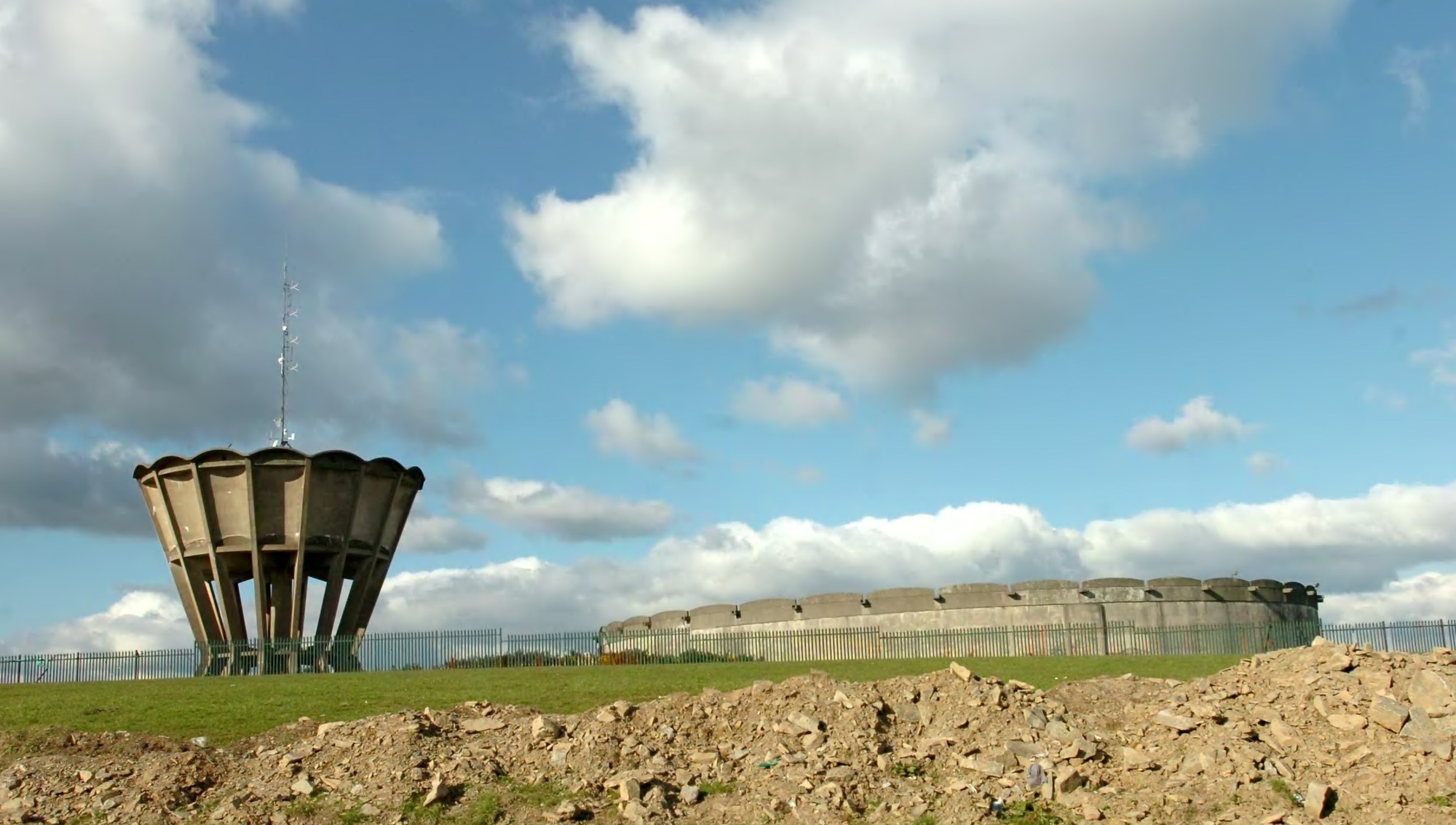
On to the examples. Gilleece is enthusiastic about the Knocknaheeny water tower, visible to generations of Cork people returning from Dublin as one of the city’s first landmarks, usually visible as the train rolls south by Rathpeacon.
“It’s bold, it’s not just functional,” she says.
"I think if it were designed today it would be a concrete data centre, almost, just straight lines up and down, a container holding water.
“But the impression you get looking at what was built, however, is more ‘if we go to this trouble let’s design it like a sculpture’, and it’s really striking.
“I have colleagues from Cork and it’s funny that they didn’t know the name of the Dundanion housing estate, but they knew the water tower immediately.”
Gilleece makes a strong case for people taking the trouble to drive to the water tower to admire it.
“I think it’s beautiful, the way it’s been designed. It almost looks like an upside-down shuttlecock — even in the photograph in the book that aspect of it is really noticeable.
“If you didn’t know what it was and just saw the photo up close you might think it was an artwork; if someone said, ‘this is a sculpture’, you’d find it really interesting, it’s so geometric, so well designed.
“When you say ‘water tower’ I think you might have a preconceived idea, but then you notice the scalloped roof, the sinewy arms going down, the vase effect ... that design really suggests that the designers thought, ‘we’re going to take one of the most utilitarian jobs in a city, water storage, but we’re going to make the facility look really elegant and aesthetically pleasing.’
“And I love that because they didn’t have to do that. People might say to me, ‘you weren’t around then so you don’t know that, you’re looking at this through rose-tinted glasses,’ but the evidence suggests that at the time they didn’t just grab the cheapest tender and get it done as quickly as they could. They put some thought into it.
“I’d love if people looked at it again and appreciated the design that went into it, which is one of the basic points I’m trying to get across in the book — to look at places that they’ve taken for granted.”
The same for Dundanion Court, which has captured the attention of countless drivers heading down the Blackrock Road. When this philistine suggested it looked like something from California in the seventies, Gilleece agreed: “The American influence is really interesting. It reminds me of estates near where I grew up in Corbally in Limerick, where houses were built for American workers in Shannon and the estates certainly looked like something from TV.
“Neil Hegarty, the architect who designed Dundanion, went to America on his honeymoon and was clearly influenced by housing schemes he saw there.
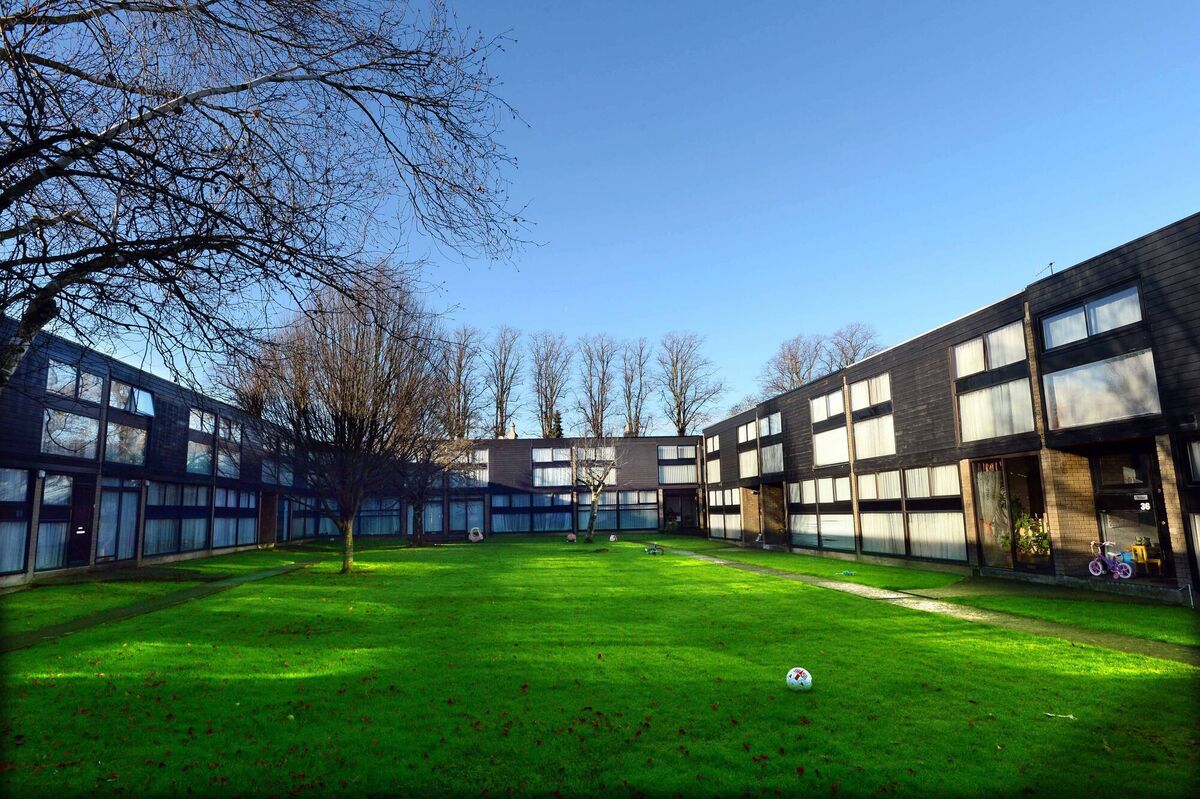
“I’m not sure if people even know you can walk into the courtyard and see the houses and the courtyard, for instance, and it’s well worth walking in to see it.
“But there’s very interesting social engineering going on there as well. Hegarty deliberately designed the passageways to be narrow so that people couldn’t pass without saying hello to each other or stop and chat.
“That’s something I think we’ve lost. I’ve lived in housing estates where you didn’t have to talk to neighbours because of the design, but in this case the architect was trying to create a community as well as building houses.”
It’s interesting to see design build a sense of community: in Dundanion: people at the kitchen sink could see their kids out front playing with the neighbours’ kids in the courtyard.
“That means there are other things they can see as well — if an older person stumbles or falls on the way home, for instance.
“It’s interesting that nowadays surveys suggest that householders like to be able to see their cars in front of their windows, so there can be a sense of the house stopping at the front door.
“But there was a time when the front door stopped at the end of the street. That made for more of a community. We’ve lost that a little bit, which may be why Dundanion spoke to me.”
Building that sense of community would speak to a lot of people, I suspect.
- This Modern Love — Architectural Gems of 20th Century Ireland by Emma Gilleece is published by New Island and available now


CONNECT WITH US TODAY



Be the first to know the latest news and updates