Jim O'Callaghan has much in common with Micheál Martin but lacks Taoiseach's pragmatism
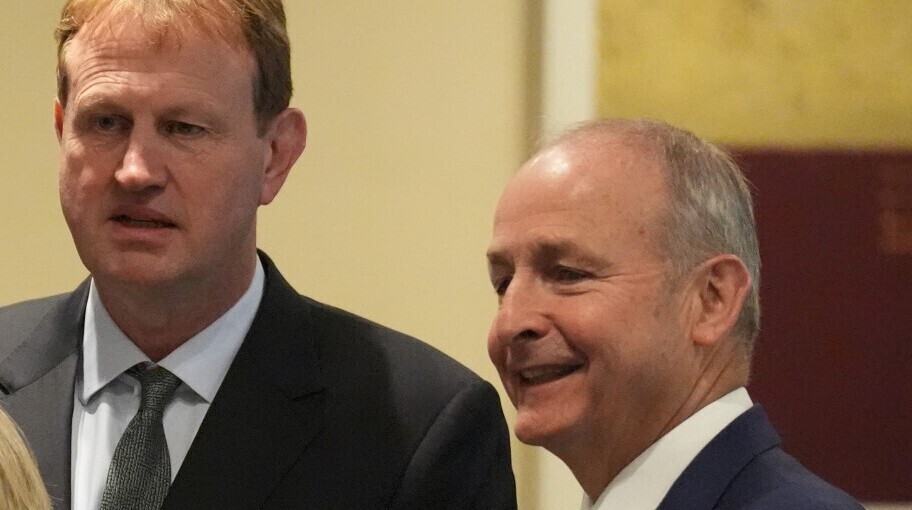
The contrast between Jim O'Callaghan's dealing with the legal aid dispute and Micheál Martin's approach to the public sector strikes underlines the challenge O'Callaghan faces when the Fianna Fáil leadership comes into play. File picture: Niall Carson/PA
Jim O’Callaghan and Micheál Martin have a lot in common.
Both have a deep belief in Fianna Fáil, both have had accomplished careers, and both have supporters within their party willing their man to lead them into the next general election.
Perhaps the greatest thing they have in common, however, is their stubbornness.
Sometimes this works in their favour. Sometimes it backfires completely and loses them support within Fianna Fáil and with the public.
The difference, however, is that Mr Martin can (when he wants to) be more diplomatic with his stubbornness. He knows when to fan the flames, and when to put them out.
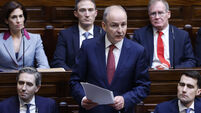
Take last week’s public sector strikes: After initially refusing to get involved and insisting that there could be “no preconditions”, it was Mr Martin’s intervention with the unions last Friday that ultimately broke the stalemate.
If Jim O’Callaghan’s handling of the solicitors’ strikes has shown anything, it is that he is not always as pragmatic as his party boss.
But then again, he is trying to impress the party faithful, with an eye on the ultimate prize of becoming the next leader of Fianna Fáil, and, ultimately, the Taoiseach.
As justice minister, Mr O’Callaghan has an interesting way of doing things. Media both like and loathe his way of conducting press conferences. He turns, looks at the reporter he wants to ask the question, and then turns to the next person the second he has finished giving his answer.
It is quick, snappy, barrister-like, and, typically, effective.
Read More
When he is done with the press conference, there is no hanging back to allow follow-up questions; He just walks away. Job done.
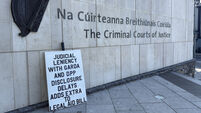
While this may work with the media, it is becoming increasingly clear that this bluntness is not working with solicitors, who are continuing to strike over reforms to the free legal aid system.
Rather than solicitors receiving €240 for a first appearance and €60 for subsequent hearings for district court cases, since July 1 there has been a “flat fee” of €520, regardless of how many court appearances there are.
Mr O’Callaghan says this reform is needed because some solicitors were taking the proverbial and too many free legal aid certs.
In his opening statement to the Oireachtas justice committee, he mentioned one sexual offences case in Cork District Court, where 112 certs were issued for eight court appearances at a cost of €63,200.
The minister further inflamed the situation when he expressed his “deep concern that the only cases deliberately affected by the withdrawal of services in the Central Criminal Court [on Monday] were those involving allegations of rape”.
This raised the ire of the opposition parties, with the minister accused of being “pigheaded”, “arrogant”, and pouring further fuel on the fire rather than attempting to resolve the dispute.
“If this is how he's behaved as Minister for Justice, I'd loathe to see how he’d behave as the Taoiseach,” Gary Gannon of the Social Democrats mused.
In many ways, this solicitors' strike is about more than the strike itself. It is about Jim O’Callaghan’s path to becoming Taoiseach.
Backing down is a double-edged sword. He resolves the dispute and can be seen as someone who can compromise. But he has backed down.
Mr O’Callaghan desperately needs a win to shore up support within the Fianna Fáil ranks.
Many politicians in his party who support him admit that he made a huge error last April when, at the height of the fuel protests, he called for the army to be deployed to clear the streets.
While many agreed with him, the fact that the army was not called in irked the public and his party, earning him the nickname “GI Jim”.
Mr O’Callaghan, like Dara Calleary, the other frontrunner for the Fianna Fáil leadership, has remained relatively quiet about the prospects of succeeding Micheál Martin, continuously insisting that there is no vacancy.
But the fact is that once Ireland’s EU presidency ends in December, conversations about the leadership of Fianna Fáil will start again in the new year.
Winning the dispute against the solicitors is much deeper than reform of the system for Jim O’Callaghan.
If he wins the solicitors’ strike, he has a better chance of winning the leadership of Fianna Fáil.
If he does not win, he will be damaged in the eyes of many Fianna Fáil TDs again.
The overriding question is whether this stubbornness will be his downfall, or whether he can adopt Micheál Martin’s pragmatic approach.
Because this pragmatism is one of the reasons why Martin has remained in the leadership and Taoiseach’s office for so long.
It currently appears that it is one of the things that Jim O’Callaghan and Micheál Martin certainly do not have in common.
- Louise Burne, Political Correspondent

CONNECT WITH US TODAY



Be the first to know the latest news and updates