Subsidies for diesel are lost money when electric trucks are the future
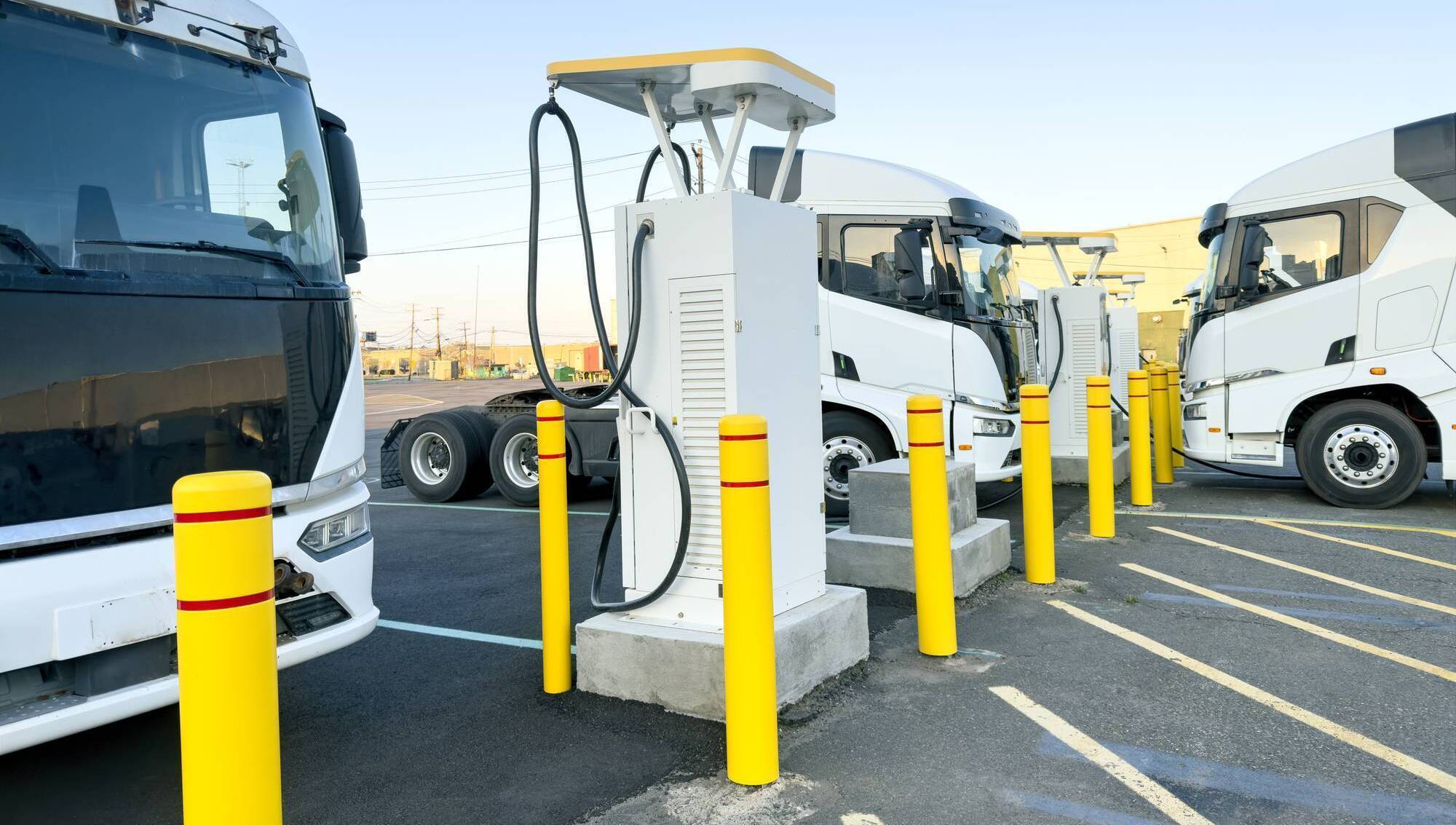
A key challenge to Ireland's transition to electric HGVs is installing a national network of high-power charging stations, usually at depots, to support these vehicles.
A global diesel shortage resulting from the ongoing wars in Iran and Ukraine is now expected to last well into 2027, with surging prices putting governments around the world under acute pressure.
Diesel in storage in the US is now at its lowest level since 1982, while stocks in Europe are also running low. In Ireland, this is being reflected in diesel prices at the pump above €2 per litre.
While petrol is widely used in cars, diesel is the fuel that powers heavy goods vehicles (HGVs) as well as tractors and trawlers, so it is vital for freight transport and for agriculture and fishing.
Earlier this year, a series of protests and blockades led by an ad hoc group of hauliers, farmers and agricultural contractors, with some involvement by far-right agitators, caused chaos across Ireland, with roads, motorways and even fuel depots blockaded.
Taoiseach Micheál Martin described the blockade of the Whitegate refinery in Cork in April as “an act of national sabotage”.
The political upshot of the protests was a package of ‘temporary’ measures costing about €750m. Predictably, these have recently been extended, pushing the overall cost to well beyond €1bn.
Despite this huge expenditure, the crisis is far from over, and if anything, is likely to intensify, given the parlous and deteriorating global geopolitical situation.
Nearly 170 million tonnes of freight is moved around Ireland every year, with more than 99% being transported by road. As recently as the early 1980s, several million tonnes of freight was transported on our railways, but today, Ireland — at 0.6% — has by far the lowest percentage of freight moved by rail in the entire EU, where the average is over 16%.
The first and obvious thing to reduce Ireland’s chronic over-dependence on imported diesel would be to implement Irish Rail’s rail freight strategy in full. This sets a near-term target of about 10% of all freight being moved by rail, which would also help reduce traffic congestion and cut air pollution.
However, according to new European data, the amount of freight carried by rail in Ireland actually fell by over one third between 2024 and 2025. Only 0.03 tonnes of freight per person were carried on Irish railways last year, compared to more than 10 tonnes per capita in Austria and six tonnes in Norway, which is also remote from the European rail network.
Rail is inherently a vastly more fuel-efficient method of moving goods than trucks, using three to four times less fuel per kilometre of freight moved. Where the freight train is electric, the efficiency gain is even higher.
Read More
Even if we do succeed in switching one tenth of our freight onto trains, what about the remaining 90%? The clear solution here is to aggressively transition to battery-electric trucks, a technology that has been advancing in leaps and bounds in just the last few years.
Ireland’s small size and relatively short maximum distances mean we are well suited to battery-powered HGVs. The sky-high cost and uncertainty surrounding liquid fuels mean there is now sustained focus on alternatives. This summer, for instance, full EVs became the single most popular engine type for new cars in Ireland, clocking up more than one in four sales.
Despite this, the Sustainable Energy Authority of Ireland estimates by 2030, only a small, single digit percentage of HGVs will be fully electric. This seems to entirely underestimate the rate of technological change.
China, in stark contrast, aims to have 40% of all HGV sales fully electric in the next four years, rising to 80% for short-haul heavy trucks. Even these estimates may prove too conservative, as battery-powered trucks are now capable of achieving ranges comparable to diesel, with relatively short recharging times as ultra high-powered chargers are being rolled out.
In early March, just days after the US began its war on Iran, the Irish government beefed up a programme aimed at speeding up the electrification of transport. It made changes to the Zero Emission Heavy Duty Vehicle (ZEHDV) grant scheme to make it easier for truck and bus operators to make the switch. Grants cover up to 60% of the price differential in buying an electric truck or bus.
To really race ahead, Ireland’s transition to electric HGVs needs to overcome two major roadblocks. The first is that electric trucks are significantly more expensive to buy than their diesel counterparts, which the ZEHDV grant goes some way to address. The second is the key challenge of installing a national network of high-power charging stations, usually at depots, to support these vehicles.
The fiasco whereby scores of electric double-decker buses purchased by the National Transport Authority at a cost of tens of millions of euros have been left idle for almost two years due to delays in installing charging facilities at bus depots will have done little to reassure sceptical private sector purchasers that Ireland Inc is actually serious about economy-wide electrification. This must change.
Imagine for a moment that, instead of throwing a billion euros down the drain on subsidising diesel, the Government had held the line and used the same money to offer freight companies an additional subsidy of €100,000 per electric truck purchased.
That would have been enough to fund the purchase of 10,000 EV trucks at a deep discount, which is about half the entire Irish HGV fleet. While diesel trucks cost a lot less than EVs, their running costs are colossal. A typical HGV doing 100,000km a year burns 35,000 litres (35 tonnes) of diesel, at a current cost approaching €70,000.
Over its average 10-year lifespan, a heavy truck will burn well over half a million euros worth of diesel, every litre of which is imported, with huge impacts on climate as well as on human health through air pollution.
An analysis of the costs of electric versus diesel trucks across 10 European countries by the NGO Transport & Environment found that in most, electric trucks were already the cheaper overall option.
On the other hand, trucks fuelled by hydrogenated vegetable oil (HVO) were even more expensive to run than diesels, while questions remain over the actual environmental benefits of HVO.
Today, about 40% of electricity in Ireland is produced locally from renewables, with much more in the pipeline from offshore wind in the early 2030s. This means the scope for cutting our dependence on dirty fuels from politically unstable regimes while also improving our trade balance is huge.
However, none of this will happen as long as the Government continues to take the easy road in capitulating to bullying and illegal blockades. Artificially lowering the price of diesel only increases our vulnerability to future fuel supply or price shocks, while doubling down on our dependence on harmful imported liquid fuels for both transport and agriculture.
- John Gibbons is an environmental journalist and author of


CONNECT WITH US TODAY



Be the first to know the latest news and updates