Fuel excise cuts won't fix hauliers' problems
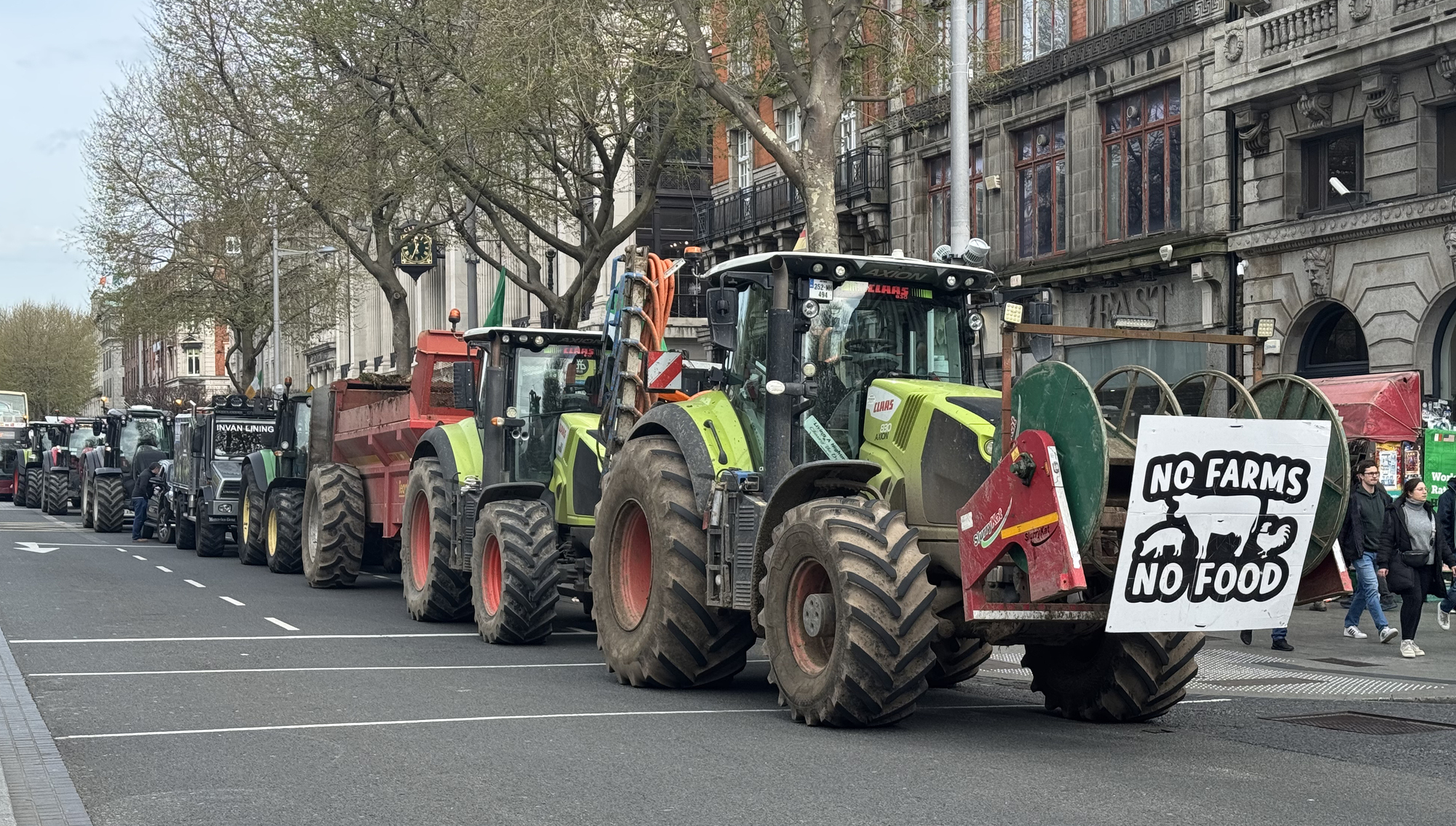
A convoy of tractors take part in a national fuel protest on O’Connell St, Dublin, in April. Hauliers have warned of further protests.
The Irish Road Haulage Association has warned of possible further protests if cuts in petrol and diesel excise are not extended past November 1.
Temporarily putting aside the blockades, one can empathise with hauliers. Their margins are often tight and they are disproportionately hit by fuel price increases, which can happen very quickly. They provide a vital economic and social function, and it is nobody’s interest that they go out of business en masse.
This does not mean that excise cuts are the best way to deal with the problem, from either an economic or equity perspective.
Let’s take the economics first: the excise cuts are enormously expensive, running to hundreds of millions of euro every time they are extended. A major reason is the huge "deadweight loss" — the cuts benefit private car users as well as hauliers.
There are just under 2.6m private vehicles in Ireland, outnumbering goods vehicles almost six to one. Even allowing for the larger consumption of bigger vehicles, excise cuts are extremely untargeted.
One can, of course, argue that private drivers are equally entitled to relief, but the social context here really matters. Survey data from 2019 found that people who commute by bus tend to have significantly lower incomes than the national average, while those who commute by train tend to earn more.
Public transport fares are due to go up 15% in January. The National Transport Authority has argued that this is the first broad increase since 2018, but increasing fares for poorer bus users while spending enormously to subsidise drivers makes little sense.
One possible way of managing this better is for the State to change the way it taxes fuel. Taxes are generally added on as a percentage of the pre-tax cost. This makes sense with incomes because you pay more as your income rises.
With fuel the outcome is slightly perverse — the excise rises along with the price, so the State reinforces the problem. A possible solution is to do the opposite, pick a target price and charge more when global prices are lower and less when they rise.
The problem here is it only fixes short-term fluctuations. It can smooth over a six-month price rise but does nothing to manage the long-term direction of travel.
Real oil prices have been highly volatile since the 1970s, but given oil is a finite resource with massive environmental costs, a future of low and stable prices is unlikely and undesirable.
Electrification is the obvious long-term solution and the State would be far better piling its considerable resources into that transition.
There are deeper national forces at work here too.
Ireland has one of the lowest population densities in Europe, largely because of population losses between the Great Famine and the 1960s.
There are some advantages to this but also plenty of costs, with transport a clear example.
Data from the Central Statistics Office show, unsurprisingly, that public transport usage in remote areas is negligible.
Low population density often makes providing these services totally unviable.
This is a recognised contributor to rural poverty, with people spending a high proportion of their incomes running cars because they have no alternative.
If policymakers really want to help low-income households, then, fuel subsidies are an inelegant way of doing it.
Even targeting specific groups with high levels of poverty can be fraught, because there are plenty of people within these categories at no risk of poverty.
Many people on minimum wage, for example, live in households well above the median income because they are not the primary earner.
The problem with introducing benefits on an ad hoc basis is the social returns are often extremely poor.
Of course, another important factor in Ireland is that many concessions have been introduced for reasons that are far more political than economic or social.
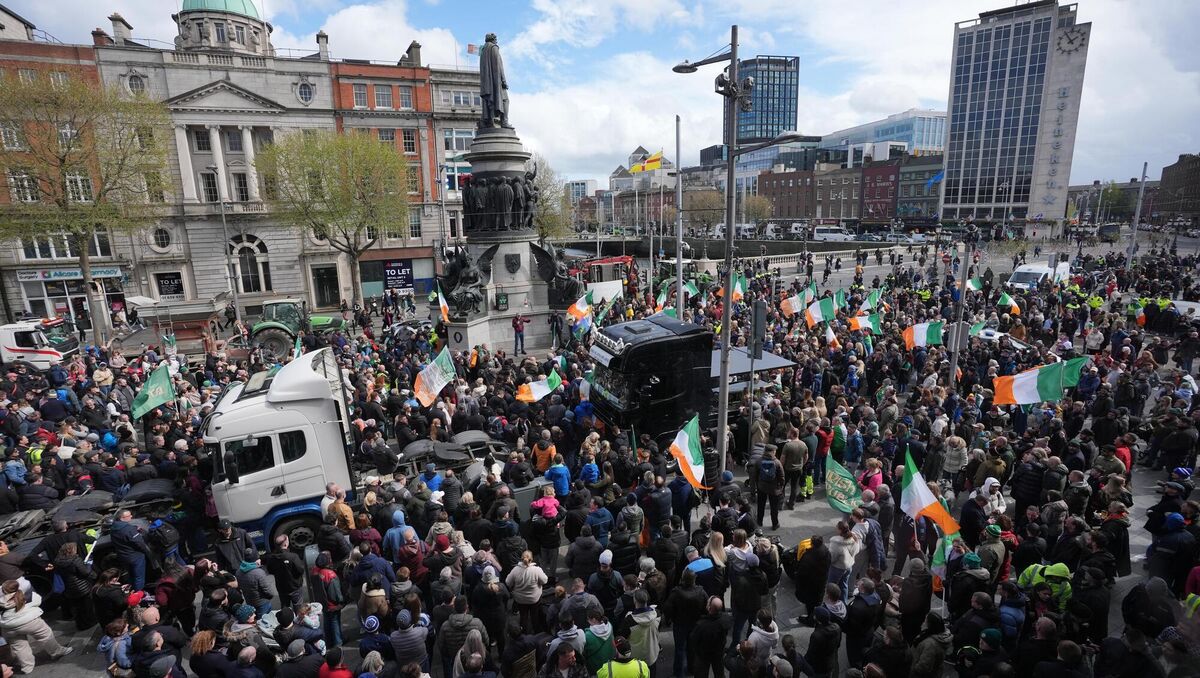
The hauliers secured excise cuts because they had the clout to bring motorways to a standstill. A generation ago, ESB workers could similarly extract generous pay deals because they could turn off the grid if government said no.
Both the tax and public spending systems became extremely inefficient because they were mired in breaks and benefits that had no overarching rationale.
Ultimately, eroding the system like this benefits nobody. It is a beggar-thy-neighbour approach that makes the economy less productive and does little to help the people who need it most.
Some commentators dismissed criticism of the road blockages on the basis that this kind of thing happens in France all the time, and that protest is indicative of a healthy democracy.
There is obviously a massive inequity here too though. Many of the people who need State support the most will never be able to create enough disruption to force government’s hand.
In a genuinely healthy democracy we need public trust in both how money is raised and spent, ensuring that equity and efficiency concerns trump the election cycle.
- Ciarán Casey is an economic historian and associate professor in the Department of Economics at Kemmy Business School, University of Limerick

CONNECT WITH US TODAY



Be the first to know the latest news and updates