Law Society calls for independent mediator as legal aid row set to roll on
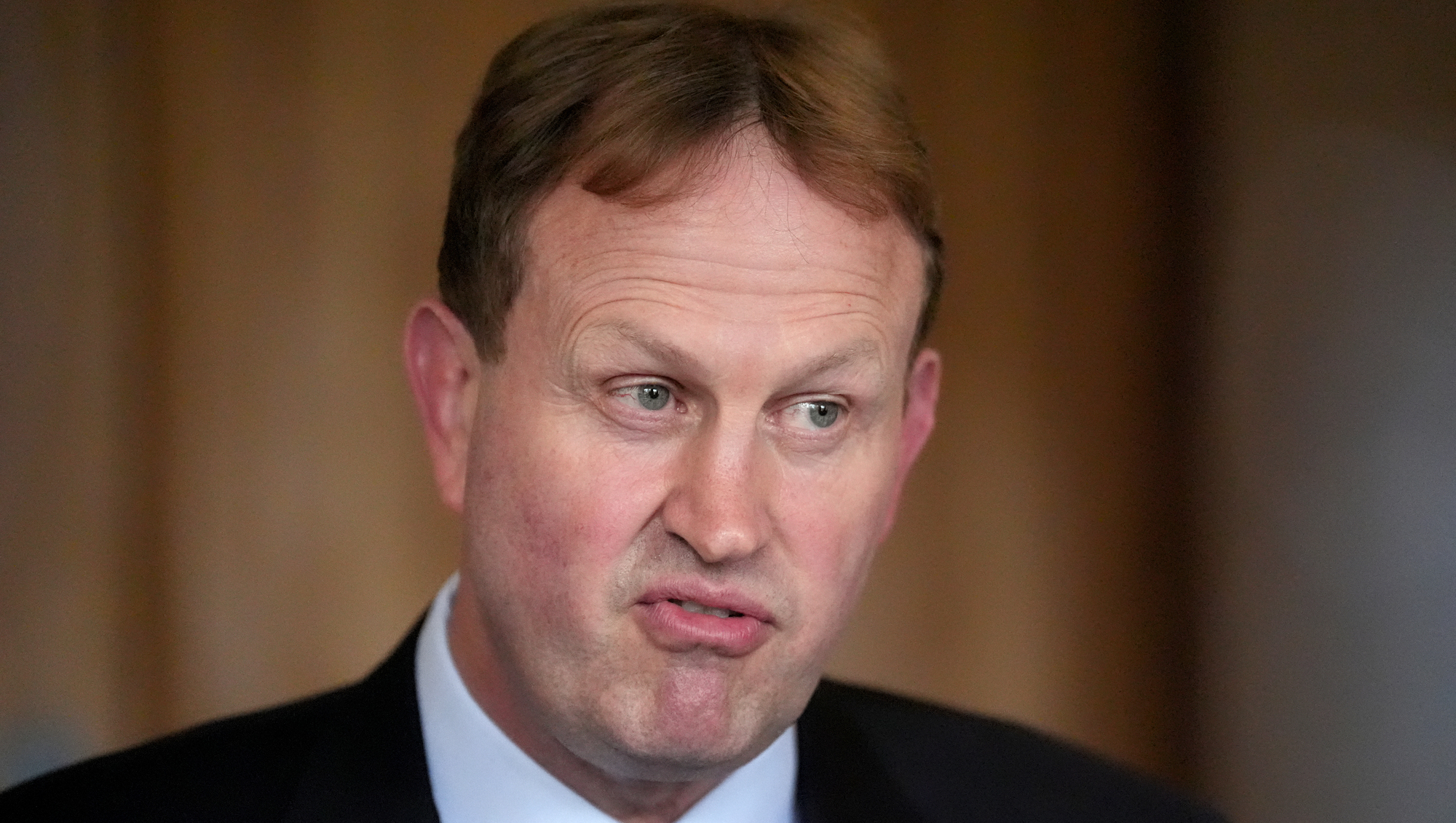
Justice minister Jim O'Callaghan has said he does not believe that mediation would assist in resolving the legal aid dispute.
There were warnings by lawyers this week that if the current criminal legal aid dispute continues into October it will plunge the criminal justice system into chaos.
Solicitors who were providing criminal legal aid withdrew their services on July 1 after minister for justice Jim O’Callaghan introduced a new flat-fee payment scheme for the service.
The new model pays a solicitor €520, calculated as payment for an average five court appearances per case.
It replaces a previous scheme in which solicitors could charge per court appearance, where €240 was paid for the first appearance and €60 for each subsequent one.
The minister said that some lawyers were gaming the system, delaying court proceedings by calling for multiple adjournments to earn more court appearance fees.
But lawyers and other people working in the courts say that adjournments are more often on the State side, waiting for complex garda evidence to be finalised or waiting on charging decisions from the Director of Public Prosecutions.
Read More
While some cases can be finalised in five court appearances or less, more complex cases — especially those involving juveniles or people with mental health difficulties — often cannot.
An Oireachtas joint committee on justice heard this week that the new scheme may stop solicitors from taking these more complex cases because they will not be paid for all their work on them.
This threatens the effectiveness of the constitutional right to legal representation, Law Society president Rosemarie Loftus told the committee.
Cases relying on criminal legal aid have plummeted, she said, with a 93% collapse in criminal legal aid certificates issued in July compared with the same month last year.
The dispute has mostly impacted the district courts so far but the higher courts are returning on October 5 after a break through August and September, so the most serious crimes like murder and rape will be due to be heard then. They will be adjourned if solicitors are still withdrawing services for legal aid clients at that stage.
Hundreds of people convicted of serious crimes such as rape are still out in the community awaiting sentencing since July, said Aoife O’Leary, chair of the Criminal State Bar Committee at the Bar of Ireland.
If the dispute continues, their cases may be adjourned again in October, she warned.
Victim support groups said that their clients are increasingly anxious about what might happen in their cases when the new legal term starts on October 5.
But Clíona Saidléar of the Dublin Rape Crisis Centre stressed that the new court term has not yet started and urged a resolution to the impasse before then.
“There is some time yet,” she said.
The Law Society has called for an independent mediator to help break the current impasse with the justice department.
It said that that two changes to the current scheme would make it acceptable to most lawyers.
One of these is a change to the current scheme where separate criminal cases are treated as the same if the charges are brought on the same day.
A lawyer said that this could mean that a solicitor was effectively being paid for one case, when they could be working on multiple different cases concerning the same individual, such as an alleged assault in Cork City, an alleged robbery in a suburb, and a public order offence in a completely different county, with separate case work required on each offence.
The other change lawyers are calling for is that lengthy, complex cases which require multiple court appearances can be accommodated and paid for in the scheme.
Other jurisdictions have accounted for such measures within otherwise flat-fee payment models which work and could be considered here, the Oireachtas justice committee heard.
The Department of Justice told the that Mr O’Callaghan responded to the letter from the Law Society requesting mediation on September 15 and clarified he does not believe that mediation would assist in resolving the issues at this stage as the regulations underpinning the revised scheme are currently the subject of judicial review proceedings.
“The High Court is due to deliver its judgment on October 13. In those circumstances, and out of respect for the High Court, the minister does not consider that it would be appropriate to participate in a mediation process,” a department spokesperson said.
More than 600 solicitors remain on the criminal legal aid panel as criminal cases continue to be dealt with in the courts, the justice department said.
Twenty-four solicitors recently reapplied to join the panel, and four joined the panel since the reforms were introduced on July 1.
“Since the commencement of the new system over 1,800 new certificates (invoices for payment with an approximate value of €936,000) for legal aid have issued,” the spokesperson said.
“In considering the need for reform, it is important to note that, while criminal case volumes in the district court have decreased, expenditure on criminal legal aid in the district court has increased, from €19m in 2015 to over €41m in 2025.
“The Department of Justice, Home Affairs, and Migration continues to keep the operation of the new criminal legal aid arrangements in the district court under review following their introduction.
“As part of this review process, the minister has already indicated the possibility of considering modifications to reflect the distinct nature of cases that may require a large number of hearings, such as cases before the children’s court and remand hearings.” Dublin, where the majority of criminal legal aid cases are heard, has remained staunchly opposed to the scheme with only a small number of solicitors returning to the panel.
In Cork City, approximately six solicitors have returned to the panel but many others across Cork City and county say that they will not join it until some changes are made.
Other counties in Munster have remained more staunchly opposed to returning under the new scheme, with some counties such as Kerry having no solicitors currently on the criminal legal aid panel.
A garda source who works in the courts said that the dispute is already resulting in many cases being adjourned.
Although the most serious criminals are still being jailed, people convicted of more medium-grade crimes such as joyriding, burglary, and car theft may not get sentenced as efficiently as they should, they said.
“There’s a concern because we have cases that we should be finalising that we’re not finalising, and they’re all bulging within the system,” the source explained.
“All of these have to be dealt with at some stage.
“So it’s going to cause a huge delay in justice and a delay in people being sentenced,” they said.
“It will put us back as well from a policing point of view.”
One lawyer told the that they were shocked that the dispute had already dragged on so long.
The justice minister’s refusal to engage pending the High Court decision on October 13 is just a “delay tactic,” they said.
“There will be huge backlogs. At the district court they are already adjourning cases until January. And the circuit court always has a big list when it comes back in October, every year, because it last sat in the end of June.
“There’ll be huge delays in trials, there will be huge delays in sentencing.”
Defence solicitor Frank Buttimer, who has a large legal practice in Cork, said that the majority of criminal legal aid solicitors around he country are remaining off the legal aid panel, and will not return until this matter is resolved.
“I am extremely concerned, as should the Government be, about what is going to happen when the higher courts return to resume their work from the first week of October onwards throughout the country,” Mr Buttimer said.
“Whatever has happened up to now in the district court in relation to lower level criminal prosecutions, the impact on the system for the extremely serious cases which come before those other courts will be a matter of great societal concern.
“We, as solicitors want to go back to work.
“The industrial action has impacted significantly on us. And as soon as this matter is resolved, we will be back in court doing what we are supposed to do,” he said.

CONNECT WITH US TODAY



Be the first to know the latest news and updates