TDs fear budget clash on energy credits and one-off payments
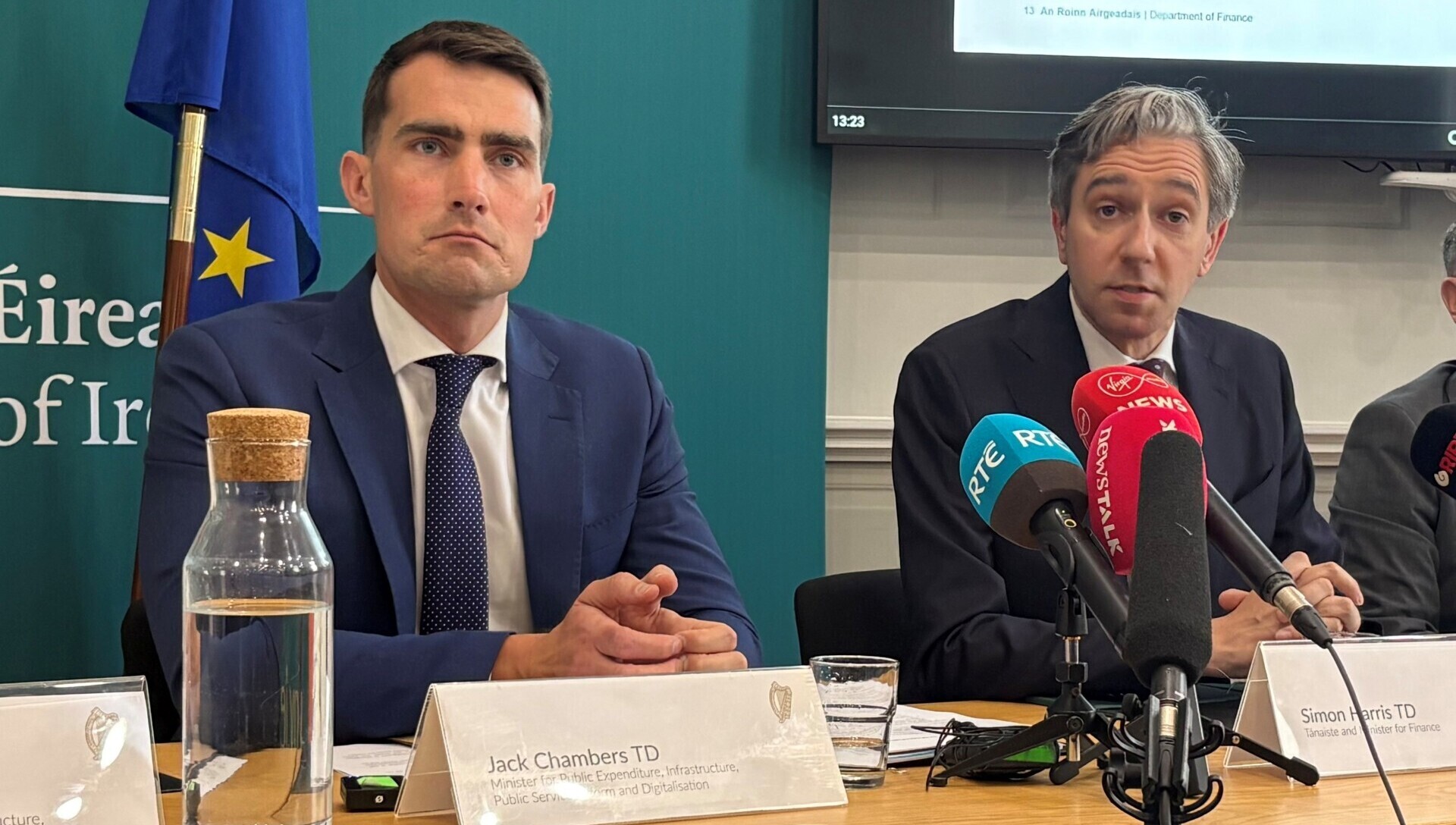
Public expenditure minister Jack Chambers and finance minister Simon Harris announce the Government's summer economic statement last July. Pictured: David Young/PA
Members of Fianna Fáil fear that Tánaiste Simon Harris will push for one-off payments or energy credits in the upcoming budget , despite warnings that such measures would add to inflation.
While Taoiseach Micheál Martin has ruled out universal energy credits as part of October's budget, some within his party now believe that his Fine Gael counterpart would be in favour of using additional revenue to roll out one-off cost-of-living payments.
One senior source suggested that there is a "streak of want" from Mr Harris when it comes to one-off supports.
It is understood that the Department of Finance is now working on the basis that the amount of corporation tax collected this year will exceed the €35.3bn forecast made in April by a wide margin.
This could provide the Government with some extra wiggle room on spending in the budget.
However, the Coalition has been strongly warned against further fuelling inflation through once-off universal payments, with the Irish Fiscal Advisory Council (Ifac) and others stating that it would simply drive up prices.
Meanwhile, a cost-of-disability payment will be announced as part of the budget on October 6.
Social protection minister Dara Calleary said he remains in discussions on the finer details of the package. It is expected that the new payment would be phased in, with payments set at around €40 or €50 per week in the first year.
There are around 200,000 people with a disability who receive various State supports, and who could be entitled to the new payment.
Mr Calleary said the Coalition will be introducing "targeted" measures, in areas "where people are feeling the pinch most at the moment".
He warned that the Government will not be able to address all of the challenges, citing working families, businesses, and the need to respond to the energy crisis as key areas that will be the focus of supports.
It is now expected that the reduction in excise on petrol and diesel will be retained beyond November and instead will continue until next spring at a cost of €100m each month.
"We are investing in people's daily lives through the subsidies that have been paid," Mr Calleary told RTÉ's programme. "That's keeping diesel 30c a litre lower, keeping petrol similar levels per litre lower. Without the subsidies that are going in, without that decision, petrol and diesel prices would be a lot higher."
It comes as a meeting organised by those involved in the fuel protests took place in Moate, Co Westmeath, yesterday evening.
Organisers said they would be drawing up a document of concerns raised at the meeting, which they would be giving to the Government ahead of the budget.
CONNECT WITH US TODAY



Be the first to know the latest news and updates