'Protracted delays' in flood relief schemes as 31 of 54 still at design stage, climate watchdog warns
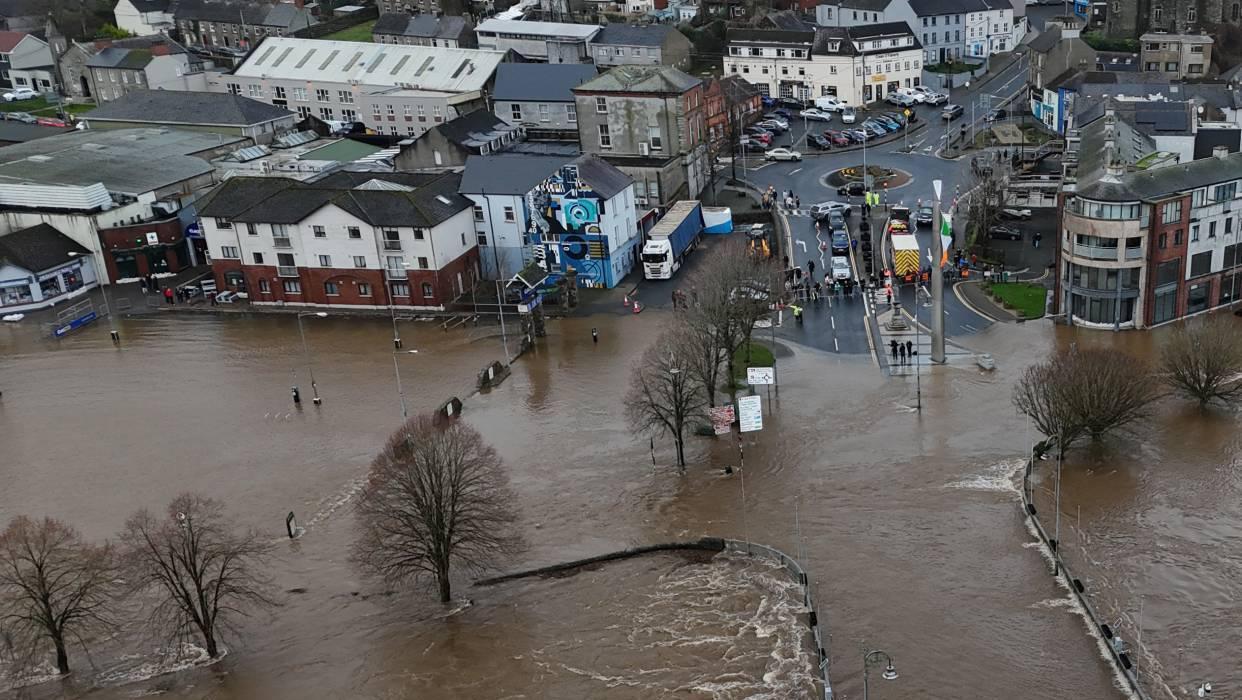
In Enniscorthy, which experienced some of the worst impacts of Storm Chandra in January and seven flooding events since 2000, construction has yet to begin on a flood defence scheme initiated in 2015 because of environmental concerns and planning issues.
Serious concern has been raised in a new report that 30 out of 54 major flood relief schemes still remain at stage 1 of construction.
The Climate Change Advisory Council said Ireland was not adapting quickly enough to worsening climate risks, with Storm Chandra and prolonged rainfall exposing weaknesses in transport networks, critical infrastructure and community preparedness.
The latest report found that, while the Office of Public Works has invested about €100m annually in flood relief schemes, only 56 have been completed to date. These protect more than 13,500 properties and have prevented an estimated €2bn in damage.
These include schemes in towns such as Bandon, Clonmel, Mallow and Skibbereen.
However, the council said it was very concerned about “protracted delays in the execution of flood relief schemes”.
It added that, eight years after being prioritised for development, 30 of the 54 major flood relief schemes remain at stage 1 — which is the preliminary design stage.
“This is particularly significant given that completing flood relief schemes takes an average of 11 years,” the report added.
In Enniscorthy, which experienced some of the worst impacts of Storm Chandra in January and seven flooding events since 2000, construction has yet to begin on a flood defence scheme initiated in 2015 because of environmental concerns and planning issues.
Read More
“In April 2026, it was announced that the OPW has provided €2.6m in funding for interim flood protection measures in Enniscorthy, which are expected to be in place by October 2026,” the report added.
Chair of the council’s adaptation committee Peter Thorne said the major flood relief schemes should have “protected people by now”.
“They [were established] in the immediate aftermath of Storm Desmond, and that’s a long time ago, and we should have protected people by now,” he told the .
“It is indicative of the fact that we are under-ambitious in adaptation. Of course, climate change is making matters progressively worse, so even more areas now arguably need protection than was the case a decade ago.
“So we are behind the curve and getting further behind it. We’re not alone in that; most countries are not making fast enough progress on adaptation and are not adapting to the rapidly changing climate,” he added.
Looking more closely at Storm Chandra, the report highlighted volunteer and community support played a vital role in the response.
In Louth, Wexford, Monaghan and Wicklow, community volunteers were essential in carrying out evacuations and welfare checks on affected households, transporting medically vulnerable people, distributing sandbags, and establishing and staffing community rest centres.
However, it added the community response “cannot act as a substitute for planned investment in flood protection, resilient infrastructure and risk reduction”.
Transport networks also remain vulnerable to flooding, with impacts extending beyond immediate disruption to longer-term repair costs. Storm Chandra caused road closures and widespread disruption to bus and rail services.
More than 300 roads were damaged, and about 50 were rendered impassable during the storm, with the eight worst-impacted local authorities needing €59m to repair regional and local roads.
It also highlighted the need to improve local flood-risk communications and national flood-forecasting capabilities.
Mr Thorne said effects similar to those of Storm Chandra would occur “more and more” frequently.
“We’re going to see more cascading and compounding impacts of climate change affecting people’s day-to-day lives, and that’s not just from rainfall, but from heat and drought. This is going to be more and more the story of your and everyone else’s lifetimes, unless and until we reach net-zero emissions,” he added.
CLIMATE & SUSTAINABILITY HUB
CONNECT WITH US TODAY



Be the first to know the latest news and updates