Finland's childcare is state-run, cheap, and plentiful — why can't Ireland do it?
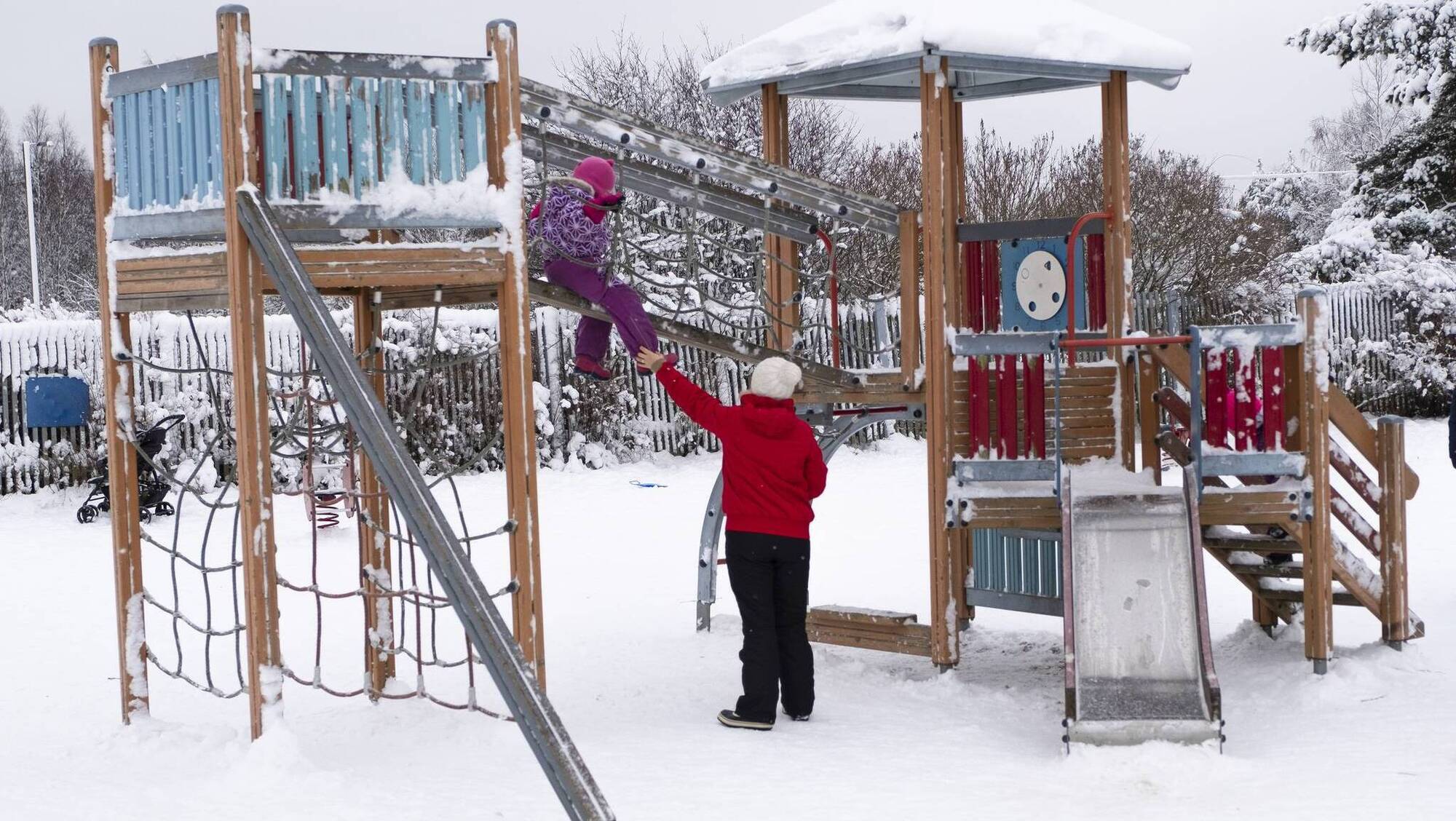
The state or local government designs and builds the daycare facilities in Finland which include huge, well-equipped play yards. These yards double as public playgrounds during evenings and weekends.
Six years ago I moved to Finland with my young family. I'm Irish, I have a seven-year-old and a four-year-old, and my older child has been through the childcare systems in both Ireland and in Finland.
Our experience of childcare in the two countries could not be more different.
In Finland, the system is completely public, with the staff all paid by the state, usually on permanent contracts, with holidays, pensions and all the usual entitlements of a good job. Our children have been with the same people for the last four years, and we have a close connection with them.
The facilities are also significantly better than anything I saw in Ireland. The state or local government designs and builds the daycare facilities and the more modern ones quite often cater for more than 100 kids.
For us, this seems to be a very good thing because scaling up means they have better facilities for everyone. The children are still in small groups with a great ratio of teachers to kids.
Read More
They have kitchens and canteens that make tasty, healthy food on site, they have large gymnasiums that wouldn't be feasible in a smaller building, and they have huge, well-equipped play yards. These yards double as public playgrounds during evenings and weekends.
Our daughter is in from 8.30am to 4.30pm and care is available 365 days a year at no extra cost. There are even 24-hour daycare centres dotted around the city for children whose parents work nights such as doctors, nurses, or taxi drivers.
Children get dinner and sleep overnight before being picked up by their parents on their way home from work. This costs exactly the same as a regular daycare.
We had two kids in full-time childcare for several years, and it cost nothing. We recently started paying €50 a month because we crossed the income threshold. But that threshold is very high.
The family income has to be over €6,000 per month before you start to pay. It's then capped at a couple of hundred euros for the highest earners. When I think about what friends of mine are shelling out at home, the equivalent of a second mortgage or even more than that, I just can’t imagine the strain.
In Ireland, lots of parents seem unable to access a spot at all. Here, the system is centralised. You apply for your chosen location four months before the date you plan to start, and if you don't get it you are guaranteed a spot in a nearby daycare.
It’s worth repeating that: every child is guaranteed a place. You might be on a waiting list for your chosen daycare centre, but you will have care in a different daycare nearby while you wait.
The problem isn't solved once a child goes to school at five years of age. What are parents in Ireland supposed to do when children finish school in the middle of the day?
In Finland, kids are entitled to full-time daycare until they turn six when they start in "pre-school", the equivalent of junior infants in Ireland. Pre-school includes after-school care as a standard, in the same building and with the same teachers, so it's absolutely seamless.
In pre-school, your kids are still there from 6.30am to 5pm if necessary and it's an even lower cost than daycare; in fact, it’s free for many parents.

Our seven-year-old is now in the first grade and he cycles himself to school independently, which is encouraged here. His official school day ends at 12.30, but thankfully all schools are mandated to provide after-school care for all first and second graders.
A group of after-school club workers take over from the teachers and lead the kids with games in the schoolyard and activities indoors. Our boy loves it, he stays until 5pm every day and then he cycles himself home.
After-school care is free if your income is below €6,000 a month and half price if it's below €7,500 a month. The full price for people on higher incomes is €120 a month.
We feel incredibly privileged to have this excellent system for our kids, and the thought of having to go back to Ireland to try and navigate the system there was a major factor in us choosing to stay in Finland.
It is unfair that parents and children in Ireland go through so much stress, uncertainty, and financial hardship for a service that we know can be provided in a much better way.
Finland is one of many countries with a system that is designed and well-funded by the government. The Irish Government has the resources. Is the political will there?
- Dan Nickström lives in Finland with his wife and two children.

CONNECT WITH US TODAY



Be the first to know the latest news and updates