Ireland must back human rights as the US seeks to curb them
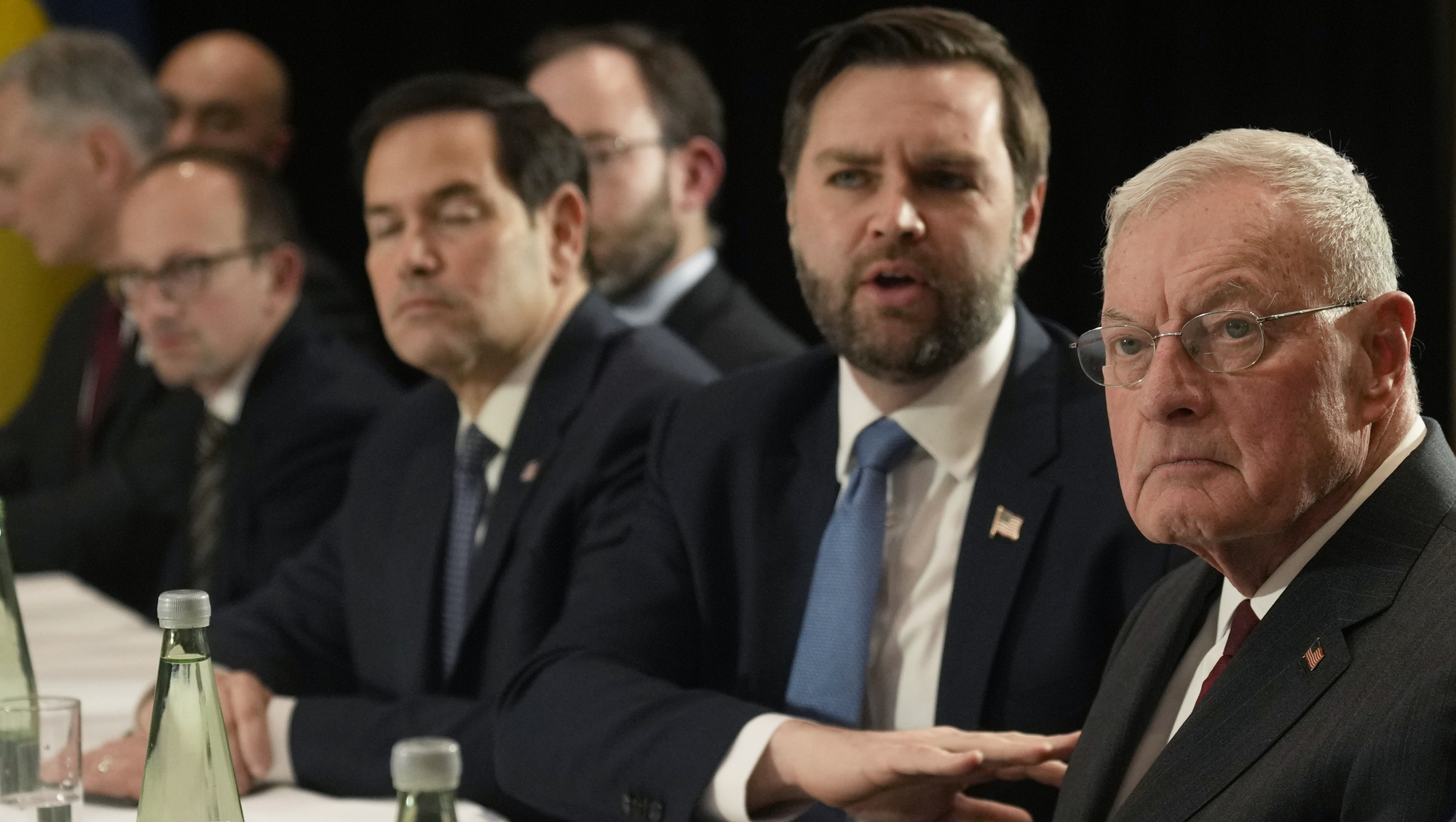
From right, US special envoy Keith Kellogg, United States vice president JD Vance and United States secretary of state Marco Rubio at a meeting with Ukraine's president Volodymyr Zelenskyy last year the Munich Security Conference where Vance accused Europe of suppressing the voice of its citizens. File photo: AP/Matthias Schrader
It was only a matter of time. For months, hints have abounded about the US administration’s intention to fund so-called ‘freedom of speech’ movements in Europe.
But this funding is not neutral. It is an attempt to legitimise anti-rights politics under the banner of free speech.
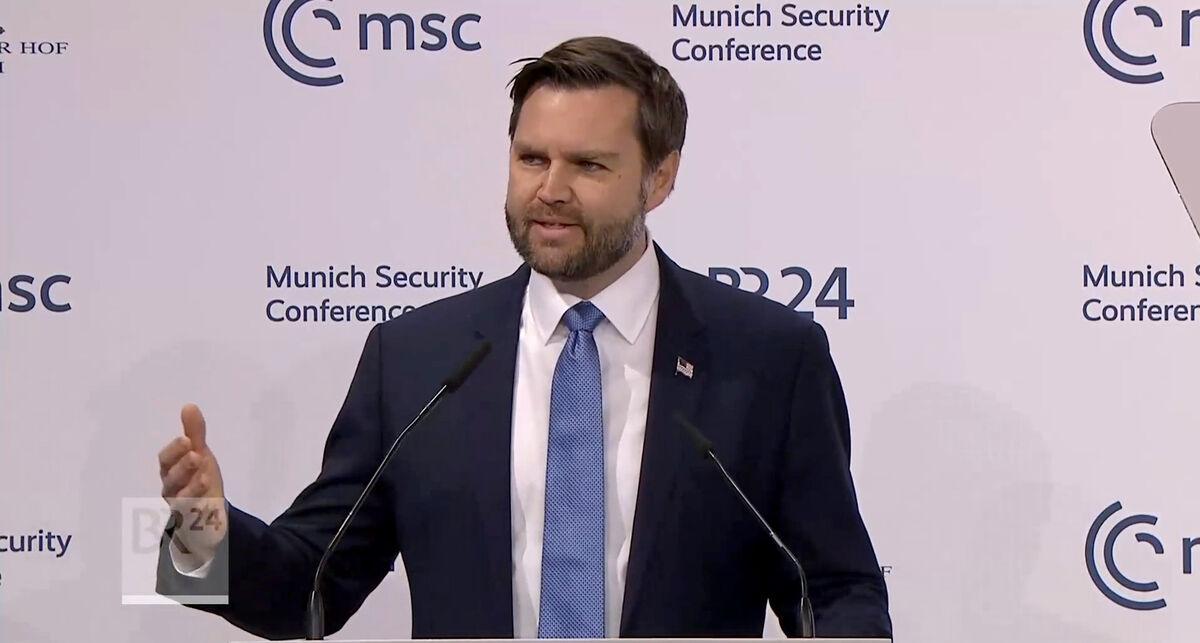
The first signal was the Munich Security Conference in 2025. US vice president JD Vance boldly accused Europe of suppressing the voice of its citizens. “In Britain and across Europe, free speech, I fear, is in retreat,” he said.
Cosying up to far-right leaders in Europe has been part of the US administration’s playbook. The open endorsement of Viktor Orban — on the cusp of Hungary’s parliamentary elections in April — was a case in point.
It was striking to see the US taxpayer-funded vice president fly halfway around the world to talk up another strongman. The strategy failed. The Hungarian people decided their own fate.
Read More
Outside Europe, there has been the US administration’s support for much debunked claims about abuses of white South African farmers. Alliances with UK far-right organisations have also been reported, including funding to the British Free Speech Union, established to counter, what it describes as, cancel culture.
Grants to combat digital ‘overregulation’ have been touted. Much of this has happened quietly, without the usual processes and procedures for public spending.
It must be a difficult situation for the remaining US State Department permanent staff who have, for so long, scrutinised and weighed funding applications to support groups fighting flagrant abuses of human rights, including abuses that have caused death and suffering across the globe.
So in mid-July, when the US State Department posted a call — under its Bureau of Democracy, Human Rights, and Labour — to develop “civilisation bonds”, democratic resilience and the rule of law in Europe, it was worth examining the small print.
A limited number of European organisations — two or three, at most — would be entitled to draw down US taxpayer dollars of up to €3m. The funding would support those seeking to counter “overbroad and vague hate speech laws and online content regulation”.
Activities under the funding stream could encompass monitoring for “judicial overreach” and the development of strategies that promote “Western identity” in the context of migration.
Far-right-fuelled research and narratives have already been finding their way, in increasing volume, onto the floor of democratic institutions in Europe. The European Parliament has become a fractious place at times, and MAGA tropes have found support and voice on its margins, with meetings involving MEPs and US anti-abortion campaigners.
There will be an audience for this new funding call, be it in the US or in Europe. Perhaps the beneficiaries of these tax dollars are already planning how to spend them once the grant awards are made in early autumn.
For many adults in Ireland, the strength of the anti-rights movement was a very real and suppressive experience until recently.
Just over 30 years ago, being gay in Ireland was a criminal offence. Less than a decade ago, women who procured an abortion in Ireland were criminals.
Ireland, and its anti-rights movement, which campaigned vigorously to retain these multiple levels of criminality, was held up by global anti-rights campaigners, including many in the US, as a bastion of traditional values.
But in Ireland women died and they were shamed. Gay people were denied expression, and some lived lonely lives.
In just over a decade, as a nation, we have said no to the denial of fundamental freedoms. We have become a healthier, more pluralistic and more equal society.
The MAGA definition of rights and freedoms is not the one grounded in the Universal Declaration of Human Rights. In the US and under strongman regimes, as previously happened in Poland and Hungary, gender equality and sexual and reproductive health and rights are often the first targets when democracy is being weakened.
Closing down free media and restraining civil activism then follow. The shift in US taxpayer investment from protecting genuine human rights to supporting anti-rights divides us further.
Human rights, the rule of law and regulations that keep us safe require vigilance. This development is a rallying call to member state governments and the EU to secure our democracy.
It’s a call to double down on trusted sources of information and create the conditions for fact-checking across our media systems, including major investment in media literacy. EU Commissioner Michael McGrath, whose portfolio includes the protection of democracy, needs a plurality of allies and advocates.

It’s a message for leadership, including Ireland’s leadership of the EU presidency, to ensure that Europe’s next Multiannual Financial Framework gives sufficient weight to securing our democracies and human rights infrastructure as part of our shared security strategy. It’s not just a question of military hardware.
When our Taoiseach, Micheál Martin, meets US president Donald Trump on the margins of the Irish Open in September, he should reassert what values look like for a progressive country that remains a voice for multilateralism, human rights and the rule of law. It’s an opportunity to tell the Irish story.
Ireland’s recent history of respecting human rights, dignity and freedoms is an experience to be talked up. It is one we should shamelessly share, especially now when we hold the EU flag and our leader prepares to meet Trump.
Together, we must saturate the space with proof points that respect and dignity, grounded in human rights, makes us all better.
US tax dollars to close these conversations? No thanks.
- Catherine Heaney is CEO and co-founder of CaraDem, an Irish-led democracy initiative incorporated in 2025. CaraDem's co-founders are former tánaistí Eamon Gilmore and Simon Coveney.
CONNECT WITH US TODAY



Be the first to know the latest news and updates