Patrick Horgan book excerpt: People critisising Gary Keegan over 2025 final misread the situation totally
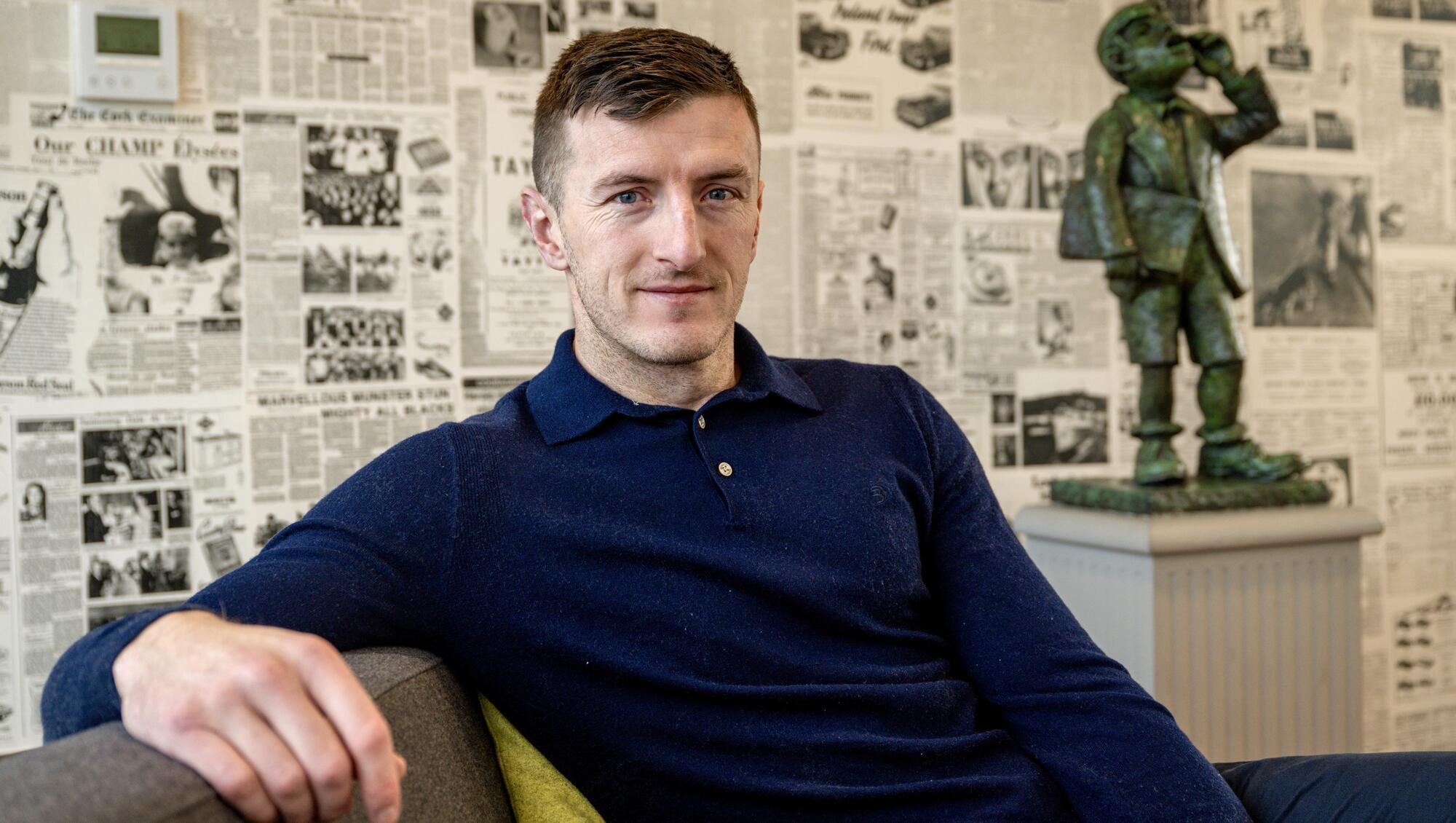
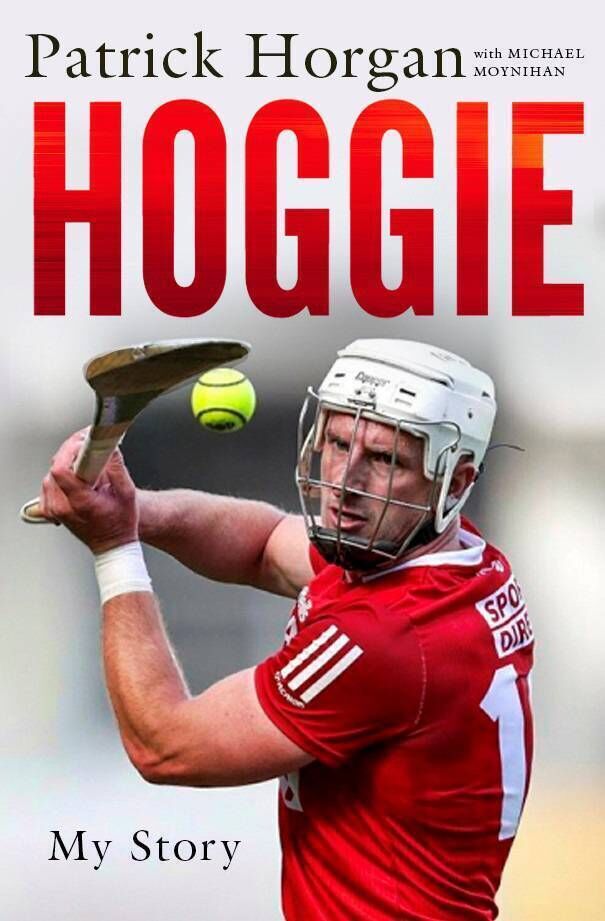
COMING SOON: Patrick Horgan's autobiography, 'Hoggie', published by Gill Books and in shops from October 8th. Pic: Chani Anderson
WE WERE beaten in a few finals, but in getting to those finals we played different ways.
The first thing Pat Ryan drove into us when he came in was that you had to give everything. There was no point in standing around and hoping it was going to happen for you; you had to make it happen. Try your absolute hardest.
Run until you drop. It grew and evolved from there. There was a great connection with the team, and among the full-forward line. It was a great place to be.
That (Munster Championship) game against Limerick in 2024 in Páirc Uí Chaoimh was as big as any final we ever played. It was win or we were out, so, in some ways, it was like a final.
We had a two-week break after our first two games, which we’ d lost. For a lot of teams, it would have been a depressing prospect: lost two and then facing the best team in the country. Snookered.
But Pat was very clear early in the first week of preparation. He told us how we were going to beat them and why we were going to beat them; there wasn’t even a slight doubt about it.
He never blinked, he never contradicted himself, he just said, ‘We’re going to do this and this is how it’s going to end up. We’re going to play better hurling than them. ’ And we did. The way it went, in the end, it was a exciting finish, but we should have had it won before that.
We were a fair bit ahead of them.
Read More
Now, when he said, ‘We’re going to beat them, ’ did he really see much weakness in Limerick? I don’t think so, but he was so convincing, so persuasive, so sure, that we never doubted him. The specifics were that we’ d have too much pace, that we’ d be pulling them all over the field, and we did that for a long period. We were going to run, and we were going to have them on the back foot by putting their full-back line under pressure if we could, because they build from there.
To be fair, they came back into it – helped by a couple of soft enough goals we gave away – and when Aidan O’Connor got that point out on the wing in the last minute to put them two points up, it was a grim enough feeling. We were looking up at the scoreboard and thinking, ‘We’ve played all the hurling here but we’re still two points down. ’
But then Pa hit a serious puck-out to find Shane Kingston – it was such a ballsy puck-out – and Shane just took off. He was the only fella who could have done what was needed that night, soloing half the length of the field, flicking the ball over the heads of fellas with four or five All-Ireland medals.
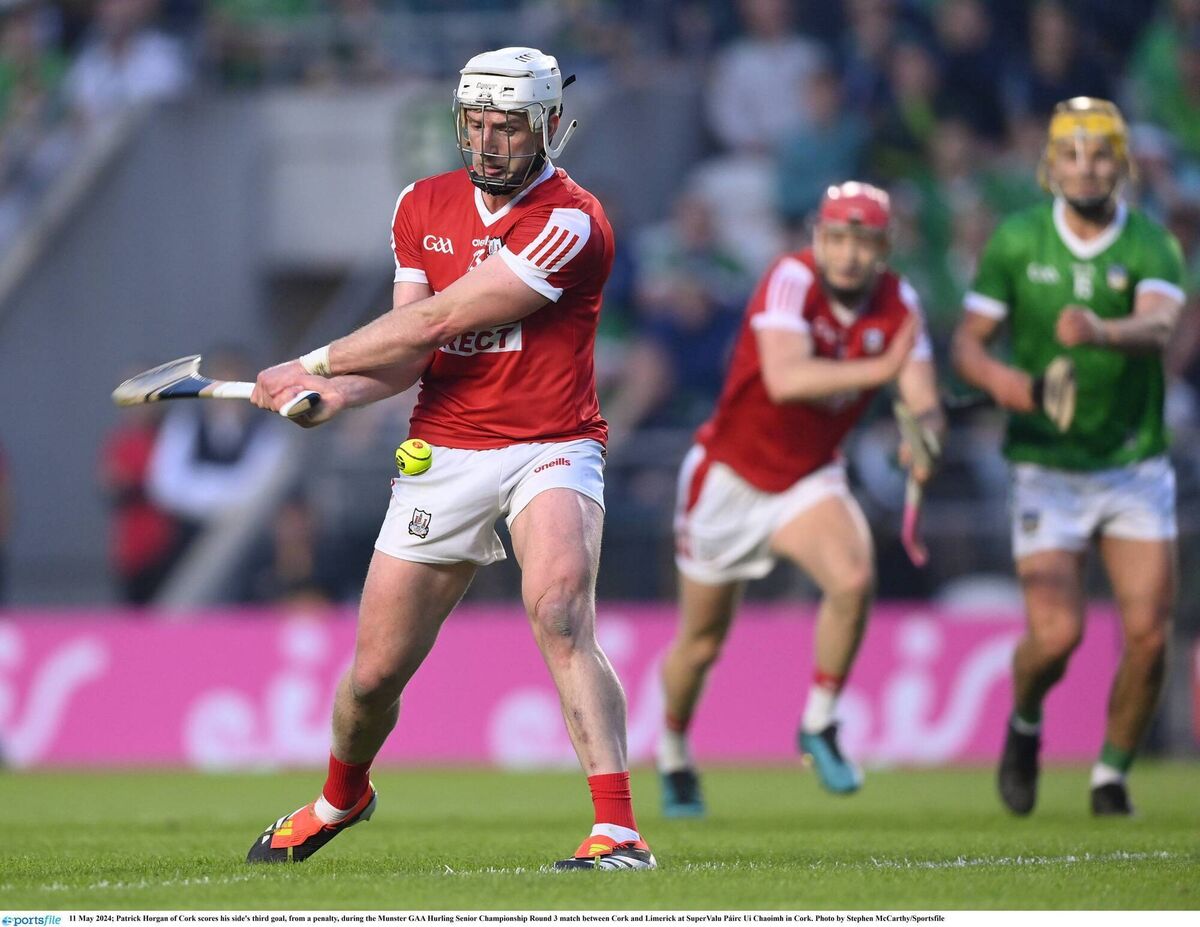
When they whipped him down and the referee gave the penalty, the noise in the stadium was unbelievable. It was so loud that I found it hard, for a few seconds, to stay focused on the game, on what I had to do next.
What helped me was the fact that the Limerick players started pleading their case with the referee, so by the time they turned around, I had the ball on the spot for the penalty, so they couldn’t really come over and try to distract me.
I had my own reason for moving fast with the penalty.
It wasn’t that I wanted it over and done with and finished; instead I didn’t want to give Nickie Quaid, the keeper, a chance to react to how I was shaping up to take the shot.
It was always in my mind that, if I was taking a penalty, I’ d make it as hard as I possibly could for one of them to read me. A good keeper will see by the way you shape your body, as you lift and strike, which direction you’re going to hit the ball, and that’s a big advantage when their reflexes are so good to begin with. It’s a little like baseball, where you have that fraction of a second to begin swinging when the ball is thrown or else it’s gone past; a hurling keeper has to be moving almost before the ball’s been struck for a penalty.
I lifted the ball and left it drop below my hips, to show that I was going right with the penalty – and then whipped it across to the other side. That also meant that he had to bring the hurley across to the other side of his body.
People think you have a big advantage for the penalty with just one in the goal nowadays, that the odds really are in your favour as the taker. But it’s a long way out, and if the keeper picks the right side, he has a very good chance of saving it. Someone that doesn’t play the game may think, ‘Wow, the ball’s going a million miles an hour’ , but it’s not.
If you have a good eye for the ball, you’ll stop it pretty easily.
When the ball hit the net that night in the Páirc the place went bananas. It erupted.
I was standing 20 metres from the goal and the red on the Blackrock End terrace seemed to explode into my face; it just filled the eyeline completely. I’ d have loved to have taken a picture of it.
Afterwards, I said something like, ‘How hard could it be to score when you were shooting into the terrace and there were maybe 15,000 people wanting you to score?’ It was a great feeling.
But it still wasn’t over after that goal. We were only up by a point, and you couldn’t help but think, ‘They’ll manage a point somehow here and it’ll be a draw, and we’ll be out. ’ But, in fairness to Shane Barrett, the puck-out broke and he won a great free out by the sideline when he got a slap down across the head. I went out to take it. I was in no hurry, walking out at my ease, but I’ll never forget the noise that was coming down from the South Stand – rolling, rolling, rolling down in waves; it was like nothing I’ d ever heard before. Again, it was so different that it distracted me a bit: I was almost out of breath when I got out to where the free was to be taken.
Pat was there, and we actually had a bit of a chat when I picked up the ball.
‘I’ll go for a score, will I? It’ll go dead anyway. ’ ‘Be careful, ’ he said. ‘What if it hits the post and stays in play?’ He was thinking of everything, as usual. And he was right.
It was just a dream, the whole night.
***
GOING back to talks we had with performance coach Gary Keegan over the years, one thing he always said was to be careful. ‘Be careful how you think, because you are listening. Be careful how you talk to yourself, because you are listening.’ What that means is that, when you’re at training, you can talk yourself up.
‘I love this.’ ‘I love the big moment.’ ‘Taking frees in front of this many people is easier than taking them in front of no one at all.’ When you say those things, they’re going in, taking root in your mind. Over time – obviously with the help of Gary – you begin to convince yourself that these are the sort of moments that you want. Otherwise, why are you training? Why are you putting in a massive effort for months, years at a time? It doesn’t make sense if you don’t want those big moments.
The second he started talking, we were hooked. It’s simple, a lot of what he said, but you recognise it in yourself straight away. He might say, ‘You’re thinking of things too much,’ and you’d say to yourself, ‘I am – I am thinking of games probably a bit too much and burning up energy.’ But he doesn’t only tell you how you think, he’s also telling you how not to think.
One of the first things he said to us was to close our eyes for five minutes and to think about the black in front of our eyes. Before you know it, your work, your training, family – all sorts of things – are popping into your mind. You realise just how little control you have over that. What you get from Gary, over time, is some control over it. Gary’s way is to get you in the moment, with exercises to help you do that.
That’s also where the detail comes into it. For instance, he would have you look at your position and look at what you’re lifting in the gym and ask: ‘Is everything you’re lifting in the gym transferring to the field, to your movements, your power, your play?’ It can’t be a case of lifting in the gym for the craic, and then going to the field and training for the craic. The lifting in the gym, the running – in fact, all your training – has to be aimed towards what you want your performance to look like on the field.
If you dream of a perfect performance for a corner-forward or a half-back, then you should go right back to the starting point for that. Where do you start? How do you train? How do you think? How do you eat? How do you sleep? And soon it became a case that every movement you were making during the day was geared towards that goal. All because he made it so simple.
He also spoke of how you’ve got four performance windows: your strength and conditioning, your skills, your tactical side and your diet. But within each of those windows, you could have fifteen or twenty one- or two-per centres. And every day you get up, you look at them and ask yourself: Am I eating the right thing? How long did I sleep? What am I doing in the gym? What skills am I doing? What thinking am I going to do in my designated five to ten minutes a day?
He just took over how the dressing room thought, and that was something we’d never experienced before.
There was some talk about the fact that Gary was away with the Lions in Australia for the All-Ireland final in 2025, and I know there were people unhappy that he wasn’t around the team the day of the game. That misread the situation totally. He’d have never been in our dressing room. He did his work over the years with us long before any game – with his slides and his notes, with one-to-ones with players.
And while he was away in Australia he’d have done plenty more one-to-ones with Cork players as well – in the middle of the night, too, because of the time difference. Gary had a relationship with players, so you could send him a message and say, ‘I’m thinking this, how do I get out of that mindset?’, and he’d set up a chat and put you on a completely different route.
I’ve never met anyone like Gary. You’d hear a lot of things about performance coaches and advisers, but he’s the man. An extraordinary guy, he changed how I think about hurling 100 per cent.
High performance has to be how you think. You could have the best facilities to prepare in, but you can go in and give a six-out-of-ten quality session. Or you can say, ‘I have a shitty training shed over there with a leaky roof, but I’ve got a high-performance mindset and I will train with that mindset.’ That’s more important than a huge building.


A collection of the latest sports news, reports and analysis from Cork.
CONNECT WITH US TODAY



Be the first to know the latest news and updates