Five years under the Taliban: What Afghanistan has lost
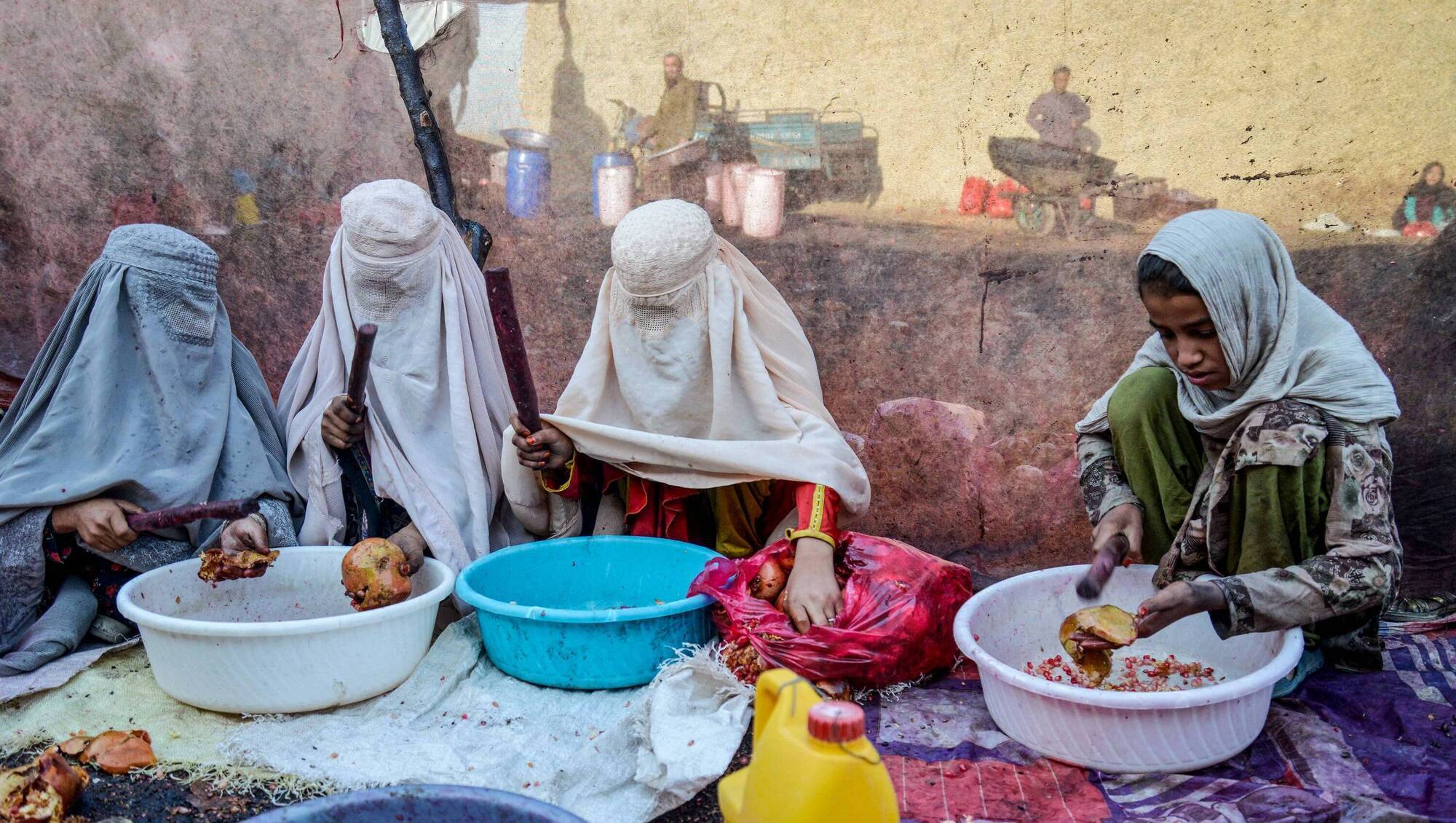
Burqa clad-women sort pomegranate seeds for sun-drying at the Arghandab district in Kandahar province, Afghanistan. Picture: Sanaullah Seiam/AFP via Getty
The fall of the Islamic Republic on 15 August 2021 was not an ordinary transfer of government.
The Islamic Republic’s legal order rested on a written constitution, equal citizenship, popular sovereignty, elections, representative institutions, judicial review, a human rights commission, a plural media sector, and the participation of women and minorities.
The Taliban replaced all of that with an unelected, exclusively male emirate overwhelmingly dominated by Pashtun Taliban. The supreme leader claims final religious, political, legal, and administrative authority. There is no public procedure for choosing or removing him, no elected legislature, no constitutional court capable of reviewing his commands and no domestic system of public accountability.
After five years, the central change is clear: Rights have shifted from legal entitlements to permissions conditioned by the Taliban’s interpretations of religion and morality and by a person’s gender, ethnicity, loyalty, and perceived security status.
The pre-2021 republic must not be romanticised. Corruption was pervasive, elections were marred by fraud, and power was excessively centralised. Nevertheless, it rested on a written constitution and the principle of popular sovereignty. It provided for elected institutions, equality before the law, political participation, freedom of expression, women’s representation, independent oversight, and judicial review.
Under the Taliban, there are no national elections. Opposition and protest are suppressed. The country is governed through decrees, edicts, and instructions whose hierarchy is often unclear, while the judiciary is subordinated to the supreme leader and Taliban doctrine.
After August 2021, the legal framework was dismantled. The national assembly ceased to function, electoral and human-rights bodies were dissolved, and the ministry of women’s affairs was abolished. Media freedom and political pluralism gave way to censorship, repression, sex-based exclusion, and the Taliban’s monopoly over power.
Both the standards and the principal channels of accountability have largely disappeared.
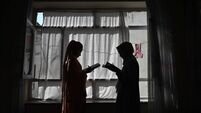
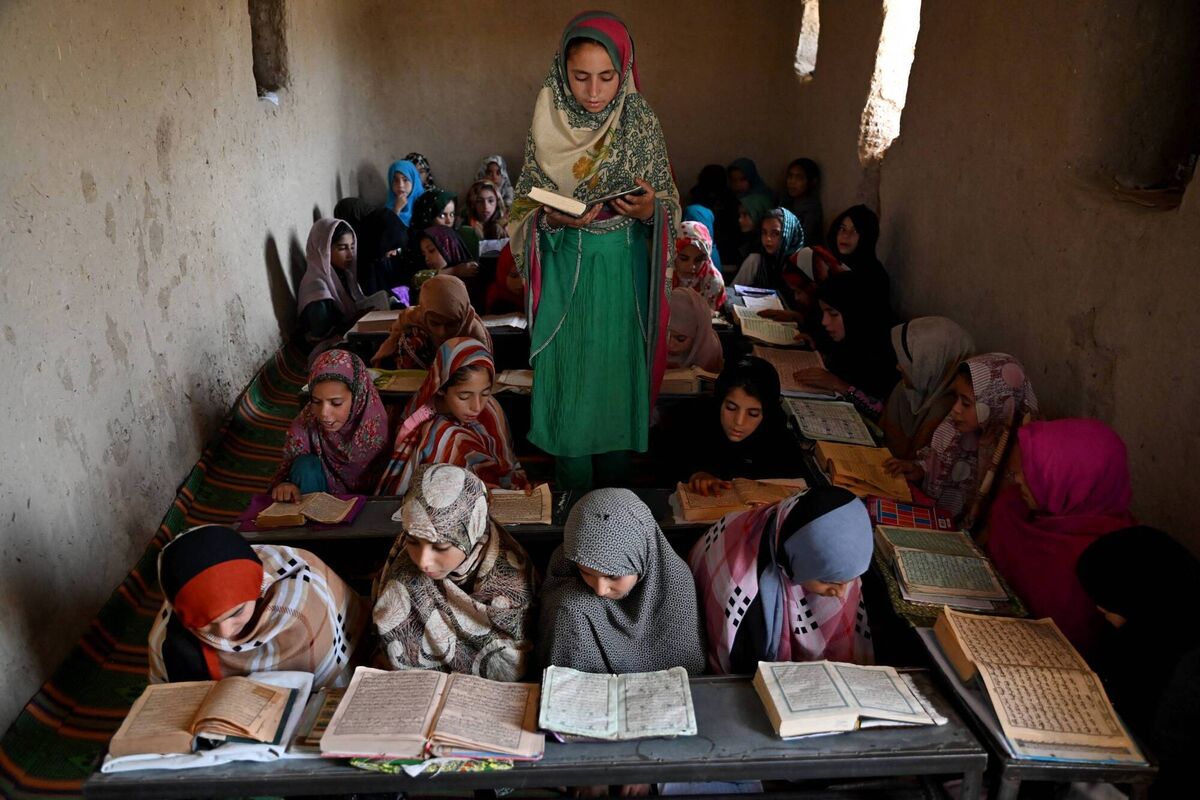
Parliament has been abolished. The cabinet is entirely male, and there is no woman in the judiciary. Women have been excluded from almost all areas of the civil service and from senior national and provincial leadership positions. Behind this institutional erasure are women whose careers, education, and independence were built over many years and taken from them almost overnight.
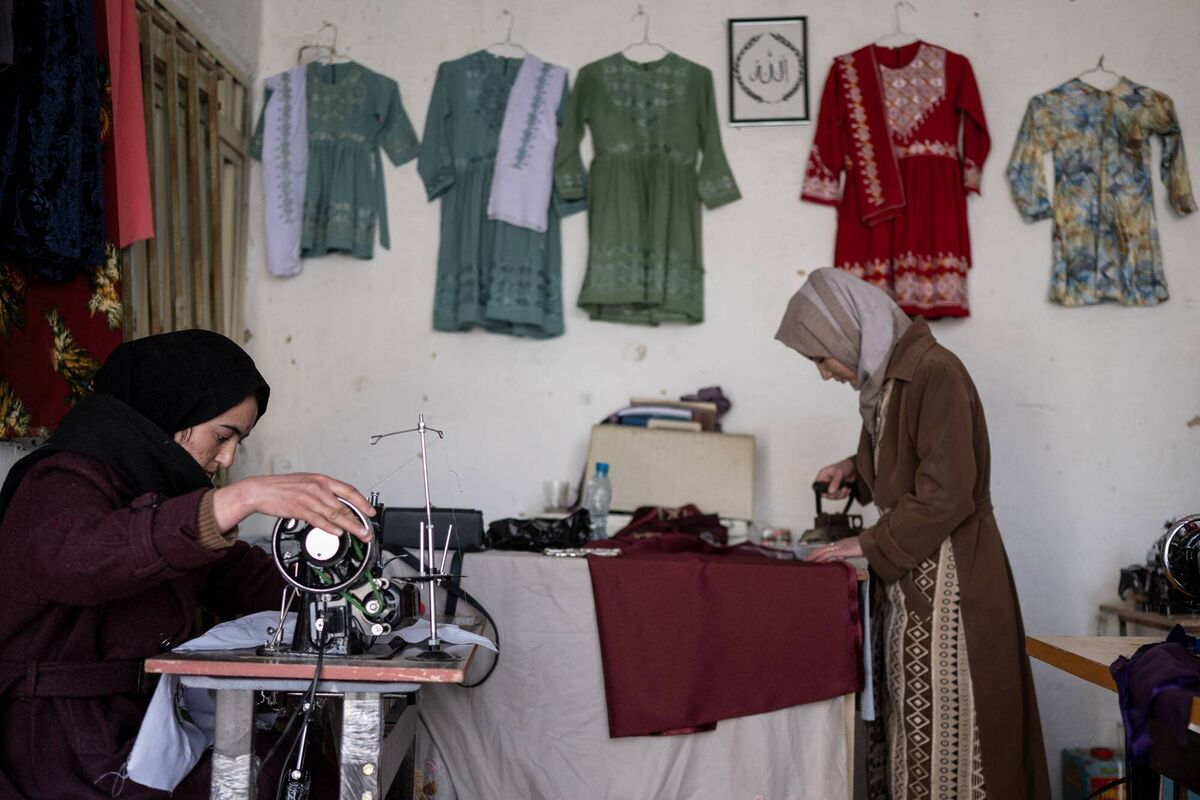
Exclusion from education, employment, and public life has intensified women’s economic dependence, isolation, and psychological distress. Combined with poverty and the dismantling of protection services, it has increased exposure to domestic violence, forced and child marriage and other forms of abuse. The UN special rapporteur for Afghanistan and a growing body of international legal experts have described this institutionalised system of domination and exclusion as gender apartheid.
The scale of the reversal is visible in the figures. Under the republic, women held 6.5% of ministerial posts, occupied 27% of parliamentary seats, and constituted 26% of civil service employees. They also held approximately 9-12% of senior leadership positions and made up 12.7% of judges.
Under Taliban rule, women’s representation in the cabinet, judiciary, parliament, and senior national and provincial leadership has fallen to zero. Women have been excluded from most civil service positions, with limited roles remaining mainly in healthcare and primary education. More than 2.4m girls are now deprived of secondary schooling, while women and girls remain excluded from universities across the country.
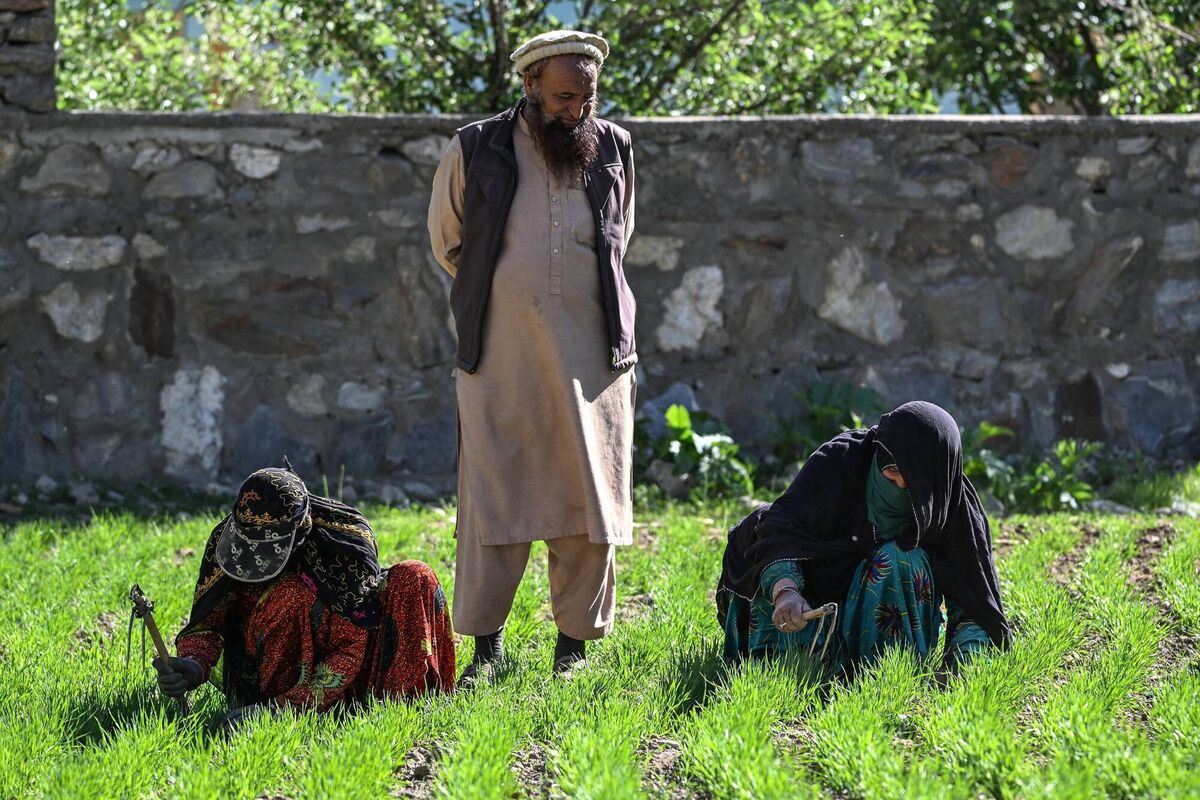
The post-2001 political order broadly reflected Afghanistan’s ethnic diversity. The Taliban have reversed that principle. Political authority is now concentrated overwhelmingly in Pashtun Taliban leaders, while Tajiks, Uzbeks, Hazaras, and other communities have been pushed to the margins.
The exclusion of Hazaras is especially alarming. During the Taliban’s first period of rule, from 1996 to 2001, its forces committed massacres and other grave abuses against Hazara civilians in Mazar-i-Sharif and Bamyan, in a context shaped by historical ethnic hostility and religious prejudice. They are excluded from government, with predominantly Hazara areas governed by Sunni Taliban officials.
The Taliban present their return to power as a divinely sanctioned military victory. That triumphalist outlook has produced a conquest-based approach to government in which public offices, land, and state resources are treated as rewards of victory. Non-Pashtun communities are treated as defeated populations whose land, resources, and political authority may be appropriated by the Taliban and its supporters.
Since August 2021, Taliban authorities have confiscated land and forcibly displaced communities in several provinces, disproportionately affecting Hazaras and other non-Pashtun groups.
Homes and land have been reclassified as “emirate” property without independent adjudication, an effective right of appeal or suitable recognition of customary ownership documents. Human Rights Watch has documented the eviction of Hazara families in several provinces and reported that some of this confiscated property was subsequently distributed to Taliban supporters.
EU engagement with the Taliban may facilitate humanitarian assistance, but it must not become acceptance of the political order the Taliban are constructing. The test of moderation is not whether Taliban representatives attend international meetings. It is whether Afghans regain enforceable rights, whether girls can return to school, women can work and participate in government, minorities can exercise meaningful authority, journalists can report freely, and citizens can challenge state power.
The EU should make these standards central to any engagement with the Taliban regime. It must ensure that women and minorities participate meaningfully in international processes and must resist formal recognition if the Taliban maintain their exclusionary political order.
For Afghan women, five years is not merely an anniversary. It is five years of interrupted lives, denied ambitions, and daughters growing up without freedoms their mothers had only begun to claim.
Five years after the fall of Kabul, the outcome is no longer uncertain. The Taliban have not simply imposed a collection of harsh restrictions. They have reconstructed Afghanistan as an unaccountable emirate in which gender, ethnicity, religion, and loyalty determine a person’s place.
The passage of time does not make such a political order legitimate.
CONNECT WITH US TODAY



Be the first to know the latest news and updates