Thirty years, two invasions and one unanswered question: How are the Taliban still there?
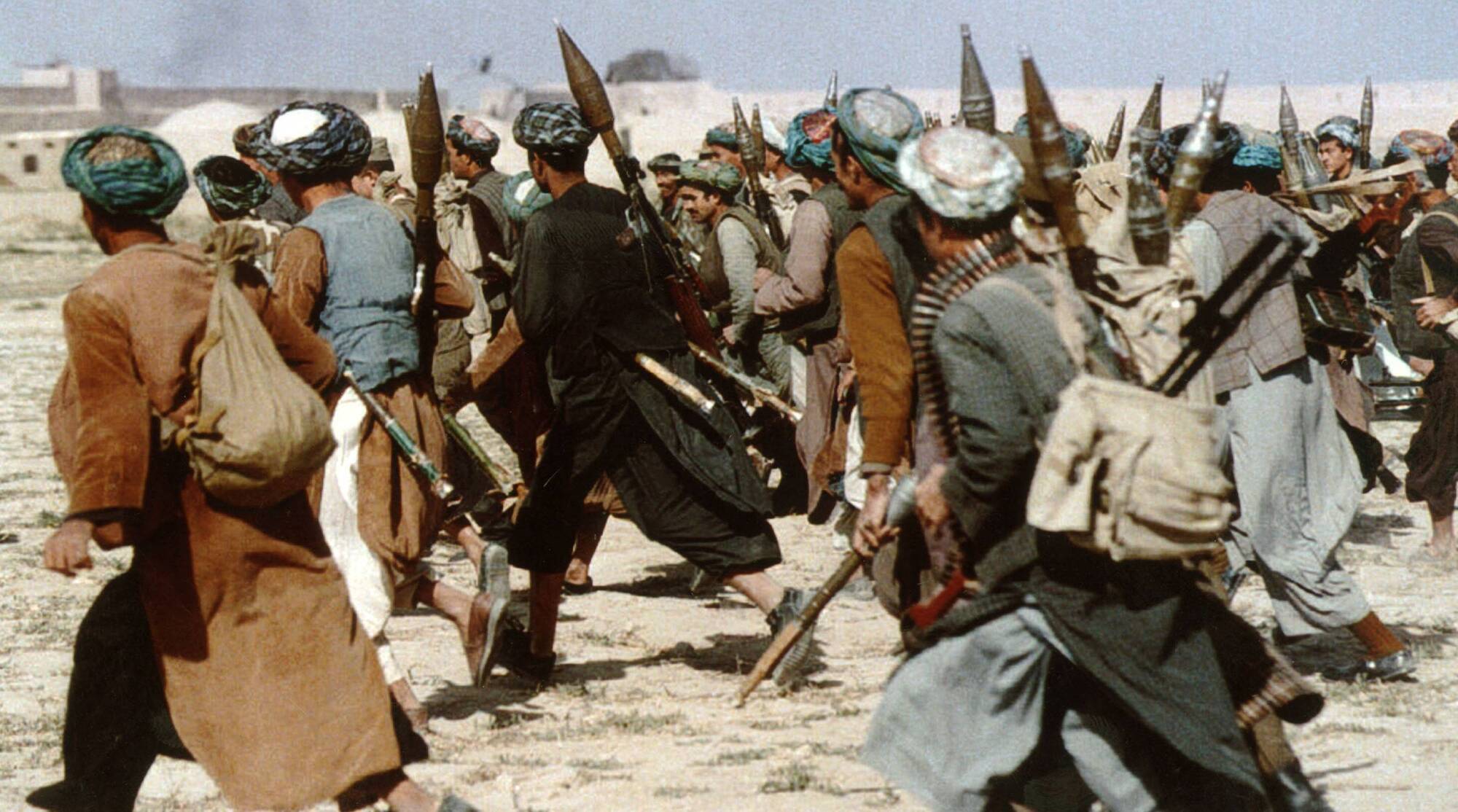
Soldiers of the anti-Taliban alliance infantry of northern ethnic Uzbek warlord general Abdul Rashid Dostum launch an assault on Kabul in 1996. Pictures: Getty Images
In September 1996, the Taliban entered Kabul. It is unlikely many people outside Afghanistan remember where they were that day.
There were no rolling television retrospectives to come, no photographs that would become instantly recognisable across the world, no understanding that something had happened which would help shape the foreign policy of the US and its allies for a generation.
There was not even a War on Terror. Yet.
Osama bin Laden had returned to Afghanistan only months earlier. September 11 was five years away. George W Bush was governor of Texas. Guantanamo Bay was simply an American naval base in Cuba.
Read More
The invasions of Afghanistan and Iraq, extraordinary rendition, drone warfare, the Patriot Act, and the sprawling security architecture constructed after 2001 belonged to a future nobody could see.
There was no retrospective inevitability. There was only Afghanistan. And Afghanistan was already a catastrophe.
Thirty years ago next month, Taliban fighters advanced into a capital devastated by years of civil war. Forces loyal to Ahmad Shah Massoud withdrew. Former Afghan president Mohammad Najibullah, who had been sheltering in a United Nations compound, was seized, tortured, and killed, his body displayed publicly.
A new government began imposing its interpretation of Islamic law. Women were pushed from workplaces. Girls were excluded from education. Music was prohibited. Punishments were public and brutal. Yet reducing the Taliban's arrival to the sudden appearance of religious fanatics misses much of what had happened before.
Afghanistan had already endured almost two decades of upheaval: The communist coup of 1978; the Soviet invasion the following year; the mujahideen war, armed and financed in part by the US, Pakistan, and Saudi Arabia; the Soviet withdrawal; the collapse of the Soviet-backed government; and then the savage struggle between the factions which had supposedly won.
Kabul paid an extraordinary price. Whole neighbourhoods were reduced to rubble. Tens of thousands were killed. Militias established checkpoints, extorted civilians and committed murder, kidnapping, and rape. The state had effectively ceased to exist.
It helps explain something subsequently difficult for outsiders to comprehend: Some Afghans initially welcomed the Taliban because they promised order. That order would prove ferocious, particularly for women and girls. But in a country exhausted by predatory imperial forces, warlords, and endless violence, order itself had become politically powerful.
The Afghanistan scholar Barnett Rubin published an analysis just weeks after Kabul fell. Its title now reads almost like an accusation: 'Afghanistan: The Forgotten Crisis'.
Forgotten remains the most important word, because one of the distortions created by September 11 is the idea Afghanistan suddenly became important on the morning America was attacked. It did not. Afghanistan had been suffering catastrophically for years. What changed was not Afghanistan's misery, but that its consequences finally reached the West.
Bin Laden had returned to Afghanistan in May 1996. Under Taliban protection, al-Qaeda established the sanctuary from which it could develop its international operations. American embassies in Kenya and Tanzania were bombed in 1998. The USS Cole was attacked in Yemen in 2000. Then came September 11, 2001.
Within weeks, the US invaded Afghanistan, and what followed became the longest war in American history. The initial objective was relatively comprehensible: Destroy al-Qaeda's sanctuary and remove the Taliban government that protected it. Kabul fell quickly. The Taliban scattered, and even offered a surrender in late 2001. Washington rejected it. Bin Laden escaped.
But the mission expanded.
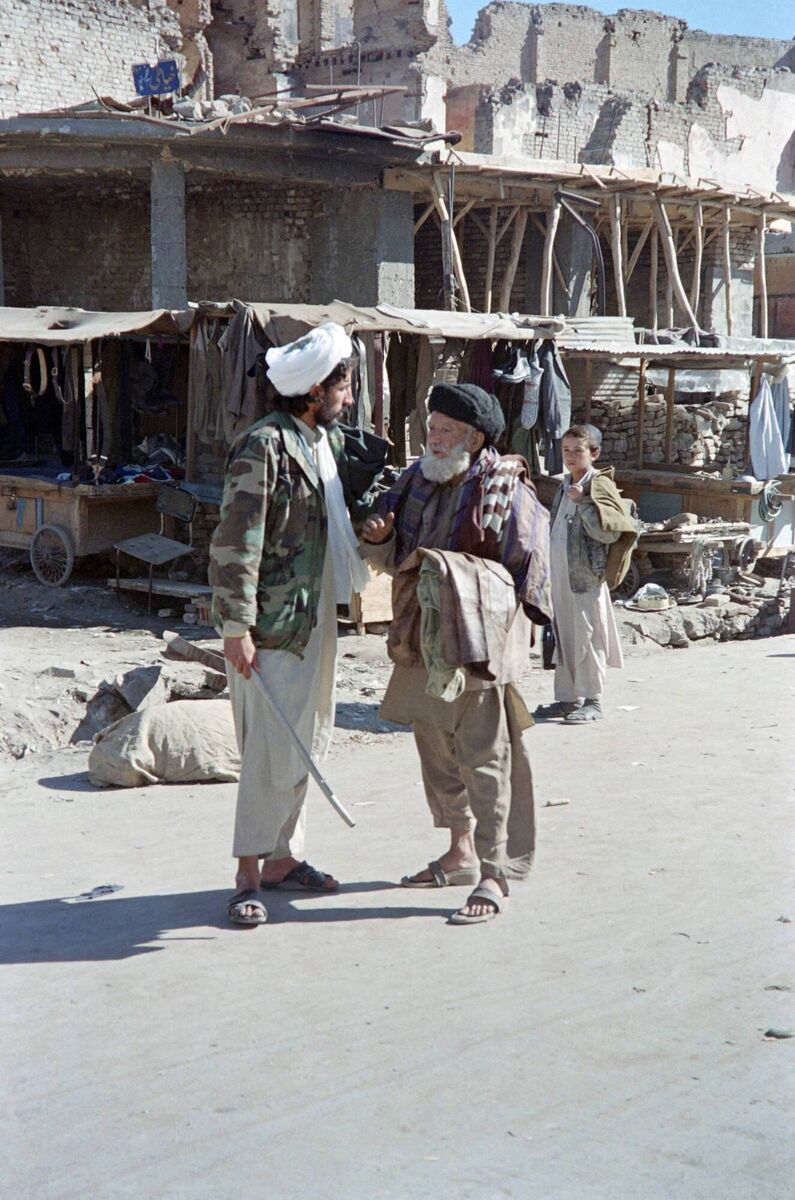
Counterterrorism became counterinsurgency. Counterinsurgency became state-building. State-building became a trillion dollar business. Afghanistan was to acquire a functioning democracy, national institutions, an army, and police force capable of securing the country, an economy capable of sustaining it, and a political system sufficiently legitimate that the Taliban could never return.
For 20 years, enormous resources were poured into achieving it. And many things did change. Millions of children entered school, including millions of girls. Women entered universities, journalism, medicine, politics, and public life. Roads, hospitals, and communications infrastructure were built. An urban Afghan generation grew up experiencing freedoms unimaginable under the first Taliban government.
Those lives matter when asking what the intervention achieved.
So do the lives destroyed by it. The Costs of War project at Brown University estimates the post-9/11 wars have cost the US around $8trn when the wider War on Terror is included.
Afghanistan alone consumed over $2trn in American expenditure and future obligations. More than 2,400 US service personnel died there, alongside military personnel from allied countries.
The Afghan cost was incomparably greater. Tens of thousands of Afghan civilians were killed, alongside Afghan soldiers and police, Taliban fighters, and others caught inside a war whose neat categories rarely survived contact with the country itself.
Ireland was never as detached from this history as we sometimes pretend.
Shannon Airport became an important transit point for the US military throughout the War on Terror, including the war in Afghanistan. Millions of US troops passed through Ireland post-9/11, an arrangement successive Irish governments maintained while simultaneously insisting upon the State's military neutrality.
Irish soldiers also served in Afghanistan. The first Defence Forces personnel deployed there in January 2002, just months after the American invasion, as part of the UN-authorised International Security Assistance Force. Irish personnel continued serving in Afghanistan until 2016. Ireland did not invade Afghanistan. It did not wage America's war. But neither were we merely spectators to the history unfolding there.
And then, after 20 years, came August 2021. Provincial capitals collapsed with astonishing speed. An Afghan military built, trained, and equipped at immense cost disintegrated. President Ashraf Ghani fled. Desperate Afghans crowded Kabul airport and clung to departing aircraft, many of them falling to their death
And the Taliban walked back into Kabul.
There is an almost unbearable simplicity to the chronology.
1996: The Taliban capture Kabul.
2001: The US and its allies remove them.
2021: The Taliban capture Kabul again.
Between the second and third dates lie 20 years of war, hundreds of thousands of deaths across the wider conflict, trillions of dollars, an enormous Western military and diplomatic undertaking, and a generation of Afghans who were promised that their country could become something different.
This does not mean nothing was achieved.
A girl who went to school because the Taliban were removed cannot be entered into a balance sheet as nothing. Neither can a woman who became a doctor, a journalist, or an MP. Nor should the absence of another 9/11-scale attack launched from Afghan territory during the Western presence simply be dismissed.
But the political and imperialist project by which the war eventually justified itself failed.
The Taliban were not defeated by a trillion dollar military.
Thirty years after they first entered Kabul, they govern Afghanistan again.
Women and girls have once more been systematically removed from education and much of public life. Many of those who worked with the Western-backed state fled; many others could not. The international community which once spent extraordinary sums attempting to transform (and exploit) Afghanistan now struggles with how — or whether — to deal with its rulers.
There is a temptation, particularly around anniversaries, to impose coherence upon history. September 11 will receive enormous attention next month on its 25th anniversary because we understand its significance immediately. We remember the images. We understand the world before and the world after.
September 27, 1996, is harder. It gives us the world before anyone knew what Afghanistan was going to become. There was no War on Terror. No invasion. No occupation. No triumphant declaration of liberation and no humiliating evacuation.
There was simply a ruined city in a forgotten country into which a movement few people in the West understood had just marched.
Almost nobody was watching.
Thirty years later, perhaps the most uncomfortable question is not how the Taliban managed to take Kabul then.
It is how, after everything that followed, they are still there now.

CONNECT WITH US TODAY



Be the first to know the latest news and updates