Clodagh Finn: A window into life of an Afghan woman who set up a secret school for girls and now lives in hiding
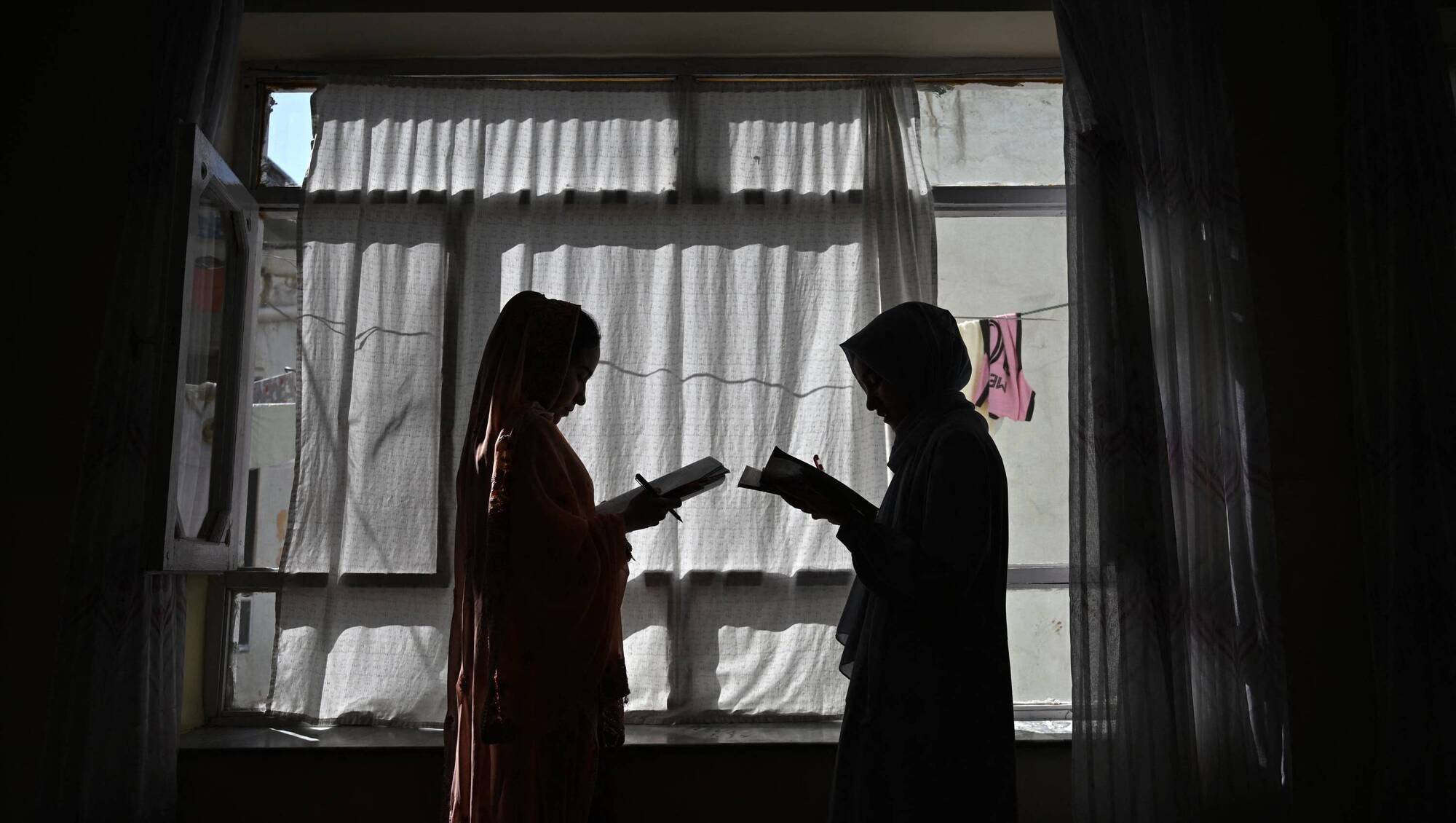
When the Taliban banned girls from education after sixth grade, Roshana Dadgar and her fiancé (now husband) opened a secret school. They assembled a staff of 12 voluntary teachers. The Window of Hope, as the school was named, opened in December 2021. However, Roshana was forced to flee Afghanistan when the Taliban raided her house in 2022.

Three days ago, Roshana Dadgar, a woman from Afghanistan living in hiding in Pakistan, looked in the mirror and saw that her hair was turning white. There were black bags under her eyes and she noticed that her nails were falling out.
Sleep, if it comes at all, is light and fleeting, haunted by an unending carousel of questions: “What if I am deported? What if I go to Afghanistan and get imprisoned like my husband? What if I’m killed? Who will take care of my family? What will happen to my parents?”
Yet, this journalist and woman’s rights activist who set up a secret school for girls in a northern province of Afghanistan has chosen a pseudonym that means radiance, hope and justice.
She wants to use her real name — and has done so in the media in the past — but it is just too dangerous now as life for undocumented Afghan refugees in Pakistan is increasingly uncertain.
Roshana has been in Pakistan for four years and while life was relatively good in the early years, deportations of Afghan migrants have intensified in recent months. There are door-to-door searches and biometric screening of people on the street. The recent news of a 10,000-rupee (about €30) reward to identify Afghan refugees has multiplied her fears.
If she leaves her dark, damp room at all, she pretends to be deaf so that anyone asking her questions won’t realise that she doesn’t speak Pashto.
“When I sit in a rickshaw or go shopping, I don’t speak and point to my ears to explain that I can't hear. One day, a lady asked me where I was from. I didn’t answer. When she patted me on the shoulder, I nodded and said I was deaf. She looked at me sadly until she reached her destination.”
For all that is said about the evils of technology — and there are many — it also allows contact with people in places that are normally cut off.
Roshana has been in touch with all week, typing in a courtyard with the sound of gunfire in the distance; continuing her story on the tiny screen of a phone even though it hurts her eyes and her fingers are numb from typing.
In a sense, that is the least of it because recounting her experience tears open the wounds inflicted by living under the Taliban and now hiding in exile.
“There were two or three times while I was writing when I had to stop. Whenever I remembered the Taliban taking power, or the hardships I have faced in Pakistan, I simply couldn’t go on. I left it for the next night, and then another night, and eventually I was able to continue working on my story when I felt a little better,” she writes.
Despite the pain, she kept going in the hope that her voice, and the voices of Afghan women, would be amplified.
As she explains, she is from a country whose people have grown up with war and displacement, generation after generation. Its women have struggled with gender discrimination, restrictions, violence and forced marriage for years, and many have finally chosen the escape route.
Her childhood, she says, was not spent with children’s games. “I remember having to get up at 5am to go to religious school. They told me that you should go hungry until you absorbed the lesson more.”
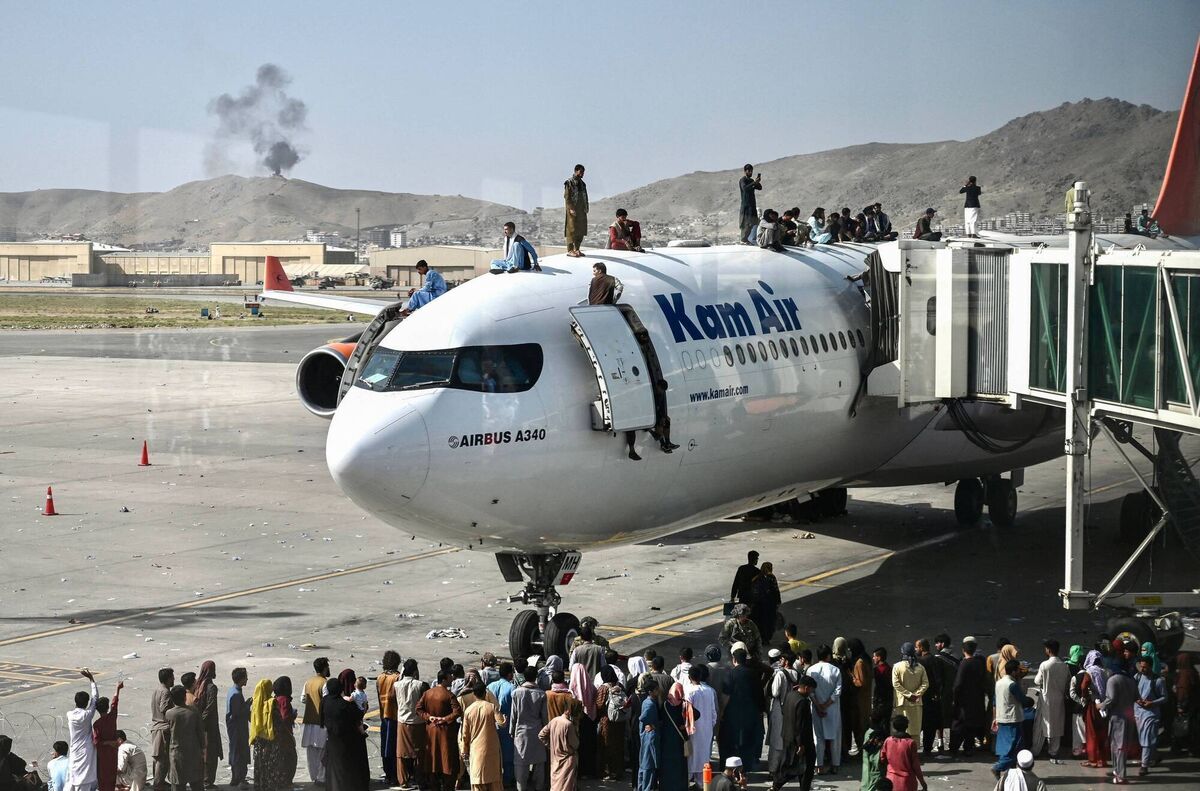
She wanted to wear her hair short rather than grow it long and cover everything in a chador, which is considered the “perfect adornment” for women. Life went on, though, until August 15, 2021, when the Taliban took control of Afghanistan.
“For me and millions of Afghan women and girls, that day marked the beginning of a new chapter of darkness,” she says.
The abhorrent regime, which has effectively erased women from public life, has been in the spotlight recently to mark the fifth anniversary of the Taliban’s takeover, but it will disappear from the headlines again soon and from public consciousness.
That is why Roshana feels it is so important to speak out, even at great personal risk.
But then, she is accustomed to taking risks.
When the Taliban banned girls from education after sixth grade, she and her fiancé (now husband) decided to open a secret school. They had no money to pay salaries but soon they had assembled a staff of 12 voluntary teachers — many of them family members — willing to teach young girls in secret in their own homes.
The Window of Hope, as the school was named, opened in December 2021. Soon it had 110 students; girls ranging in age from 12 to 20 who were taught English, history, mathematics, physics and chemistry.
“I sometimes sat down with my students and listened as they told me they wanted to be doctors, engineers and teachers [careers which are impossible for women under the Taliban]. These dreams motivated me to continue. Even today, I try to keep the school alive and spend some of the money I earn [in Pakistan] on school supplies.”
Roshana was forced to flee Afghanistan when the Taliban raided her house in 2022. She escaped to a neighbour’s house and, a month later, got a visa to go to Pakistan.
Her future husband was arrested, though, and spent a month in jail. “To save his life, I deleted all my social media accounts for a while but continued my activities in secret. Eventually, he was released with the bail of several families and elders of the region.”
After his release, Roshana continued her work, running online courses and, more recently, working as a journalist, secretly sending reports to several media outlets.
“I want to become the kind of journalist I dream of being: someone who always writes about women. Women matter deeply to me, because I believe every woman has an untold story, just like I do,” she says.
Since last August, life in Pakistan has become increasingly difficult as visas for Afghans are no longer extended. Roshana tried to get a visa but, after an eight-month back and forth, she realised the person who was purportedly helping her was a fraud: “I fell to the ground once again and my hope was shattered.”
These days, she jumps when a doorbell rings, afraid the police are coming to deport her but, she says, she still has hope.
“I don’t know where that hope comes from, maybe from the day I first decided to set up a secret school for the girls; maybe from the eyes of those 110 girls who still dream of becoming doctors and engineers. I still believe that one day this tedious journey will end.”
She won’t give up, she says. She has already endured war, exile, threats, poverty, insomnia, fear, and homelessness.
“But I’m still standing,” she says, with a strength and optimism that are utterly humbling.
“I’m still writing and trying.
"And my greatest triumph is that despite their best efforts to silence me, I still haven’t lost my voice.
“The day will come when this tiring journey ends. The day will come when I will no longer be afraid to open the door, or be forced to pretend to be deaf to buy bread. I have finally come to understand that ‘The Window of Hope’ was not just the name of the school I built for girls, but the name of the path I found myself through the darkness to reach my future.”


CONNECT WITH US TODAY



Be the first to know the latest news and updates