Could virtual autopsies be the solution to Ireland's post-mortem crisis?
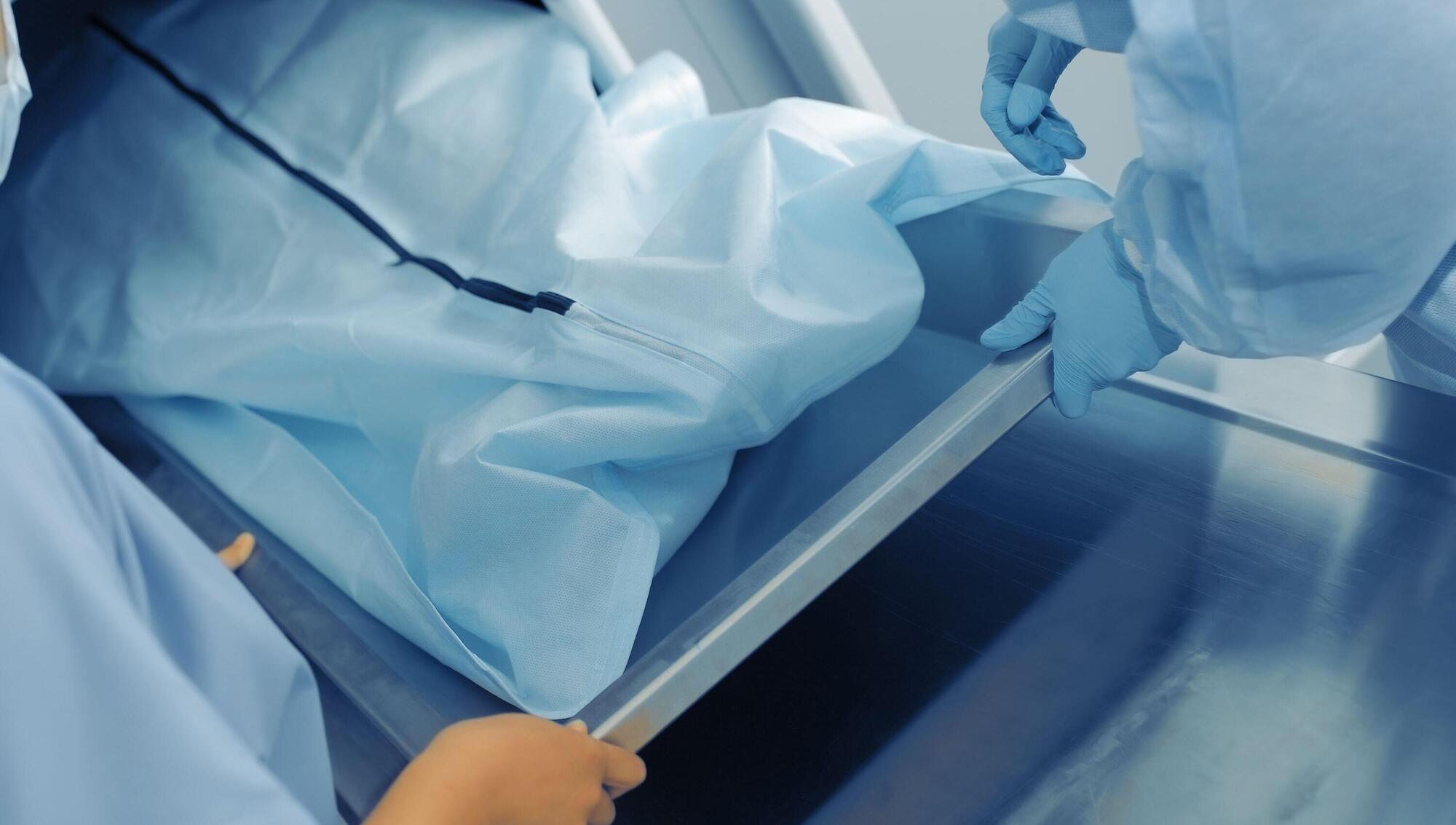
Former Kildare coroner Denis Cusack said working conditions, alongside 'a lack of innovation' have culminated in the deterioration of Irish post-mortem services.
As the HSE struggles to recruit pathologists and hospital autopsy services continue to shutter, some Irish experts have touted ‘virtopsies’ as a means to ease Ireland’s post-mortem crisis.
Virtual autopsies or ‘virtopsies’ refer to the use of CT (computed tomography) scanning, MRIs or any other virtual screening technologies, which help pathologists in their work and to transition away from traditional dissection work.
That technology presents an opportunity to pierce through the body's skin, bones, and soft tissue and pick up on intrinsic details without needing a scalpel at hand.
Squeezed resources and unfavourable working conditions have led to a system where families here can wait up to 18 months for closure on a loved one’s death.
Former Kildare coroner Denis Cusack said working conditions, alongside “a lack of innovation” have culminated in the deterioration of Irish post-mortem services.
“If we cannot be confident of getting pathologists to carry out full dissections, then we have to look at complementing that, and maybe even the majority would be by imaging autopsy,” he said.
About 6,000 autopsies are carried out by the Irish Coroner’s Service each year, with 2,500 going to inquest.
The use of virtopsies is still in its relative infancy. Ideas for the technology were first floated in the early 2000s.
Toronto pathologist Dr Michael Pickup said conversations around virtopsies in North America were spurred in the wake of 9/11, when questions arose over how death investigations would be carried out following severe mass casualties.
Toronto has been one of the earliest adopters of the technology. Zurich and Melbourne are also strong proponents.
Advocates see virtopsies as a way to delegate dissection workload away from pathologists and economise a system that, by its nature, requires digging through the finer details.
“We use this quite a lot in Toronto — 40-year-old man shovelling his driveway from snow keels over and drops dead,” said Dr Pickup.
“We look at a CT scan, and if there’s nothing in the head… then if we can potentially exclude other trauma or other disease on the CT, we can open him and just look at his heart,” he explains.
Read More
That methodology can be applied to other types of deaths, especially violent homicides where a body may be riddled with bullets.
“For a victim that’s suffered bullet wounds and has bullets lodged in their body, virtopsies would allow pathologists to see the exact location of the projectiles, before dissecting the body,” said Dominc Gascho, a virtopsy researcher at the University of Zurich.
“You can perform whole body examinations quite fast.
“CT is a great tool, it's fast, it captures the entire body… you have a skeletal overview.”
Both Dr Pickup and Mr Gascho are quick to stress virtopsies are not a silver bullet for an ailing post-mortem service, rather a helpful filtration tool.
For the immediate time being, dissection work is still seen as an absolute necessity in certain cases.
But with virtopsies, that work becomes more targeted, and in many other cases, the scan provides sufficient information to close a case without dissection.
Some say the technology can help rapidly expedite dead bodies.
Dr Hemanth Naik, a forensic pathologist and director of Virtual Autopsy Global, said the main pull of virtual autopsies is speed and respect to the dead.
Dr Hemanth’s company provides virtopsy services to the UK’s coroner service and has eight centres across the UK.
He said a British family normally waits eight to 10 days to get access to a loved one’s body for a funeral following an autopsy.
He claimed in some cases, the waiting time could be cut down to just two days with virtopsy technology.
“The pathologist goes through the PMCT [postmortem CT] report… and then if he's convinced with the case, he doesn't open it.
“So out of 100 cases, they don't open 85 cases, they open only 15 cases where they are not really sure about the PMCT findings."
The value of CT scanning becomes even more appealing in the case of religions like Islam or Orthodox Judaism that condemn invasive autopsies, or where a non-invasive approach is preferred in the case of deceased children.
Dr Naik and Mr Gascho said AI could hypercharge the technology’s efficacy.
“We have auto detection of the fractures… we’re also working on AI where we can come up with auto detection of the pathology in the brain and in the lungs.
“We have the new technology in scanning, but also in reconstructing images, and the images are getting better and better, also supported with AI algorithms that are already used for reducing noise,” Dr Gacho said.
“In the future, AI may help us also for doing segmentation, for example, to have organ weights automatically computed from the CT data.”
Adopters of the technology present it as a gamechanger, but also an inevitability.
Yet that unstoppable force doesn’t seem to be hitting Ireland anytime soon.
Costs are steep, about €1m for a CT scanner and its associated infrastructural needs, according to Dr Naik.
Staffing shortfalls will also prove difficult, as well as a dearth of trained pathologists in Ireland, there’s also a shortfall in forensic radiologists that can interpret virtopsy scans and critically inform pathologists.
Ireland’s chief state pathologist Linda Mulligan cast doubt that Ireland would pick up on the technology like the UK, largely because of a difference in legislation.
“As forensic pathologists, we would question as to whether the causes of deaths are 100% accurate in those [UK] cases, but it is a different system where once a suspicious death has been ruled out and they know it's a natural death, then the coroner is generally happy.
“In Ireland, the coroner system works differently in that you have to have an exact medical cause of death, and the coroner's legislation, as it currently stands, states that when a post-mortem examination is directed, it must be a three-cavity examination, so you must examine the contents of the head, the chest, and the abdomen.”
Still, experts say Ireland needs to find fixes to the post-mortem service, and quick.
“We have to actually look to developing that sort of [virtopsy] service in conjunction with and to complement improved pathology autopsy services, and that's where we're going… We are in crisis, and it's going to get worse,” said Prof Cusack.


CONNECT WITH US TODAY



Be the first to know the latest news and updates