Gen Z want active travel — temporary Adare Ryder Cup train station shows what's possible
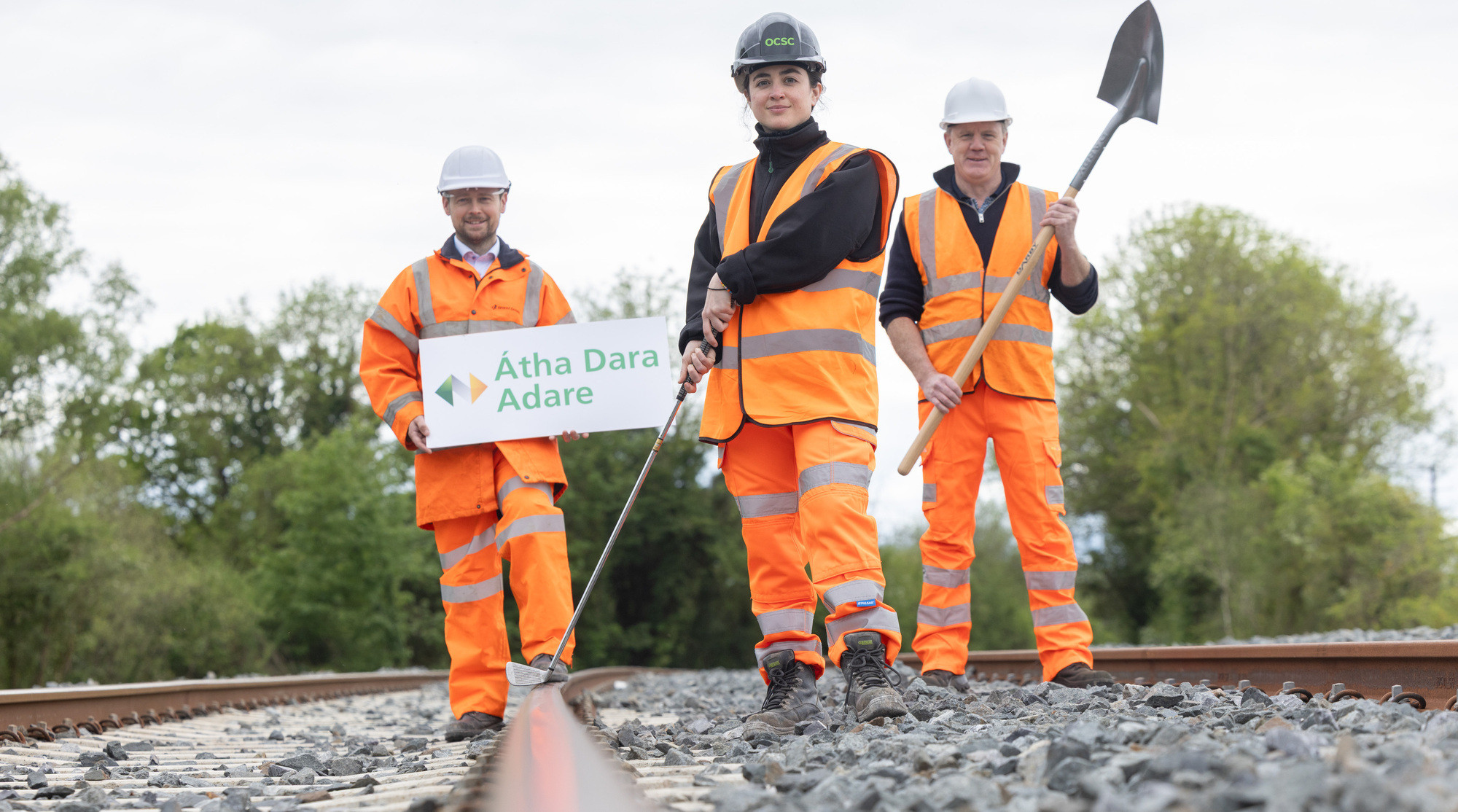
(Left to right) Oliver Ternery of the Irish Rail project, Martha Mares of OCSC and Declan Maher of Cara Plant Hire at the launching of construction of the temporary Adare Station for the Ryder Cup. Picture: Paul Sharp/SHARPPIX
For my generation, how we move through the world has become one of the small ways we are told we can change it. We are encouraged to consider the carbon attached to ordinary journeys, to take the train instead of driving, walk shorter journeys and cycle where the roads allow us to.
The curious thing is that many of us are perfectly willing to change.
I take the train, like most of my peers, and when I arrive somewhere I will happily walk, take a bus or unlock a rental bike for the rest of the journey. I have yet to rent a TFI bike and congratulate myself on personally saving the planet. Most of the time, it’s simply convenient.
My generation is already changing how it moves. The question is whether the Ireland we are building is prepared to move with us.
Anyone who has spent long enough sitting in traffic through Adare has had ample opportunity to admire its thatched cottages. With the Ryder Cup arriving next year, construction has begun on a temporary station to carry spectators along the reinstated Limerick to Foynes railway.
Read More
It’s an excellent idea, which makes it all the stranger that permanent passenger services become considerably more complicated once the golfers go home. The commuters will still be there, as will the congestion and, rather conveniently, the railway.
It is revealing how quickly rail becomes possible when a major international event requires it. Perhaps this is because roads and rail are afforded very different assumptions in Irish transport policy.
Limerick has just opened the Moyross Link Road and dual carriageway, infrastructure justified partly through the housing, investment and movement it might enable.
There is nothing wrong with wanting those things, but the confidence with which we imagine the future created by a road is striking. Future motorists are accommodated quite generously in our imagination, while rail is repeatedly asked to prove that the passengers already exist.
Nobody, after all, looks at a field beside a proposed motorway and asks why nobody is driving through it yet. Ireland can sometimes seem culturally wedded to the car, particularly beyond our larger cities, but that may tell us more about the country we have built than the one we might choose to live in.

When the nearest station is 20km away, the bus comes three times a day and cycling into town means sharing a fast regional road with traffic, getting behind the wheel is hardly proof that we are a nation of petrolheads.
Lay the tracks for another way of moving, and another picture of Ireland begins to emerge.
Growing up in rural Tipperary, I know the car is not going anywhere, nor should it. What I want is something much less dramatic: an Ireland where having a car is useful, but living without one is possible.
Where alternatives exist, people are using them. The National Transport Authority estimates that walking, wheeling and cycling remove up to 33,000 cars from roads across the Limerick-Shannon Metropolitan Area every day.
A third of 16- to 25-year-olds cycle at least weekly, while 61% of residents say they often drive because no other transport options are available. That looks considerably less like a cultural attachment to driving than people responding to the infrastructure available to them.
Rail presents a similar question, and Limerick only has to look south to see what can happen when investment is allowed to create demand.
The Midleton line reopened to passengers in 2009 and 15 years later the combined Cork–Cobh and Cork–Midleton commuter services were making around 2.2 million passenger journeys a year.
Rather than treating that as the natural limit of demand, Cork is building again. If we are looking for the direction of travel, Cork has already left the station.
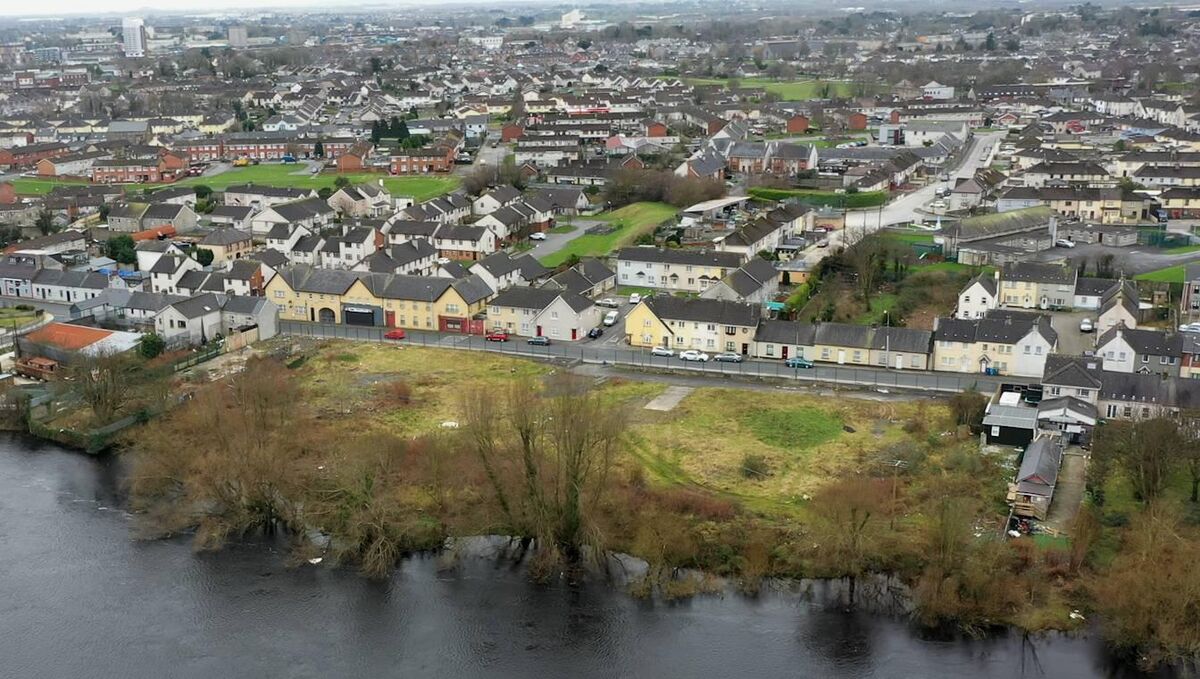
Limerick, meanwhile, already has the potential. Lines radiate out from Colbert Station, while plans for Moyross and Ballysimon and the possibility of passenger trains returning towards Mungret and Adare hint at what that network could become.
The railway geography exists, the plans exist and the appetite for another way of moving is increasingly difficult to ignore.
Ireland is not short of rail strategies, but rail has a peculiar tendency to appear in plans, studies and future phases while road congestion retains a remarkable ability to turn itself into concrete.
That political reluctance is increasingly difficult to reconcile with our climate commitments: transport is supposed to cut its emissions by 50% by 2030, while the EPA projects that even with additional measures we are heading for a reduction of less than 28%.
Nor is this solely about carbon. Car dependency shows up in household budgets too. When we build places where people have no realistic alternative to driving, we build the price of fuel into the cost of participating in everyday life.
A railway cannot make petrol cheaper, but it can make buying petrol optional for more journeys.
The future of transport does not simply arrive one morning in 2040. We build it through the places we connect, the stations we open and the homes we construct.
Build homes around good public transport and people can shape their lives around more than a car. Build them around roads and car parks, disconnected from the places people need to reach, and car dependency begins before the first family has even finished unpacking the boxes.
Ireland’s climate ambitions were never meant to rest on people making the right choice alone. After all, every choice about how we move is shaped by the places we have built around us.
You cannot choose a train that does not run, a bus that never arrives or a cycle route that was never built. You cannot ask a generation to change how it travels while constructing places in which the alternative is impractical.
The future does not simply arrive. We lay its tracks, build its roads and decide, piece by piece, how people will move through it.
- Aislínn Kelly is an environmental geographer and writer from Tipperary, based in Limerick. Her writing focuses on landscapes, environmental change and the politics of place.


CONNECT WITH US TODAY



Be the first to know the latest news and updates