Kildare crash: Garda crackdown to target juvenile gangs driving on the wrong side of the road
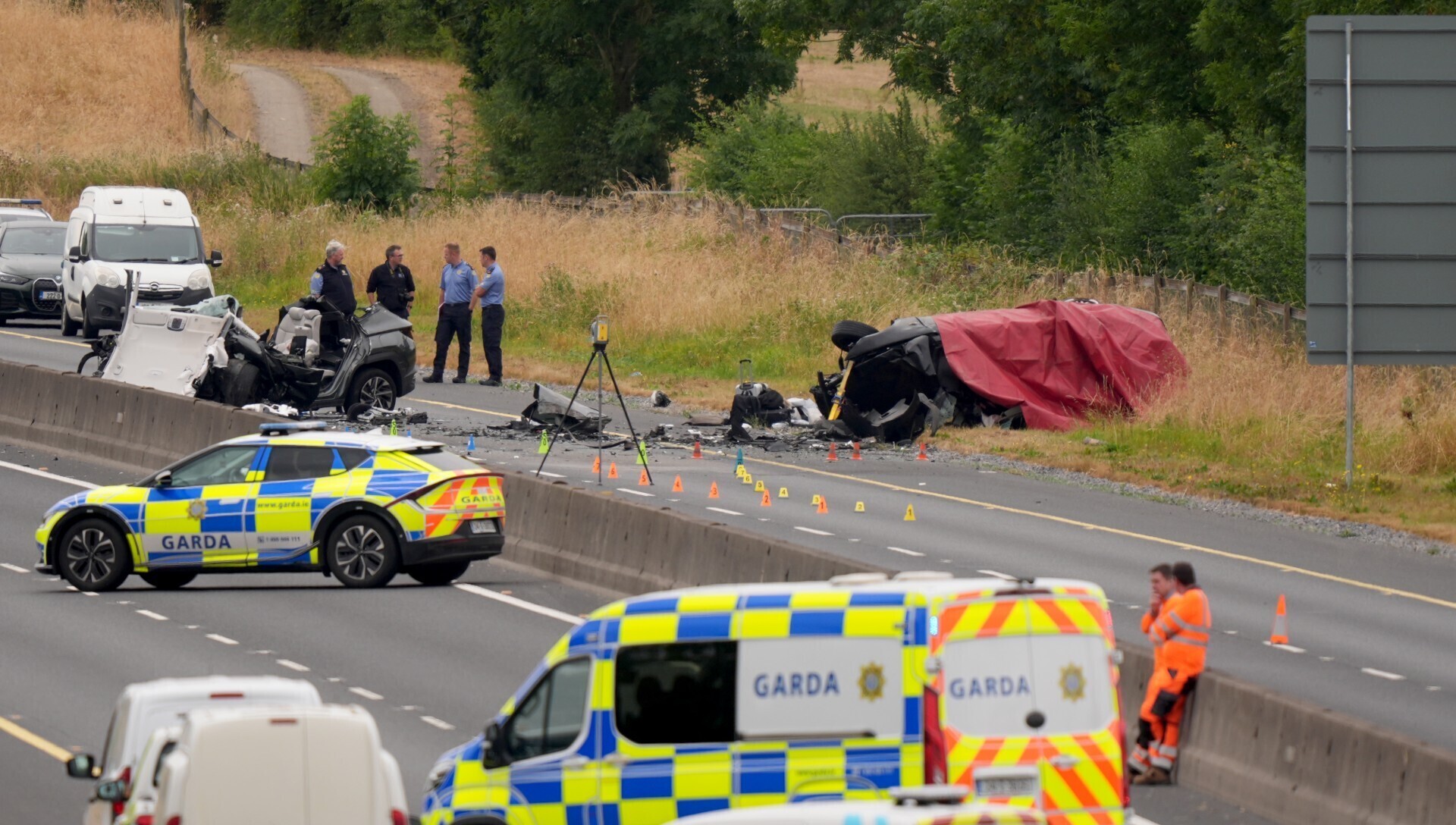
The scene of the crash on the M9 in Kildare. Picture: Niall Carson/PA Wire
Gardaí are expected to carry out “focused intelligence operations” to identify and target mainly juvenile gangs driving on the wrong side of the road.
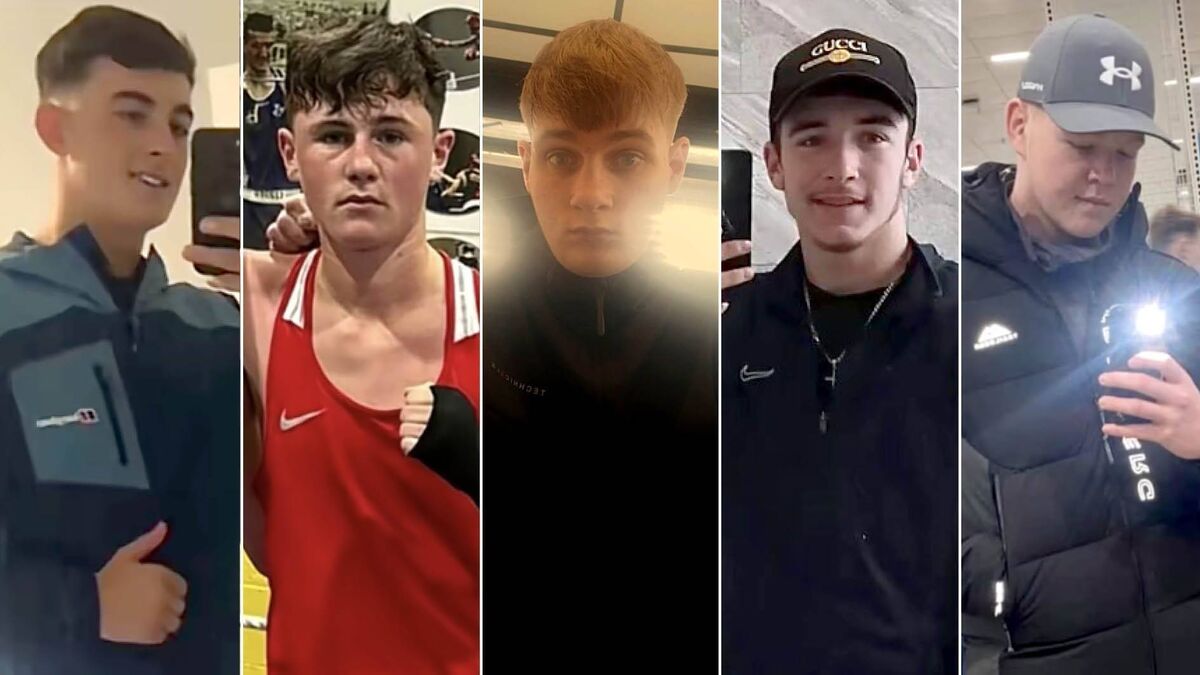
It is one of a number of actions being progressed in light of multiple similar incidents, most recently the horrific collision on the M9 motorway, in which five masked teenagers were killed and four family members injured.
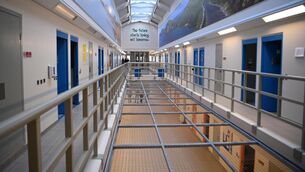
It comes as concerns are also being expressed at senior level at the lack of space in the country’s sole detention centre for children — Oberstown in north Dublin.
Garda sources have said that members of a notorious network of teenage criminals, the so-called Lucky Dip gang, continued to carry out crimes, including joyriding, because the detention centre was full and could not take the offenders.
The car in which the five teenagers crashed and died on Sunday morning was not stolen, as initially suspected.
But it was bought as a “company car” for approximately €1,000, it is understood.
The teenagers killed in the M9 crash were aged 15 to 18. One of their bodies was found partially concealed under the smashed vehicle.
Read More
The BMW was driven at high-speed the wrong way down a motorway and collided with a car carrying a family early on Sunday morning.
Three sisters and a seven-year-old boy were hit as they travelled to Dublin Airport for a wedding in England.
Although two of the sisters hospitalised after their car was hit were initially in a critical condition, their condition is understood to have stabilised, although they remain in serious condition in hospital.
Sisters Alma and Niamh Kinsella were in the front of the car that was smashed into on the M9, while their younger sister, Ella Hendricken and a little boy, aged seven, were in the back, it is understood.
All remain in hospital undergoing treatment for serious injuries. The little boy is believed to have suffered leg injuries.
Garda Representative Association (GRA) vice president John Joe O'Connell said that the family's lives have been changed forever by Sunday's crash.
“It was a horrific scene for our members in Kildare Carlow division to deal with.
“These are five young teenage boys, five lives destroyed, and then the horrific injuries of the four people in the oncoming car; it was a terrible scene. And all this is completely preventable.
“We need to look at this from a holistic viewpoint in An Garda Síochána, the Department of Justice, whatever other government departments want to get involved, the judiciary, and parent groups.
“Everybody needs to sit down and take whatever ownership they need with this and come up with solutions and action now.
“Because something like this will happen again if this is not addressed in the strongest possible terms.”
Mr O'Connell told the that he welcomed Monday’s announcement that gardaí will be given all resources necessary to tackle dangerous driving, including pursuit training.
The GRA has flagged the need for pursuit training for many years, Mr O’Connell said. But he said the training is unlikely to be rolled out before next year.
“The Garda driving instructors in Templemore and in Dublin are currently being trained in what's called IPP, which is Initial Phase Pursuit. But that IPP is actually a tactic of hanging back and observing rather than pursuing," he said.
“So it's like pursuit training, but without the pursuit. But any training to deal with this problem is welcome.”
IPP training for garda driving instructors is due to finish in November or December, he said, and it can then be rolled out to frontline gardaí.
More gardaí are also needed in roads policing, with a 40-45% drop in road policing units over the last 10 to 15 years, he said.
Equipment available in other jurisdictions could also be introduced in Ireland, like deflation devices that will automatically deploy if a car moves on the wrong side of a motorway, Mr O'Connell said.
All-roads policing garda cars and many operational garda vehicles in other units have stinger devices stored in the boot which can be placed across a road to deflate a vehicle’s tyres to stop them.
“But not everyone is trained to deploy them,” Mr O'Connell said, pointing to another area where more training is needed.
Mr O'Connell said it was standard practice for gardaí not to follow a car if it was going down the wrong side of the motorway to avoid escalating the situation.
But being unable to pursue vehicles is resulting in some people feeling untouchable on the roads.
Juveniles are also trying to goad gardaí into pursuits, knowing that their response is limited.
The youths killed in the crash on Monday were known to gardaí, and some had engaged with the juvenile diversion programme.
Gardaí had responded to reports of youths trying to break into cars in Athy that night before the horror crash.
“What happened the other night fits the criteria for what is happening with young males across the country,” Mr O’Connell said.
“Young males, many who are part of this ‘Lucky Dip’ Snapchat group, are posting videos of themselves committing crimes, robbing cars, and filming their interactions with gardaí.
“We are increasingly seeing young men, young teenage boys, committing these crimes, whether it's stealing cars or burning houses, and then they’re filming the subsequent interactions with gardaí on the roadways of Ireland and posting these videos on social media and showing they're driving the wrong way down dual carriageways and motorways to evade capture.”
The drive for attention on social media is “pushing them to show a better video with more dangerous driving, putting everybody's lives - their own, other road users, and our members - in danger.”
Prior to Sunday’s crash on the M9, there was a similar head-on collision on the M50 last week.
“And you had two [garda] patrol cars rammed in the last few days in Dublin as well. In Carlow last month, you had a vehicle fail to stop for gardaí which took off, and drove over a motorcyclist,” Mr O'Connell said.
Social media companies have permitted videos of cars being stolen and of being driven the wrong way down roads to be widely viewed despite receiving complaints about the material.
Content of illegal activity is also clearly searchable on their platforms.
Cork Fianna Fáil TD Pádraig O’Sullivan, who sits on the Oireachtas Media Committee, said that tougher laws are needed to force social media companies into more responsible behaviour.
Currently, social media platforms are facilitating behaviour like stealing cars and driving them the wrong way down motorways to be stylised as desirable, while it is tragic for the families involved when there is an incident like what happened on the M9 on Sunday morning, he said.
"Social media should be taking this content down,” Mr O’Sullivan said. “Older videos are still up, almost romanticising this behaviour online. And the algorithms are designed to fuel anger and dissent.
“A lot of companies say their platforms are largely policed by AI now. And I’d be dubious about the level of scrutiny this content is given.
“But until we move to a system that really penalises improper content or inappropriate content being left up, and unless it comes with really hefty penalties and sanctions, the social media companies will continue to ignore it.”
Ireland’s media regulator, Coimisiún na Meán, said that it has contacted TikTok to seek a full account of how the company is dealing with reports of illegal and concerning content and how they are applying their own community guidelines.
“We are also looking for information on whether TikTok have introduced or scaled up proactive monitoring or additional human review of content or accounts,” a statement from Coimisiún na Meán said.
“We are also inquiring whether they have reported any relevant information or suspicion of criminal activity to An Garda Síochána.
“We are also in close contact with An Garda Síochána on this issue.”
CONNECT WITH US TODAY



Be the first to know the latest news and updates