State pathologist warns of crisis in autopsy services
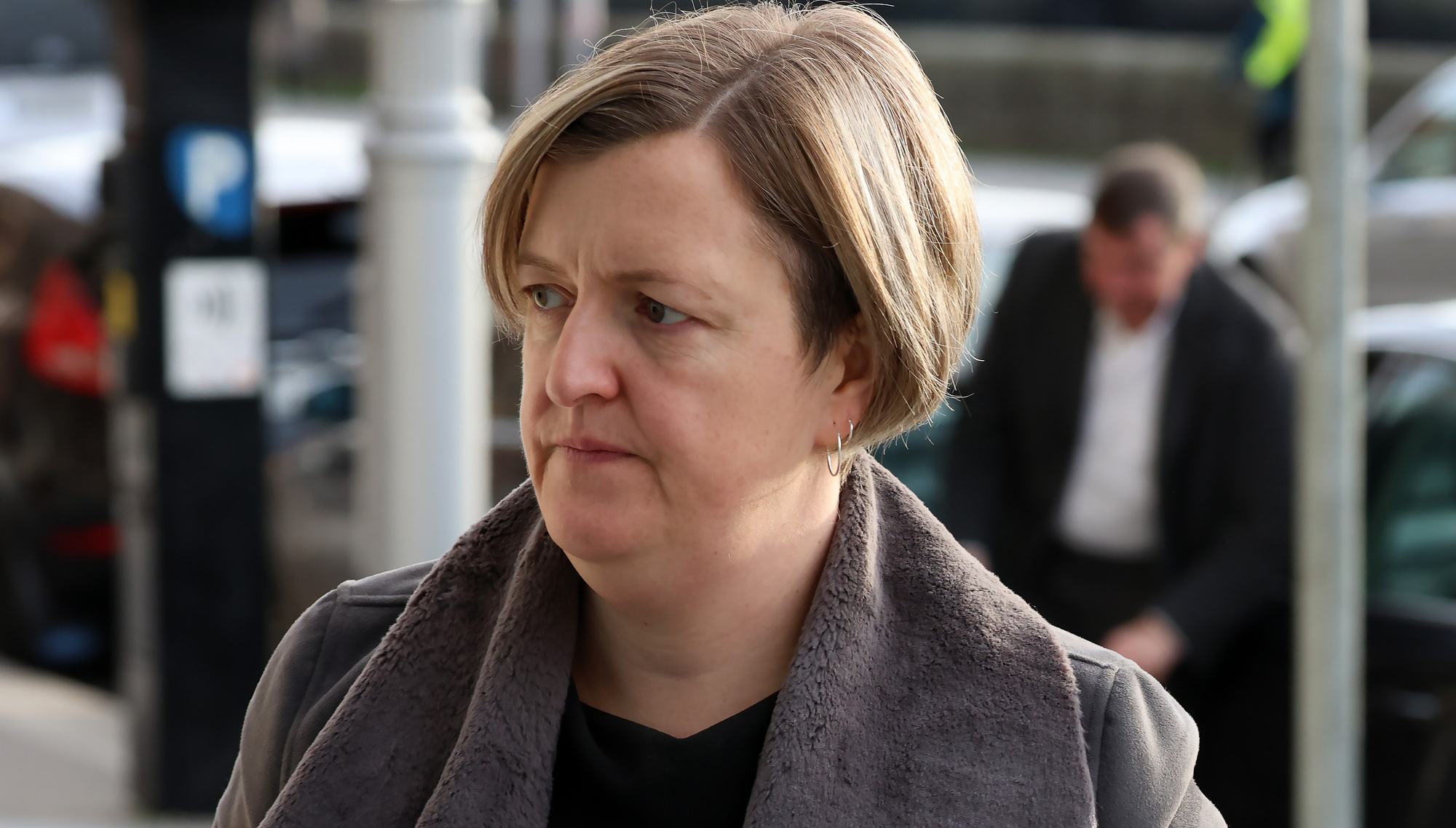
Dr Linda Mulligan, the chief state pathologist, said that due to several Dublin hospitals closing their autopsy services, the Dublin District Mortuary was now operating at twice its intended capacity. Picture: Colin Keegan
The chief state pathologist has warned of an increasing crisis in the Department of Justice’s ability to carry out autopsies on homicides and suspicious deaths due to widespread staffing shortfalls.
Dr Linda Mulligan told the that Ireland’s four full-time State Pathologists are facing increased pressure as more hospitals pull the plug on autopsy services.
According to Dr Mulligan, the fallout from three Dublin hospitals — the Mater Hospital, St James’s Hospital, and Beaumont Hospital — shuttering their autopsy services has led to the Dublin District Mortuary operating at twice its intended capacity.
“[The Office of State Pathology] must rely on access to Dublin District Mortuary and to the HSE hospital mortuaries around the country if we are called by the local coroner and directed to perform a postmortem examination in a suspicious death,” said Dr Mulligan.
“What's happening a lot is that the access is limited because they're dealing with an increased workload. They prioritise the non-suspicious death cases locally.
“It's understandable. They're not our mortuaries, they're not Department of Justice facilities, and it's the HSE staff who assist us in the postmortem examinations … It is their grace and favour that we rely on.”
Dr Mulligan said while long-term fixes are being worked on, “there have been difficulties” engaging with the Department of Health.
Separately, one of Dublin’s four coroners, Aisling Gannon, has vacated their post. The Department of Justice does not intend to fill the seat.
Sources in the Coroner’s Service raised fears that the unfilled vacancy will lead to Dublin’s three coroners becoming further stretched in carrying out inquests, with families facing further delays for closure on a loved one’s death.
According to suicide support charity Hugg, inquests in Dublin can take up to 18 months.
The Department of Justice told the it is satisfied that the Dublin Coroner’s Service is adequately resourced in light of Ms Gannon’s departure.
According to former Kildare coroner and professor of forensic and legal medicine, Denis Cusack, the country's autopsy services have suffered a “dramatic and incremental deterioration".
He said poor working conditions, underfunding, and a failure to innovate have left bereaved families waiting months for a death certificate.
The certificate allows a family to handle a deceased family member’s estate.
Around 6,000 coroner-requested autopsies are carried out by pathologists each year, with 2,500 going to an inquest.
Consultant pathologists are employed by hospitals but provide autopsies for the Department of Justice’s coroners' service outside of their hospital working hours.
Mr Cusack said defining legislation about consultant pathologists' working practices has never truly been solidified, and that the current "grace and favour" system grew organically and is no longer fit for purpose.
Fees for coroner-directed autopsies have remained static since 2009.
Mr Cusack described facilities for autopsies in his native Kildare as “dire". Yet hospitals such as University Hospital Waterford (UHW), where modern facilities have been put in place, have also seen staff walk due to workload.
The hospital announced in November 2024 that it would cease carrying out coroner-directed inquests.
UHW and University Hospital Limerick’s autopsy services are currently upheld by British and Hungarian locum pathologists.
Mr Cusack said autopsy services have suffered from an inability to embrace imaging technologies such as CT scanning.
He said that CT scanning, a fixture of autopsies in Toronto, allows for the delegation of workload and less dissection work.
“So many other countries, they're so far ahead of us on this,” Mr Cusack said.
“We have to think outside the box … We are in crisis, and it's going to get worse.”
According to Dr Mulligan, a lack of facilities and qualified forensic radiologists prevents the fast-tracking of the technology, with almost no available scanners outside of Dublin.
Mr Cusack said the HSE does not view autopsy services as a key investment priority, labelling the battle to leverage funding as “an uphill battle".

CONNECT WITH US TODAY



Be the first to know the latest news and updates