Children's creativity shouldn’t be left to a once-a-year celebration
The soft skills learned from the freedom to be creative are ones we all need in daily life, so where are the extra points for those who want to study arts, asks Patrick Holloway
Children's creativity shouldn’t be left to a once-a-year celebration

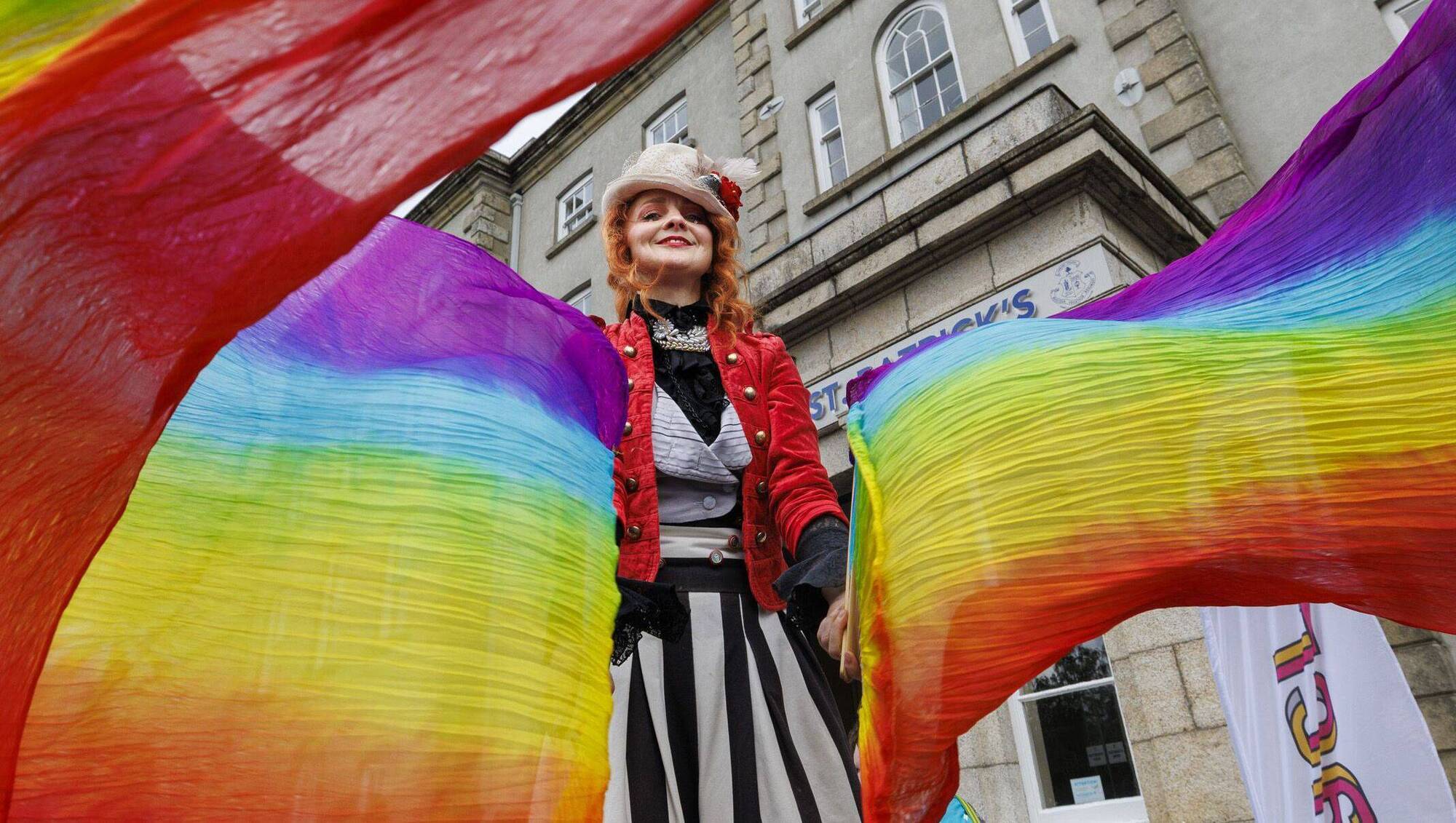
One of the characters who took part in the Carnival of Collective Joy in Carlow College during the Carlow Arts Festival. Our school systems still operate as if maths and science sit above arts and humanities in the hierarchy of learning.

Each June, children and young people across Ireland take part in Cruinniú na nÓg — a national day of free creativity for under-18s. Workshops, performances, exhibitions, and events pop up in libraries, theatres, parks, and community spaces across the country. Ireland is the first, and still the only, country in the world to dedicate a national day entirely to children’s creativity.
I only heard about it recently, even though it has been running since 2018. At first, I was impressed. I immediately began wondering how I might get involved — perhaps through my daughters’ school or in some local capacity. But the more I thought about it, the more another question crept in: Why do we need a day like this at all?

Perhaps one reason is that creativity — in all its shapes, forms, and possibilities — is not valued enough in the everyday lives of children, particularly in school.

I remember finding school arduous for a myriad of reasons.

The times I felt most engaged — the moments when learning seemed to come alive — were the moments I was given the freedom to think and act creatively. Much of that happened outside school at speech and drama lessons with the local legend that was Eileen McCollum.

In school, I was lucky enough to encounter one of those rare teachers who seem able to see a student properly. My English teacher, Colette Murphy, had that gift and instilled in me an appreciation for the gifts of literature — the worlds they create and the avenues they can open for a person.

Slipped through the cracks

Without those spaces and those people, I sometimes wonder if I might have slipped quietly through the cracks of education. I might have been one of the students who simply drift through school feeling disconnected from the hierarchy of subjects that kept me at a distance and made me feel less than.

I was reminded of that hierarchy recently while giving a Leaving Cert English grind. My student mentioned that they now receive 25 extra CAO points for taking higher level maths. I was taken aback. When I looked into it, the reasoning was clear enough: The incentive was introduced to encourage students to take on the challenge of higher level mathematics, strengthen Stem skills, and meet the needs of high-tech employers.

But it left me wondering about the students whose ambitions lie elsewhere. What about the young person who wants to dance? Or write? Or sing? Or paint, sculpt, photograph, compose music, or make films? What about the student who wants to explore literature, theatre, or art history? Why does mathematics still sit so firmly at the top of the subject pyramid? What message does that send to students year after year?

Whether intentionally or not, it reinforces the idea that school is primarily a pathway to employment — an idea rooted in the development of modern education systems during the Industrial Revolution of the 19th century.

Schools were designed to produce disciplined workers for an industrial economy. The world has changed drastically since then

Entire industries have evolved or disappeared, while the creative industries have expanded dramatically. Yet, our school systems still often operate as if mathematics and science must sit above arts and humanities in the hierarchy of learning.

Where, for instance, are the extra points for students who want to study literature? Why are there no bonus points for English, art, or music?

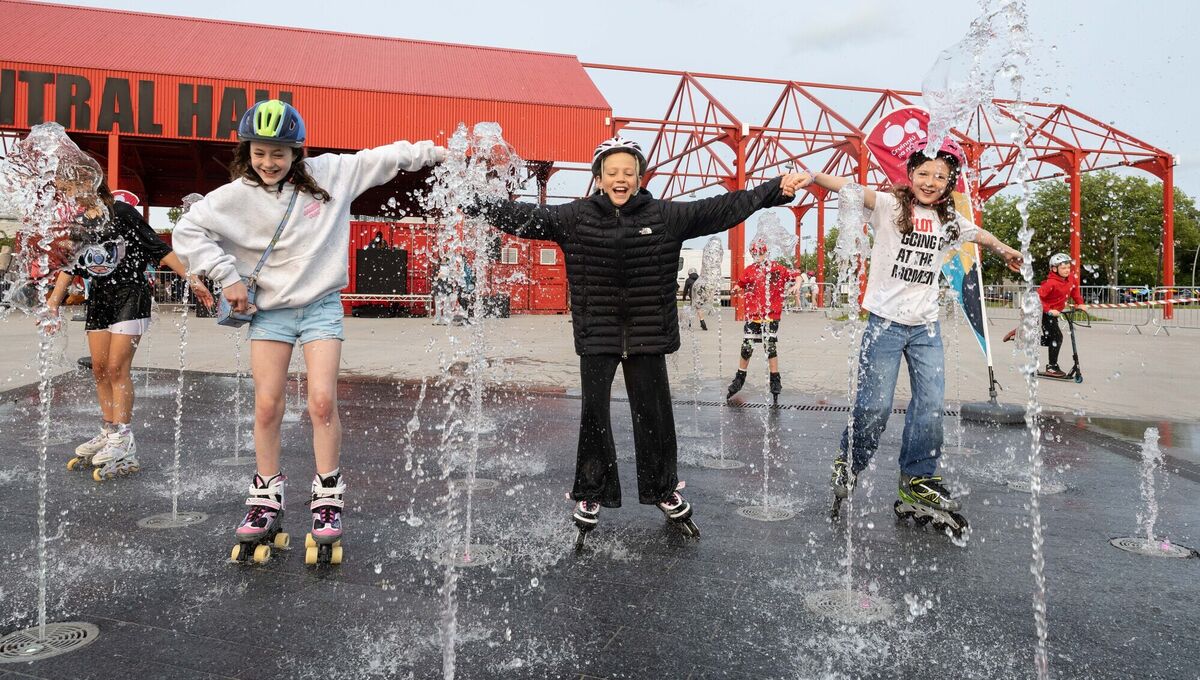
Children have fun at the roller disco event in Central Hall, Marina Park, Monahan Rd, Cork, for Cruinniu na nÓg. Can all forms of curiosity really fit inside 38-minute classes spent sitting still and copying notes from a board? File Picture: Darragh Kane

This is not an argument against mathematics or science, but the current structure can unintentionally sideline students whose strengths lie elsewhere — particularly those with imaginative or divergent ways of thinking.

Many creative learners struggle in environments built around memorisation, rigid assessment, and narrow definitions of achievement. Some students become disengaged, others are labelled disruptive or inattentive. Increasingly, these patterns are sometimes explained through diagnoses (or attempted diagnoses) such as attention deficit hyperactivity disorder (ADHD).

But I often wonder how much of this difficulty stems not from the student but from the structure itself. Can all forms of curiosity really fit inside 38-minute classes spent sitting still and copying notes from a board?

I filled exercise book margins with endless doodles. I was regularly sent out of class for being disruptive or distracting others. At the time, it simply felt like failure. Now, I look back and wonder if it was simply energy without the right outlet.

I see echoes of that energy every day in my two daughters. Children at that age seem to carry creativity as naturally as breathing. They invent elaborate games, ask endless questions, and build whole imaginary worlds from nothing.

Recently, we’ve been playing a lot of Snakes and Ladders. I started adding extra dice to make the game more interesting. As they roll them, I watch them counting the dots in their heads, their bodies practically vibrating with movement. Sometimes, they have to jump off the sofa to finish the calculation — running, dancing, pacing around the room — before racing back to move their counter up the board. The energy is constant. The curiosity is unstoppable.

Children take risks

Watching them reminds me of something the education thinker Ken Robinson often said: Children are not afraid to be wrong. They take risks.

Yet, in many classrooms, risks are seen as mistakes and are treated primarily as failure rather than as part of the learning process. Over time, the message can become clear: Stay within the lines. Since leaving school, I have worked in a range of different jobs. In nearly every one of them, it has been the so-called “soft skills” that mattered most — the ability to communicate ideas, solve problems creatively, collaborate with others, adapt to new situations, and think differently.

These are precisely the kinds of skills we often say we want young people to develop. Creativity sits at the centre of them all

Creativity nurtures curiosity, encourages experimentation, and builds the confidence to imagine possibilities that do not yet exist. Yet, in many schools, creative subjects are still treated as secondary.

This is why initiatives such as Cruinniú na nÓg matter. They remind us of what young people are capable of when creativity is given time, space, and encouragement. Across the country, children who might struggle to sit still in a classroom suddenly flourish when asked to create, perform, design, write, or imagine.

Perhaps the real challenge is not simply to celebrate creativity for one day each year. Perhaps the challenge is to ask why it so often feels separate from everyday learning in the first place.

If Cruinniú na nÓg shows us anything, it is that creativity is not an optional extra in children’s lives. It is a fundamental way that they explore the world, make sense of ideas, and express who they are becoming.

Instead of confining that spirit to a single national celebration, we might begin asking a larger question: What would our education system look like if creativity were valued every day of the school year?

More in this section

Revoiced

Newsletter

Sign up to the best reads of the week from irishexaminer.com selected just for you.

Cookie Policy Privacy Policy Brand Safety FAQ Help Contact Us Terms and Conditions

© Examiner Echo Group Limited