When tech does the thinking, our children miss the real lesson 

Children are ‘borrowing’ comprehension rather than developing it — it’s like sending a robot to the gym on your behalf: the weight gets lifted, but no muscle growth occurs
When tech does the thinking, our children miss the real lesson 

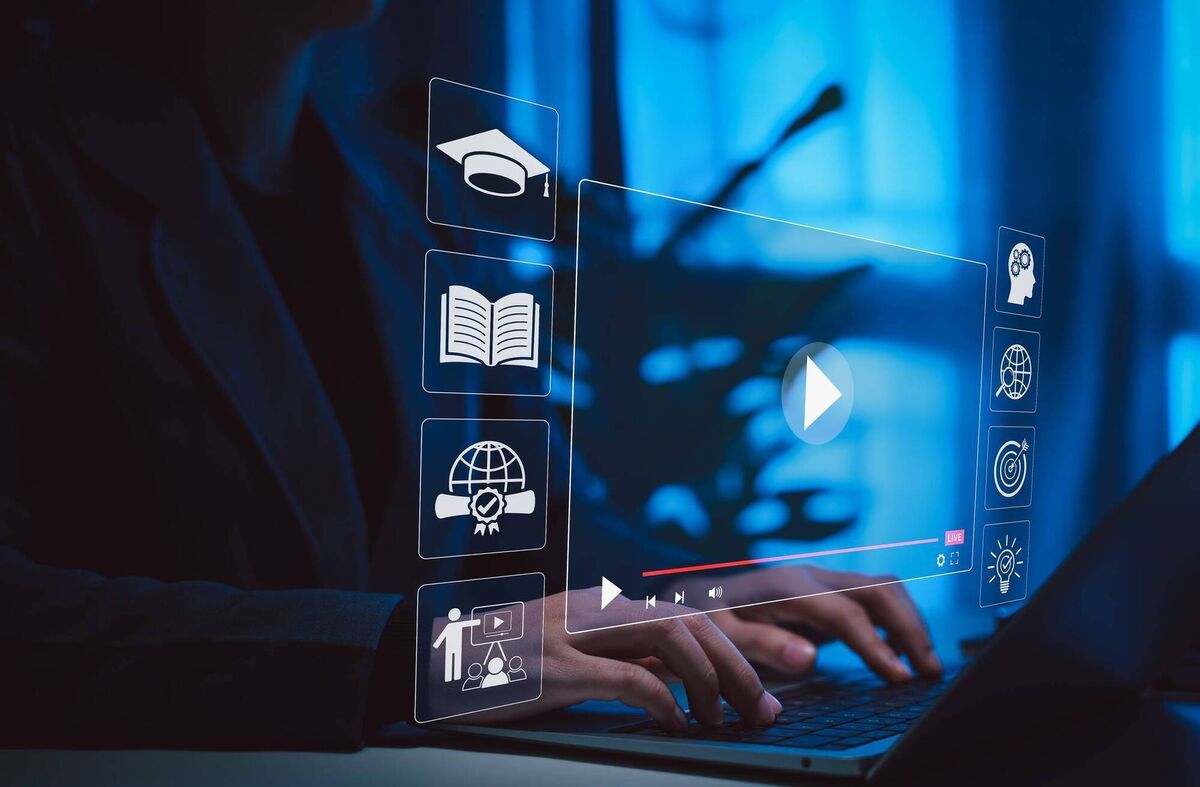
Laptops and other digital tools used in classrooms can potentially diminish a student’s ability to learn. Picture: iStock

AS a university lecturer, I am grappling with the rise in student use of AI. Colleges are exploring how to integrate it into teaching and assessments, not because AI will enhance learning, but because there is no way to prevent its widespread use.

This dilemma raises questions about the future of education and the trade-offs when adopting technologies.

Educational technology (EdTech) arrived in the early 2000s with promises of personalised learning, limitless information, and seamless communication. But do these tools enhance our children’s learning, or diminish it?

Several iPad-based school initiatives, including in Sweden and Germany, have reversed course in large-scale EdTech adoption. The most notable example is the Los Angeles Unified School District’s (2013) ‘iPads for All' initiative, which cancelled its $1.9bn (€1.65bn) iPad programme in December 2014, because of technical failures, inadequate digital curricula, security breaches, and governance concerns. The district reduced device use and refocused on traditional practices.

Concerns about using technology in education are no longer confined to sceptics. Neuroscientists, educational researchers, and international data highlight concerning trends. Jonathan Haidt, the author of the 2024 bestseller, The Anxious Generation, describes Ed Tech as “Big Tech in a sweater”.

He argues that internet-connected devices in classrooms undermine deep concentration and that empirical evidence for learning gains from many forms of educational technology remains limited. 

Unesco and the Education Endowment Foundation (2024) similarly note that educational technology has mixed effects and depends heavily on the quality of implementation.

But one of the most prominent voices in this space is educational neuroscientist Dr Jared Cooney Horvath, whose recent analysis of global assessments suggests that the more time children spend learning on screens, the less they retain and understand. 

In a recent US Senate testimony, he warned that literacy, numeracy, attention, and higher-order thinking have stagnated or declined over the past two decades, a period that coincides with the rise of school-based digital tools and pervasive smartphone use.

A cognitive crutch

We have long equated technology with progress, but child development does not accelerate just because technology does. Growth still depends on nurturing attention, memory, and effort, internal skills that are being displaced by digital tools.

A concern is the long-term cost of ‘cognitive offloading’ — a phrase introduced by cognitive scientists Elisabeth Risko and Sam Gilbert in 2016 — which describes our tendency to rely on external tools, such as apps, search engines, and devices, to perform mental tasks. As adults, we do this constantly, via calendars to remind us of appointments, satellite navigation apps to guide our journeys, and autocorrect software to fix our spelling errors.

In moderation, cognitive offloading can be effective. However, for children whose cognitive wiring is still developing, reliance on digital tools can hinder the development of cognitive skills. When technology constantly provides answers, hints, or simplified steps, it lessens children’s need to engage deeply with the material, weakening the core mechanisms that support learning.

Cooney-Horvath says that digital tools are not neutral because they are engineered for speed, stimulation, and instant feedback. This form of cognitive engagement promotes fragmented attention rather than sustained focus. His conclusion that increased classroom screen use correlates with lower academic achievement is based on a review of international student datasets, such as PISA, TIMSS, and PIRLS.

Rapid cognitive engagement isn’t solely about distraction. 

When children rely heavily on digital aids, they cease to do the mental exercise that deepens their understanding. 

They ‘borrow’ comprehension rather than develop it. It’s like sending a robot to the gym on your behalf: the weight gets lifted, but no muscle growth occurs.

Technology promises to assist our ability to organise ourselves, but, as a therapist, I notice more young people struggling with organisation, focus, and problem-solving.

These issues are part of a broader decline in cognitive stamina and an inability to persist through difficulty without external assistance. The paradox is that tools meant to enhance focus also diminish it.

IQ decline

The concerns become more pronounced when we consider long-term effects. Today’s students may be the first generation to show a decline in core cognitive ability compared to their parents. The upward trend in IQ, known as the Flynn Effect, reversed in the mid-2000s, which is precisely when laptops, tablets, and digital curricula became widespread in schools, and when smartphones became pervasive. 

It is impossible to establish causation when so many other social variables, such as children’s diets, family make-up, and global migration, have also changed in children’s lives in the last 20 years, but there is a case for correlation.

Parents describe their children as intelligent, but less able to tolerate boredom, overcome challenges, or work independently without digital assistance. They say their teenagers cannot study without a device running in the background. This is not the children’s fault, but the consequence of an environment that subtly influences how they believe they need to learn and think.

I am not arguing that educational technology is inherently harmful. Some digital tools, particularly those that support specific learning difficulties or additional learning needs, can be transformative.

The issue is widespread, indiscriminate adoption. Schools and universities frequently increase device use because technology appears modern, measurable, and in tune with expectations. Meanwhile, the relational core of education, such as conversation, mentorship, curiosity, and debate, risks being overshadowed by digital aids.

When learning becomes effortless, children miss the chance to build persistence.

Screens also shape how a child’s relationship with effort develops. When learning becomes effortless, and answers come before effort, children miss chances to build persistence. I often compare persistence to a muscle: It grows stronger under surmountable stress, like dealing with frustration and handling uncertainty. But digital tools remove many of these experiences. They eliminate the discomfort of uncertainty, even though this is the creative space where development happens.

The way forward is not to ban technology, but to rebalance it. Introducing guardrails and understanding their strengths and limitations in learning are essential.

We must let technology serve education, not replace it. 

We should ensure that technology complements learning, not supplements it, by using screens sparingly and only when they clearly improve the task at hand. The responsibility for providing this proof should lie with EdTech companies, not parents or teachers.

We also need to prioritise deep work rather than seek to bypass it. Children and young adults require extended periods of focused, uninterrupted engagement with non-digital materials. Books, paper, and pens still have cognitive advantages, such as deeper processing, better memory coding, and spatial understanding.

We also need to listen to the student voice in moderation. While there is a strong push to prioritise students’ preferences, which is commendable, they may not always understand what they truly need. It is human nature to oppose hard work and effort, but these are unavoidable aspects of meaningful intellectual endeavour.

Insisting that tools enhance learning rather than hinder it is not anti-technology. It is merely responsible teaching and parenting.

Ultimately, our children do not need more devices. They need opportunities to think deeply, remember fully, and cultivate a mind that does not rely on constant digital assistance. As we move in to an era dominated by AI, these internal ‘soft skills’ will become even more valuable.

  • Dr Colman Noctor is a child psychotherapist

More in this section

Cookie Policy Privacy Policy Brand Safety FAQ Help Contact Us Terms and Conditions

© Examiner Echo Group Limited