Fragile ceasefire holds as US awaits Iran response to latest proposal to end war
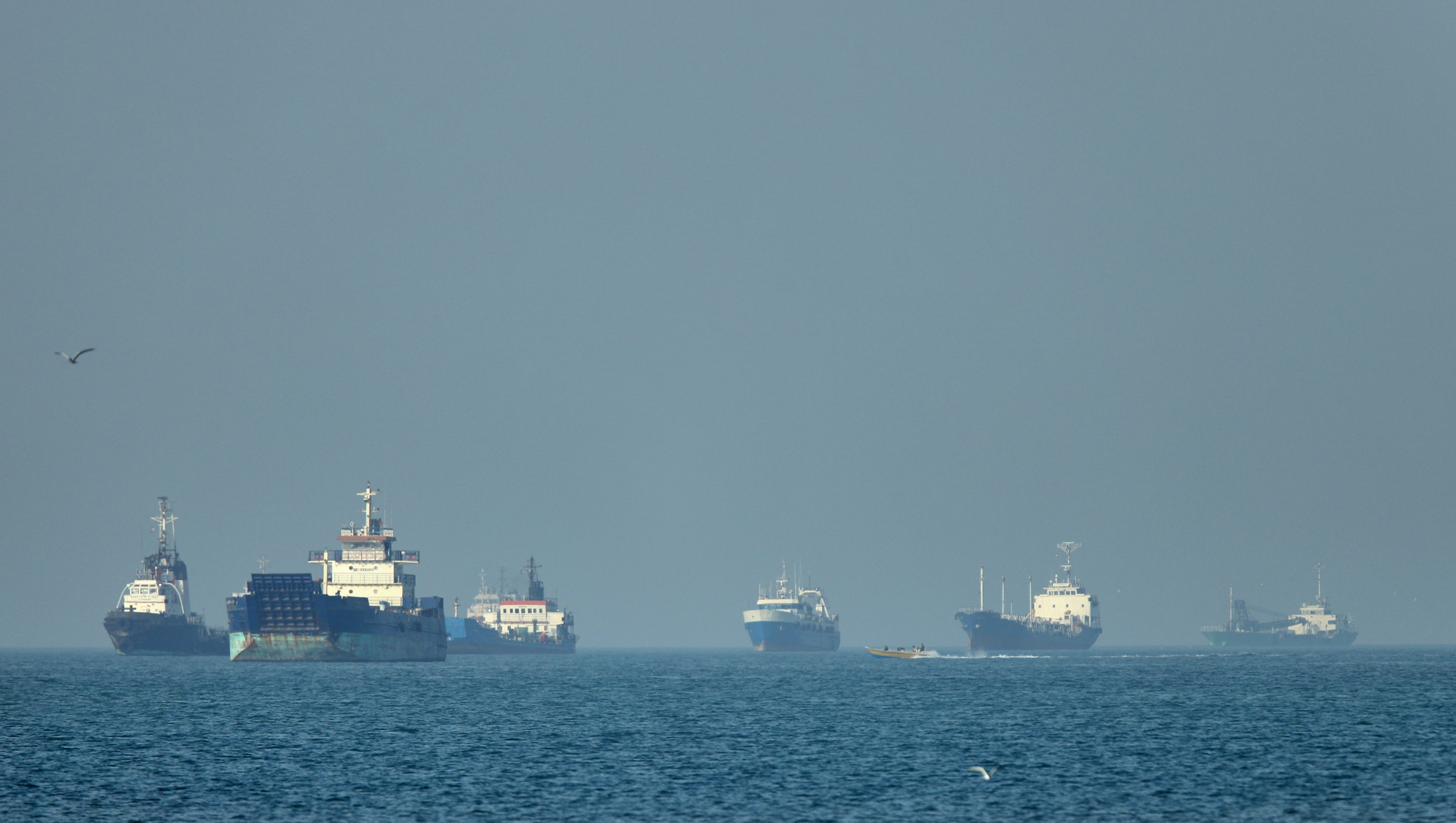
Cargo ships stranded in the Strait of Hormuz (Amirhosein Khorgooi/ISNA via AP)
A tenuous ceasefire appeared to be holding on Saturday after the United States struck two Iranian oil tankers.
Attacks on Friday cast doubt on the month-old ceasefire that the US has insisted is still in effect.
Washington is awaiting an Iranian response to its latest proposal for a deal to end the war, reopen the Strait of Hormuz and roll back Tehran’s disputed nuclear programme.
The US military said on Friday that its forces had disabled two Iranian tankers that were trying to breach an American blockade of Iran’s ports. Hours earlier, the military said it thwarted attacks on three navy ships and struck Iranian military facilities in the strait.
Read More
Meanwhile, in the small Gulf island of Bahrain which hosts the US navy’s regional headquarters, the nation’s Ministry of Interior said on Saturday it had arrested 41 people it alleges are part of a group affiliated with Iran’s Revolutionary Guard.
It said investigations are ongoing to take further action against anyone affiliated with the group but did not provide further details.
Bahrain is led by a Sunni Muslim monarchy but, like Iran, its population is majority Shiite. Rights groups have said that the kingdom has used the war between Iran and the US, which bases its Fifth Fleet in the country, as an excuse to crack down on dissent at home.
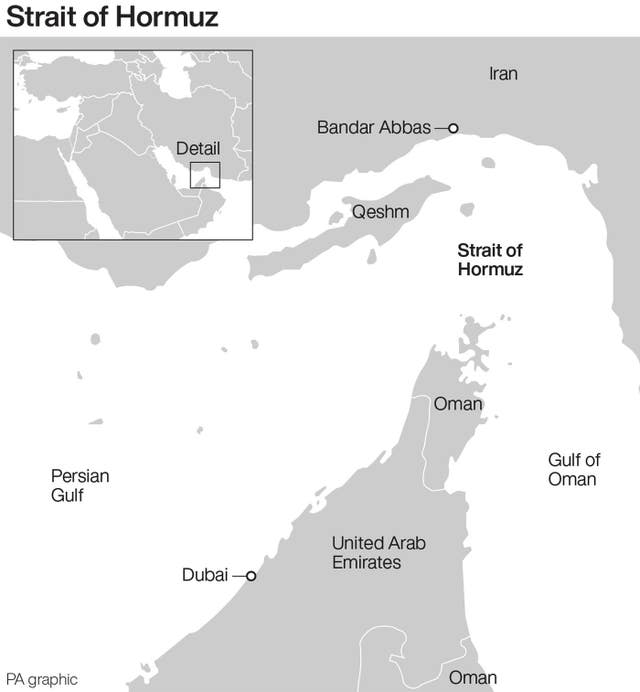
Iran has mostly blocked the critical waterway for global energy since the US and Israel launched the war on February 28, causing a global spike in fuel prices and rattling world markets. The US has imposed its own blockade of Iran’s ports.
The US military posted video of the two Iranian tankers as their smokestacks were struck by an American fighter jet on Friday. Earlier in the week, an American military jet shot out the rudder of a tanker the US military said was attempting to breach its blockade.

A US strike overnight killed at least one sailor and injured 10 others aboard a cargo vessel that caught fire, a news agency affiliated with Iran’s judiciary reported. It was not clear if the ship was one of the two tankers the US acknowledged striking.
Despite the attacks, US President Donald Trump has insisted the ceasefire is holding. He also has reiterated threats to resume full-scale bombing if Iran does not accept an agreement to reopen the strait and roll back its nuclear programme.
On Friday, Iranian foreign ministry spokesperson Esmail Baghaei said the country was not paying attention to “deadlines” and Tehran continues reviewing a US proposal related to ongoing negotiations, according to the state-run IRNA.
A top Iranian official also said on Friday that the country’s Supreme Leader Mojtaba Khamenei was in “complete health” and that he would eventually appear in public.
The comments were made by Mazaher Hosseini, who is affiliated with the office of Iran’s former supreme leader, at a pro-government gathering.

Mr Khamenei has not been seen in public since the war began and the continued absence of verified images, audio, or video of him has fuelled speculation about his status. Remarks such as Mr Hosseini’s are seen by some as attempts to counter doubts that he may no longer be alive.
As tensions escalate there has been a flurry of diplomacy across the globe.
Russia’s foreign ministry said on Saturday that it, as well as Saudi Arabia, is calling for continued diplomatic efforts to reach a “sustainable, long-term agreement” to end the war.
Egyptian and Qatari top diplomats have also have reiterated that diplomacy is the sole path to finding a solution, according to a readout of a Saturday phone call between Egyptian foreign minister Badr Abdelatty and his Qatari counterpart Sheikh Mohammed bin Abdulrahman Al Thani.
Pakistani Prime Minister Shehbaz Sharif said his country has been in contact with the US and Iran “day and night” in an effort to extend the ceasefire and reach a peace deal.


CONNECT WITH US TODAY



Be the first to know the latest news and updates