I went behind the scenes at Vision Ireland to see the impact of our fast fashion addiction
Inside the Vision Ireland warehouse on the outskirts of Dublin, clothing arrives by the bagful.
Each week, trucks pull in from across the country, carrying donations from more than 120 charity shops. The bags are stacked high, spilling into storage containers. Inside, five workers stand at sorting tables, working methodically through the volume, item by item.
“Everything that comes through our doors is sorted and given an opportunity,” Jody Monaghan, Vision Ireland’s Retain Operations Manager, explains. "We see the value in every item – it’s about extending the lifespan of clothing for as long as possible.”
Last year alone, Vision Ireland collected more than 80,000 ten-kilogram bags of donated clothing – a 20 per cent increase since 2024 – amounting to an estimated 650,000 individual items redirected back into circulation. Each piece is sorted, graded and, in many cases, sent back out again in an effort to extend its life for as long as possible.
CLIMATE & SUSTAINABILITY HUB
“The scale has grown significantly in recent years,” Monaghan says. “We’re seeing more volume coming through our stores than ever before.”
It is, in many ways, a system designed to make fashion circular, one that not only funds services for people with sight loss, but also keeps vast quantities of clothing in use. That work has not gone unnoticed: in 2025 Vision Ireland was awarded both the Charity Retail Association’s Environmental and Sustainability award and Retail Excellence Ireland’s Sustainable Retailer of the Year – the first charity ever to receive the honour.
But the scale is hard to ignore.
At any given time, more than 10,000 bags of clothing can be sitting in storage, waiting to be processed, redistributed, or held back for another season. Even with a reuse rate of up to 75 per cent, a significant portion cannot be resold. In 2025 alone, more than 307,000 kilograms of clothing were diverted from landfill through recycling partnerships – a reminder that not everything finds its way back onto the shop floor.
And as the volume of clothing continues to grow – driven in part by ultra-fast fashion and the ease of resale platforms like Vinted and Depop – the question is no longer just what happens to our clothes after we donate them. It is whether systems like this can keep up at all.
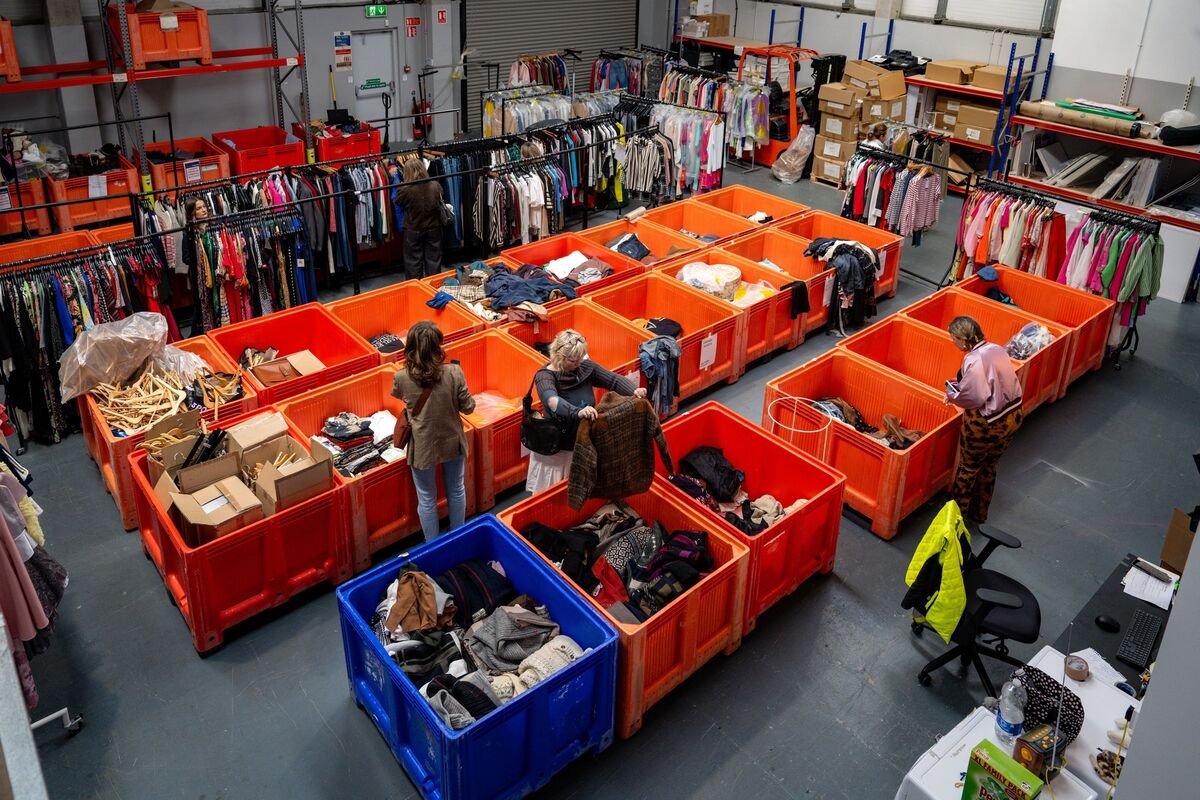
“The volume means we’re constantly managing what comes in against what we can process and move back out,” Monaghan explains.
What is happening inside Vision Ireland’s warehouse is not unique. It is a reflection of a much broader shift in how we consume clothing – one that has accelerated dramatically over the past two decades.
Globally, the volume of clothing being produced has reached unprecedented levels. According to Professor Kate Fletcher, a leading expert in sustainability and fashion systems, fibre production has more than doubled in less than 25 years, rising from 58 million metric tonnes in 2000 to 124 million in 2023.
“The current state of fashion consumption in the global North is large and growing,” she says.
Ireland is among the highest consumers of textiles in Europe. According to the Environmental Protection Agency (EPA), the average Irish person generates more than 53kg of textile waste each year, with the majority ending up in general waste rather than being reused or recycled. (Across the EU, textile consumption is estimated at around 26kg per person annually, placing Ireland amongst the heavier consumers).
As only a fraction of clothing is collected for reuse or recycling, large volumes are lost to landfill or incineration, reinforcing the pressure on systems like Vision Ireland to absorb what remains.
At the same time, second-hand shopping has undergone a transformation. Once associated with necessity niche style, it is now mainstream, driven by platforms like Vinted and Depop that make buying and selling preloved clothing effortless.
On the surface, this shift suggests a more circular system where clothes are passed on rather than thrown away. But in practice, it has also made it easier to consume more.
Clothing moves faster now, not just through shops, but through wardrobes. Items are bought cheaply, worn briefly and then resold or donated, often with the assumption that someone else will give them a second life.
In the Vision Ireland warehouse, that assumption plays out at scale.
More donations mean more stock to sell, generating vital income for services. But the nature of those donations is changing.
Ultra-fast fashion has introduced a new kind of garment into the system: lower-cost, lower-quality items that may not withstand repeated wear, handling or resale. While every item that arrives is sorted and given the opportunity to be sold, not all clothing can sustain the extended lifecycle that the system depends on.
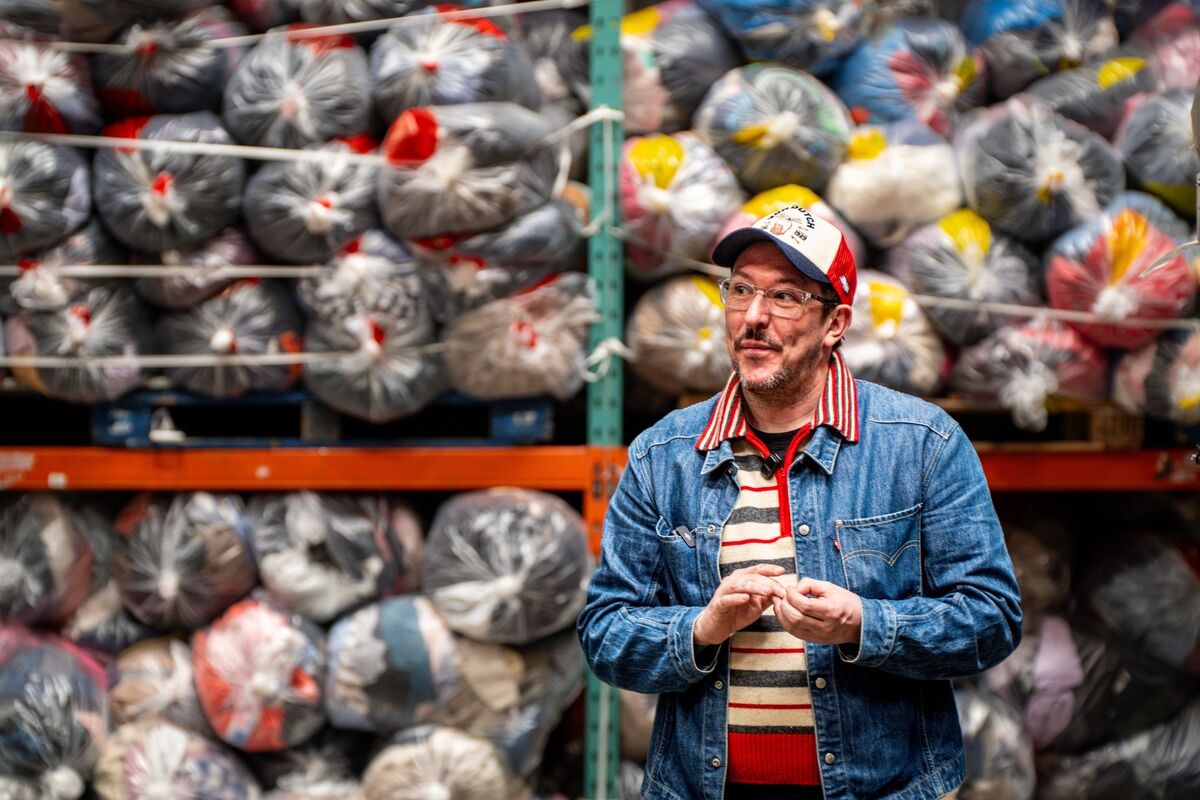
“Not everything is designed to last,” says Monaghan. “That can impact how long items stay in circulation and whether they can be resold.”
At the same time, the rise of resale platforms has altered how people think about their clothes. The ability to sell or donate items easily creates the sense that nothing really goes to waste.
But that ease can also encourage a higher turnover.
If clothing can be passed on with minimal effort, there is less incentive to hold onto it. The result is a system where garments are constantly in motion, moving from retailer to consumer, from wardrobe to resale app, and eventually into donation streams like those managed by Vision Ireland.
And while much of that clothing does find a second, third or even fourth life, the sheer volume raises a more difficult question: what happens when there is simply too much?
Inside the warehouse, the process is both meticulous and relentless.
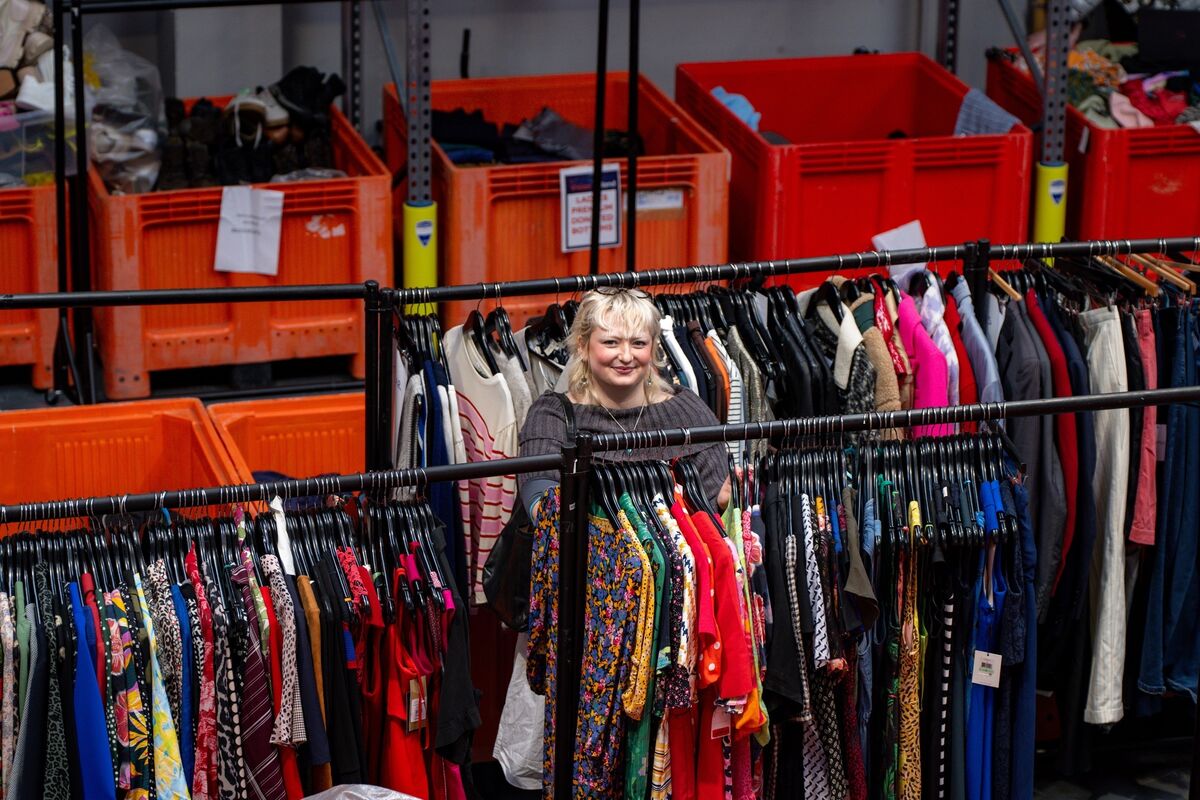
Every item that arrives is sorted by hand by a small team, some of whom have worked in the warehouse for decades. Clothing is categorised by type and season – men’s, women’s, children’s, summer, winter – before being prepared for redistribution.
In-store, each item follows a structured lifecycle. It is initially sold at full price, then discounted after two weeks, and again after five. If it still does not sell but retains value, it is sent back to the warehouse, sorted again and redistributed to another shop.
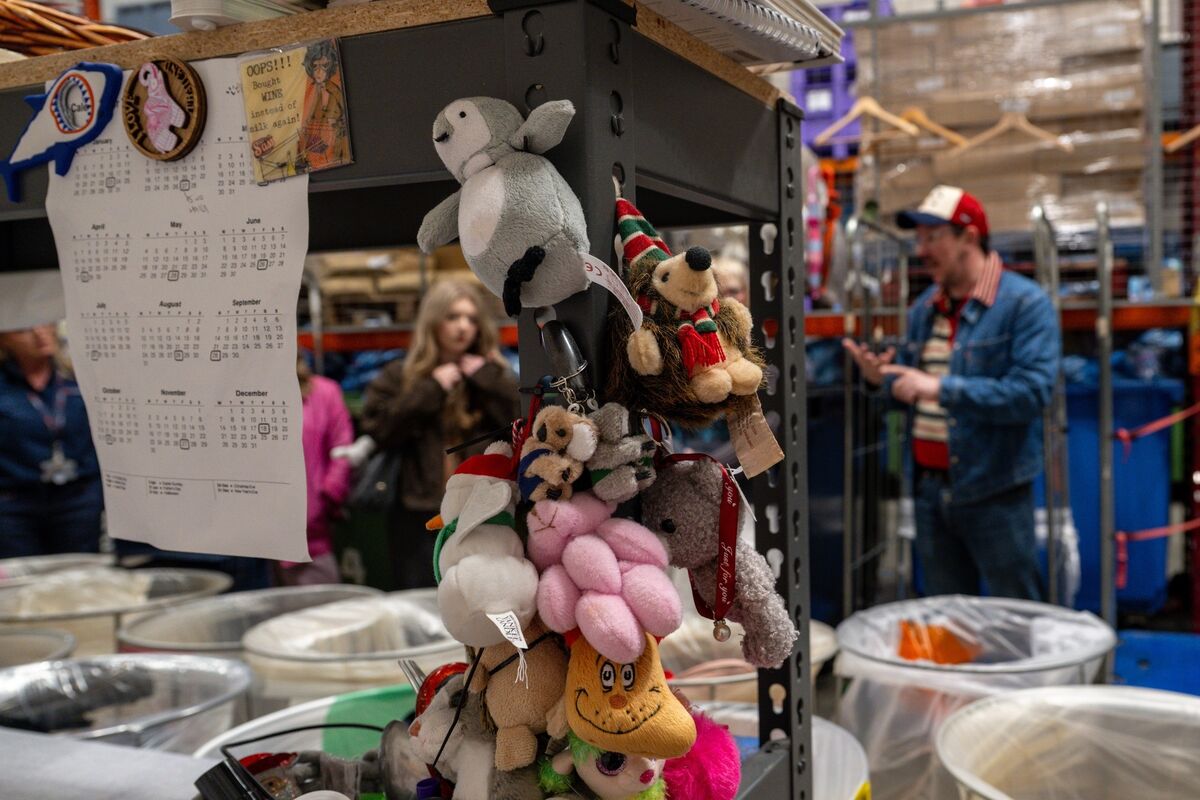
On average, an item may pass through as many as four different stores before reaching the end of its retail life.
It is a system designed to extract as much value as possible from every donation, to give each garment what staff describe as “its chance to shine”.
However, this process is not without limits.
Even with careful sorting and multiple chances for resale, a portion of clothing cannot be returned to the shop floor. Items may be too worn, too damaged, or simply unsellable. Others arrive in volumes that exceed what stores can realistically absorb.
The system is designed to be circular – but it was never built to handle infinite supply.
“There’s a constant balance between what comes in and what we can process, store, and resell. The volume means we have to be very strategic in how we manage stock,” Monaghan describes.
As this scale of textile waste grows, attention is also turning to the role of government.
In Ireland, the Department of Climate has recently published the country’s first National Policy Statement on Textiles, alongside plans for a nationwide information campaign aimed at encouraging reuse and reducing waste.
Minister of State for Climate Alan Dillon said the policy includes “wide-ranging proposals to tackle fast fashion and the environmental degradation caused by textile waste”.
The move reflects a growing recognition that the issue cannot be addressed through individual behaviour alone.
Across Europe, more direct intervention is beginning to take shape. In France, lawmakers have proposed measures targeting ultra-fast fashion, including restrictions on advertising and potential environmental penalties for high-volume producers.
While still in the early stages, such policies point to a shift in how the problem is being understood, not simply as a matter of consumer choice but as one tied to the scale and structure of the fashion industry.
For those working within fashion, this imbalance is becoming harder to ignore.
“Reuse of existing goods does not stop new pieces being produced – it happens in addition to it,” says Professor Fletcher. While reuse is lower impact than producing new clothing, it does little to offset the scale of ongoing production unless that production is reduced.
The rise of resale platforms has often been framed as a solution, but Fletcher suggests the reality is more complicated.
“It underscores that the challenges faced are not technical as much as cultural and political.” There remains a gap between perception and reality.
“That changing what consumers buy will make the fashion industry green,” she says, is a common assumption. “The reality is that the trajectory of the industry to grow production volumes year on year completely outstrips any benefits gained from more informed consumer choices.”
She offers a simple analogy: “If a tap in your house sprang a leak and water started flowing all over the floor, you would turn off the water at the source before mopping up the spill.” For designers working outside the fast-fashion model, the effects of this system are felt in a different way.
Faye Anna Rochford, founder of Irish sustainable fashion brand FéRí, says that while awareness is growing, it has yet to translate into widespread behavioural change.
“I think the majority of people are still shopping from fast fashion brands. Pre-loved is rising in popularity, but it’s not the only solution. Independent brands are being recognised slowly, but it’s not an easy one. The big retailers are still winning.”

There are signs of change. Consumers are increasingly interested in how their clothes are made, from materials to manufacturing. But that awareness sits alongside a contradictory reality.
“On one hand, we are made aware of the damage of the fashion industry, and on the other hand, we see large fast fashion brands being supported and championed… which is frustrating,” she says.
At the heart of the issue is a shift in how clothing is valued.
“Everything is so accessible and prices are shocking in some retailers,” she says. “This devalues clothing to a point where it’s deemed not worth mending.” Behind every garment is human labour that is often overlooked.
“The hands of a human have sewn every single item of clothing in the world, regardless of fabric, quality or where it’s made. Not everyone sees it like this.” For smaller designers, shifting that mindset is one of the biggest challenges.
“The pricing structure is entirely different to big brands that manufacture large quantities using cheaper materials,” she says. “Some customers still don’t see the difference – not only in how the product looks, but in everything behind the scenes.” “We encourage customers to invest in pieces they really love instead of settling for a quick fix. Loved clothes last.”
Back in the Vision Ireland warehouse, the work continues.
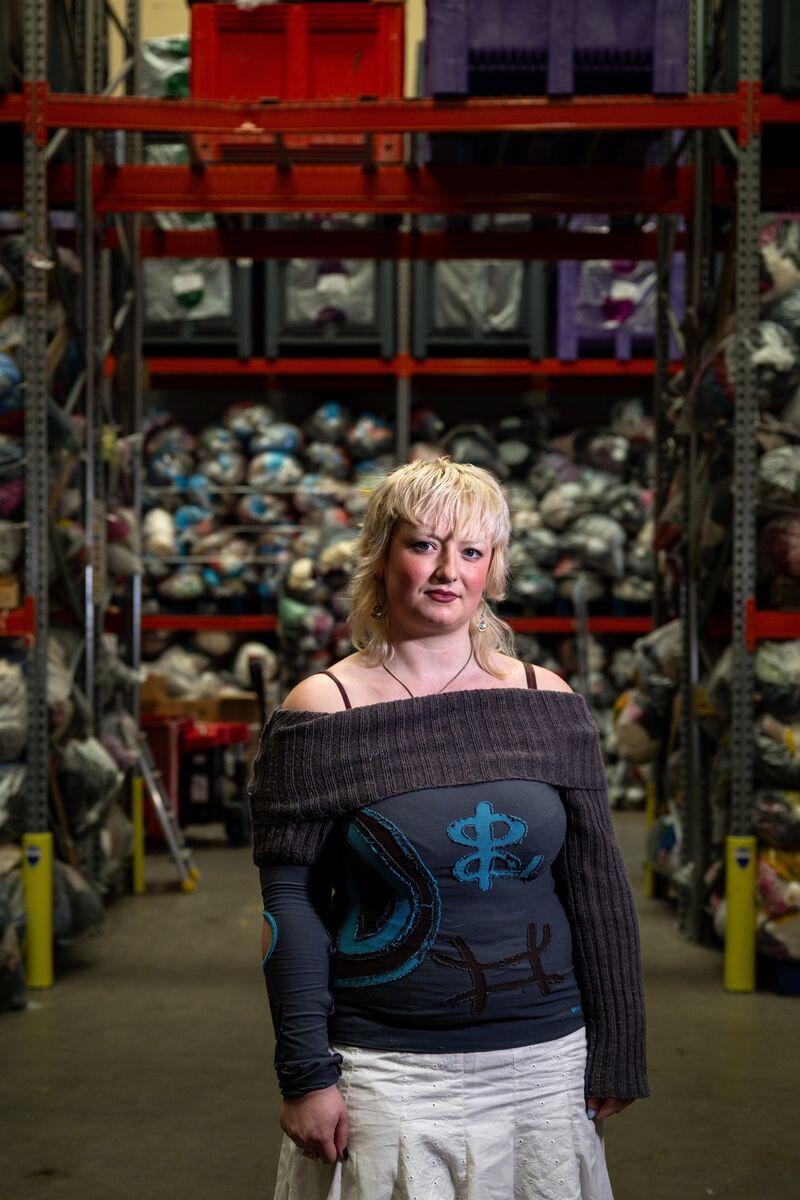
Bags arrive, are opened, sorted and sent back out again – clothing moving in a constant cycle from one place to the next, each item given multiple chances to be worn before its journey ends.
It is, by design, a system built on optimism: the belief that clothing can always find another use, another owner, another life.
But the scale of what passes through the warehouse suggests something else, too – that the system is not just circulating clothing, but absorbing the consequences of how we consume it.
For consumers, donating a bag of clothes can feel like a small act of responsibility. A way to clear space, to pass things on, to avoid waste. But once those bags arrive at places like Vision Ireland, they become part of a much larger flow – one that depends on constant sorting, storing and redistribution to keep moving.
And as that flow continues to grow, the question becomes harder to ignore.
Not just where our clothes go when we are finished with them – but how many we needed in the first place.
- A special edition of Weekend examining Ireland's addiction to fast fashion is free inside your Irish Examiner this Saturday
Read More
CONNECT WITH US TODAY



Be the first to know the latest news and updates