When Israel accepts 70,000 deaths in Gaza, the West’s moral failure is no longer deniable
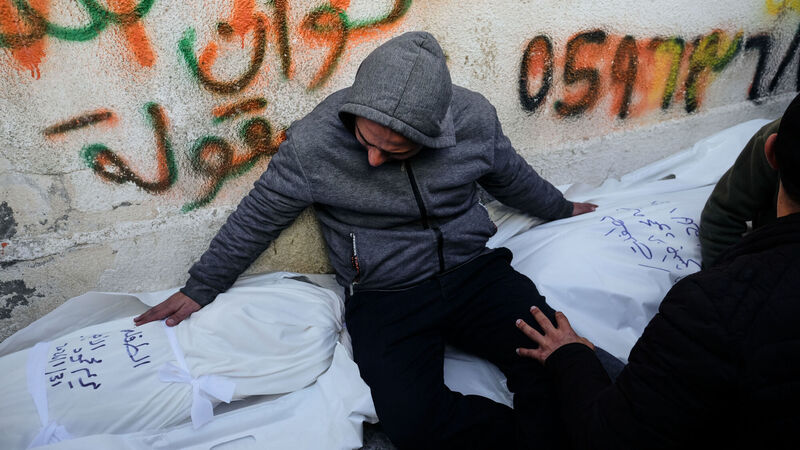
Mahmoud Al-Atbash with the bodies of his daughters, Zeina and Maryam, killed in an Israeli strike at Shifa Hospital in Gaza on Saturday amid the so-called 'ceasefire'.
When even the Israeli military accepts the scale of death, what possible excuse is left for the West’s moral shrug?
This week, Haaretz reported that the Israeli Defence Forces (IDF) have acknowledged the Gaza health ministry’s estimate that more than 70,000 Palestinians have been killed by the IDF. Not alleged. Not disputed. Accepted. By the army that’s been doing the killing.
That fact alone should have detonated every newsroom and foreign ministry in the Western world. Instead, it passed like a grim weather update. Another number. Another headline. Another moment quickly buried under the usual fog of “complexity”. But pause on it.
If 70,000 deaths is the figure the killing side is willing to recognise, what does that tell us about the real toll in a territory where bodies lie unrecovered under mountains of rubble, where hospitals have been destroyed, where people die unseen from starvation, infection, and untreated wounds?
In a place where counting the dead has itself become impossible?
It tells us the real number is almost certainly far higher. Potentially in the hundreds of thousands. And yet, this is the moment the West has chosen to manage rather than confront.
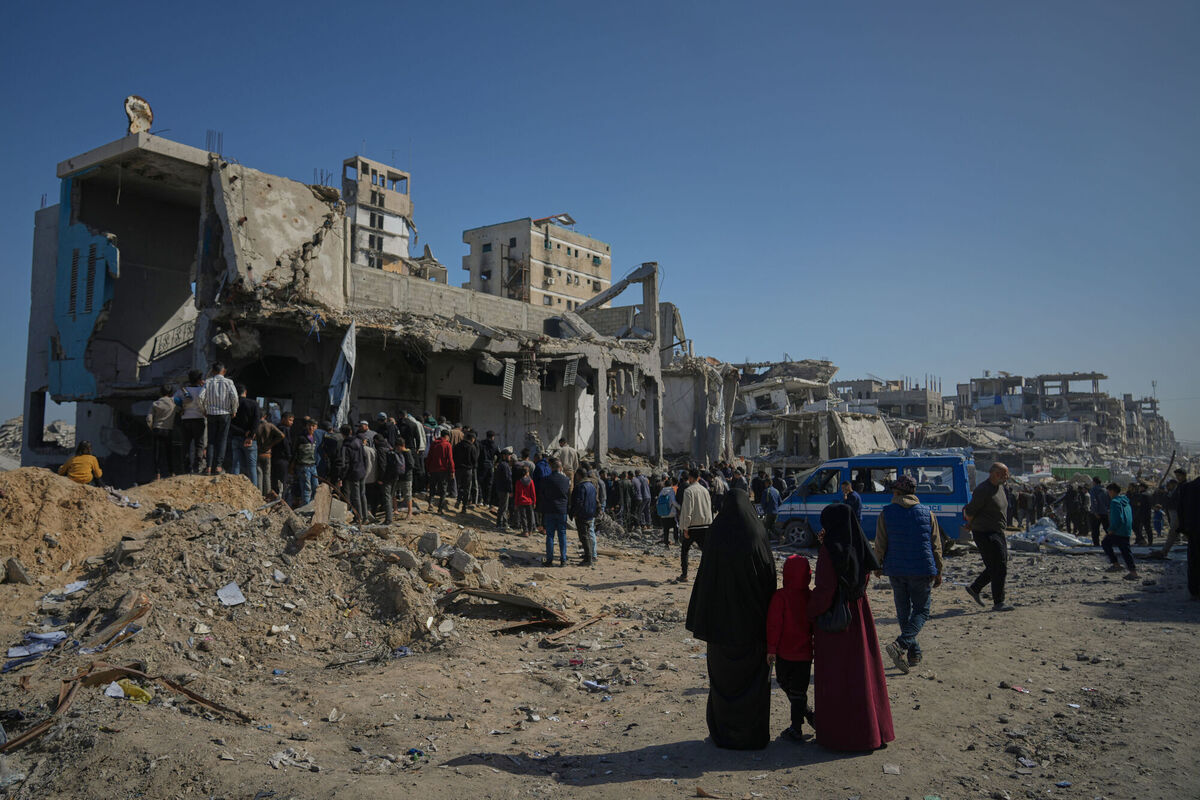
Al Jazeera has reported that more than 2,700 entire Palestinian families have been wiped out in Gaza — not individuals, not households partially destroyed, but entire extended families erased from the civil registry. Family names eliminated. Bloodlines ended. In thousands more cases, only a single survivor remains.
These are not “casualties”. This is genealogical destruction. At the very least, 70,000 dead — 2,700 families extinguished.
And still, the dominant political instinct — in Ireland, across Europe, in Washington — is to wait it out. To let outrage exhaust itself. To allow Gaza to recede from the front pages. To replace moral urgency with procedural language. To hope that time will perform the absolution our actions will not.
This is not caution. It is complicity by inertia.
From inside Gaza, the reality is spoken in a voice Western capitals prefer not to hear.
In a recent dispatch, Gaza-based writer Huda Skaik described Israel’s decision to bar dozens of international humanitarian organisations from operating in the occupied Palestinian territory. It is not, she wrote, merely an administrative measure. It is a continuation of the assault by other means.

“This genocide has never been just about bombs and tanks,” she wrote.
“In reality, it is about systematically dismantling every structure that allows Palestinians to survive, endure, and bear witness to what is being inflicted on them.”
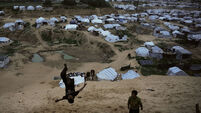
She described Gaza as having been turned into “a laboratory of engineered deprivation” — hospitals destroyed, water systems dismantled, bakeries shut down, borders sealed, aid convoys obstructed and attacked. Now, even humanitarian work itself is being criminalised.
And crucially, Ms Skaik named what this really targets: Witnesses.
“Aid organisations do more than deliver relief,” she wrote.
“They document violations, count civilians killed, record testimonies, and challenge official narratives.
That is the centre of this moment.
Gaza is not only being destroyed, it is being sealed.
The crime scene is being cleared while the crime is still underway.
At least 562 aid workers, including hundreds of UN staff, have been killed. Doctors abducted. Convoys bombed and clinics flattened.
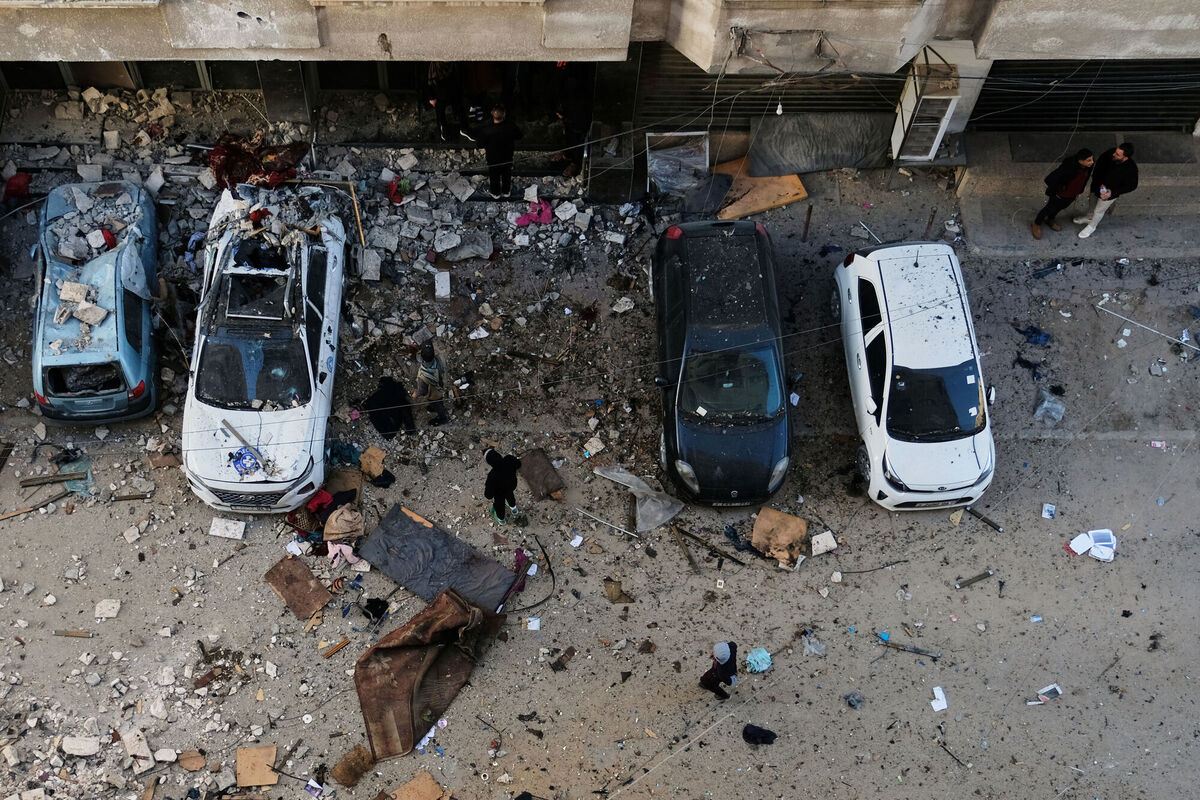
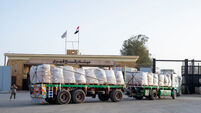
And now the remaining organisations are regulated out, buried under requirements no other country in the world imposes.
“The latest ban is the logical extension of that violence,” Ms Skaik wrote.
This is what the so-called ceasefire has meant in practice: Not relief, but consolidation. Not accountability, but control. Not access, but erasure.
If the “ceasefire” had meant anything, it would have been the moment the world forced its way into Gaza. When independent war-crimes investigators entered and journalists were allowed to report freely. When mass graves were protected rather than paved over. When testimonies were recorded before entire families vanished from memory.
None of that happened.
Instead, Western leaders treated it as a political interlude. A chance to recalibrate messaging. To lower the temperature. To move on.
In Ireland, the performance has been painfully familiar. Statements of concern. Reaffirmations of international law. Symbolic gestures carefully divorced from material consequences. The Occupied Territories Bill stalled more times than the new children’s hospital. Sanctions endlessly discussed, never imposed.
Meanwhile, there is no comparable hesitation when it comes to advancing new definitions of antisemitism or performing moral ceremony at official events.
We are quick to speak on yesterday’s Holocaust. Slow to act on today’s genocide. And glacial when it comes to doing anything that might carry real political cost. This is not neutrality. It is a studied avoidance of responsibility. The unspoken calculation is obvious: Wait for Gaza to exhaust itself as an issue. Let the news cycle move on. Let horror become background noise and let future commissions deal with the past. But history does not work that way.
Gaza is not an isolated tragedy. It is the thread that now runs through everything.
It runs through the US, where militarised policing, mass surveillance, and the normalisation of state violence at home mirror the techniques tested and legitimated abroad — from Minneapolis to Rafah.
It runs through Europe’s accelerating drive toward militarisation, the quiet construction of a permanent war footing, the fantasy that building an EU army will insulate us from the consequences of a world where law is optional and power is everything.
It runs through the obsessive paranoia about Russia and China — the constant invocation of a “rules-based international order” that collapses the moment those rules inconvenience an ally.
It runs through Ireland’s self-image of neutrality, forcing a question we have long postponed: Is neutrality the refusal to take sides between power and power, or between power and people?
Gaza exposes this evasion. It strips away the rhetoric. It shows us what our values are worth when they are tested against strategic interest.
Because when an occupying army accepts that more than 70,000 people have been killed, and the response of the so-called democratic world is managerial rather than moral, something profound has broken.
We are told to be careful. To mind our language. To balance every sentence. To contextualise every massacre. To centre every conversation on Western anxiety rather than Palestinian death.
We are told that outrage is dangerous. That anger clouds judgement. That restraint is the mark of seriousness.
But what is serious about a politics that can absorb the eradication of thousands of families without rupture?
What is serious about a media culture that treats the acknowledgement of tens of thousands of deaths as another data point in a running story?
What is serious about a diplomatic class that can watch humanitarianism itself being outlawed and respond with “calls” and “urging”?
This is not seriousness. It is moral anaemia.
Huda Skaik asked the question plainly from inside Gaza: “What does it mean to ban aid in a place where more than 80% of the population depends on humanitarian assistance to survive? It means weaponising hunger. It means turning winter into a death sentence for families living in tents.”
She answered it too.
That collapse is not happening somewhere else. It is happening in the institutions that claim to represent us. In the parliaments that prefer caution to courage. In the newsrooms that confuse balance with blindness. In the governments that have convinced themselves that doing very little, very slowly, is the same thing as leadership.
There will come a time when full accounting is unavoidable. When the rubble is cleared. When the archives open. When the dead are finally counted. When exterminated family names are read aloud.
And when that happens, no one will ask whether our statements were nuanced enough.
They will ask what we did when we knew. They will ask why the acknowledgement of 70,000 dead did not trigger consequences.
They will ask why the erasure of 2,700 families did not rupture diplomatic relations. They will ask why the banning of humanitarian witnesses did not provoke collective action.
They will ask why we waited.
Gaza is not only a humanitarian catastrophe. It is the moral referendum of our age. And on the evidence so far — from Dublin to Brussels to Washington — we are voting for inertia.
CONNECT WITH US TODAY



Be the first to know the latest news and updates