St Brigid's Day should inspire real change to empower Irish women
Women are really good at celebrating and supporting each other - but it's no substitute for structural change and political will, writes Ingrid Seim
St Brigid's Day should inspire real change to empower Irish women

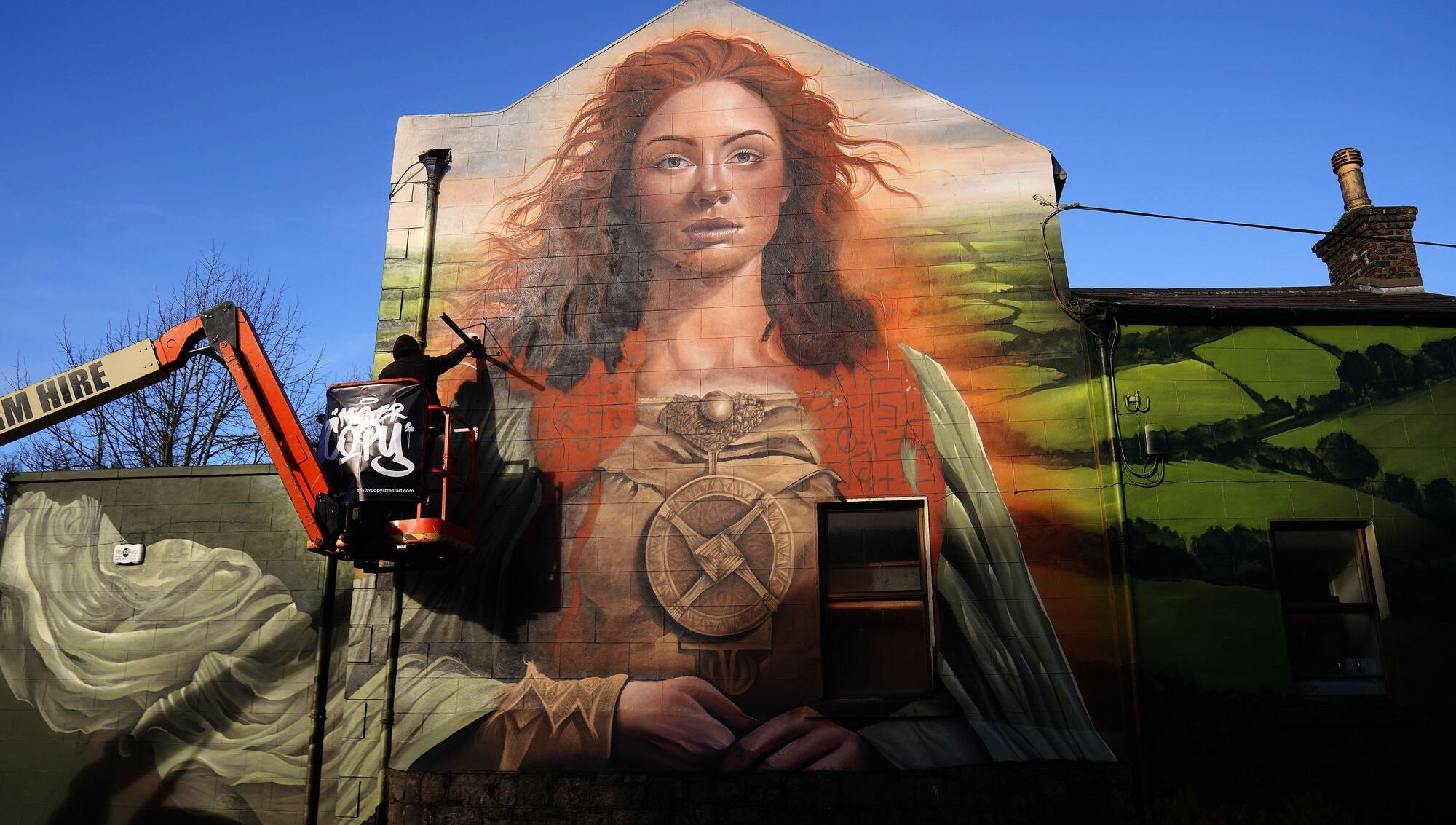
Street artist Mister Copy continues work on a mural depicting St Brigid which was commissioned to coincide with the return of the sacred relics of St Brigid to Co Kildare after nearly a millennium.  Picture: Brian Lawless/PA

The establishment of St Brigid’s Day as a public holiday in 2023 seemed like a fitting recognition of the change in Ireland’s attitude to women and the contributions they had made throughout its history. In a country that for so long had written half of its population out of it, women finally seemed in a position to reclaim at least some of their place in the national and cultural canon.

It is probably not insignificant that the campaign to officially recognise the St Brigid’s Day holiday came off the back of Repeal and a referendum that, to a large extent, was won by women making their stories visible and their lived experiences matter. 

Building on this momentum, organisations such as HerStory carved out an opportunity to celebrate Irish women and their achievements, projecting prominent and lesser-known faces onto the GPO and other significant buildings, slowly but surely bringing these stories back into the national consciousness.

The shift was both subtle and momentous. Nollaig na mBan suddenly became less about the patriarchal gesture of letting women have a day off from their domestic duties and more about bringing women back from undeserved obscurity and acknowledging those who had to sacrifice dreams and ambitions because of the circumstances at the time. Existing narratives around women’s health, motherhood, agency over their own lives, and societal power dynamics and structures were challenged as part of a recognition of what acknowledging the female aspect of our history would really mean.

HISTORY HUB

If you are interested in this article then no doubt you will enjoy exploring the various history collections and content in our history hub. Check it out HERE and happy reading

St Brigid tapestry
St Brigid tapestry

And Brigid seemed to embody it all. A Celtic goddess, a Christian saint, associated with poetry, healing, protection, nurturing and caregiving, and also apparently smithcraft, domestic animals, nature, fertility, female empowerment and the transition from winter to spring. A tall order, and some achievement. 

She was some woman for one woman, Brigid.

Legends tell us something about who we are

Interesting, perhaps, to compare this remit to that of St Patrick — it seems the unequal division of labour might run deep in our cultural psyche. 

Legends about saints’ accomplishments should, of course, be taken with a pinch of salt. But the legends we tell and carry with us do have significance, do tell us something about who we are. And maybe one of the reasons Brigid resonates so much with so many is that she so graciously and powerfully seems to carry the nurturing and emotional labour that we associate with women and that when we celebrate her, we celebrate that too.

But any celebration of women and what they do, especially around the topic of nurture, emotional labour, and domesticity, is complex. Because for most of history, what women do has been systematically rendered unimportant and detached from any influence, power, and financial rewards, no matter how much we claim to value it.

The Irish Constitution is a prime example. There is constitutional value put on domestic labour. But this constitutional value existed in a society that then went on to ensure that, after confining women to the domestic sphere, everything of importance happened elsewhere. A society that then went out of its way to strip women of any decision-making powers, not just in the public sphere but also in their private lives. 

And if you are lacking real influence and power, any official narrative that talks about valuing what you do, what you contribute, what you experience, is at best meaningless and at worst gaslighting.

Bringing women’s stories back

In June, Mr Dunne and 5th class pupils of St Brigid's Primary School, Kildare town created a postcard garden for Bloom titled 'The Cloak and The Oak', which features St Brigid.

Things change, of course. We have decision-making powers and opportunities now that go way beyond anything previous generations could even dream of accessing. And bringing women’s stories back, championing St Brigid as a beacon for a different and more equal way forward, celebrating women’s contributions and taking inspiration from them is part of what is going to bring change.

But we also need actual change. Any celebration — of women, of anyone or anything — needs to be careful about not sugarcoating the status quo and real lived realities. It needs to be about making things better. About actually putting supports and policies in place that mean everyone can live the life they want and deserve, and that burdens can be shared and lessened. About ensuring that resources can be accessed equitably by everyone. About power, influence, and financial rewards. Because we still have such a long way to go in all of these areas.

And I am concerned that without key structures in place, real political will to create the change we need, and real power to make decisions beyond our own personal lives, women will just keep having to keep celebrate and support each other to compensate for environments that remain lacking. 

We are really good at this. But that’s not what it should be about. It should be about ensuring that women’s realities, needs, and lived experiences form as much of a basis for how we forge a new way forward as a society as the other influences we take on board in our decision-making.

Brigid would probably agree.

More in this section

Revoiced

Newsletter

Sign up to the best reads of the week from irishexaminer.com selected just for you.

Cookie Policy Privacy Policy Brand Safety FAQ Help Contact Us Terms and Conditions

© Examiner Echo Group Limited